Xu Wei, Xia Shuai, Pu Jing, Wang Qian, Li Peiyu, Lu Lu, Jiang Shibo
Shanghai Public Health Clinical Center and School of Basic Medical Sciences, Key Laboratory of Medical Molecular Virology of MOE/MOH, Fudan University, Shanghai, China.
Lindsley F. Kimball Research Institute, New York Blood Center, New York, NY, United States.
Front Microbiol. 2018 Nov 6;9:2643. doi: 10.3389/fmicb.2018.02643. eCollection 2018.
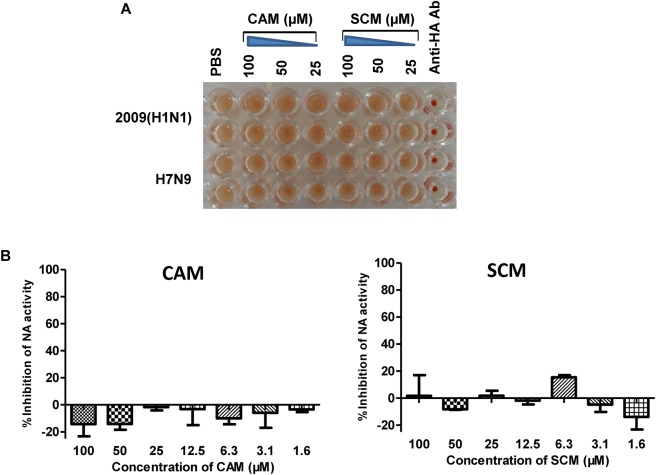
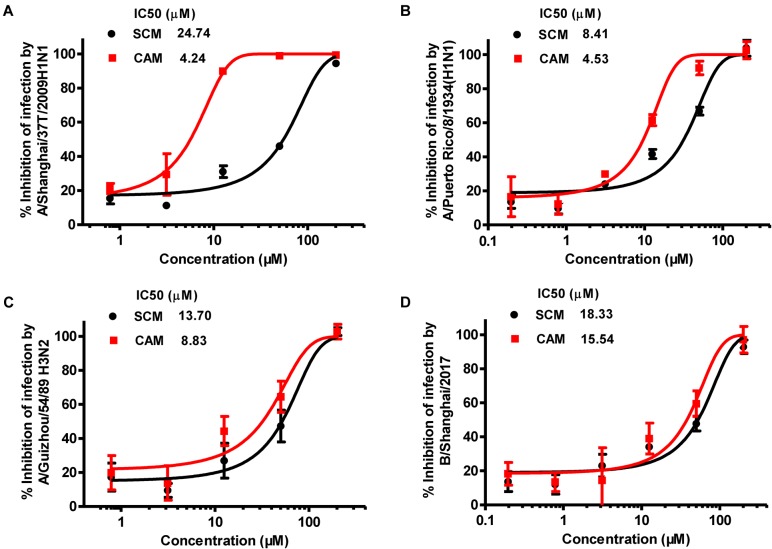
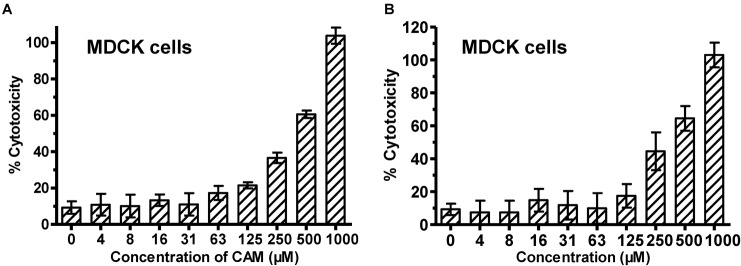
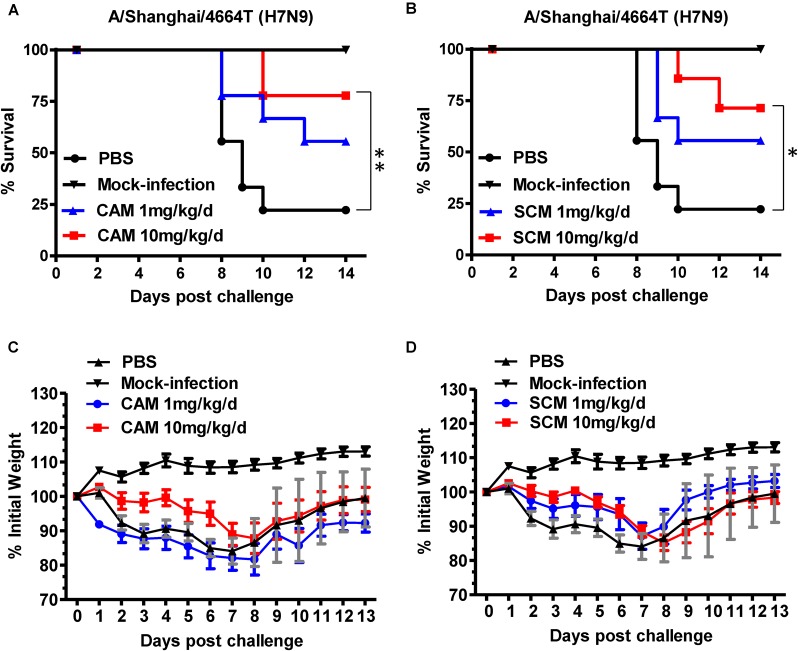
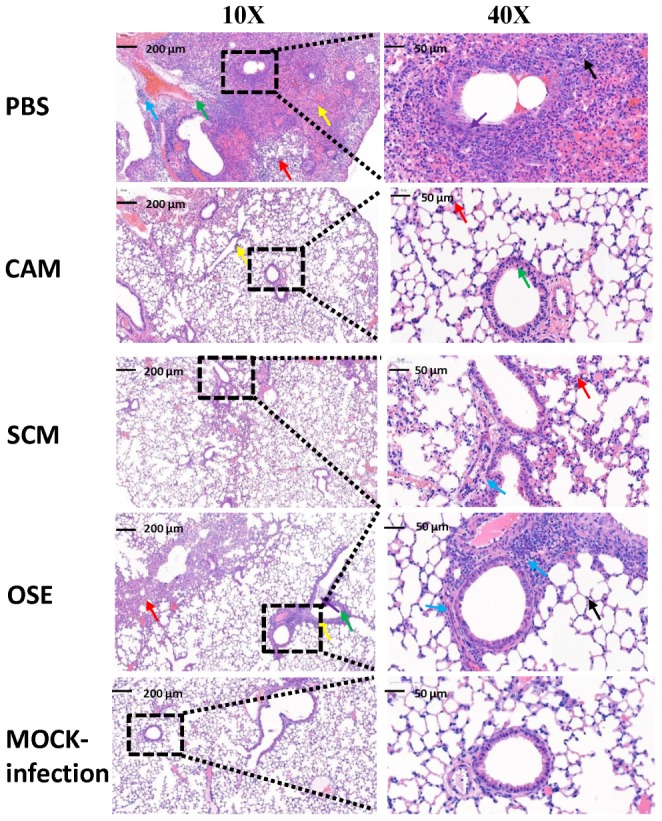
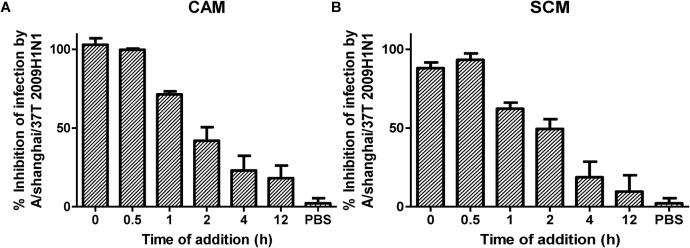
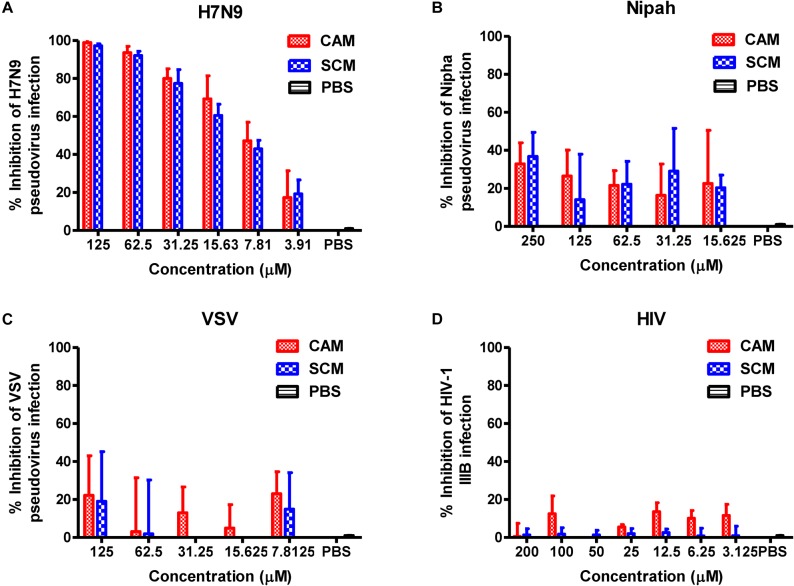
Influenza A viruses (IAV) comprise some of the most common infectious pathogens in humans, and they cause significant mortality and morbidity in immunocompromised people as well as children and the elderly. After screening an FDA-approved drug library containing 1280 compounds by cytopathic effect (CPE) reduction assay using the Cell Counting Kit-8, we found two antihistamines, carbinoxamine maleate (CAM) and S-(+)-chlorpheniramine maleate (SCM) with potent antiviral activity against A/Shanghai/4664T/2013(H7N9) infection with IC (half-maximal inhibitory concentration) of 3.56 and 11.84 μM, respectively. Further studies showed that CAM and SCM could also inhibit infection by other influenza A viruses, including A/Shanghai/37T/2009(H1N1), A/Puerto Rico/8/1934(H1N1), A/Guizhou/54/1989(H3N2), and one influenza B virus, B/Shanghai/2017(BY). Mice were challenged intranasally with A/H7N9/4664T/2013 (H7N9) virus and intraperitoneally injected with CAM (10 mg/kg per day) or SCM (1 mg/kg per day) for 5 days. CAM or SCM (10 mg/kg per day) were fully protected against challenge with A/Shanghai/4664T/2013(H7N9). The results from mechanistic studies indicate that both could inhibit influenza virus infection by blocking viral entry into the target cell, the early stage of virus life cycle. However, CAM and SCM neither blocked virus attachment, characteristic of HA activity, nor virus release, characteristic of NA activity. Such data suggest that these two compounds may interfere with the endocytosis process. Thus, we have identified two FDA-approved antihistamine drugs, CAM and SCM, which can be repurposed for inhibiting infection by divergent influenza A strains and one influenza B strain with potential to be used for treatment and prevention of influenza virus infection.
甲型流感病毒(IAV)是人类最常见的一些传染性病原体,它们在免疫功能低下的人群以及儿童和老年人中会导致显著的死亡率和发病率。在用细胞计数试剂盒-8通过细胞病变效应(CPE)减少试验筛选了一个包含1280种化合物的FDA批准药物库后,我们发现了两种抗组胺药,马来酸氯苯那敏(CAM)和S-(+)-马来酸氯苯那敏(SCM),它们对A/上海/4664T/2013(H7N9)感染具有强大的抗病毒活性,半数最大抑制浓度(IC)分别为3.56和11.84μM。进一步研究表明,CAM和SCM还可以抑制其他甲型流感病毒的感染,包括A/上海/37T/2009(H1N1)、A/波多黎各/8/1934(H1N1)、A/贵州/54/1989(H3N2),以及一种乙型流感病毒B/上海/2017(BY)。将小鼠经鼻用A/H7N9/4664T/2013(H7N9)病毒攻击,并腹腔注射CAM(每天10mg/kg)或SCM(每天1mg/kg),持续5天。CAM或SCM(每天10mg/kg)能完全保护小鼠免受A/上海/4664T/2013(H7N9)的攻击。机制研究结果表明,两者都可以通过阻断病毒进入靶细胞(病毒生命周期的早期阶段)来抑制流感病毒感染。然而,CAM和SCM既不阻断具有HA活性特征的病毒附着,也不阻断具有NA活性特征的病毒释放。这些数据表明这两种化合物可能会干扰内吞过程。因此,我们确定了两种FDA批准的抗组胺药物CAM和SCM,它们可重新用于抑制多种甲型流感毒株和一种乙型流感毒株的感染,有潜力用于治疗和预防流感病毒感染。