Lee Bombi, Shim Insop, Lee Hyejung, Hahm Dae-Hyun
Acupuncture and Meridian Science Research Center, College of Korean Medicine, Kyung Hee University, Seoul, Republic of Korea.
Center for Converging Humanities, Kyung Hee University, Seoul, Republic of Korea.
Anim Cells Syst (Seoul). 2018 Sep 5;22(5):305-316. doi: 10.1080/19768354.2018.1517825. eCollection 2018.
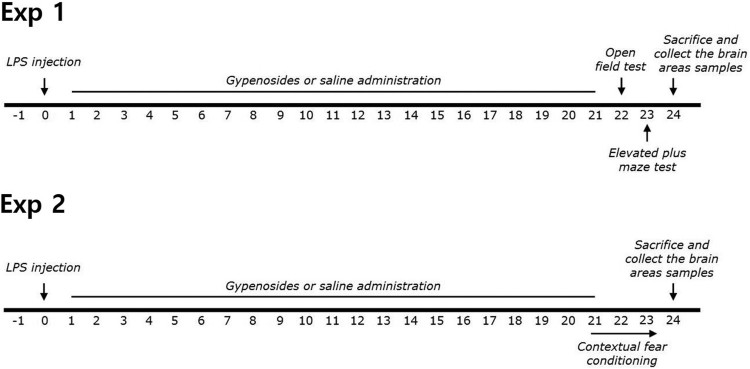
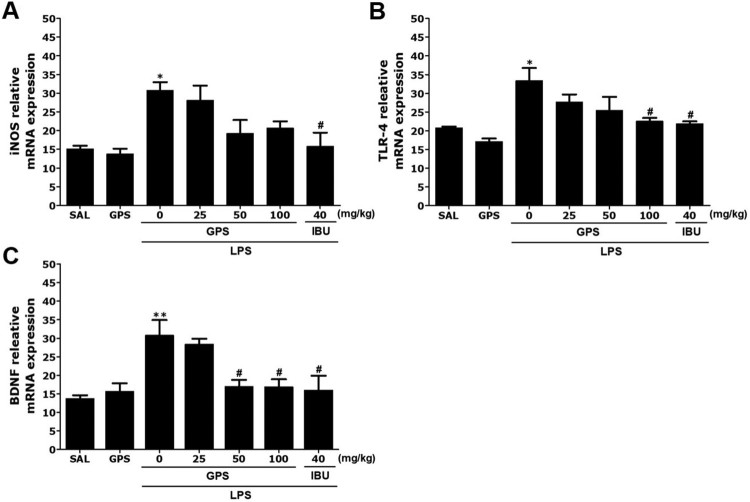
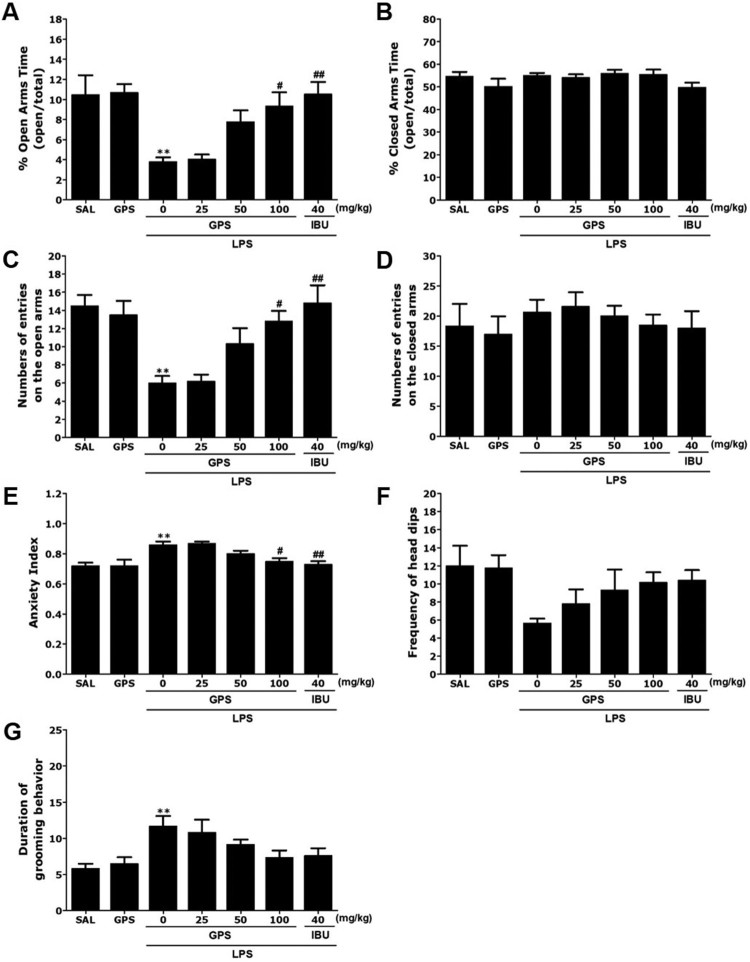
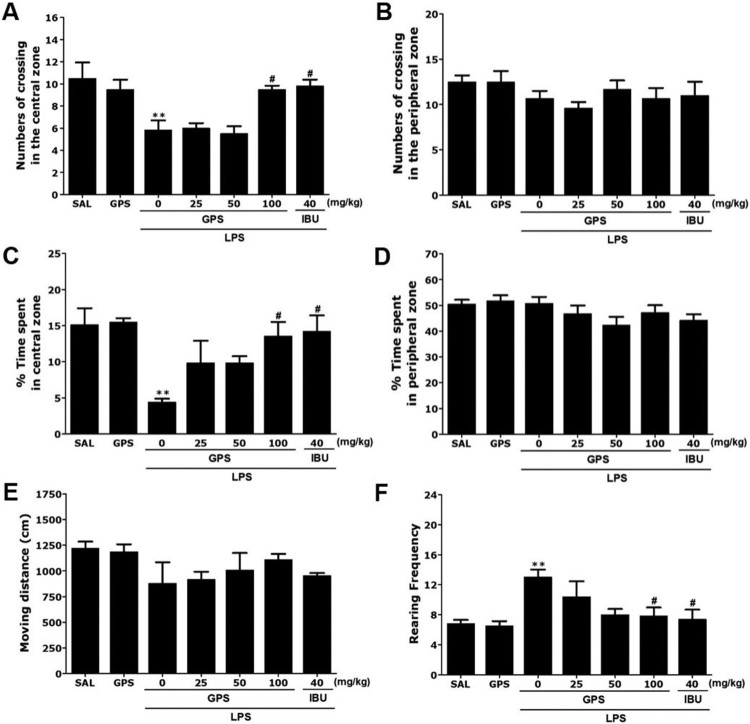
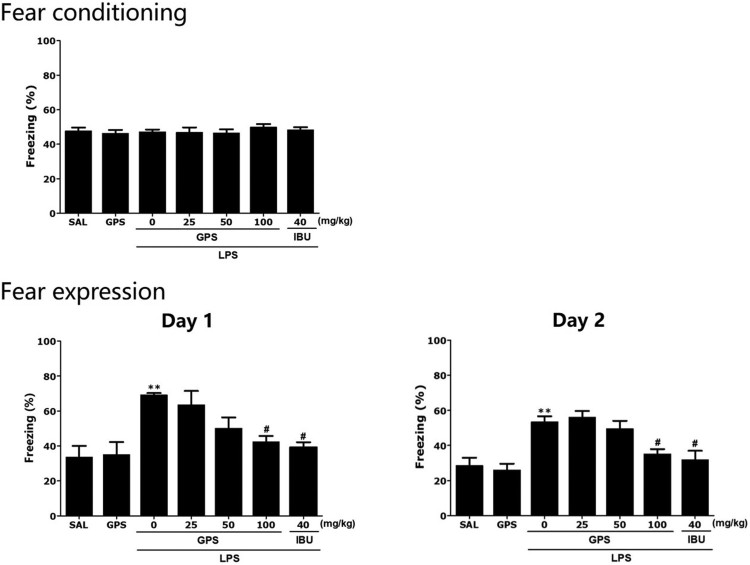
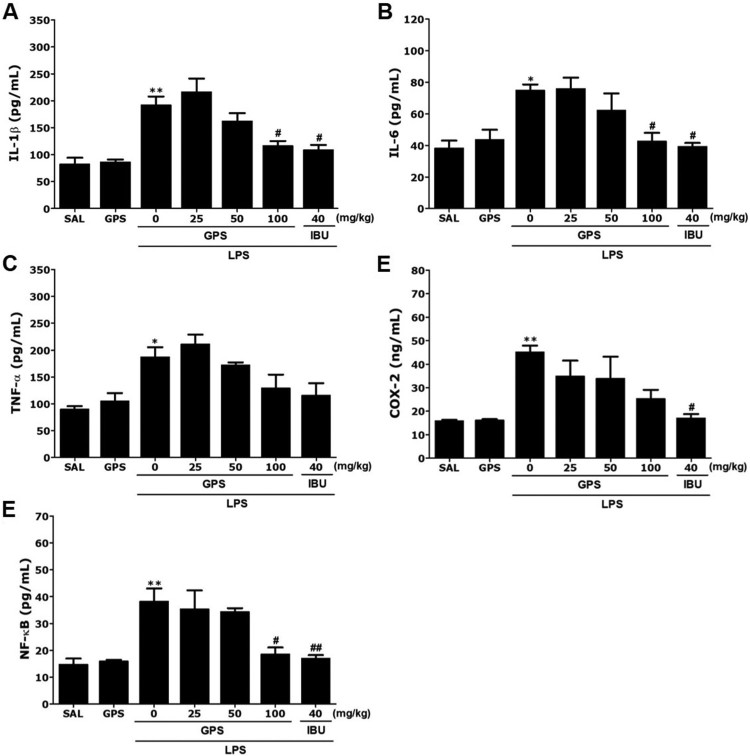
Neuroinflammation is considered a major factor in several neuropsychiatric disorders. Gypenosides (GPS) have pharmacological properties with multiple beneficial effects including antiinflammatory, antioxidative, and protective properties. The present study was performed to examine whether GPS shows anxiolytic-like effects in a model of chronic inflammation induced by injection of lipopolysaccharide (LPS) into the rat hippocampus. The effects of GPS on inflammatory factors in the hippocampus and the downstream mechanisms of these effects were also examined. Introduction of LPS into the lateral ventricle caused inflammatory reactions and anxiety-like symptoms in the rats. Daily treatment with GPS (25, 50, and 100 mg/kg) for 21 consecutive days significantly increased the time spent and number of visits to the open arm in the elevated plus maze test, and significantly increased the number of central zone crossings in the open field test. Moreover, GPS administration significantly reduced the freezing response to contextual fear conditioning, and significantly decreased the levels of proinflammatory mediators, such as interleukin-1 (IL-1), interleukin-6 (IL-6), and nuclear factor-kappaB (NF-κB), levels in the brain. Furthermore, GPS reduced LPS-induced elevated levels of Toll-like receptor 4 (TLR4) mRNA and inhibition of brain-derived neurotrophic factor (BDNF) mRNA levels. Taken together, these results suggest that GPS may have anxiolytic-like effects and may have novel therapeutic potential for anxiety-like behaviors caused by neuroinflammation. GPS may be useful for developing an agents for the treatment of neuropsychiatric disorders, such as anxiety, due to its antiinflammatory activities and the modulation of NF-κB/iNOS/TLR4/BDNF.
神经炎症被认为是多种神经精神疾病的主要因素。绞股蓝总皂苷(GPS)具有多种有益的药理特性,包括抗炎、抗氧化和保护特性。本研究旨在探讨GPS在将脂多糖(LPS)注射到大鼠海马体所诱导的慢性炎症模型中是否具有抗焦虑样作用。还研究了GPS对海马体中炎症因子的影响及其作用的下游机制。将LPS引入侧脑室会引起大鼠的炎症反应和焦虑样症状。连续21天每天用GPS(25、50和100mg/kg)治疗,在高架十字迷宫试验中显著增加了在开放臂停留的时间和进入次数,在旷场试验中显著增加了穿越中央区域的次数。此外,给予GPS显著降低了对情境恐惧条件反射的僵住反应,并显著降低了大脑中促炎介质如白细胞介素-1(IL-1)、白细胞介素-6(IL-6)和核因子-κB(NF-κB)的水平。此外,GPS降低了LPS诱导的Toll样受体4(TLR4)mRNA水平升高以及对脑源性神经营养因子(BDNF)mRNA水平的抑制。综上所述,这些结果表明GPS可能具有抗焦虑样作用,并且可能对神经炎症引起的焦虑样行为具有新的治疗潜力。由于其抗炎活性以及对NF-κB/iNOS/TLR4/BDNF的调节作用,GPS可能有助于开发治疗焦虑等神经精神疾病的药物。