Lee Bombi, Shim Insop, Lee Hyejung
Acupuncture and Meridian Science Research Center, College of Korean Medicine, Kyung Hee University, Seoul 02447, Republic of Korea.
Department of Physiology, College of Medicine, Kyung Hee University, Seoul 02447, Republic of Korea.
Evid Based Complement Alternat Med. 2018 Jun 19;2018:4183670. doi: 10.1155/2018/4183670. eCollection 2018.
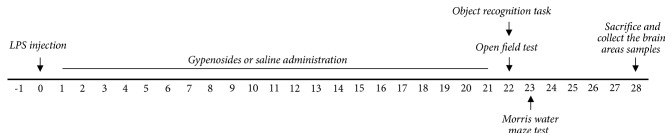
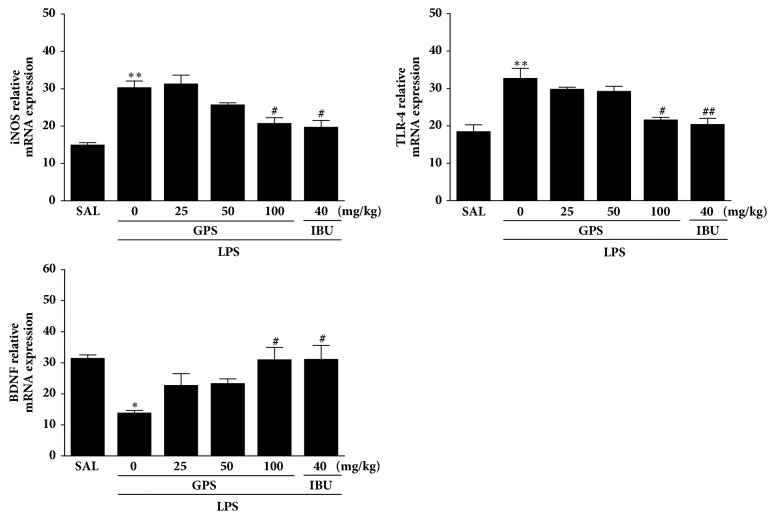
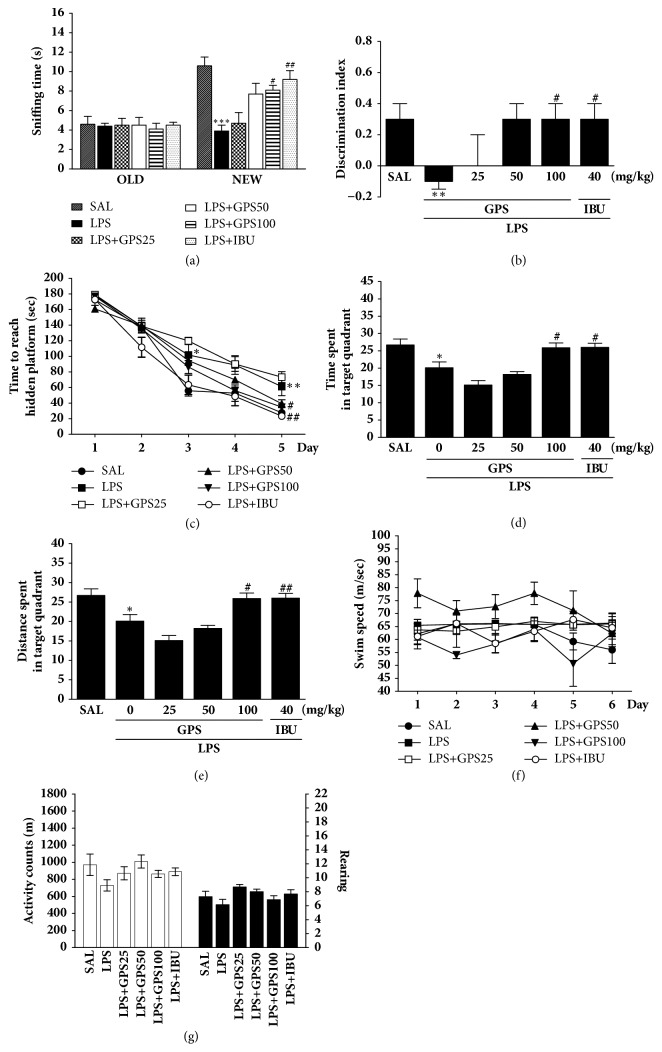
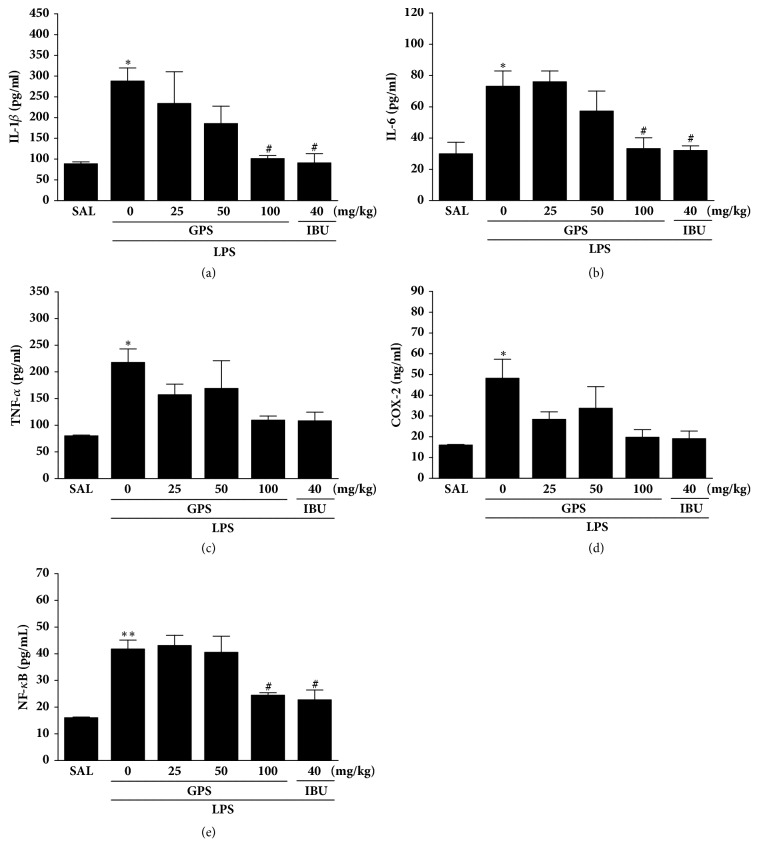
Neuroinflammation is deliberated a major factor in various neurodegenerative diseases. Gypenosides (GPS) have pharmacological properties with multiple beneficial effects including anti-inflammatory, antioxidative, and protective properties. In the present study, whether GPS could improve cognitive dysfunction and chronic inflammation caused by injecting lipopolysaccharide (LPS) in the hippocampus was investigated. Effects of GPS on inflammatory factors in the hippocampus and the downstream mechanisms of these effects were also examined. Induction of LPS into the lateral ventricle caused inflammatory reactions and memory impairment on the rats. Every day treatment of GPS (25, 50, and 100 mg/kg) for 21 consecutive days attenuated spatial recognition, discrimination, and memory deficits. GPS treatment significantly decreased proinflammatory mediators such as interleukin-6 (IL-6), interleukin-1 (IL-1), and nuclear factor-kappaB (NF-B) levels in the brain. Furthermore, GPS reduced LPS-induced elevated levels of inducible nitric oxide synthase (iNOS) and toll-like receptor 4 (TLR4) mRNA and inhibition of brain-derived neurotrophic factor (BDNF) mRNA level. Collectively, these results showed that GPS may improve cognitive function and provide a potential therapy for memory impairment caused by neuroinflammation. Based on these, GPS may be effective in inhibiting the progress of neurodegenerative diseases by improving memory functions due to its anti-inflammatory activities and appropriate modulation of NF-B/iNOS/TLR4/BDNF.
神经炎症被认为是多种神经退行性疾病的主要因素。绞股蓝总皂苷(GPS)具有多种有益的药理特性,包括抗炎、抗氧化和保护特性。在本研究中,研究了GPS是否能改善由海马注射脂多糖(LPS)引起的认知功能障碍和慢性炎症。还研究了GPS对海马中炎症因子的影响及其作用的下游机制。向侧脑室注射LPS可引起大鼠的炎症反应和记忆障碍。连续21天每天给予GPS(25、50和100mg/kg)可减轻空间识别、辨别和记忆缺陷。GPS治疗显著降低了大脑中促炎介质如白细胞介素-6(IL-6)、白细胞介素-1(IL-1)和核因子-κB(NF-κB)的水平。此外,GPS降低了LPS诱导的诱导型一氧化氮合酶(iNOS)和Toll样受体4(TLR4)mRNA水平的升高,并抑制了脑源性神经营养因子(BDNF)mRNA水平。总的来说,这些结果表明,GPS可能改善认知功能,并为神经炎症引起的记忆障碍提供一种潜在的治疗方法。基于这些,GPS可能通过改善记忆功能来有效抑制神经退行性疾病的进展,这归因于其抗炎活性以及对NF-κB/iNOS/TLR4/BDNF的适当调节。