Lu Zhaorui, Zhou Qu, Wang Caisheng, Wei Zhijie, Xu Lingna, Gui Yingang
College of Engineering and Technology, Southwest University, Chongqing, China.
Electrical and Computer Engineering Department, Wayne State University, Detroit, MI, United States.
Front Chem. 2018 Nov 6;6:540. doi: 10.3389/fchem.2018.00540. eCollection 2018.
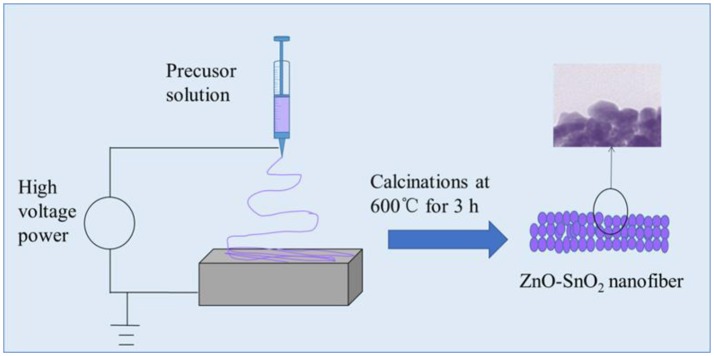
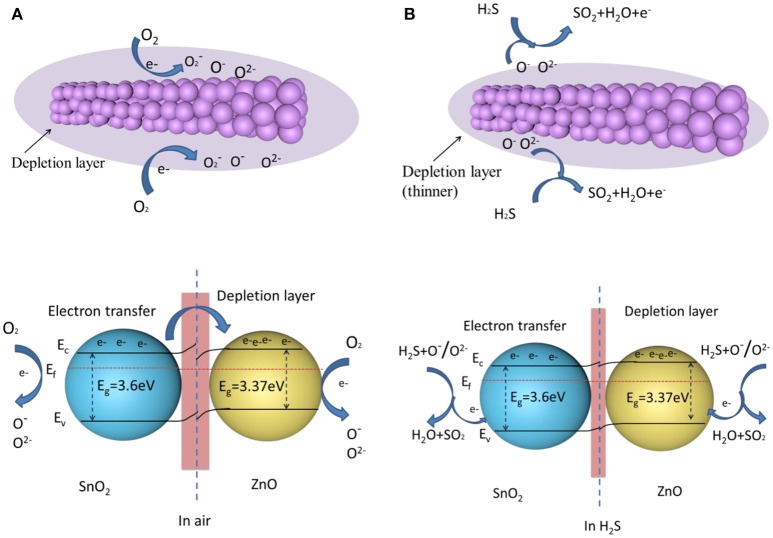
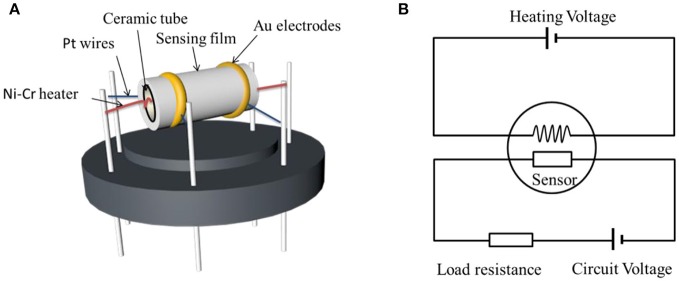
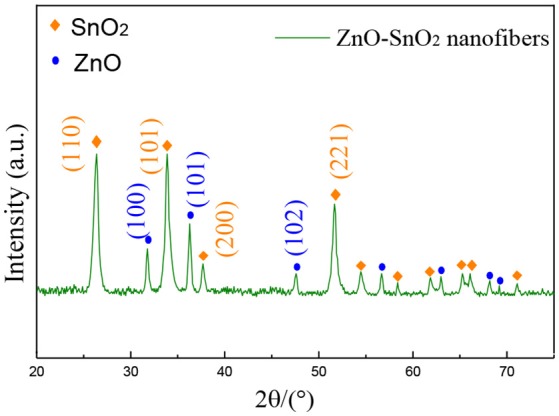
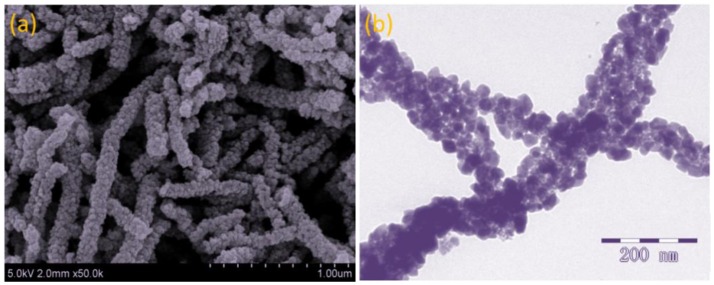
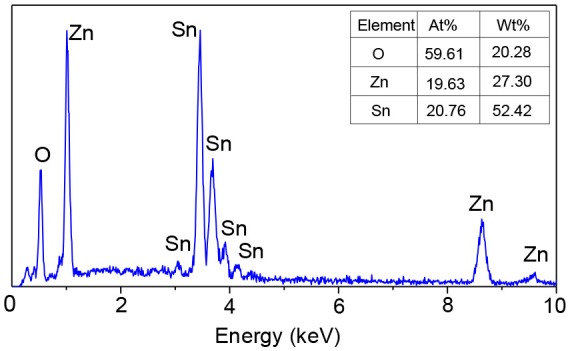
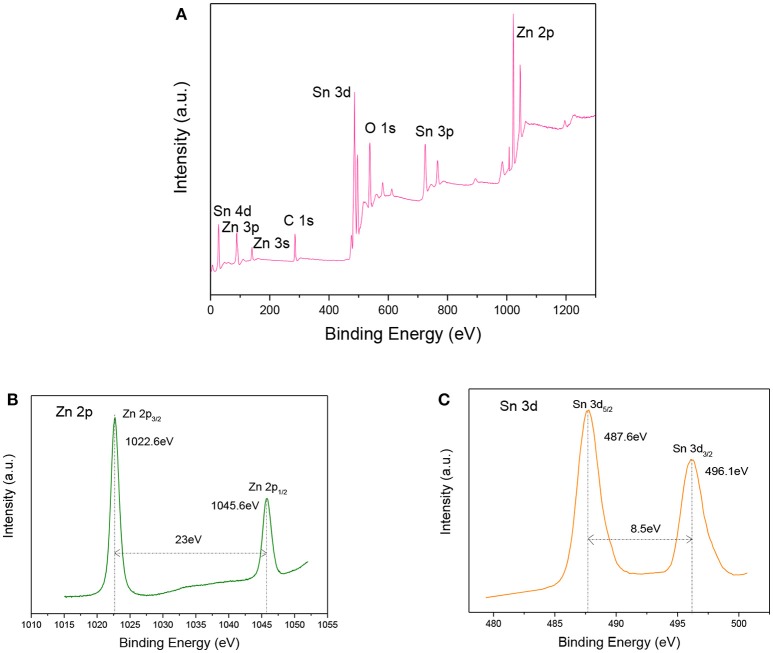
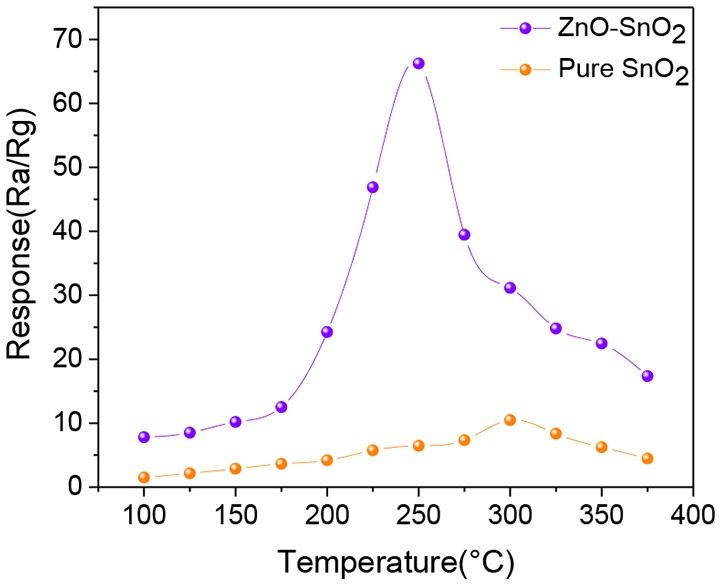
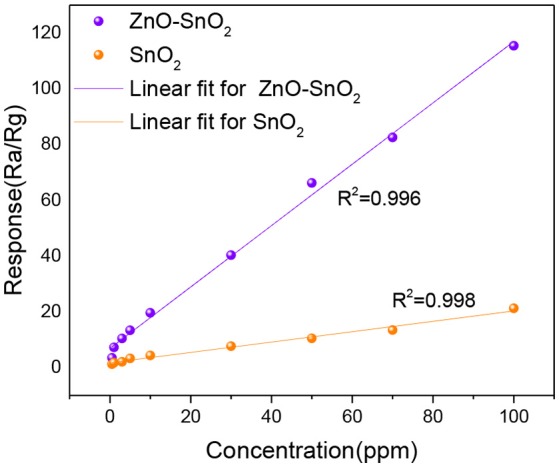
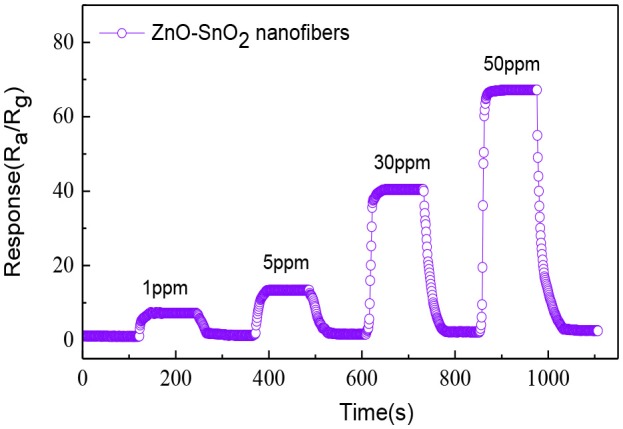
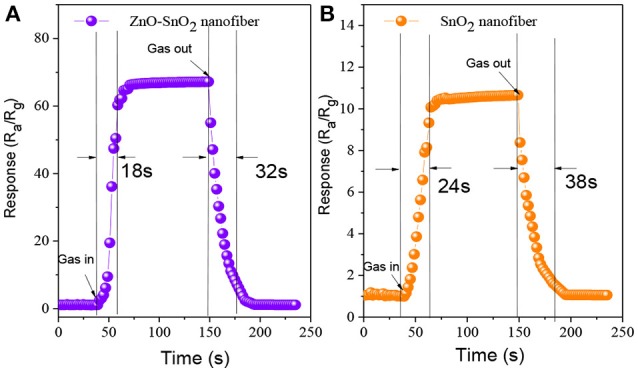
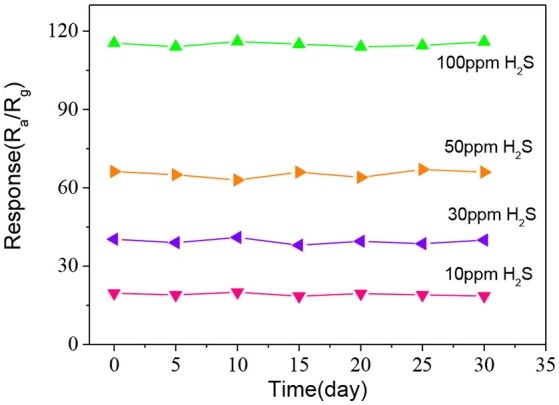
Hydrogen sulfide (HS) is an important decomposition component of sulfur hexafluoride (SF), which has been extensively used in gas-insulated switchgear (GIS) power equipment as insulating and arc-quenching medium. In this work, electrospun ZnO-SnO composite nanofibers as a promising sensing material for SF decomposition component HS were proposed and prepared. The crystal structure and morphology of the electrospun ZnO-SnO samples were investigated by X-ray diffraction (XRD), scanning electron microscopy (SEM) and transmission electron microscopy (TEM), respectively. The composition of the sensitive materials was analyzed by energy dispersive X-ray spectrometers (EDS) and X-ray photoelectron spectroscopy (XPS). Side heated sensors were fabricated with the electrospun ZnO-SnO nanofibers and the gas sensing behaviors to HS gas were systematically investigated. The proposed ZnO-SnO composite nanofibers sensor showed lower optimal operating temperature, enhanced sensing response, quick response/recovery time and good long-term stability against HS. The measured optimal operating temperature of the ZnO-SnO nanofibers sensor to 50 ppm HS gas was about 250°C with a response of 66.23, which was 6 times larger than pure SnO nanofibers sensor. The detection limit of the fabricated ZnO-SnO nanofibers sensor toward HS gas can be as low as 0.5 ppm. Finally, a plausible sensing mechanism for the proposed ZnO-SnO composite nanofibers sensor to HS was also discussed.
硫化氢(HS)是六氟化硫(SF)的一种重要分解成分,六氟化硫已被广泛用作气体绝缘开关设备(GIS)电力设备中的绝缘和灭弧介质。在这项工作中,提出并制备了静电纺丝的ZnO-SnO复合纳米纤维,作为一种有前途的用于检测SF分解成分HS的传感材料。分别通过X射线衍射(XRD)、扫描电子显微镜(SEM)和透射电子显微镜(TEM)研究了静电纺丝ZnO-SnO样品的晶体结构和形貌。通过能量色散X射线光谱仪(EDS)和X射线光电子能谱(XPS)分析了敏感材料的成分。用静电纺丝的ZnO-SnO纳米纤维制作了侧面加热传感器,并系统地研究了其对HS气体的气敏行为。所提出的ZnO-SnO复合纳米纤维传感器显示出较低的最佳工作温度、增强的传感响应、快速的响应/恢复时间以及对HS良好的长期稳定性。测得ZnO-SnO纳米纤维传感器对50 ppm HS气体的最佳工作温度约为250°C,响应值为66.23,比纯SnO纳米纤维传感器大6倍。所制备的ZnO-SnO纳米纤维传感器对HS气体的检测限可低至0.5 ppm。最后,还讨论了所提出的ZnO-SnO复合纳米纤维传感器对HS的一种合理传感机制。