Zhou Xiaorong, Xu Manli, Guo Yonghong, Ye Ling, Long Limin, Wang Haiqin, Tan Pan, Xu Meili
Department of Gerontology, The Second Xiangya Hospital, Central South University, Changsha, Hunan 410011, China,
Department of Basic Medicine, Guizhou College of Health Professions, Tongren, Guizhou, 554300, China.
Cancer Manag Res. 2018 Oct 30;10:5187-5197. doi: 10.2147/CMAR.S176954. eCollection 2018.
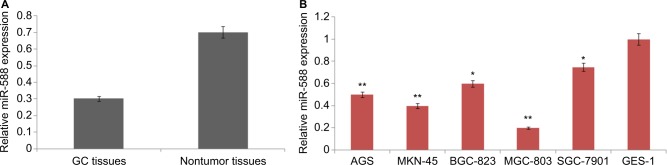
miRNAs are potential regulators of genes in many cancers. Here, we confirmed that the expression of miR-588 decreased in gastric cancer (GC) tissues and cells.
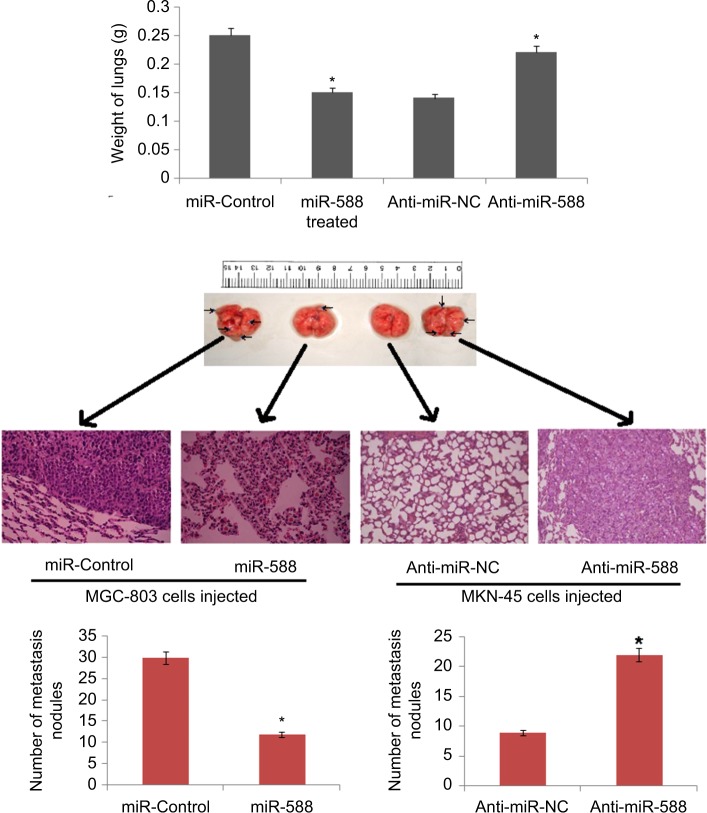
Sixty-seven GC tissues along with noncancerous tissues adjacent to them were included in the study. Quantitative real-time reverse transcription-PCR study was done to quantify the expression levels of mature miRNA. The expression of proteins was determined by Western blot and transwell chamber assay for invasion and migration studies. Immunohistochemical analysis and luciferase assay were done for evaluating the expression of epithelial-mesenchymal transition (EMT) markers and activity of EIF5A2, respectively. In vivo metastatic assay was done by injecting MGC-803 cells into nude mice.
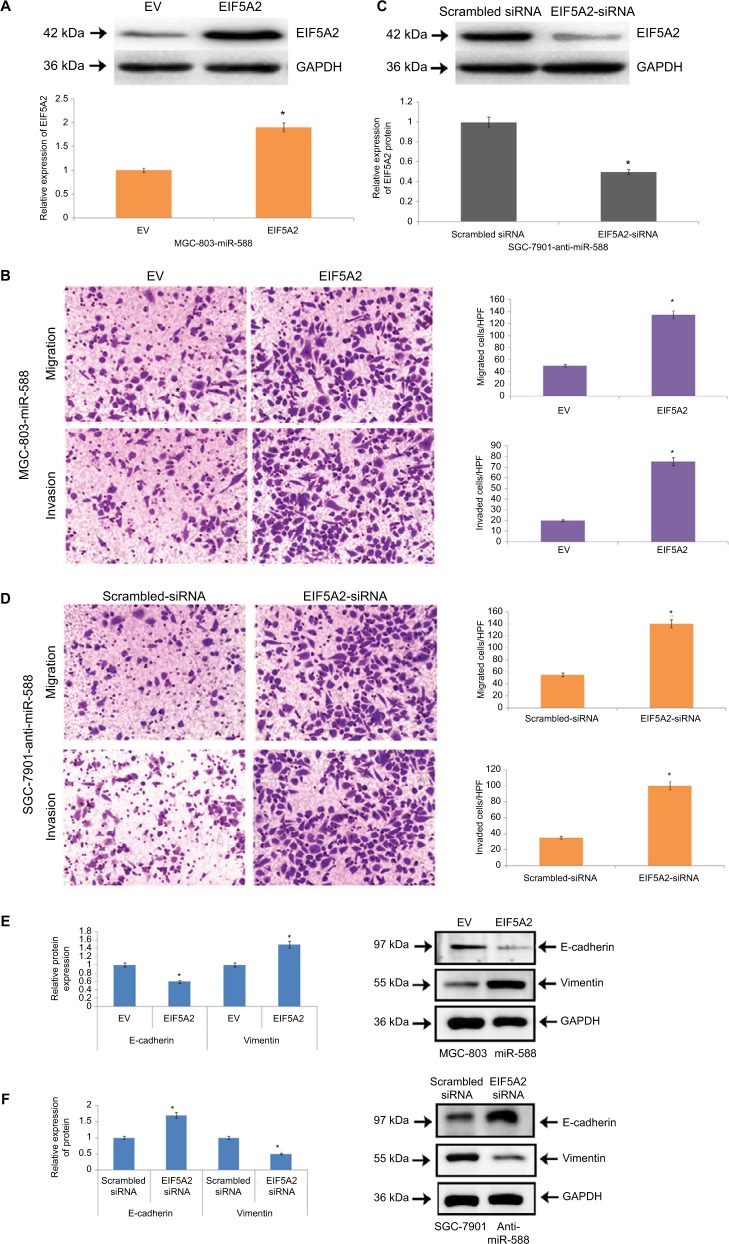
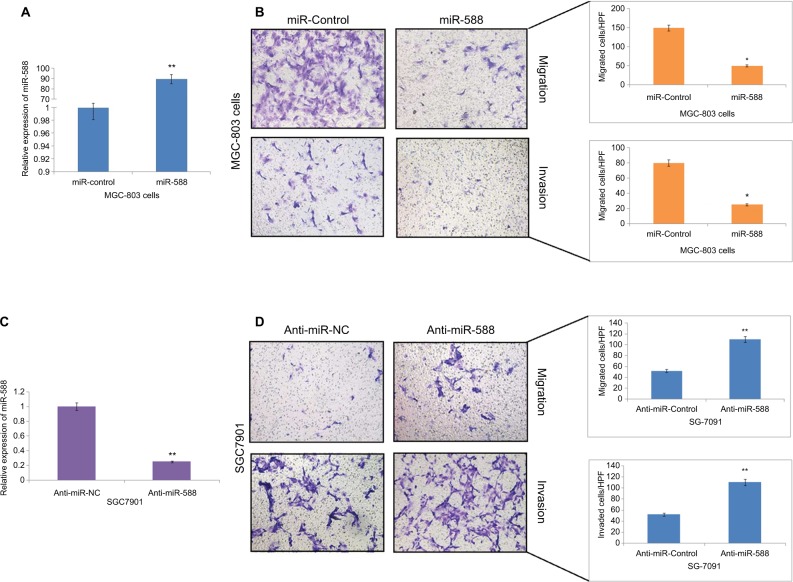
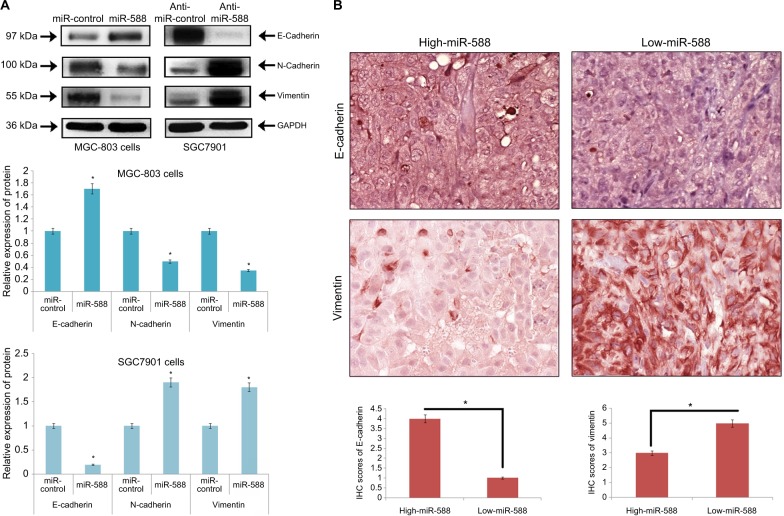
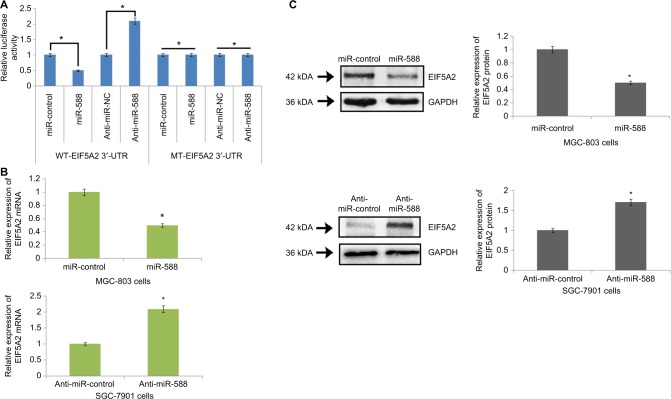
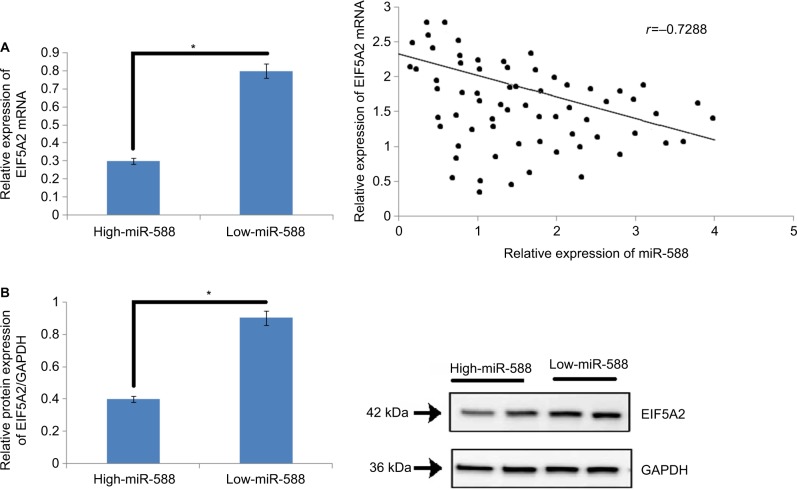
In the 5-year predicted survival study of GC patients included in the study, we found that miR-588 acted as a specific prognostic marker. Overexpression of miR-588 resulted in suppression of cell invasion, migration and progression of EMT, whereas suppression of miR-588 inverted the effects in both in vivo and in vitro experiments. miR-588 retained EIF5A2 by directly binding to the 3'-UTR. EIF5A2 was overexpressed in GC tissue samples, and the expression of miR-588 was inversely correlated to the levels of EIF5A2. The impact of miR-588 on invasion, migration and progression of EMT may be partially due to miR-588-mediated alterations of EiF5A2.
Overall, the findings of the study suggest that miR-588 acts as a tumor suppressor by regulating the invasion, migration and EMT via EIF5A2 pathway, hence presenting miR-588 as a prognostic marker as well as a therapeutic target for GC.
微小RNA(miRNA)是多种癌症中基因的潜在调节因子。在此,我们证实miR - 588在胃癌(GC)组织和细胞中的表达降低。
本研究纳入了67例GC组织及其相邻的非癌组织。采用定量实时逆转录 - PCR研究来定量成熟miRNA的表达水平。通过蛋白质印迹法测定蛋白质表达,并使用Transwell小室检测法进行侵袭和迁移研究。分别进行免疫组织化学分析和荧光素酶测定以评估上皮 - 间质转化(EMT)标志物的表达和EIF5A2的活性。通过将MGC - 803细胞注射到裸鼠体内进行体内转移试验。
在本研究纳入的GC患者的5年预测生存研究中,我们发现miR - 588作为一种特异性预后标志物。miR - 588的过表达导致细胞侵袭、迁移和EMT进程受到抑制,而在体内和体外实验中,miR - 588的抑制则产生相反的效果。miR - 588通过直接结合到3'-UTR来保留EIF5A2。EIF5A2在GC组织样本中过表达,且miR - 588的表达与EIF5A2的水平呈负相关。miR - 588对EMT的侵袭、迁移和进程的影响可能部分归因于miR - 588介导的EIF5A2改变。
总体而言,该研究结果表明,miR - 588通过EIF5A2途径调节侵袭、迁移和EMT,从而发挥肿瘤抑制作用,因此miR - 588可作为GC的预后标志物以及治疗靶点。