P N Mary Lissy, Peter Carolin, Mohan Kavya, Greens Shone, George Sneha
Department of Civil Engineering, Muthoot Institute of Technology and Science, Varikoli, India.
Heliyon. 2018 Nov 2;4(10):e00891. doi: 10.1016/j.heliyon.2018.e00891. eCollection 2018 Oct.
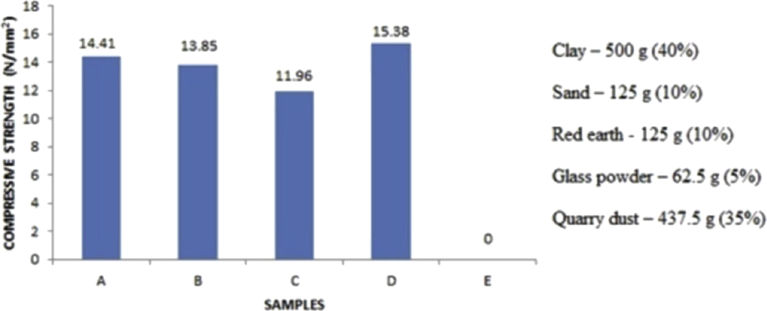
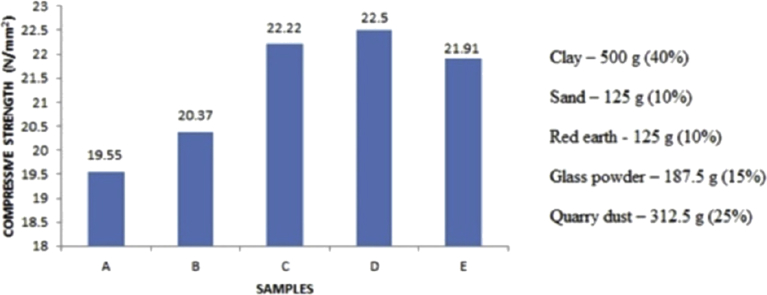
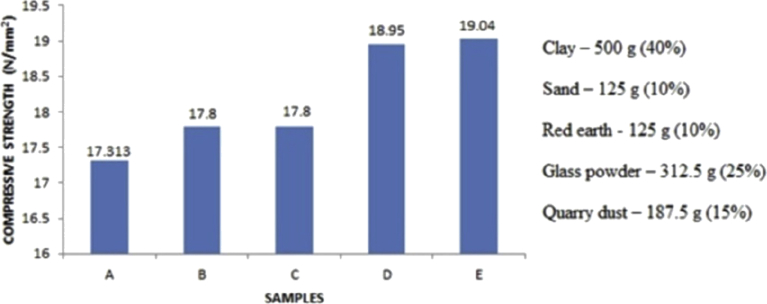
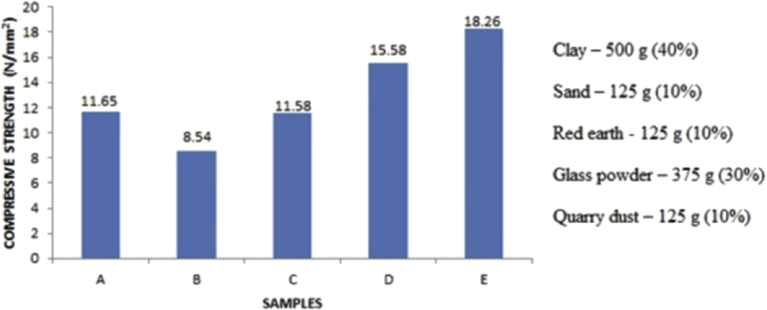
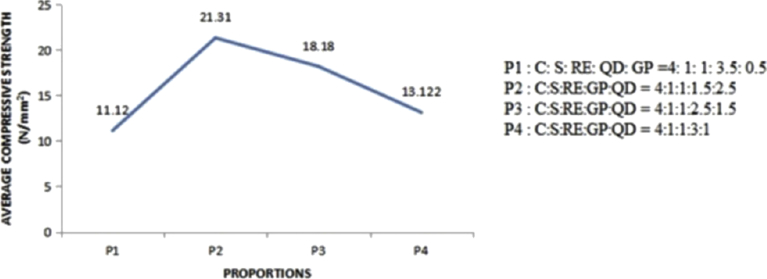
Clay brick manufacturing is a sector which involves a lot of firing processes requiring higher temperature. To maintain this temperature, large amount of fuel in the form of wood, coal, biomass etc. need to be burnt in the kiln causing serious issues of air pollution. Also, with the increase in the number of industries coming up, large amount of un-disposable waste gets accumulated. If suitable remedies are not adopted for its safe disposal, it may pollute the water bodies through runoff. This project is an effort to reduce the brick firing temperature in the kiln to about 600 °C thereby reducing the cost of production and making the whole process environmental friendly. This work will put forward a suitable alternative for the safe disposal of industrial debris like quarry dust and glass powder by incorporating them as a partial substitute for river sand which is one of the costly constituent of clay brick and thereby further reducing the cost of production. Experimental results showed higher compressive strength of 21.31 N/mmwhen the brick was casted with mix proportion of Cement: Sand: Red earth: Glass Powder: Quarry Dust = 4:1:1:1.5:2.5. The strength measured at temperature 600 °C met the requirements of the National Standards.
粘土砖制造是一个涉及许多需要较高温度的烧制过程的行业。为了维持这个温度,需要在窑中燃烧大量以木材、煤炭、生物质等形式存在的燃料,这会导致严重的空气污染问题。此外,随着新兴工业数量的增加,大量不可降解的废物堆积起来。如果不采取适当的补救措施进行安全处置,它可能会通过径流污染水体。该项目致力于将窑中砖的烧制温度降低到约600°C,从而降低生产成本并使整个过程环保。这项工作将提出一种合适的替代方案,通过将采石场粉尘和玻璃粉等工业废料作为粘土砖昂贵成分之一的河砂的部分替代品掺入其中,从而安全处置这些废料,进而进一步降低生产成本。实验结果表明,当砖按照水泥:砂:红土:玻璃粉:采石场粉尘 = 4:1:1:1.5:2.5的混合比例浇筑时,其抗压强度更高,达到21.31 N/mm 。在600°C温度下测得的强度符合国家标准要求。