Department of Pathology, Division of Neuropathology, Johns Hopkins University School of Medicine, Baltimore, MD, USA.
Laboratory of Behavioral Neuroscience, National Institute on Aging, National Institutes of Health, Baltimore, MD, USA.
Alzheimers Dement. 2019 Jan;15(1):8-16. doi: 10.1016/j.jalz.2018.07.215. Epub 2018 Dec 11.
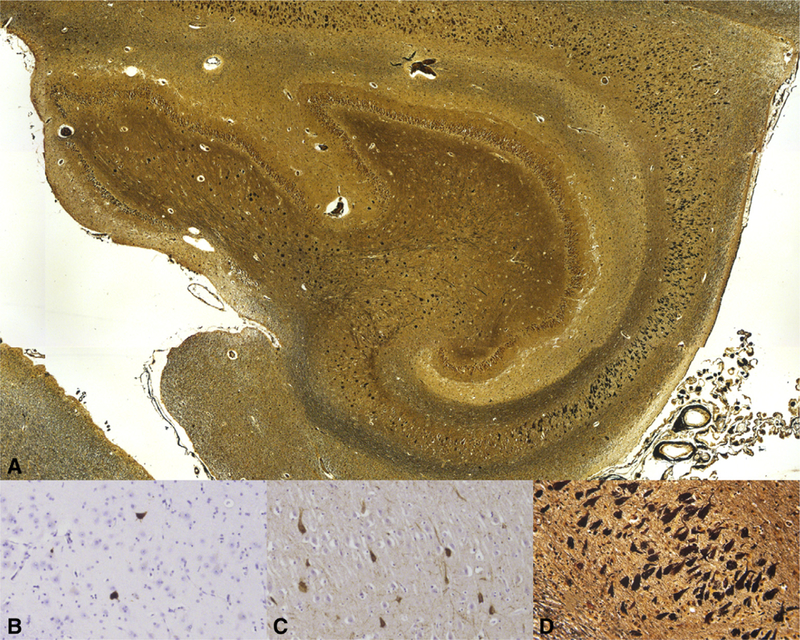
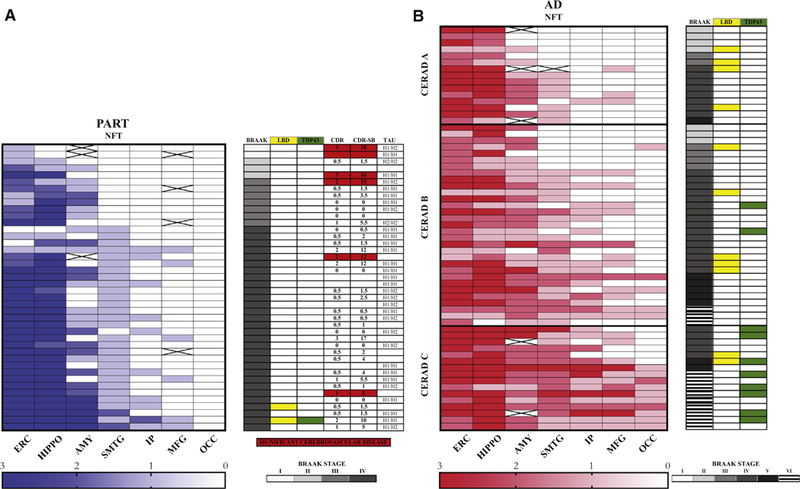
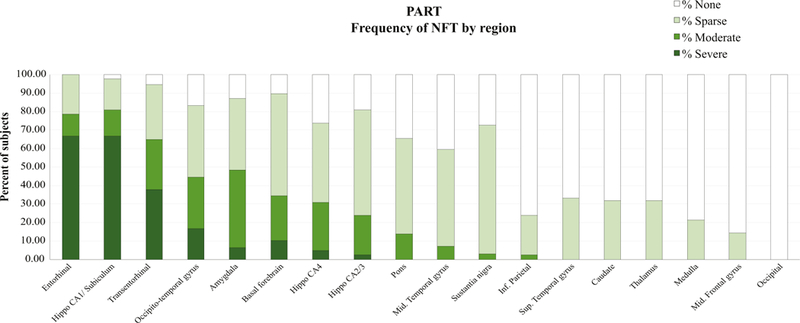
Primary age-related tauopathy (PART) is a recently described entity that can cause cognitive impairment in the absence of Alzheimer's disease (AD). Here, we compared neuropathological features, tau haplotypes, apolipoprotein E (APOE) genotypes, and cognitive profiles in age-matched subjects with PART and AD pathology.
Brain autopsies (n = 183) were conducted on participants 85 years and older from the Baltimore Longitudinal Study of Aging and Johns Hopkins Alzheimer's Disease Research Center. Participants, normal at enrollment, were followed with periodic cognitive evaluations until death.
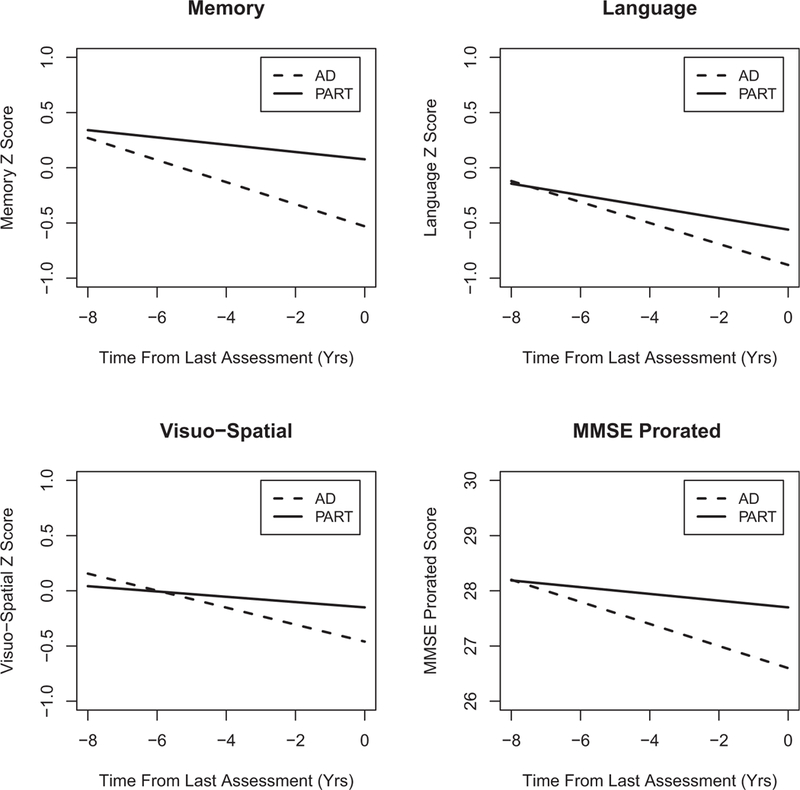
Compared with AD, PART subjects showed significantly slower rates of decline on measures of memory, language, and visuospatial performance. They also showed lower APOE ε4 allele frequency (4.1% vs. 17.6%, P = .0046).
Our observations suggest that PART is separate from AD and its distinction will be important for the clinical management of patients with cognitive impairment and for public health care planning.
原发性年龄相关性 tau 病(PART)是一种最近被描述的疾病实体,它可以在没有阿尔茨海默病(AD)的情况下导致认知障碍。在这里,我们比较了年龄匹配的 PART 患者和 AD 患者的神经病理学特征、tau 单倍型、载脂蛋白 E(APOE)基因型和认知特征。
对巴尔的摩纵向老龄化研究和约翰霍普金斯阿尔茨海默病研究中心的 85 岁及以上参与者进行了脑尸检(n=183)。参与者在入组时正常,在死亡前定期进行认知评估。
与 AD 相比,PART 患者在记忆、语言和视空间表现方面的下降速度明显较慢。他们的 APOE ε4 等位基因频率也较低(4.1% vs. 17.6%,P=.0046)。
我们的观察结果表明,PART 与 AD 不同,其区别对于认知障碍患者的临床管理和公共卫生保健规划将非常重要。