Department of Biochemistry and Molecular Biology, University of Nebraska Medical Center, Omaha, NE, 68198-5870, USA.
Fred and Pamela Buffett Cancer Center, University of Nebraska Medical Center, Omaha, NE, 68198, USA.
BMC Cancer. 2018 Nov 22;18(1):1157. doi: 10.1186/s12885-018-5074-2.
Glycosylation plays a critical role in the aggressiveness of pancreatic cancer (PC). Emerging evidences indicate significant involvement of cancer stem cells (CSCs) in PC aggressiveness. However, the importance of glycosylation in pancreatic cancer stem cells (PCSCs) is yet to be addressed. Hence, we evaluated the potential role of glycosylation in maintenance of stemness of PCSCs.
Effect of glycosylation specific inhibitors on growth and PCSCs of PC cells was assessed by MTT assay and Side Population (SP) analysis. Isolated PCSCs/SP were characterized using molecular and functional assays. Expression of tumor-associated carbohydrate antigens (TACAs) was analyzed in PCSCs by western blotting. Effect of tunicamycin on PCSCs was analyzed by tumorsphere, clonogenicity, migration assay and immunoblotting for CSCs markers. The differential expression of glycogenes in PCSCs compared to non-CSCs were determined by RT-qPCR, immunoblotting and immunofluorescence. Co-expression of GALNT3 and B3GNT3 with CD44v6 was assessed in progression stages of Kras; Pdx-1-Cre (KC) and Kras; p53; Pdx-1-Cre (KPC) tumors by immunofluorescence. Transient and CRISPR/Cas9 silencing of GALNT3 and B3GNT3 was performed to examine their effect on CSCs maintenance.
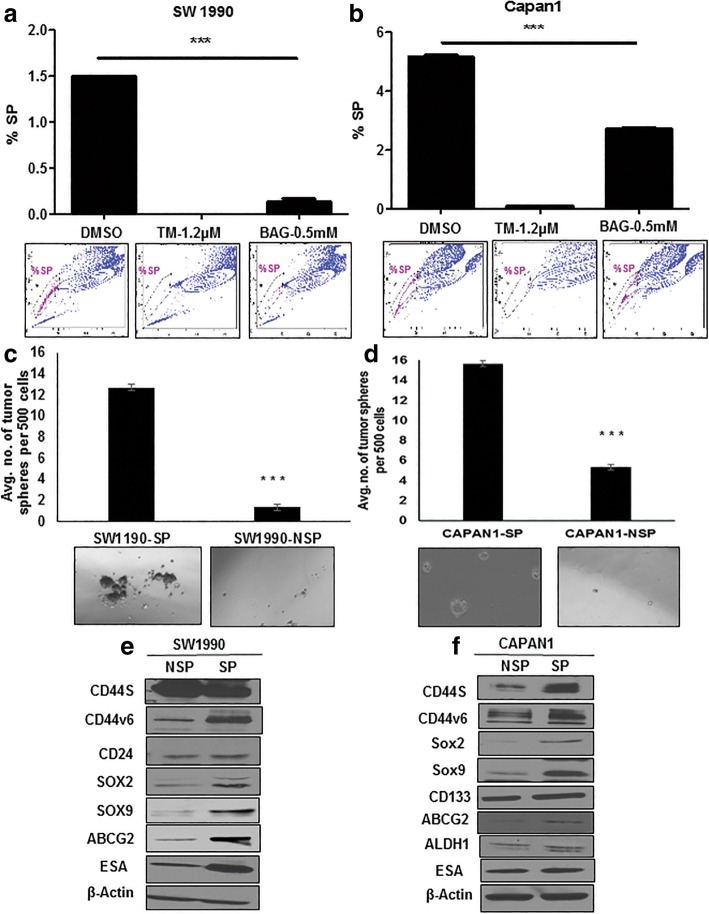
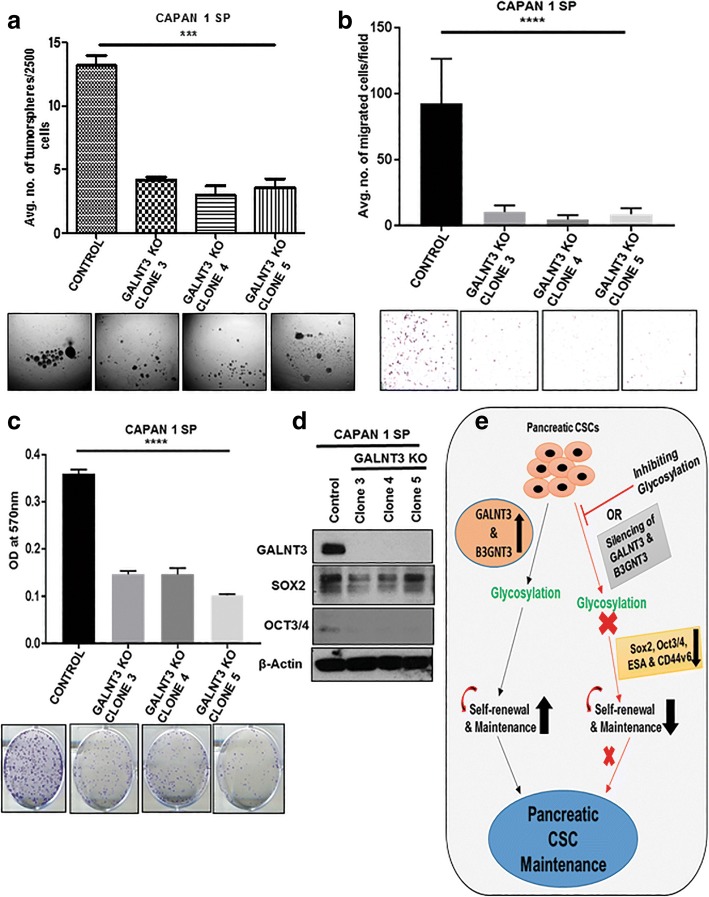
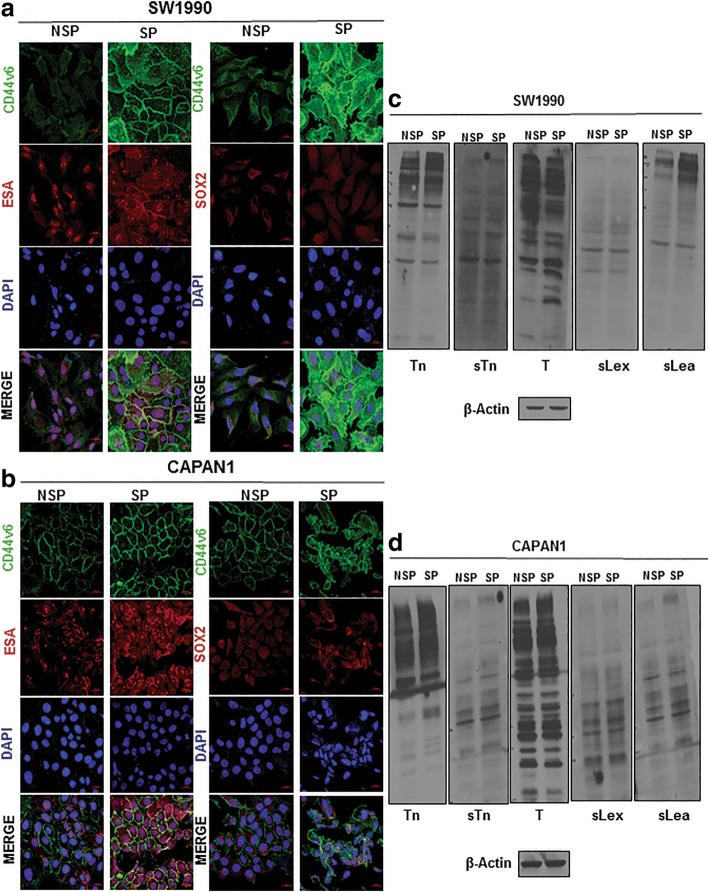
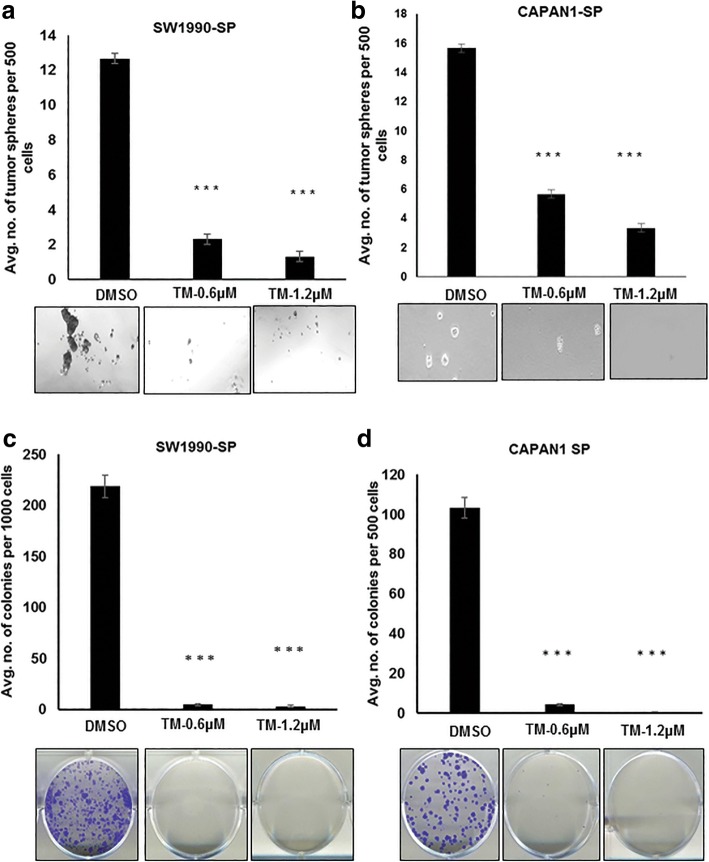
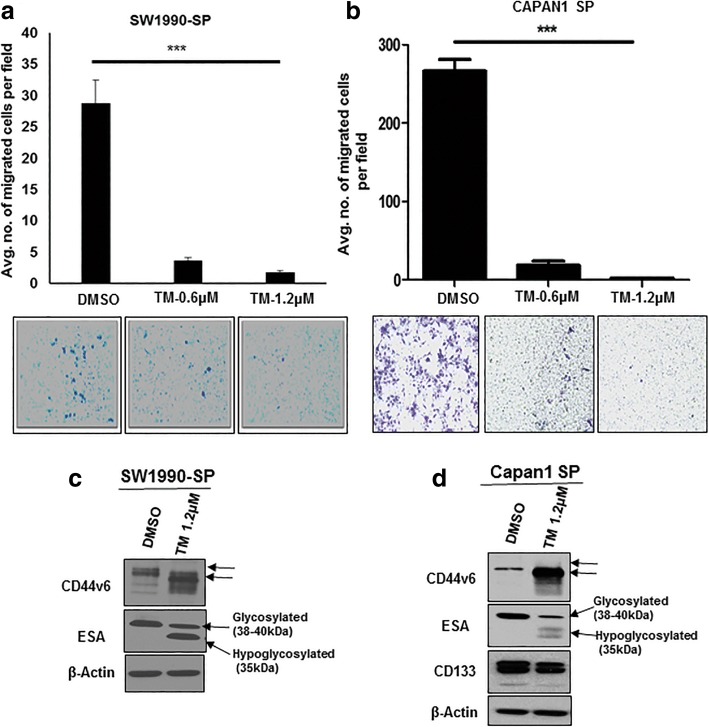
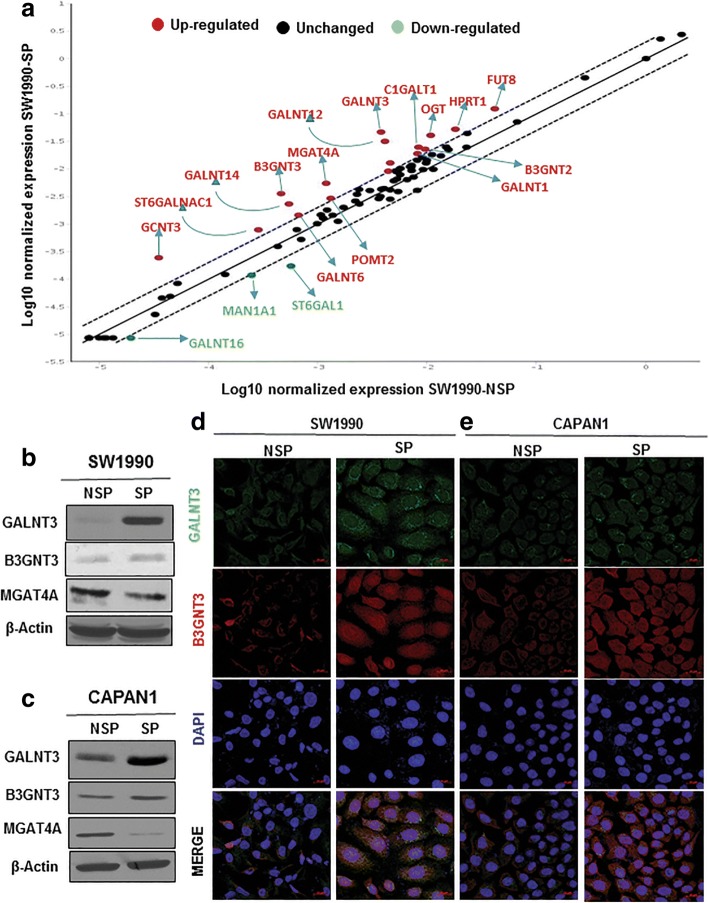
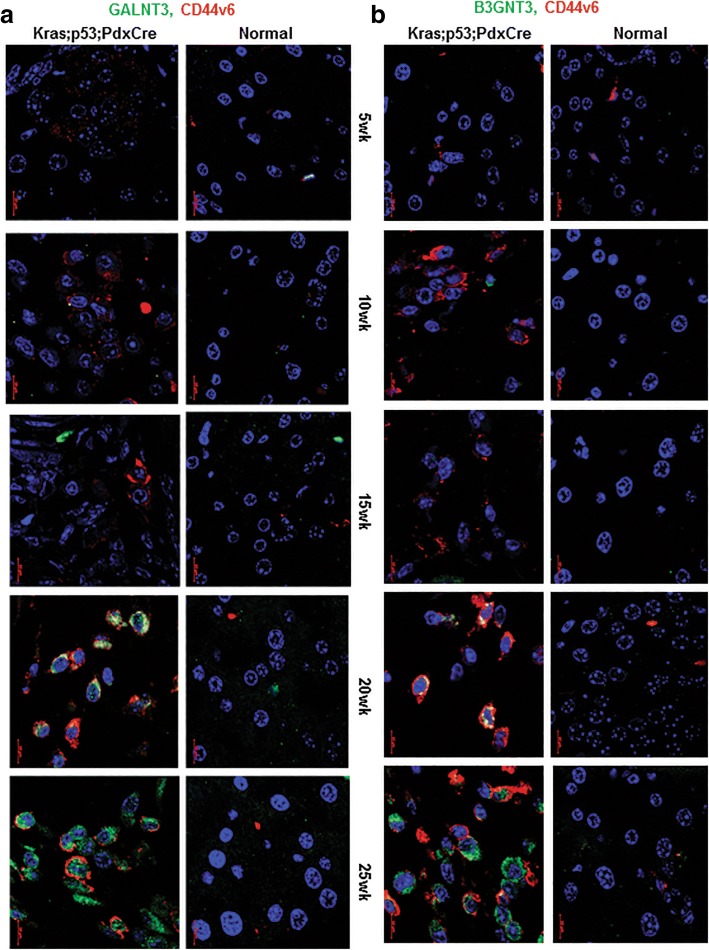
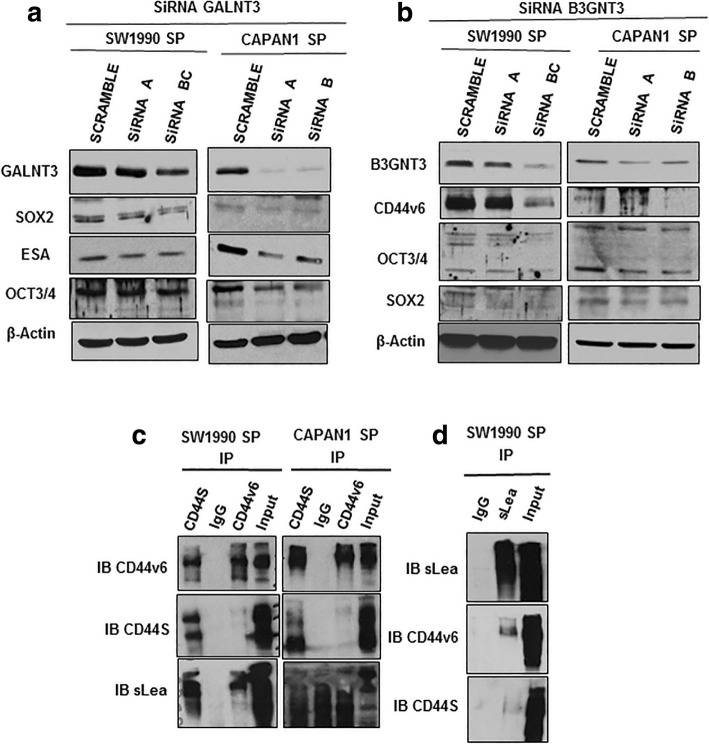
Inhibition of glycosylation decreased growth and CSCs/SP in PC cells. PCSCs overexpressed CSC markers (CD44v6, ESA, SOX2, SOX9 and ABCG2), exhibited global expressional variation of TACAs and showed higher self-renewal potential. Specifically, N-glycosylation inhibition, significantly decreased tumorsphere formation, migration, and clonogenicity of PCSCs, as well as hypo-glycosylated CD44v6 and ESA. Of note, glycosyltransferases (GFs), GALNT3 and B3GNT3, were significantly overexpressed in PCSCs and co-expressed with CD44v6 at advanced PDAC stages in KC and KPC tumors. Further, GALNT3 and B3GNT3 knockdown led to a decrease in the expression of cell surface markers (CD44v6 and ESA) and self-renewal markers (SOX2 and OCT3/4) in PCSCs. Interestingly, CD44v6 was modified with sialyl Lewis a in PCSCs. Finally, CRISPR/Cas9-mediated GALNT3 KO significantly decreased self-renewal, clonogenicity, and migratory capacity in PCSCs.
Taken together, for the first time, our study showed the importance of glycosylation in mediating growth, stemness, and maintenance of PCSCs. These results indicate that elevated GALNT3 and B3GNT3 expression in PCSCs regulate stemness through modulating CSC markers.
糖基化在胰腺癌(PC)的侵袭性中起着关键作用。新出现的证据表明,癌症干细胞(CSCs)在 PC 的侵袭性中具有重要作用。然而,糖基化在胰腺癌细胞(PCSCs)中的重要性尚未得到解决。因此,我们评估了糖基化在维持 PCSCs 干性中的潜在作用。
通过 MTT 分析和侧群(SP)分析评估糖苷酶特异性抑制剂对 PC 细胞生长和 PCSCs 的影响。使用分子和功能测定分离 PCSCs/SP。通过 Western blot 分析 PCSCs 中肿瘤相关碳水化合物抗原(TACAs)的表达。通过肿瘤球形成、集落形成、迁移测定和 CSCs 标志物免疫印迹分析衣霉素对 PCSCs 的影响。通过 RT-qPCR、免疫印迹和免疫荧光分析比较 PCSCs 与非 CSCs 中糖基因的差异表达。通过免疫荧光分析在 Kras;p53;Pdx-1-Cre(KPC)肿瘤的进展阶段评估 GALNT3 和 B3GNT3 与 CD44v6 的共表达。通过瞬时和 CRISPR/Cas9 沉默 GALNT3 和 B3GNT3,检查它们对 CSCs 维持的影响。
糖基化抑制降低了 PC 细胞的生长和 CSCs/SP。PCSCs 过度表达 CSC 标志物(CD44v6、ESA、SOX2、SOX9 和 ABCG2),表现出 TACAs 的全局表达变化,并具有更高的自我更新能力。具体而言,N-糖基化抑制显著降低 PCSCs 的肿瘤球形成、迁移和集落形成能力,以及低糖基化的 CD44v6 和 ESA。值得注意的是,糖苷转移酶(GFs)GALNT3 和 B3GNT3 在 PCSCs 中明显过表达,并在 KC 和 KPC 肿瘤的 PDAC 晚期与 CD44v6 共表达。此外,GALNT3 和 B3GNT3 的敲低导致 PCSCs 中细胞表面标志物(CD44v6 和 ESA)和自我更新标志物(SOX2 和 OCT3/4)的表达减少。有趣的是,PCSCs 中的 CD44v6 被唾液酸化 Lewis a 修饰。最后,CRISPR/Cas9 介导的 GALNT3 KO 显著降低了 PCSCs 的自我更新、集落形成和迁移能力。
总之,本研究首次表明糖基化在介导 PCSCs 的生长、干性和维持中起着重要作用。这些结果表明,PCSCs 中升高的 GALNT3 和 B3GNT3 表达通过调节 CSC 标志物来调节干性。