Division of Critical Care Medicine, Department of Medicine, Faculty of Medicine Ramathibodi Hospital, Mahidol University, Bangkok, Thailand.
Division of Pulmonary and Pulmonary Critical Care Medicine, Department of Medicine, Faculty of Medicine Ramathibodi Hospital, Mahidol University, Bangkok, 270 Rama 6 Road, Thung Phaya Thai, Ratchathewi, Bangkok, 10400, Thailand.
BMC Pulm Med. 2018 Nov 23;18(1):175. doi: 10.1186/s12890-018-0739-9.
Diaphragmatic dysfunction remains the main cause of weaning difficulty or failure. Ultrasonographic measurement of diaphragmatic function can be used to predict the outcomes of weaning from mechanical ventilation. Our primary objective was to investigate the performance of various sonographic parameters of diaphragmatic function for predicting the success of weaning from mechanical ventilation.
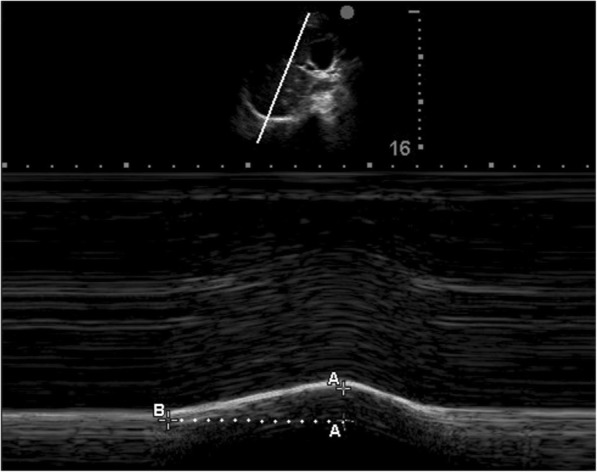
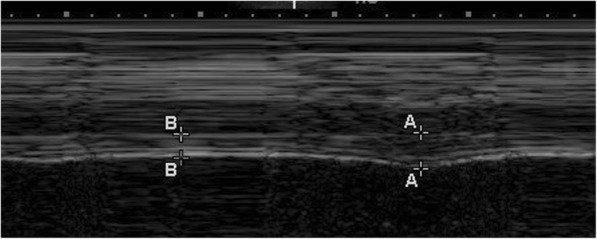
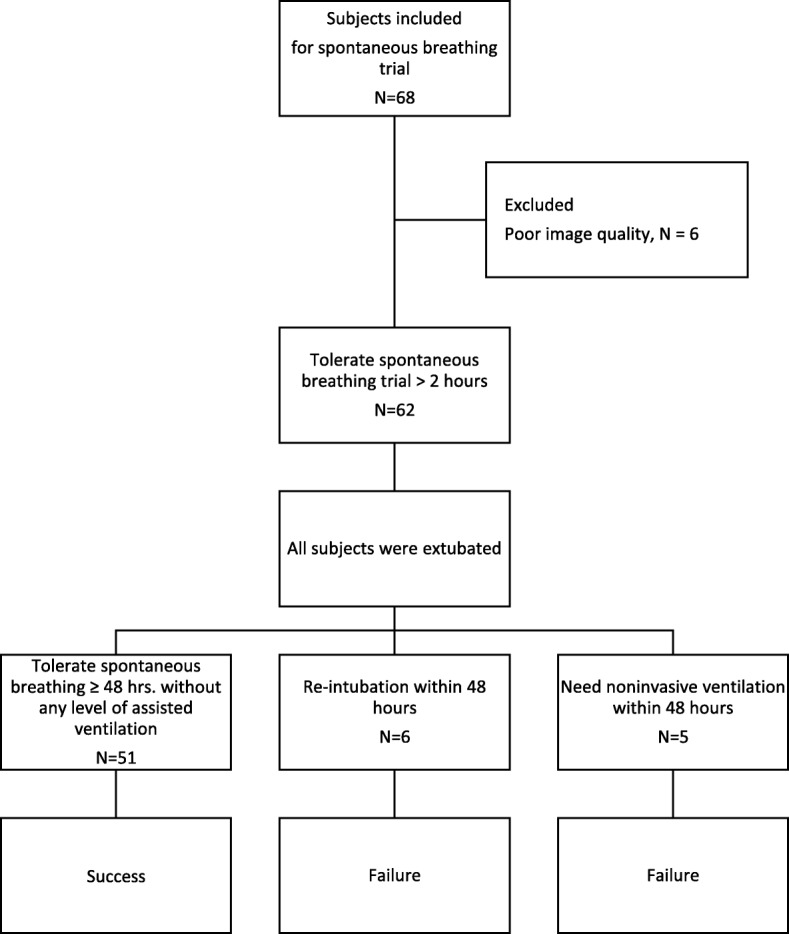
We prospectively enrolled 68 adult patients requiring mechanical ventilation who were admitted to the intensive care unit from June 2013 to November 2013. The diaphragmatic inspiratory excursion, time to peak inspiratory amplitude of the diaphragm (TPIA), diaphragmatic thickness (DT), DT difference (DTD), and diaphragm thickening fraction (TFdi) were determined by bedside ultrasonography performed at the end of a spontaneous breathing trial. A receiver operating characteristic curve was used for analysis.
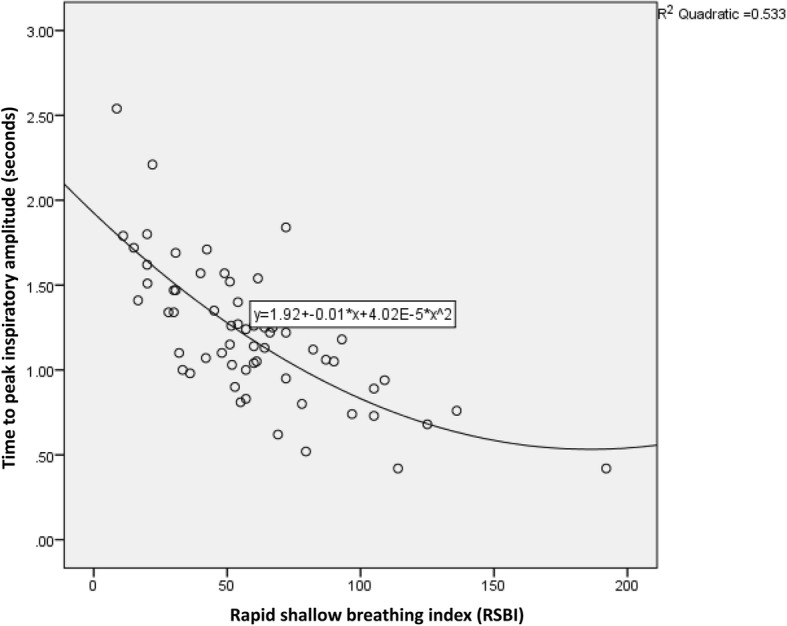
In total, 62 patients were analyzed. The mean TPIA was significantly higher in the weaning success group (right, 1.27 ± 0.38 s; left, 1.14 ± 0.37 s) than in the weaning failure group (right, 0.97 ± 0.43 s; left, 0.85 ± 0.39 s) (P < 0.05). The sensitivity, specificity, positive predictive value, and negative predictive value of a TPIA of > 0.8 s in predicting weaning success were 92, 46, 89, and 56%, respectively. The diaphragmatic inspiratory excursion, DTD, and TFdi were associated with reintubation within 48 h. The P values were 0.047, 0.021, and 0.028, and the areas under the receiver operating characteristic curve were 0.716, 0.805, and 0.784, respectively.
Among diaphragmatic parameters, TPIA exhibits good performance in predicting the success of weaning from mechanical ventilation. This study demonstrated a trend toward successful use of TPIA rather than diaphragmatic inspiratory excursion as a predictor of weaning from mechanical ventilation.
膈肌功能障碍仍然是导致撤机困难或失败的主要原因。超声测量膈肌功能可用于预测机械通气撤机的结果。我们的主要目的是研究各种膈肌功能超声参数预测机械通气撤机成功的性能。
我们前瞻性纳入了 2013 年 6 月至 2013 年 11 月期间入住重症监护病房需要机械通气的 68 例成年患者。在自主呼吸试验结束时,通过床旁超声测量膈肌吸气运动幅度、膈肌吸气峰时间(TPIA)、膈肌厚度(DT)、膈肌厚度差(DTD)和膈肌增厚分数(TFdi)。采用受试者工作特征曲线进行分析。
共分析了 62 例患者。撤机成功组的 TPIA 明显高于撤机失败组(右侧,1.27±0.38s;左侧,1.14±0.37s)(P<0.05)。TPIA>0.8s 预测撤机成功的灵敏度、特异度、阳性预测值和阴性预测值分别为 92%、46%、89%和 56%。膈肌吸气运动幅度、DTD 和 TFdi 与 48h 内再次插管有关。P 值分别为 0.047、0.021 和 0.028,受试者工作特征曲线下面积分别为 0.716、0.805 和 0.784。
在膈肌参数中,TPIA 对预测机械通气撤机成功具有良好的性能。本研究表明,TPIA 比膈肌吸气运动幅度更适合作为机械通气撤机的预测指标。