Department of Molecular Biology, Princeton University, Lewis Thomas Laboratory, Washington Road, Princeton, NJ, 08544, USA.
Nat Commun. 2018 Nov 23;9(1):4967. doi: 10.1038/s41467-018-07179-w.
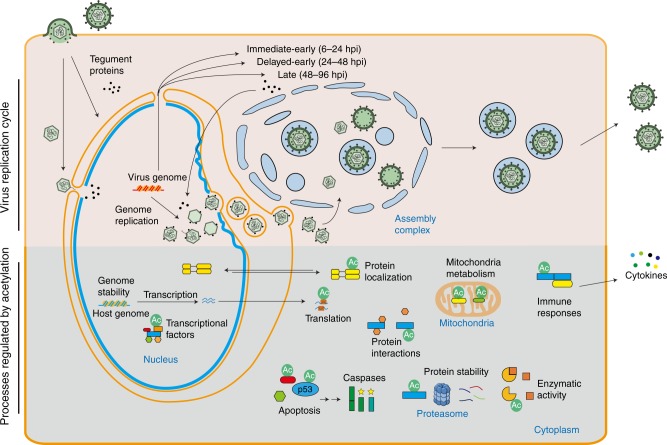
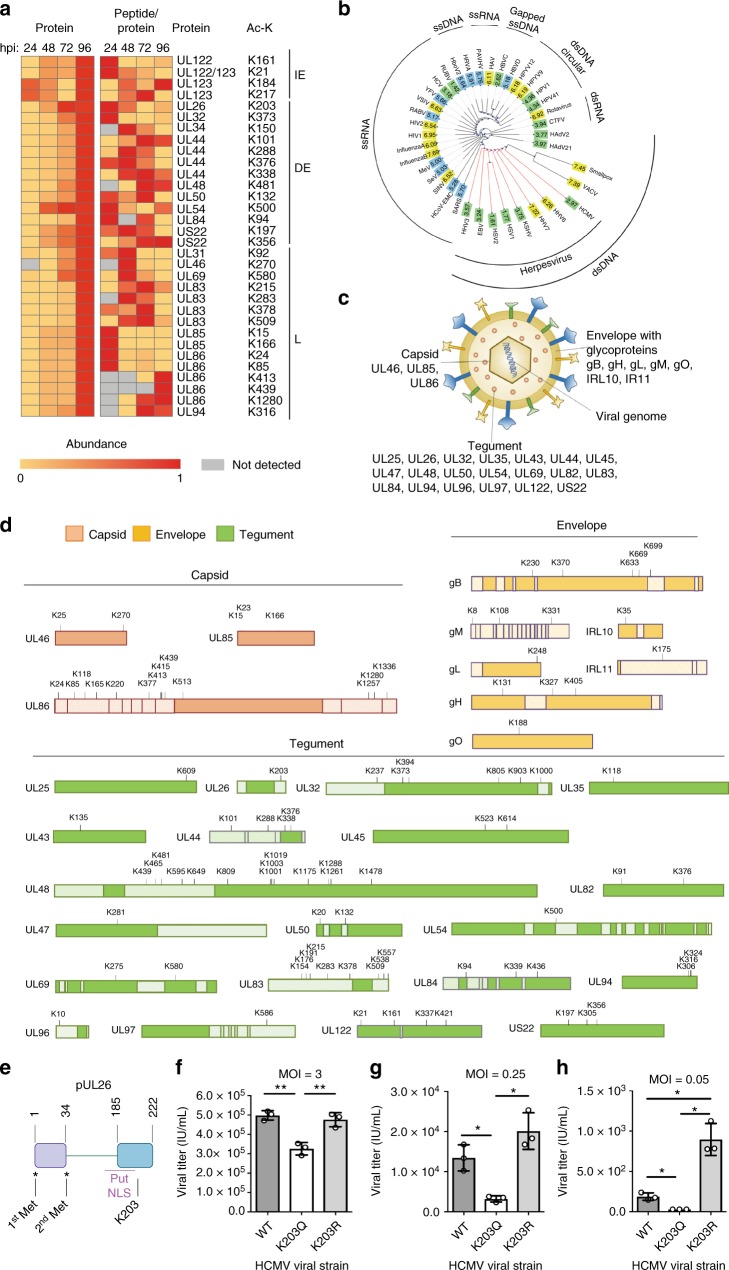
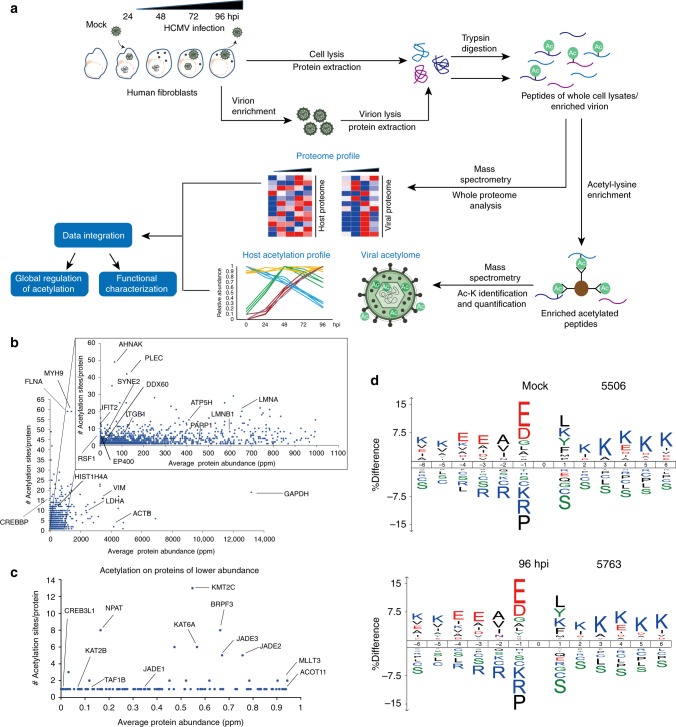
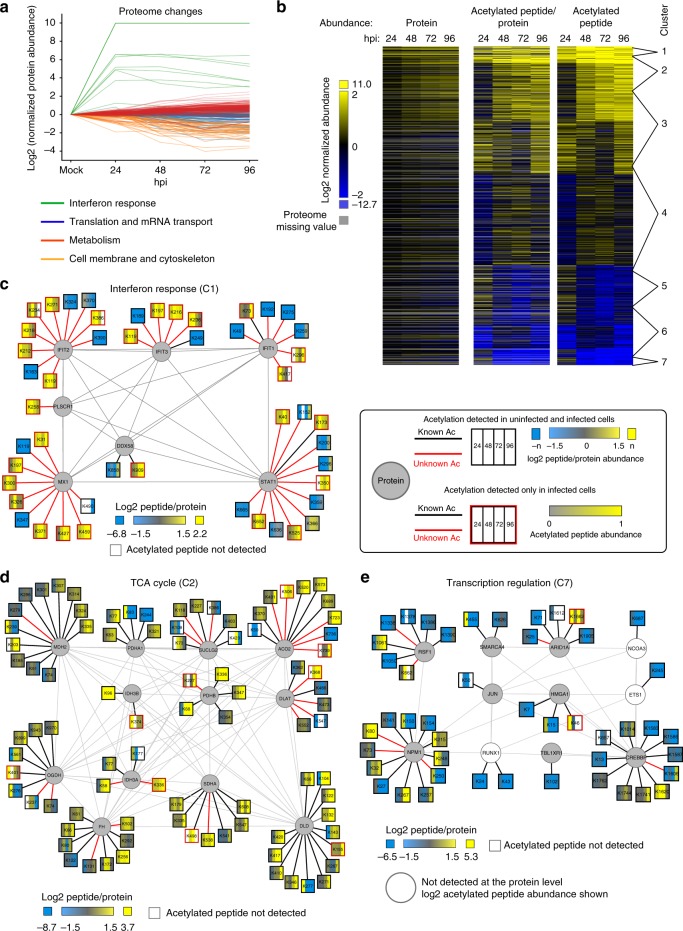
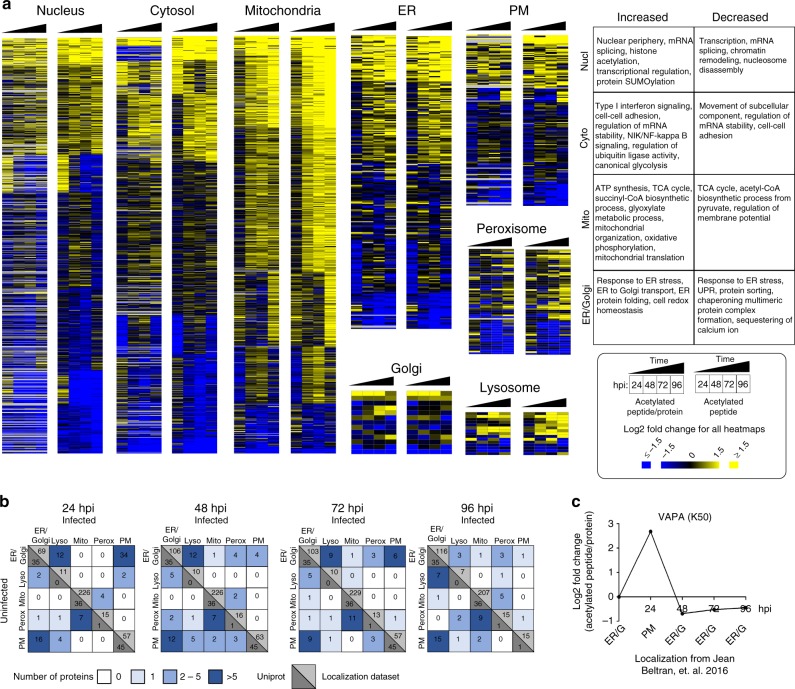
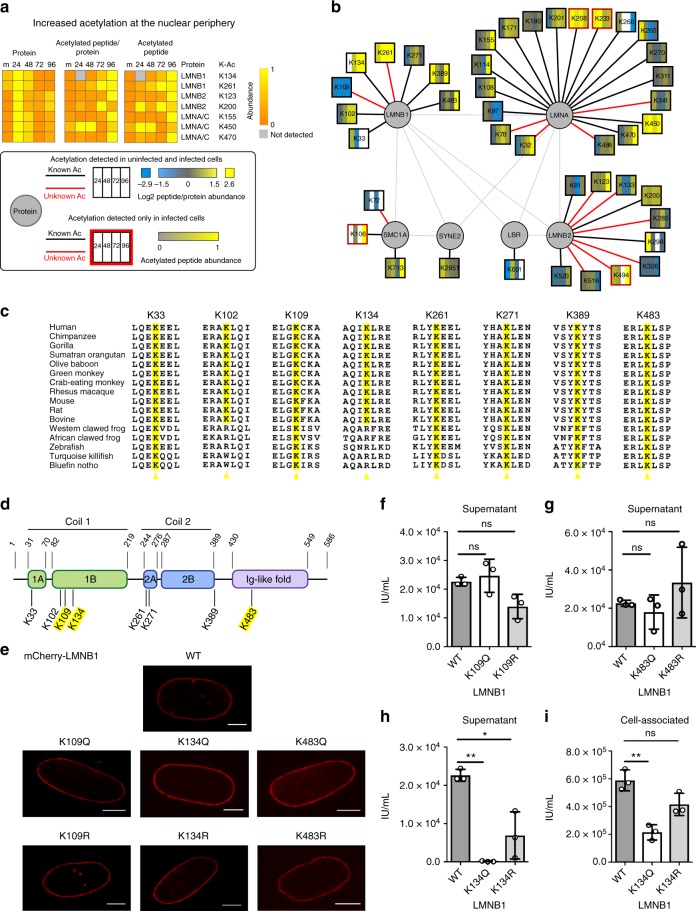
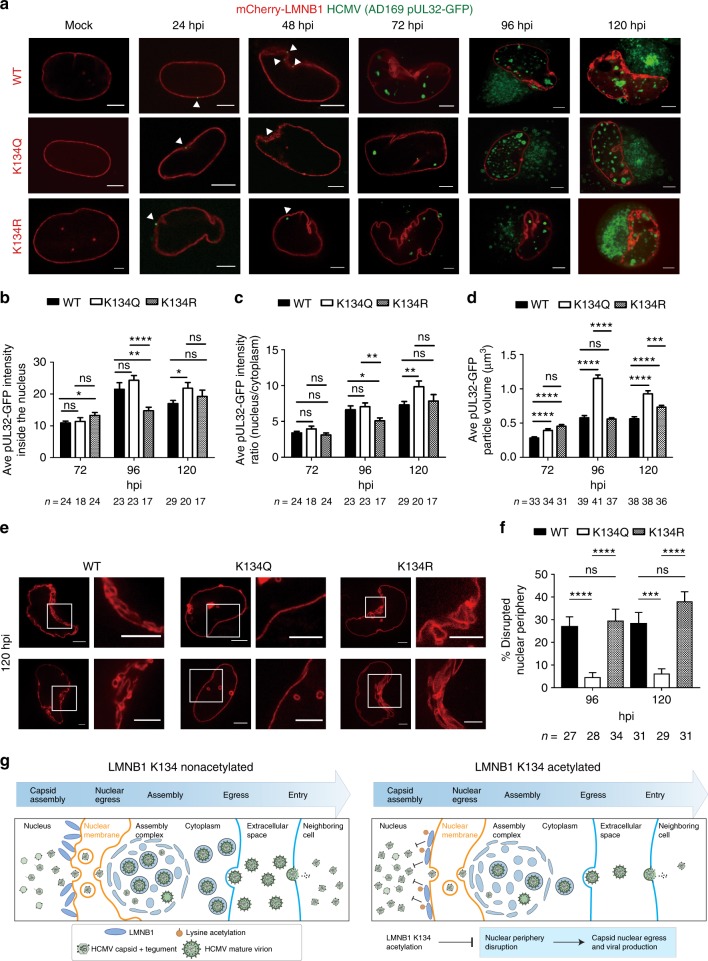
Emerging evidence highlights protein acetylation, a prevalent lysine posttranslational modification, as a regulatory mechanism and promising therapeutic target in human viral infections. However, how infections dynamically alter global cellular acetylation or whether viral proteins are acetylated remains virtually unexplored. Here, we establish acetylation as a highly-regulated molecular toggle of protein function integral to the herpesvirus human cytomegalovirus (HCMV) replication. We offer temporal resolution of cellular and viral acetylations. By interrogating dynamic protein acetylation with both protein abundance and subcellular localization, we discover finely tuned spatial acetylations across infection time. We determine that lamin acetylation at the nuclear periphery protects against virus production by inhibiting capsid nuclear egress. Further studies within infectious viral particles identify numerous acetylations, including on the viral transcriptional activator pUL26, which we show represses virus production. Altogether, this study provides specific insights into functions of cellular and viral protein acetylations and a valuable resource of dynamic acetylation events.
新兴证据强调了蛋白质乙酰化作用,这是一种普遍的赖氨酸翻译后修饰,作为一种调节机制和有前途的人类病毒感染治疗靶点。然而,感染如何动态改变全局细胞乙酰化,或者病毒蛋白是否被乙酰化,实际上仍未得到探索。在这里,我们确立了乙酰化作用是人类巨细胞病毒(HCMV)复制过程中蛋白质功能的高度调节分子开关。我们提供了细胞和病毒乙酰化作用的时间分辨率。通过同时检测蛋白质丰度和亚细胞定位的动态蛋白乙酰化,我们在感染过程中发现了精细的空间乙酰化作用。我们确定核周层粘连蛋白的乙酰化作用可以通过抑制衣壳核输出来防止病毒产生。在感染性病毒颗粒内的进一步研究确定了许多乙酰化作用,包括在病毒转录激活剂 pUL26 上,我们发现它抑制病毒产生。总的来说,这项研究提供了对细胞和病毒蛋白乙酰化作用功能的具体见解,以及动态乙酰化作用事件的宝贵资源。