Brocklehurst Robert J, Schachner Emma R, Sellers William I
School of Earth and Environmental Sciences, University of Manchester, Manchester, UK.
Department of Cell Biology and Anatomy, School of Medicine, Louisiana State University Health Sciences Center, New Orleans, LA 70112, USA.
R Soc Open Sci. 2018 Oct 24;5(10):180983. doi: 10.1098/rsos.180983. eCollection 2018 Oct.
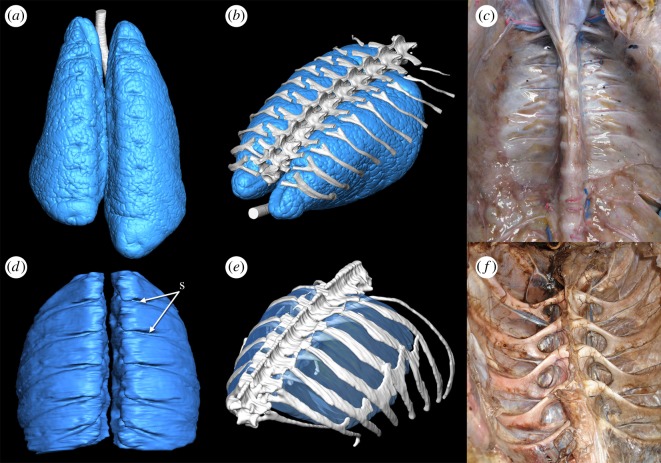
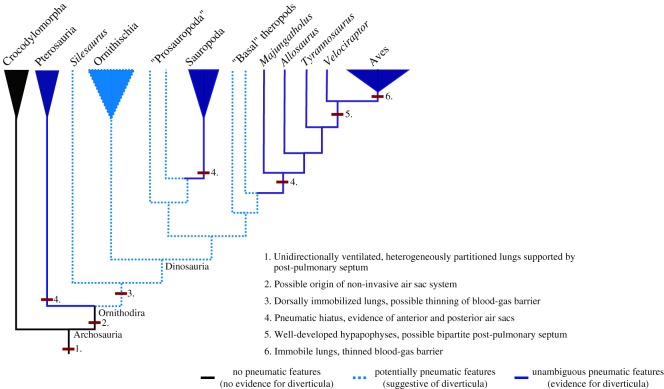
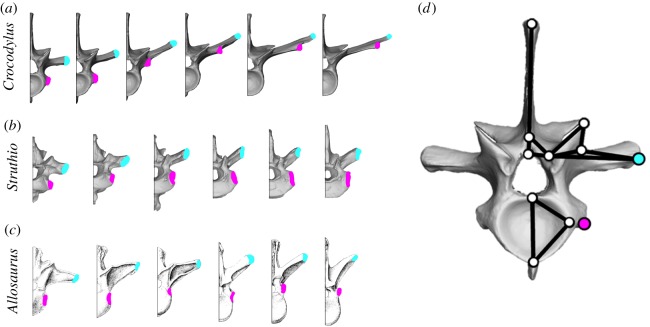
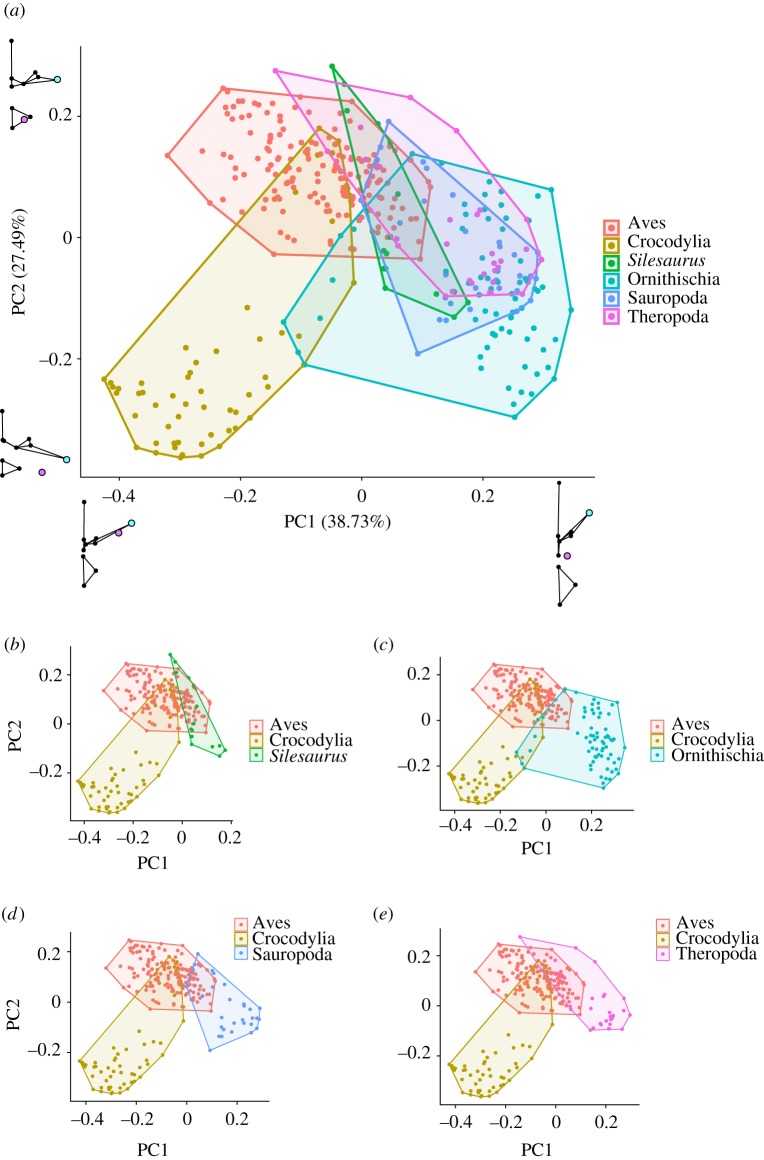
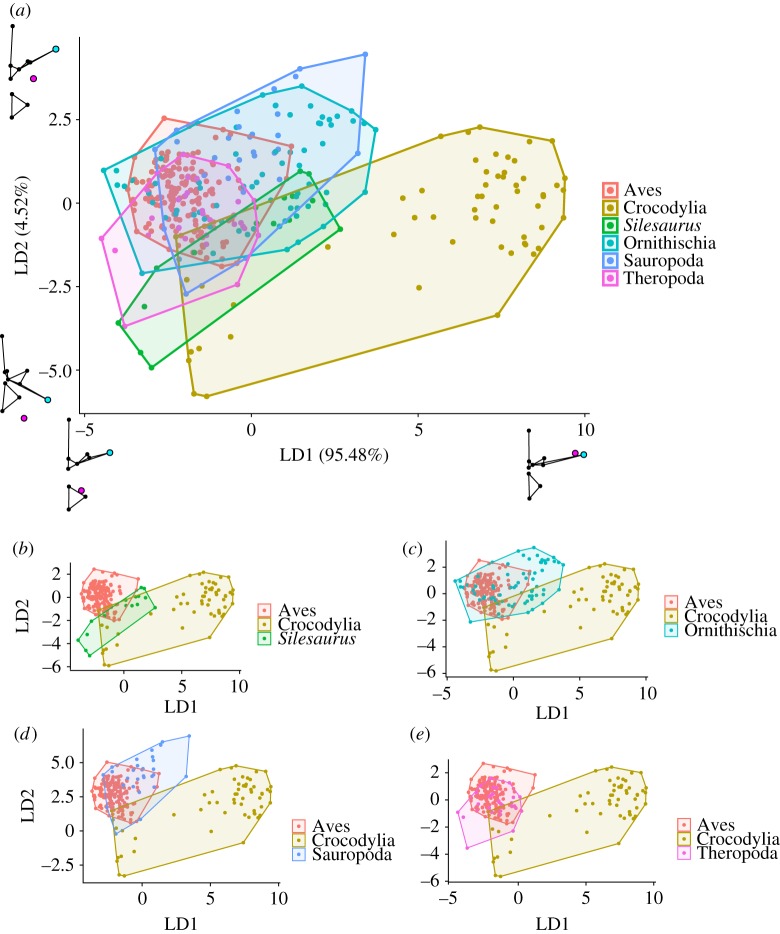
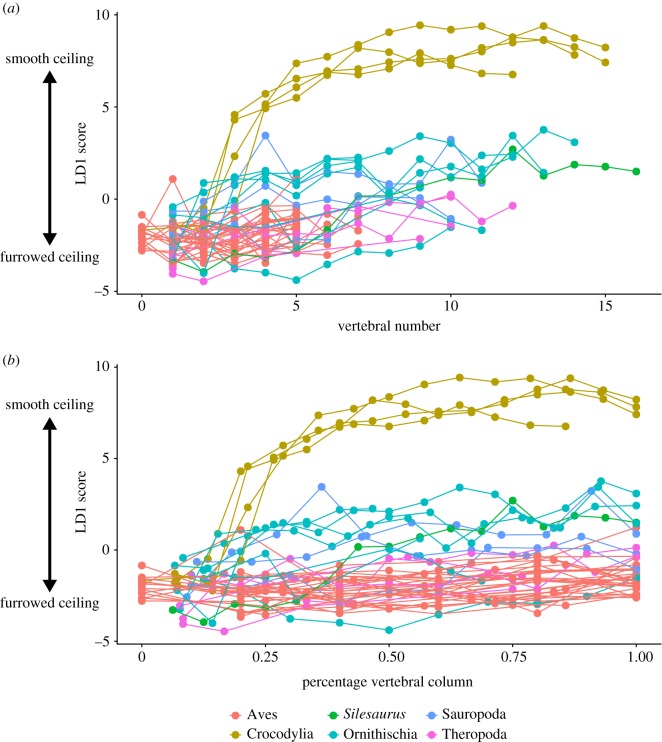
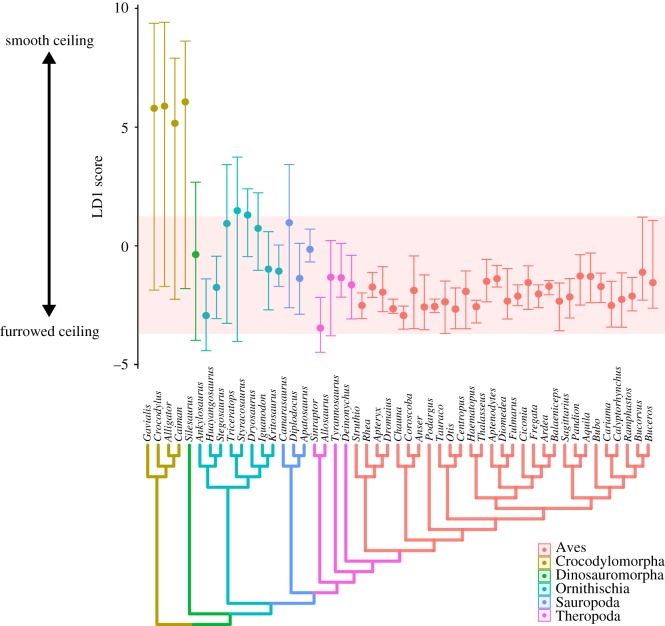
The lung-air sac system of modern birds is unique among vertebrates. However, debate surrounds whether an avian-style lung is restricted to birds or first appeared in their dinosaurian ancestors, as common osteological correlates for the respiratory system offer limited information on the lungs themselves. Here, we shed light on these issues by using axial morphology as a direct osteological correlate of lung structure, and quantifying vertebral shape using geometric morphometrics in birds, crocodilians and a wide range of dinosaurian taxa. Although fully avian lungs were a rather late innovation, we quantitatively show that non-avian dinosaurs and basal dinosauriforms possessed bird-like costovertebral joints and a furrowed thoracic ceiling. This would have immobilized the lung's dorsal surface, a structural prerequisite for a thinned blood-gas barrier and increased gas exchange potential. This could have permitted high levels of aerobic and metabolic activity in dinosaurs, even in the hypoxic conditions of the Mesozoic, contributing to their successful radiation.
现代鸟类的肺气囊系统在脊椎动物中独一无二。然而,围绕鸟类式肺是仅限于鸟类,还是最早出现在它们的恐龙祖先身上存在争议,因为呼吸系统常见的骨学关联对肺本身提供的信息有限。在这里,我们通过将轴向形态作为肺结构的直接骨学关联,并使用几何形态测量学对鸟类、鳄鱼和广泛的恐龙类群的椎骨形状进行量化,来阐明这些问题。尽管完全鸟类式的肺是相当晚才出现的创新,但我们定量表明,非鸟类恐龙和基础恐龙形类具有类似鸟类的肋椎关节和有沟的胸廓顶部。这会使肺的背表面固定不动,这是薄化血气屏障和增加气体交换潜力的结构前提。这可能使恐龙即使在中生代的低氧条件下也能进行高水平的有氧和代谢活动,从而促进它们的成功演化。