Institute of Chemical, Environmental and Bioscience Engineering, Research Area Biochemical Engineering, Technische Universität Wien, Gumpendorfer Strasse 1a, 1060, Vienna, Austria.
Christian Doppler Laboratory for Mechanistic and Physiological Methods for Improved Bioprocesses, TU Wien, Gumpendorfer Straße 1a, 1060, Vienna, Austria.
Microb Cell Fact. 2018 Nov 24;17(1):183. doi: 10.1186/s12934-018-1032-6.
The methylotrophic yeast Pichia pastoris is a common host for the production of recombinant proteins. However, hypermannosylation hinders the use of recombinant proteins from yeast in most biopharmaceutical applications. Glyco-engineered yeast strains produce more homogeneously glycosylated proteins, but can be physiologically impaired and show tendencies for cellular agglomeration, hence are hard to cultivate. Further, comprehensive data regarding growth, physiology and recombinant protein production in the controlled environment of a bioreactor are scarce.
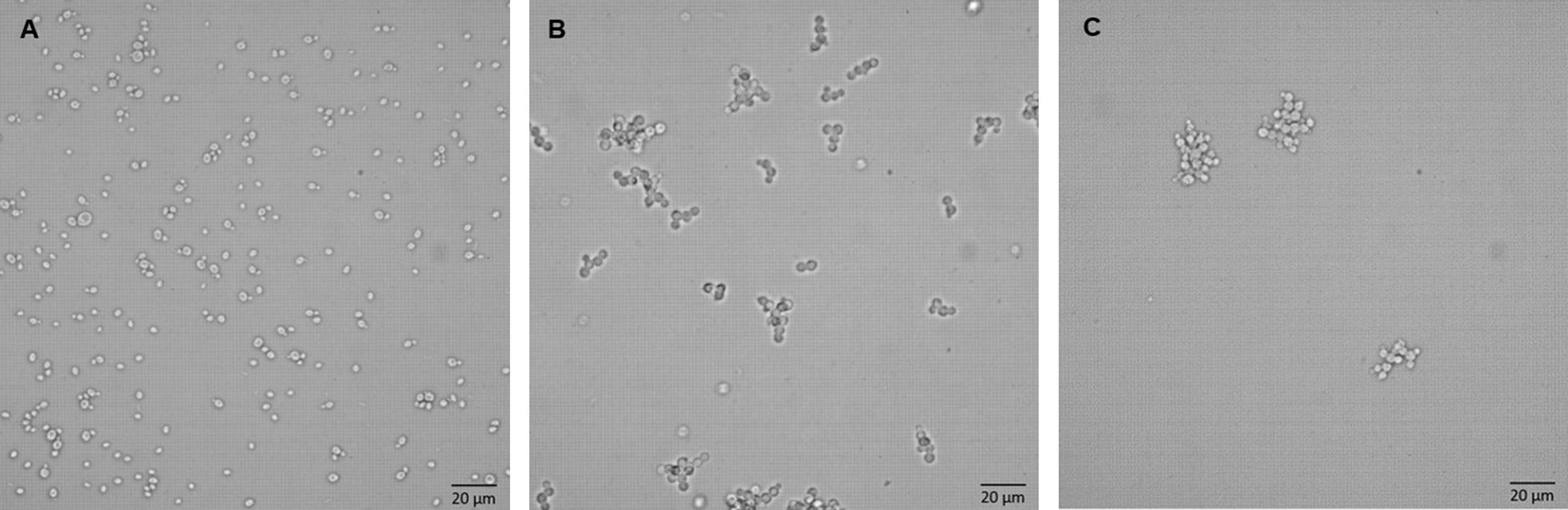
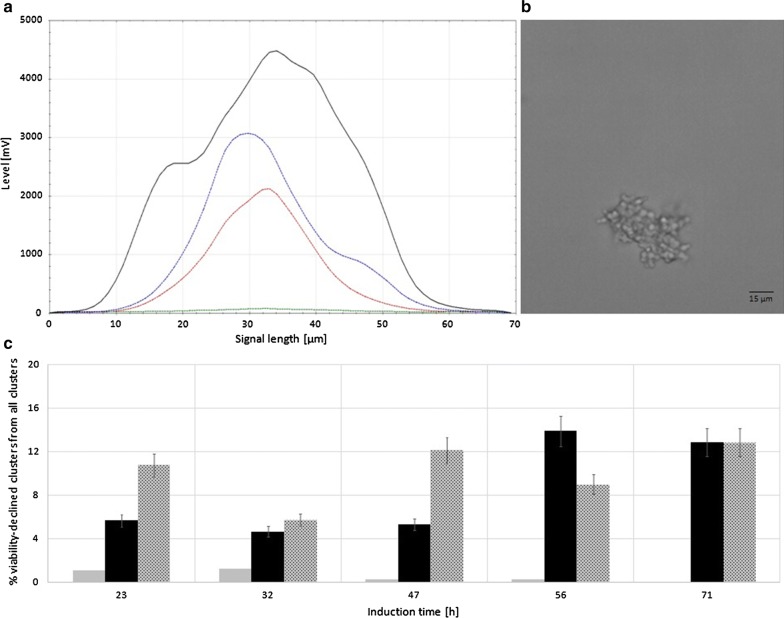
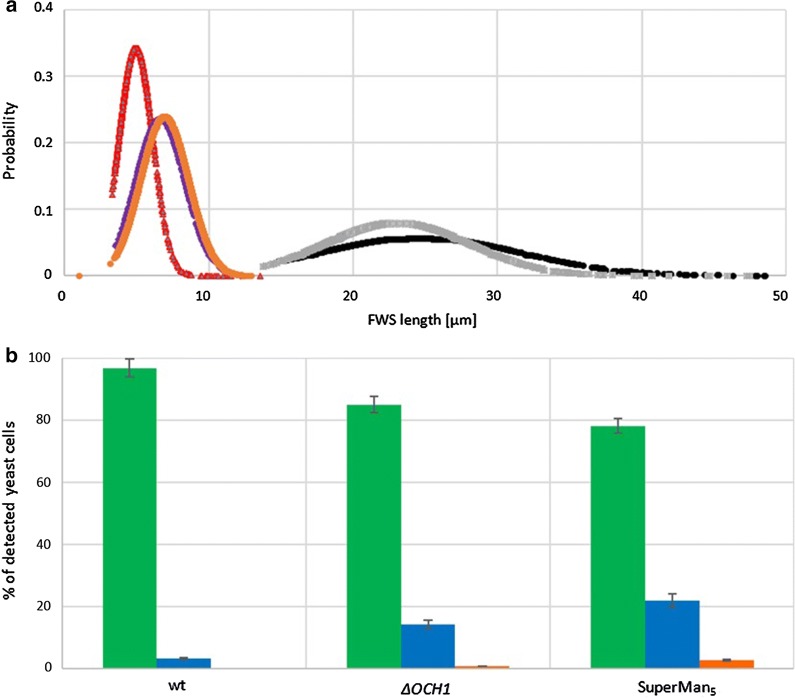
A ManGlcNAc glycosylating and a ManGlcNAc glycosylating strain showed similar morphological traits during methanol induced shake-flask cultivations to produce the recombinant model protein HRP C1A. Both glyco-engineered strains displayed larger single and budding cells than a wild type strain as well as strong cellular agglomeration. The cores of these agglomerates appeared to be less viable. Despite agglomeration, the ManGlcNAc glycosylating strain showed superior growth, physiology and HRP C1A productivity compared to the ManGlcNAc glycosylating strain in shake-flasks and in the bioreactor. Conducting dynamic methanol pulsing revealed that HRP C1A productivity of the ManGlcNAc glycosylating strain is best at a temperature of 30 °C.
This study provides the first comprehensive evaluation of growth, physiology and recombinant protein production of a ManGlcNAc glycosylating strain in the controlled environment of a bioreactor. Furthermore, it is evident that cellular agglomeration is likely triggered by a reduced glycan length of cell surface glycans, but does not necessarily lead to lower metabolic activity and recombinant protein production. ManGlcNAc glycosylated HRP C1A production is feasible, yields active protein similar to the wild type strain, but thermal stability of HRP C1A is negatively affected by reduced glycosylation.
甲醇营养型酵母毕赤酵母是生产重组蛋白的常用宿主。然而,高甘露糖基化会阻碍酵母来源的重组蛋白在大多数生物制药中的应用。糖基工程酵母菌株产生的蛋白质具有更均一的糖基化,但可能在生理上受到损害,并表现出细胞聚集的趋势,因此难以培养。此外,关于在生物反应器的受控环境中生长、生理和重组蛋白生产的综合数据还很缺乏。
在甲醇诱导的摇瓶培养中生产重组模型蛋白 HRP C1A 时,甘露糖基化和甘露糖基化菌株表现出相似的形态特征。与野生型菌株相比,这两种糖基工程菌株的单细胞和出芽细胞都更大,且细胞聚集程度更强。这些聚集物的核心似乎活力较低。尽管发生了聚集,但甘露糖基化菌株在摇瓶和生物反应器中均表现出优于甘露糖基化菌株的生长、生理和 HRP C1A 生产能力。进行动态甲醇脉冲实验发现,甘露糖基化菌株的 HRP C1A 生产能力在 30°C 时最佳。
本研究首次全面评估了甘露糖基化菌株在生物反应器受控环境中的生长、生理和重组蛋白生产情况。此外,细胞聚集很可能是由于细胞表面糖链的糖基长度缩短而引发的,但不一定会导致代谢活性和重组蛋白生产能力降低。甘露糖基化 HRP C1A 的生产是可行的,产生的蛋白质与野生型菌株相似,但 HRP C1A 的热稳定性会因糖基化减少而受到负面影响。