Trauma Research Center, First Hospital Affiliated to the Chinese PLA General Hospital, Fucheng Road 51, Haidian District, Beijing, 100048, China.
Department of Critical Care Medicine, The Second People's Hospital of Shenzhen, Shenzhen, 518035, China.
Mil Med Res. 2018 Nov 26;5(1):41. doi: 10.1186/s40779-018-0187-0.
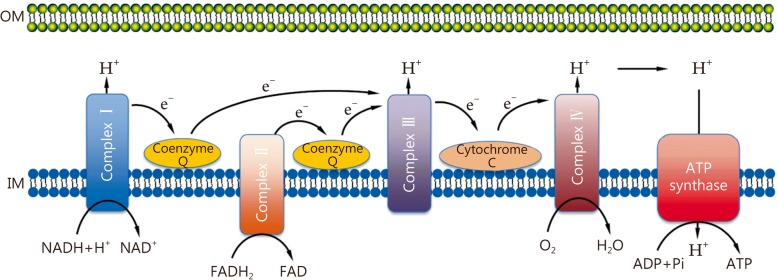
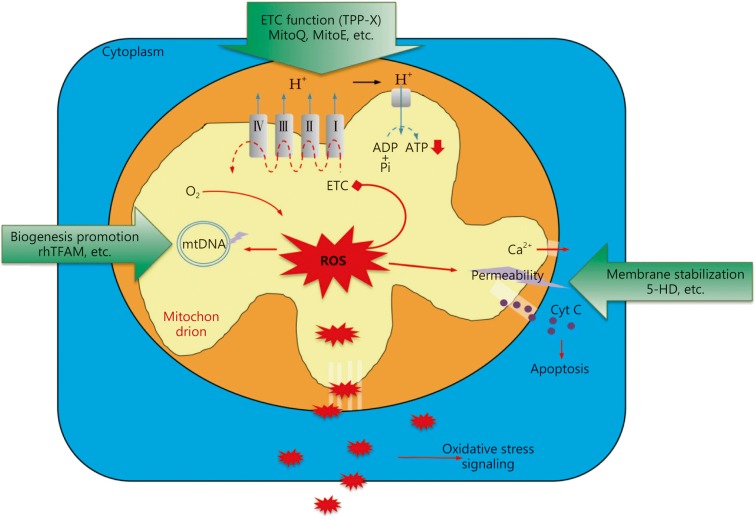
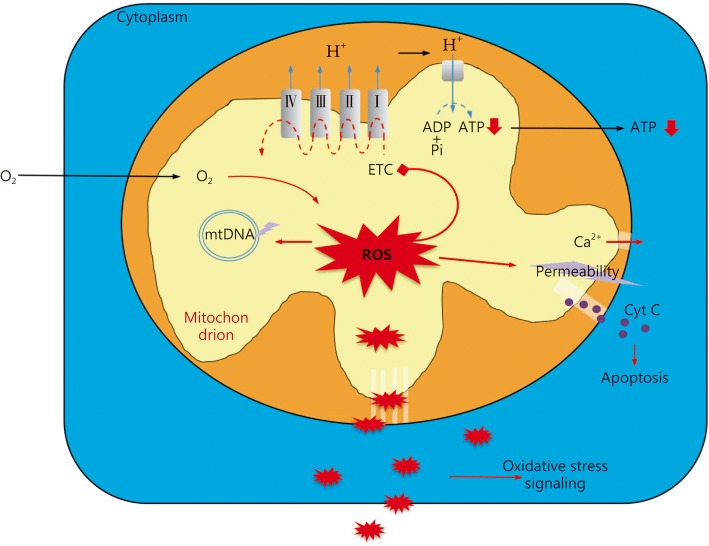
Recently, the definition of sepsis was concluded to be a life-threatening organ dysfunction caused by a dysregulated host response to infection. Severe patients always present with uncorrectable hypotension or hyperlactacidemia, which is defined as septic shock. The new definition emphasizes dysregulation of the host response and multiple organ dysfunction, which is partially attributed to metabolic disorders induced by energy crisis and oxidative stress. Mitochondria are a cellular organelle that are well known as the center of energy production, and mitochondrial damage or dysfunction is commonly induced in septic settings and is a predominant factor leading to a worse prognosis. In the present review, we determine the major mitochondrial disorders from morphology to functions in sepsis. In the following, several clinical or pre-clinical assays for monitoring mitochondrial function are demonstrated according to accumulated evidence, which is the first step of specific therapy targeting to modulate mitochondrial function. Accordingly, various reagents used for regulating mitochondrial enzyme activities and promoting biogenesis have been documented, among which mitochondria-targeted cation, TPP-conjugated antioxidants are the most valuable for future trials and clinical treatment to improve mitochondrial function as they may take advantage of the prognosis associated with septic complications.
最近,脓毒症的定义被总结为一种危及生命的器官功能障碍,是由宿主对感染的失调反应引起的。严重的患者通常表现为无法纠正的低血压或高乳酸血症,这被定义为感染性休克。新的定义强调了宿主反应的失调和多器官功能障碍,这部分归因于能量危机和氧化应激引起的代谢紊乱。线粒体是一种细胞细胞器,被公认为能量产生的中心,在脓毒症情况下,线粒体损伤或功能障碍很常见,是导致预后恶化的主要因素。在本综述中,我们确定了脓毒症中线粒体从形态到功能的主要障碍。接下来,根据积累的证据,展示了几种用于监测线粒体功能的临床或临床前检测方法,这是针对调节线粒体功能的特定治疗的第一步。因此,已经记录了各种用于调节线粒体酶活性和促进生物发生的试剂,其中,靶向线粒体的阳离子、TPP 缀合的抗氧化剂最有价值,可用于未来的试验和临床治疗,以改善线粒体功能,因为它们可能利用与脓毒症并发症相关的预后。