Department of Pathology and Huntsman Cancer Institute, University of Utah, Salt Lake City, United States.
Bioinformatics Shared Resource, Huntsman Cancer Institute, University of Utah, Salt Lake City, United States.
Elife. 2018 Nov 26;7:e38579. doi: 10.7554/eLife.38579.
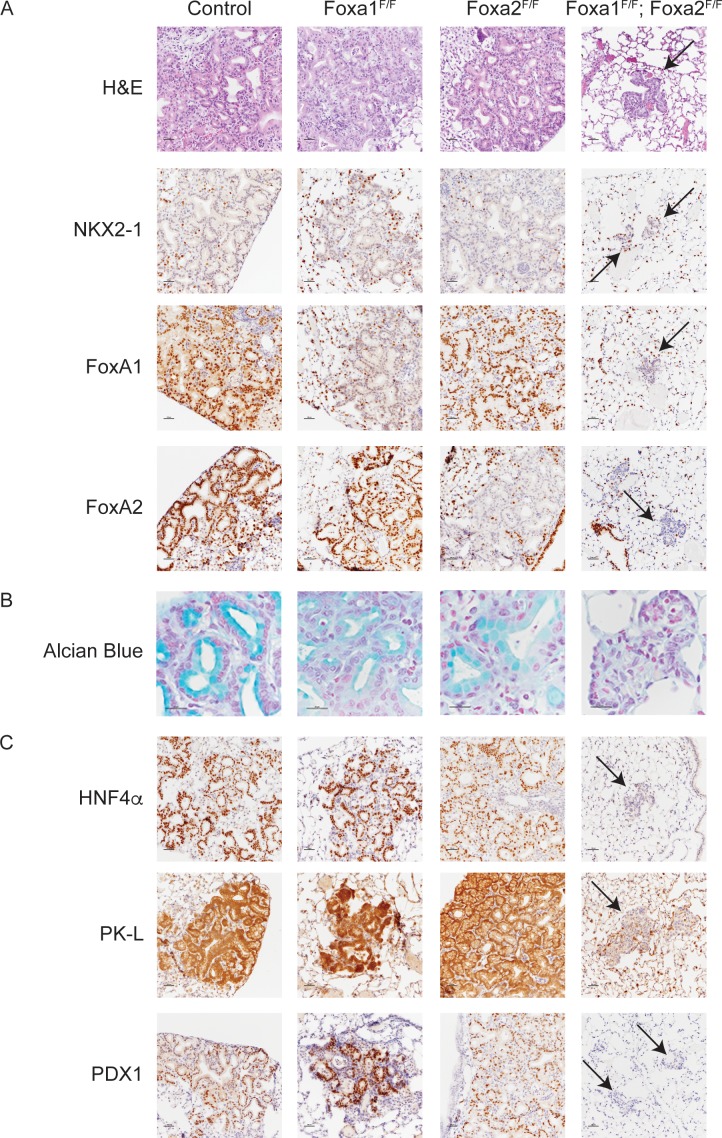
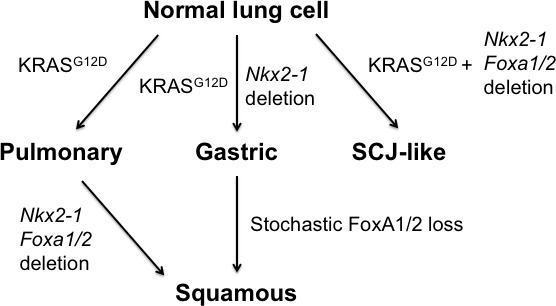
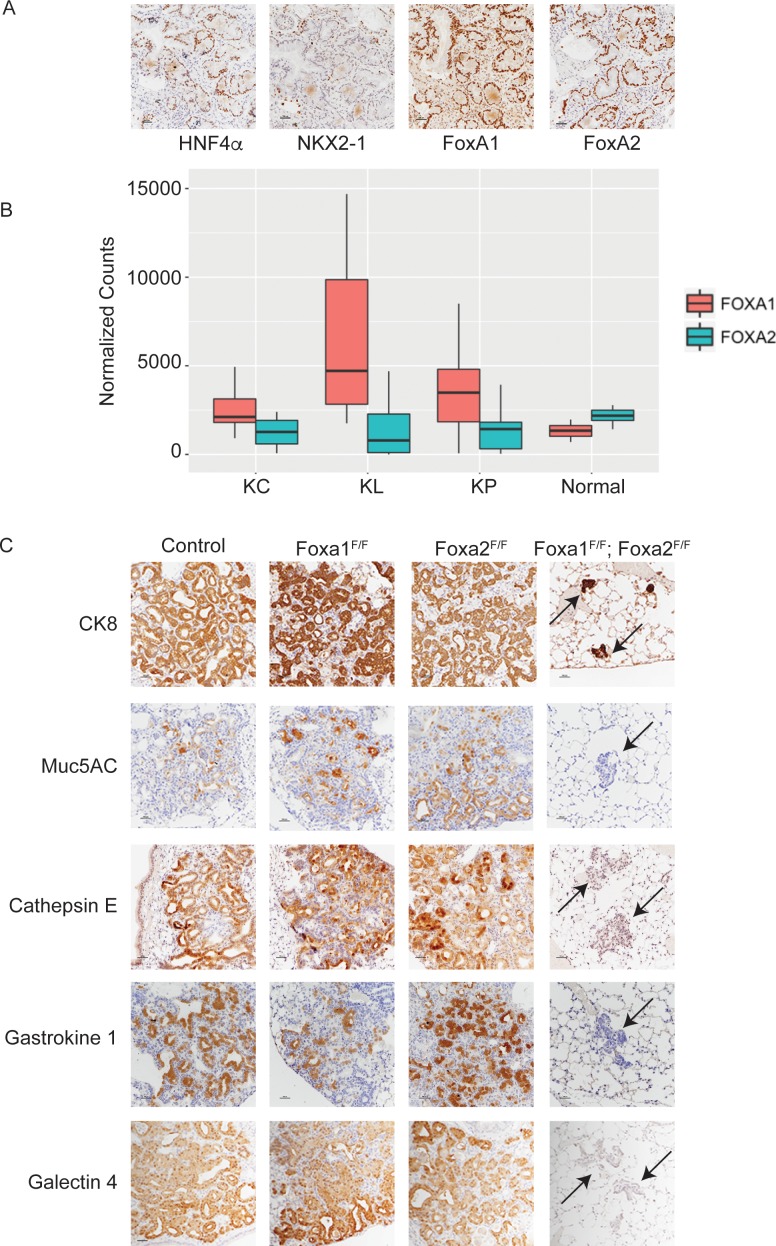
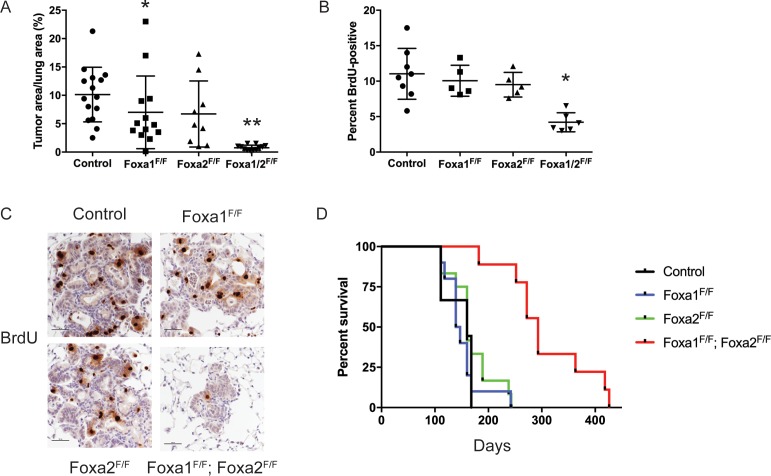
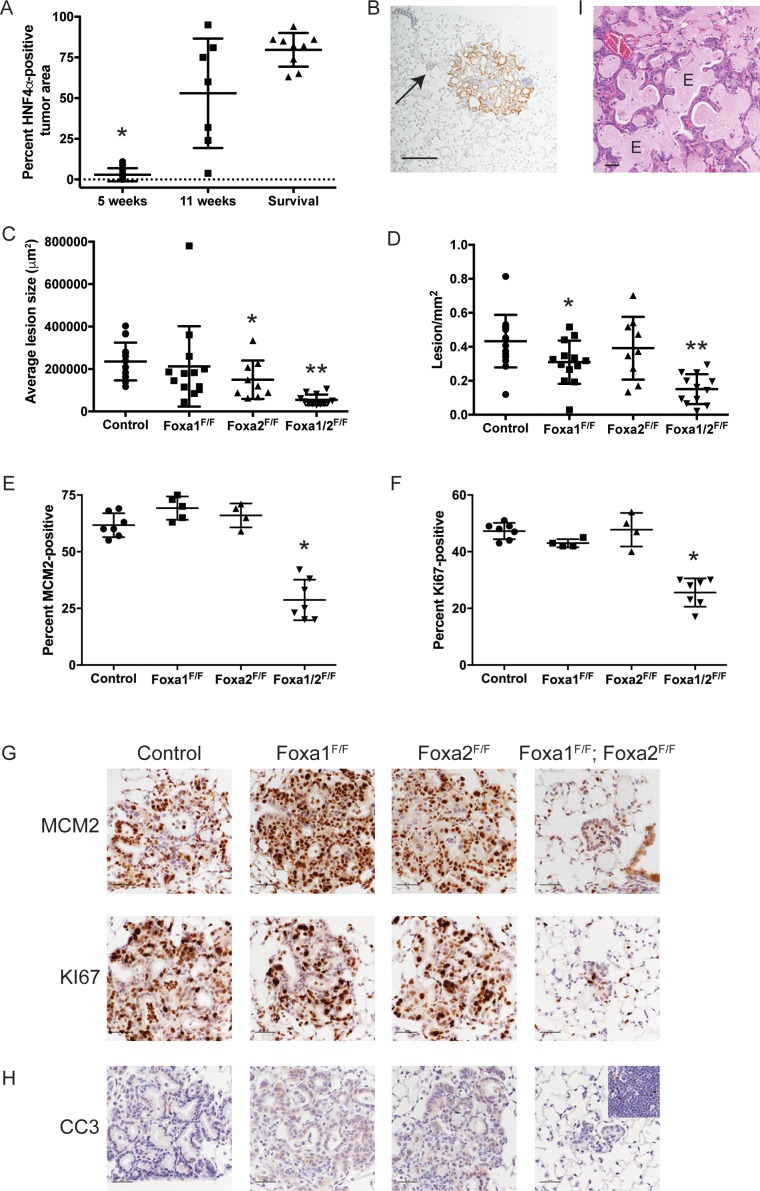
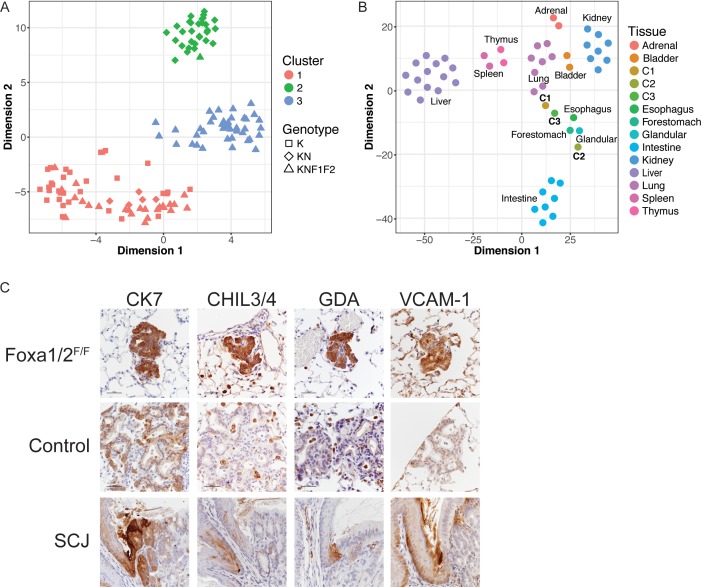
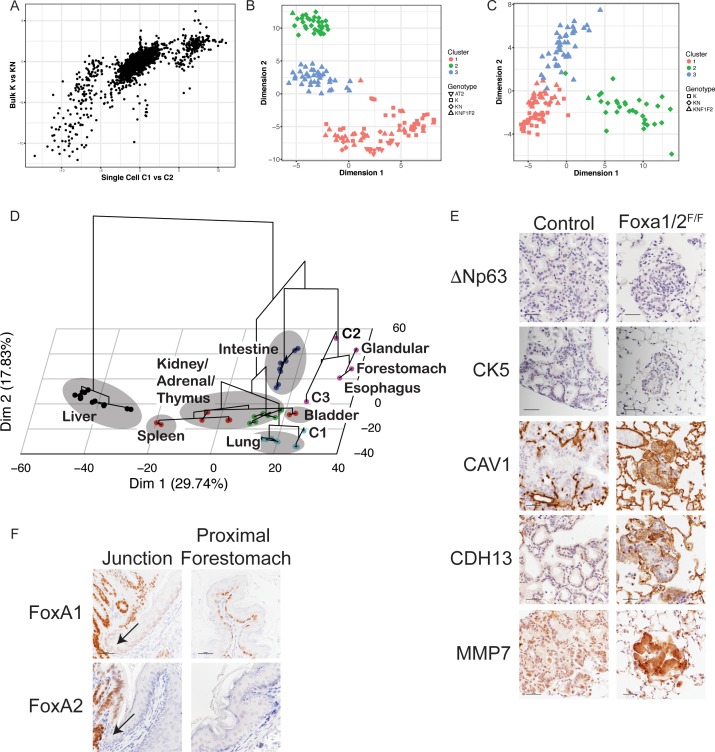
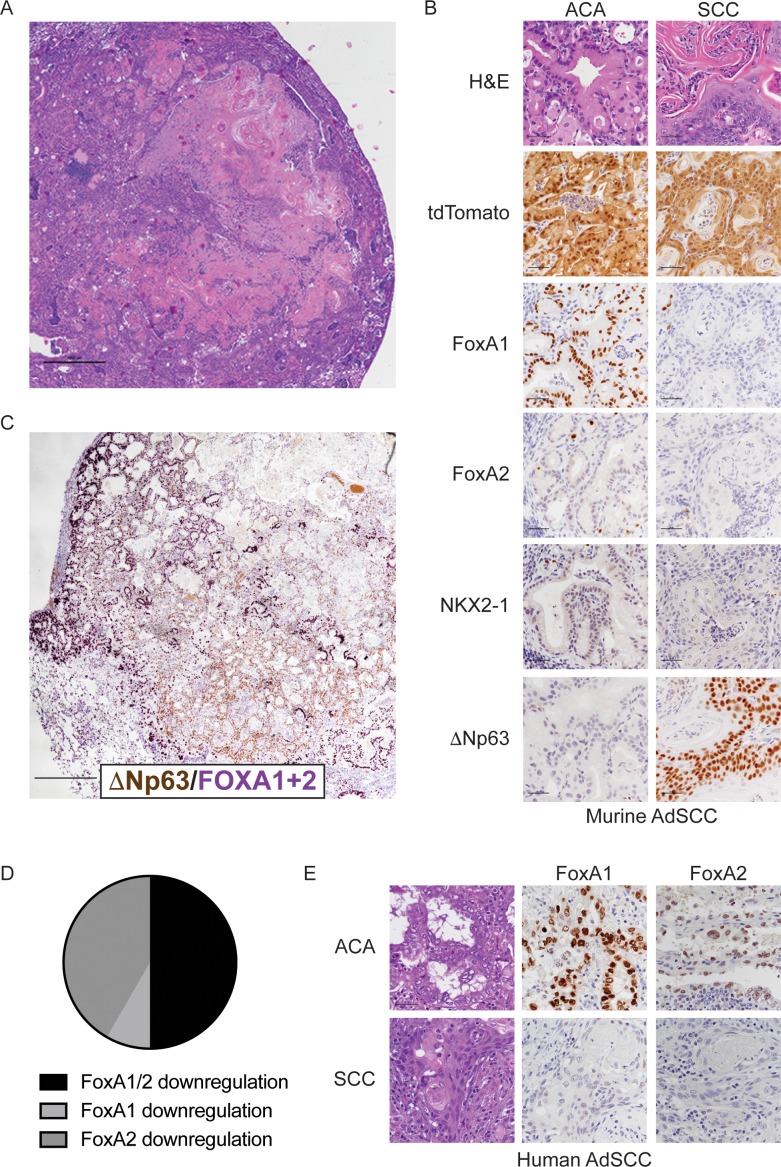
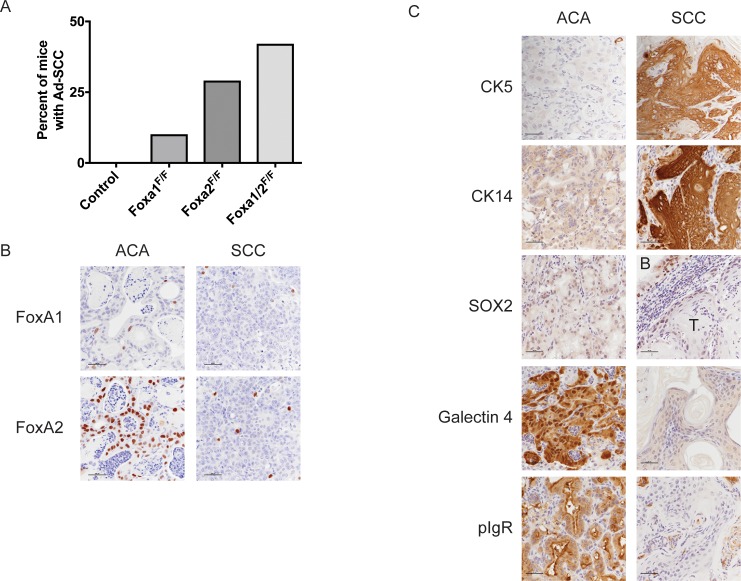
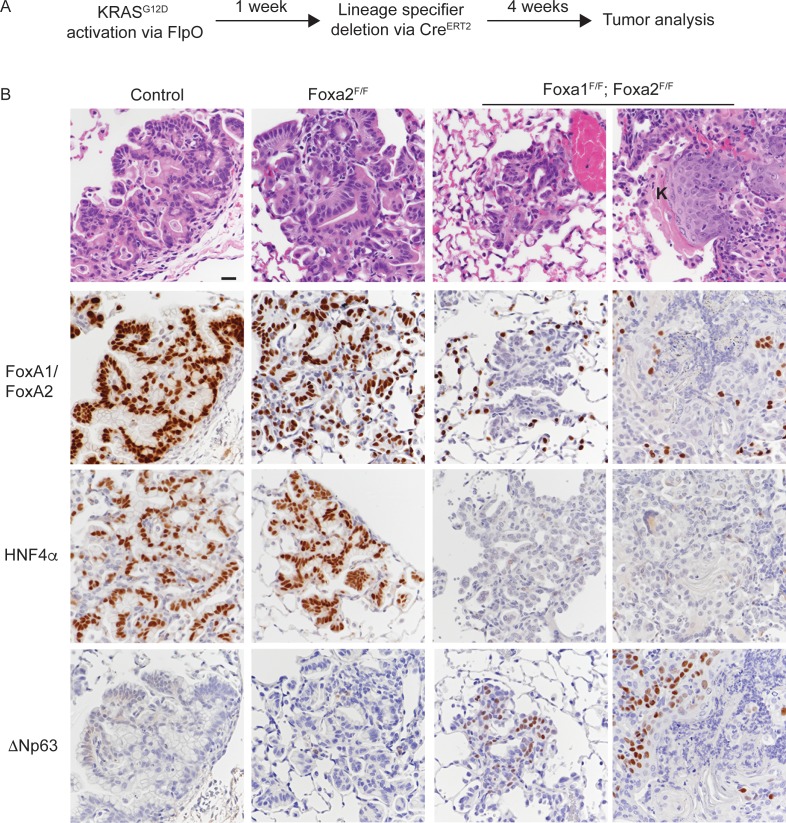
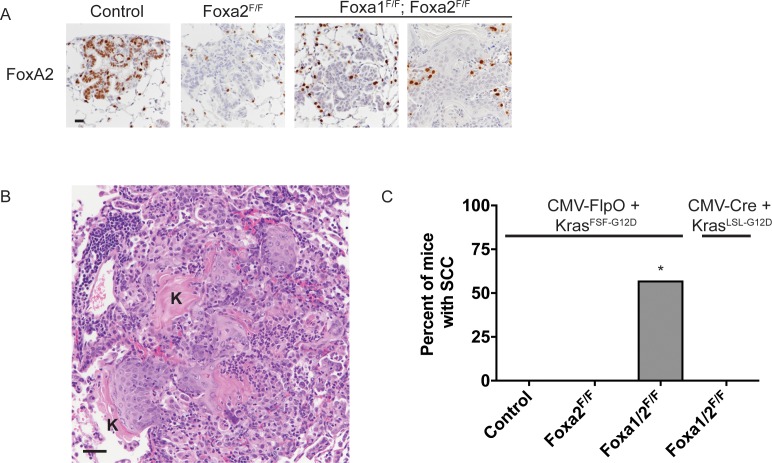
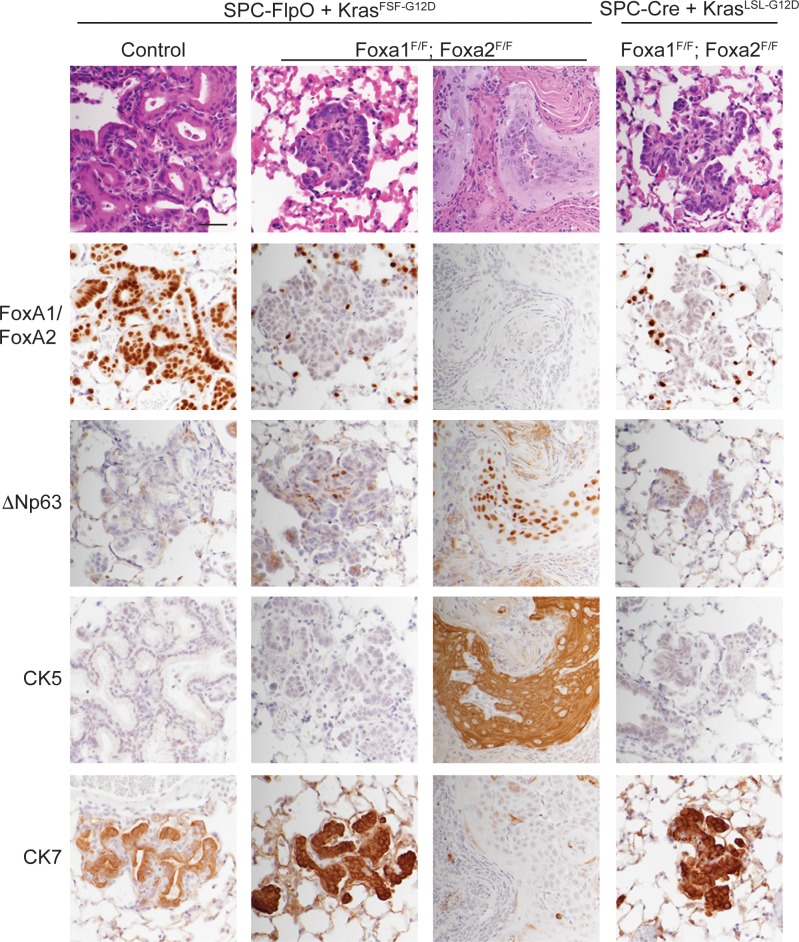
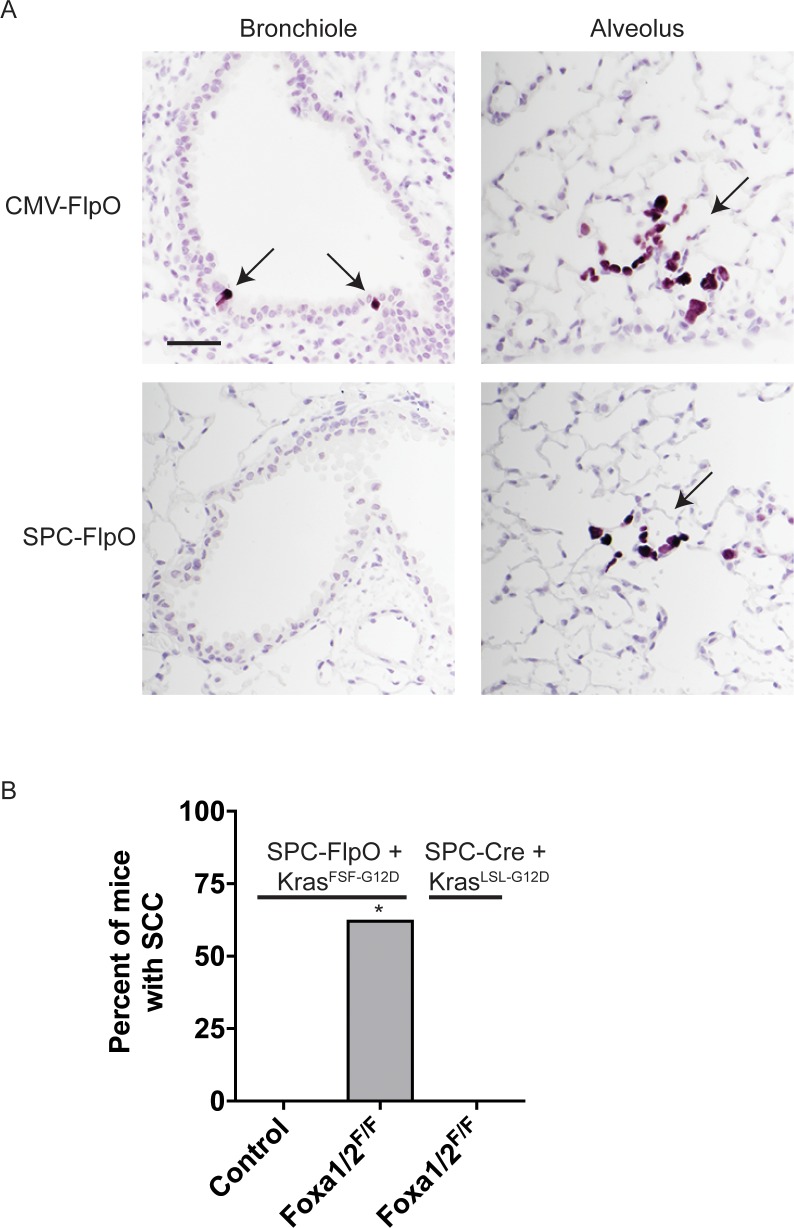
Changes in cancer cell identity can alter malignant potential and therapeutic response. Loss of the pulmonary lineage specifier NKX2-1 augments the growth of KRAS-driven lung adenocarcinoma and causes pulmonary to gastric transdifferentiation. Here, we show that the transcription factors FoxA1 and FoxA2 are required for initiation of mucinous NKX2-1-negative lung adenocarcinomas in the mouse and for activation of their gastric differentiation program. deletion severely impairs tumor initiation and causes a proximal shift in cellular identity, yielding tumors expressing markers of the squamocolumnar junction of the gastrointestinal tract. In contrast, we observe downregulation of FoxA1/2 expression in the squamous component of both murine and human lung adenosquamous carcinoma. Using sequential in vivo recombination, we find that FoxA1/2 loss in established KRAS-driven neoplasia originating from SPC-positive alveolar cells induces keratinizing squamous cell carcinomas. Thus, NKX2-1, FoxA1 and FoxA2 coordinately regulate the growth and identity of lung cancer in a context-specific manner.
癌细胞特性的改变可能会改变恶性潜能和治疗反应。NKX2-1 肺系特异性转录因子的缺失增强了 KRAS 驱动的肺腺癌的生长,并导致肺向胃的转分化。在这里,我们发现转录因子 FoxA1 和 FoxA2 对于在小鼠中启动黏液性 NKX2-1 阴性肺腺癌以及激活其胃分化程序是必需的。FoxA1/2 的缺失严重损害了肿瘤的起始,并导致细胞特性的近端移位,产生表达胃肠道鳞柱交界标志物的肿瘤。相比之下,我们观察到 FoxA1/2 在人和鼠的肺腺鳞癌的鳞癌成分中的表达下调。通过连续的体内重组,我们发现 FoxA1/2 在起源于 SPC 阳性肺泡细胞的已建立的 KRAS 驱动型肿瘤中的缺失诱导了角化的鳞状细胞癌。因此,NKX2-1、FoxA1 和 FoxA2 以特定于上下文的方式协调调节肺癌的生长和特性。