Laboratory of Infections, Carcinogenesis and Regeneration, Medical Biotechnology Section, Department of Biological and Chemical Engineering, Aarhus University, Aarhus, Denmark.
Department of Microbiology, University of Würzburg, Würzburg, Germany.
Nat Commun. 2024 Apr 9;15(1):3064. doi: 10.1038/s41467-024-47173-z.
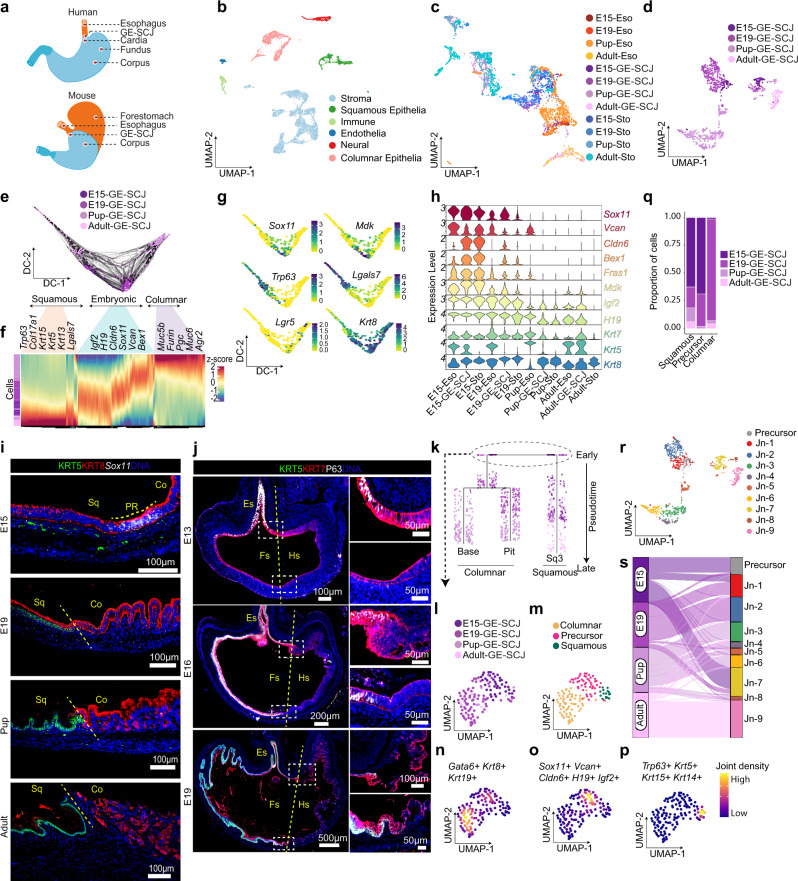
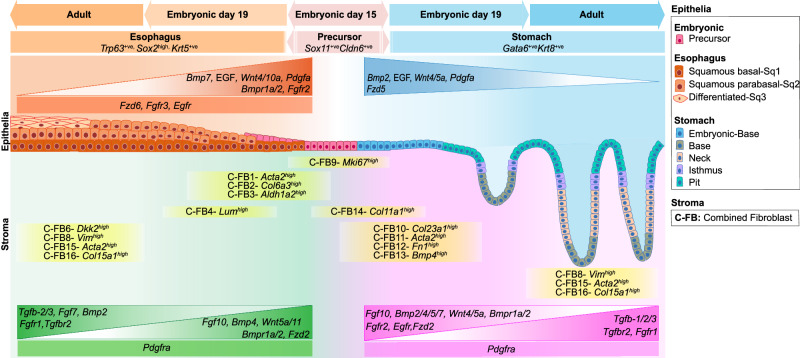
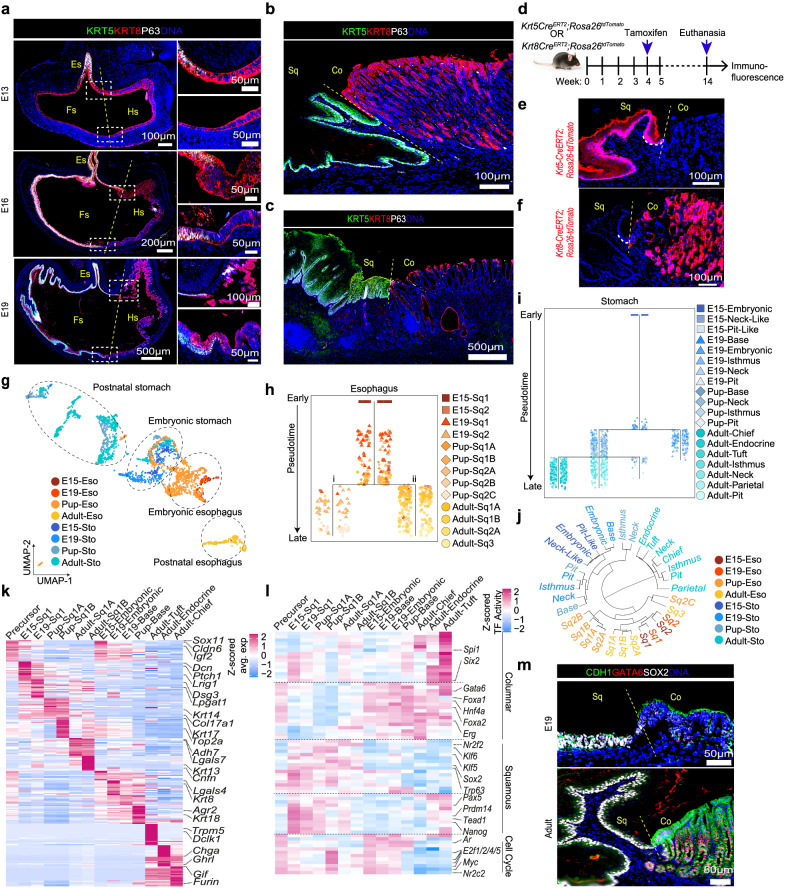
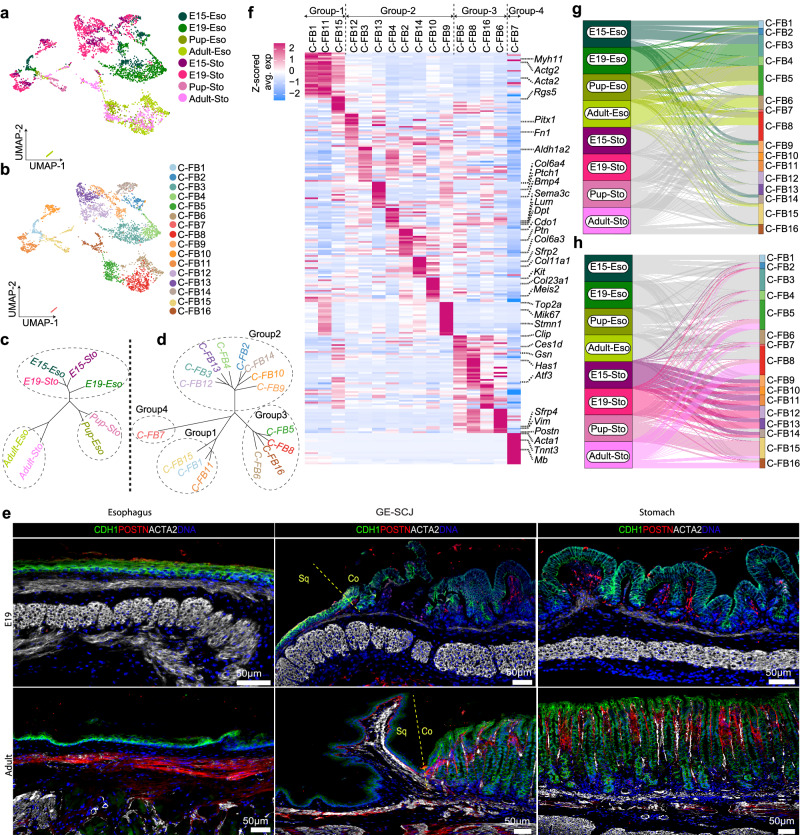
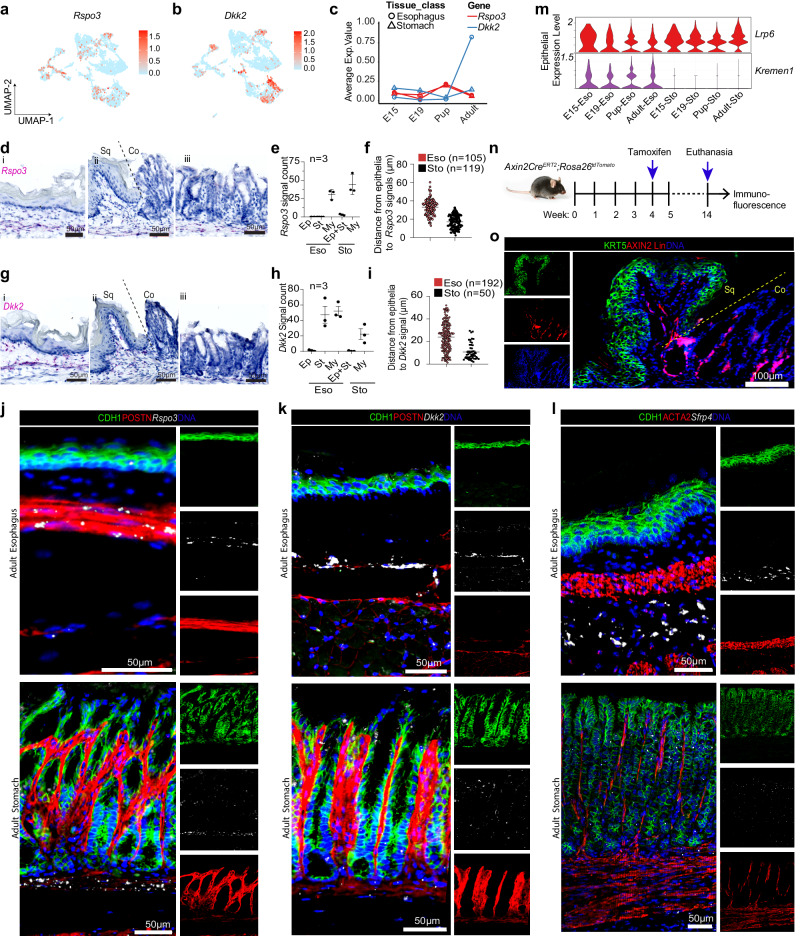
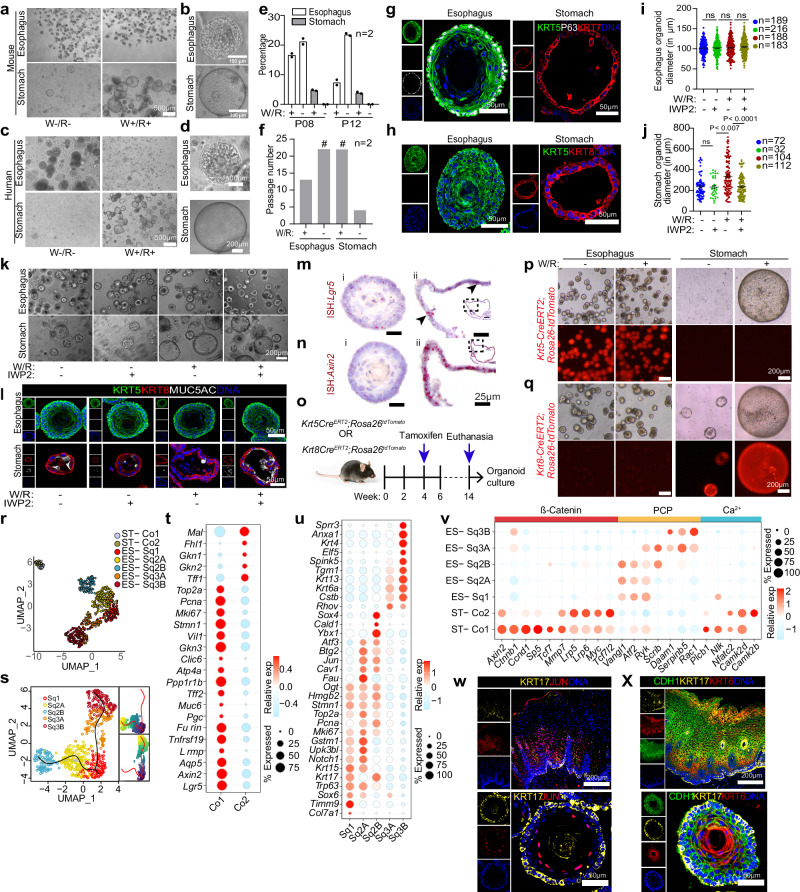
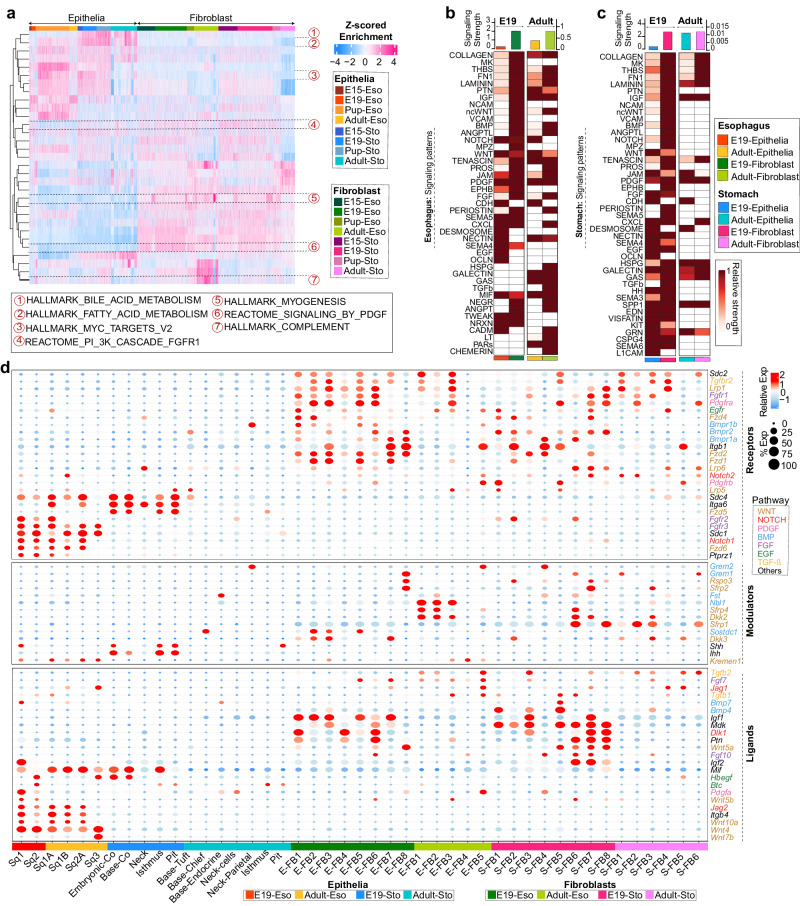
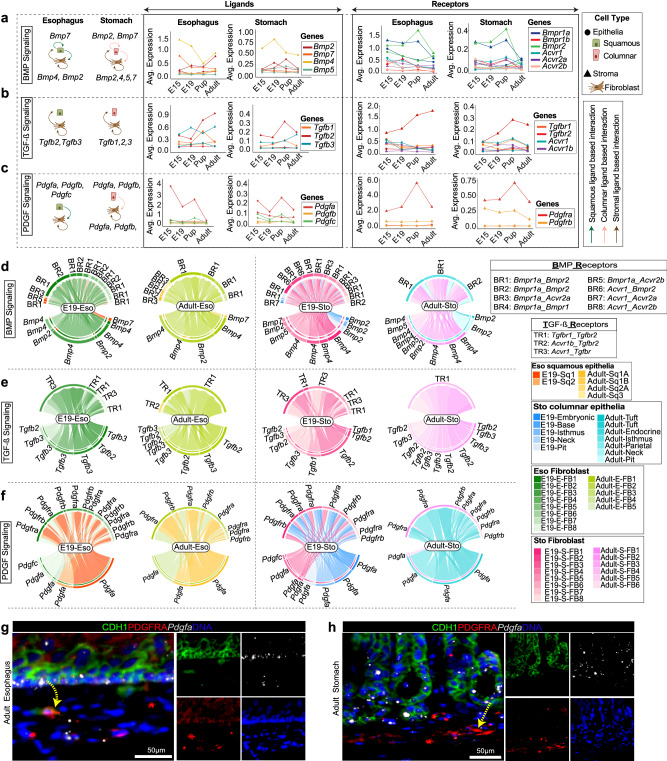
The gastroesophageal squamocolumnar junction (GE-SCJ) is a critical tissue interface between the esophagus and stomach, with significant relevance in the pathophysiology of gastrointestinal diseases. Despite this, the molecular mechanisms underlying GE-SCJ development remain unclear. Using single-cell transcriptomics, organoids, and spatial analysis, we examine the cellular heterogeneity and spatiotemporal dynamics of GE-SCJ development from embryonic to adult mice. We identify distinct transcriptional states and signaling pathways in the epithelial and mesenchymal compartments of the esophagus and stomach during development. Fibroblast-epithelial interactions are mediated by various signaling pathways, including WNT, BMP, TGF-β, FGF, EGF, and PDGF. Our results suggest that fibroblasts predominantly send FGF and TGF-β signals to the epithelia, while epithelial cells mainly send PDGF and EGF signals to fibroblasts. We observe differences in the ligands and receptors involved in cell-cell communication between the esophagus and stomach. Our findings provide insights into the molecular mechanisms underlying GE-SCJ development and fibroblast-epithelial crosstalk involved, paving the way to elucidate mechanisms during adaptive metaplasia development and carcinogenesis.
胃食管鳞柱状交界(GE-SCJ)是食管和胃之间的重要组织界面,在胃肠道疾病的病理生理学中具有重要意义。尽管如此,GE-SCJ 发育的分子机制仍不清楚。我们使用单细胞转录组学、类器官和空间分析,研究了从胚胎到成年小鼠的 GE-SCJ 发育过程中的细胞异质性和时空动态。我们在食管和胃的上皮和间充质区室中鉴定了不同的转录状态和信号通路。成纤维细胞-上皮相互作用由多种信号通路介导,包括 WNT、BMP、TGF-β、FGF、EGF 和 PDGF。我们的结果表明,成纤维细胞主要向上皮细胞发送 FGF 和 TGF-β 信号,而上皮细胞主要向成纤维细胞发送 PDGF 和 EGF 信号。我们观察到食管和胃之间细胞间通讯涉及的配体和受体存在差异。我们的研究结果为 GE-SCJ 发育和涉及的成纤维细胞-上皮细胞相互作用的分子机制提供了深入的了解,为阐明适应性化生发育和癌变过程中的机制铺平了道路。