Department of Obstetrics and Gynecology, Keio University School of Medicine, Tokyo, Japan.
J Gynecol Oncol. 2019 Jan;30(1):e10. doi: 10.3802/jgo.2019.30.e10. Epub 2018 Oct 10.
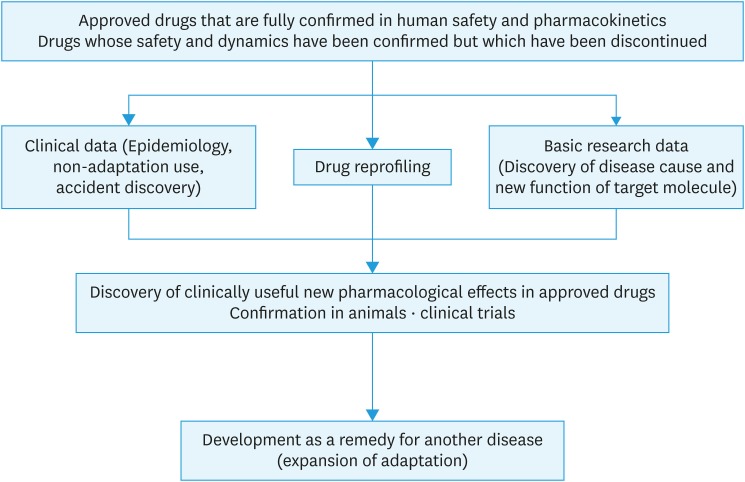
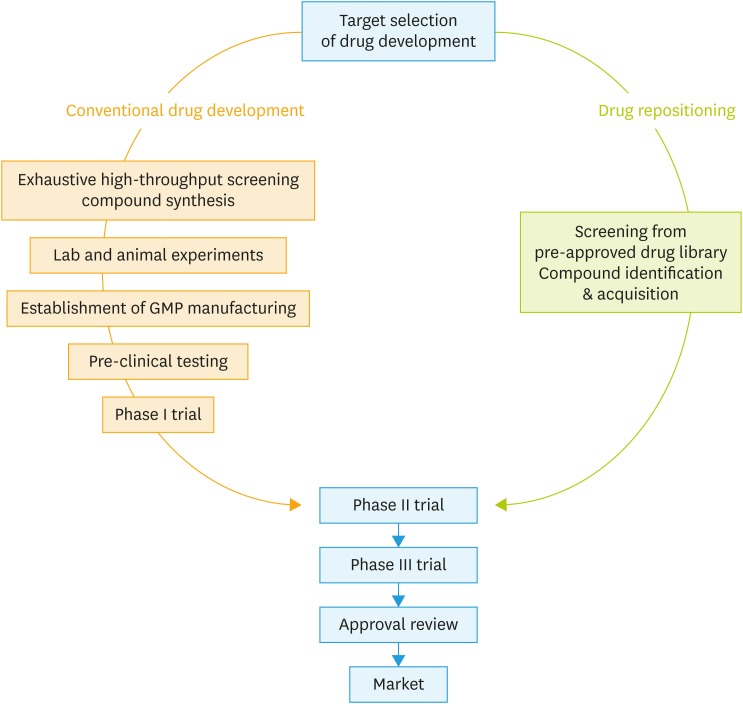
Ovarian cancer is the seventh most common cancer and the eighth most common cause of cancer mortality in women. Although standard chemotherapy is the established treatment for ovarian cancer, the prognosis remains poor, and it is highly anticipated that new drugs will be developed. New drugs, such as humanized anti-vascular endothelial growth factor monoclonal antibodies and poly ADP-ribose polymerase inhibitors, are expected to improve clinical outcomes of ovarian cancer. However, long-term, costly research is required to develop such new drugs, and soaring national healthcare costs are becoming a concern worldwide. In this social context, drug repositioning, wherein existing drugs are used to develop drugs with new indications for other diseases, has recently gained attention. Because trials have already confirmed the safety in humans and the pharmacokinetics of such drugs, the development period is shorter than the conventional development of a new drug, thereby reducing costs. This review discusses the available basic experimental and clinical data on drugs used for other types of cancer for which drug repositioning is anticipated to repurpose the drug for the treatment of ovarian cancer. These include statins, which are used to treat dyslipidemia; bisphosphonate, which is used to treat osteoporosis; metformin, which is used to treat diabetes; non-steroidal anti-inflammatory drugs; ivermectin, an antiparasitic agent; and itraconazole, an anti-fungal agent. These drugs will play an important role in future drug repositioning strategies for ovarian cancer. Furthermore, drug repositioning is anticipated to extend not only to ovarian cancer treatment but also to ovarian cancer prevention.
卵巢癌是第七大常见癌症,也是女性癌症死亡的第八大常见原因。尽管标准化疗是治疗卵巢癌的既定方法,但预后仍然不佳,人们高度期待开发新的药物。新的药物,如人源化抗血管内皮生长因子单克隆抗体和多聚 ADP-核糖聚合酶抑制剂,有望改善卵巢癌的临床疗效。然而,开发这些新药需要长期、昂贵的研究,而不断飙升的国家医疗保健成本正成为全球关注的问题。在这种社会背景下,药物重定位,即将现有药物用于开发针对其他疾病的新适应症的药物,最近引起了关注。由于已经在人体中证实了这些药物的安全性和药代动力学,因此其开发周期比传统的新药开发短,从而降低了成本。这篇综述讨论了用于其他类型癌症的药物的现有基础实验和临床数据,这些药物预计将通过药物重定位用于治疗卵巢癌。这些药物包括用于治疗血脂异常的他汀类药物;用于治疗骨质疏松症的双膦酸盐;用于治疗糖尿病的二甲双胍;非甾体抗炎药;抗寄生虫药物伊维菌素;以及抗真菌药物伊曲康唑。这些药物将在未来的卵巢癌药物重定位策略中发挥重要作用。此外,药物重定位预计不仅将扩展到卵巢癌的治疗,还将扩展到卵巢癌的预防。