Department of Brain and Cognitive Sciences, McGovern Institute for Brain Research, Massachusetts Institute of Technology, Cambridge, United States.
Elife. 2018 Nov 28;7:e42870. doi: 10.7554/eLife.42870.
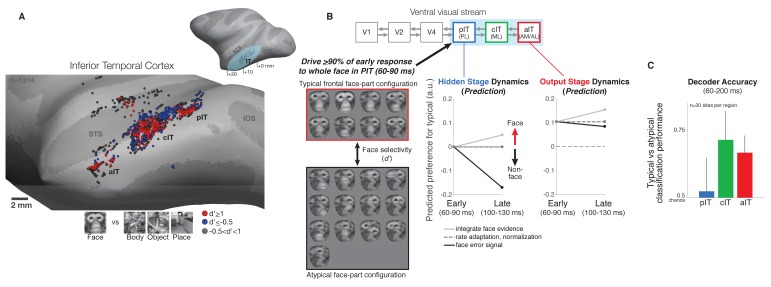
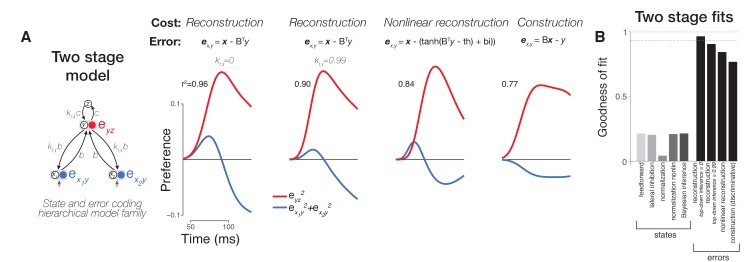
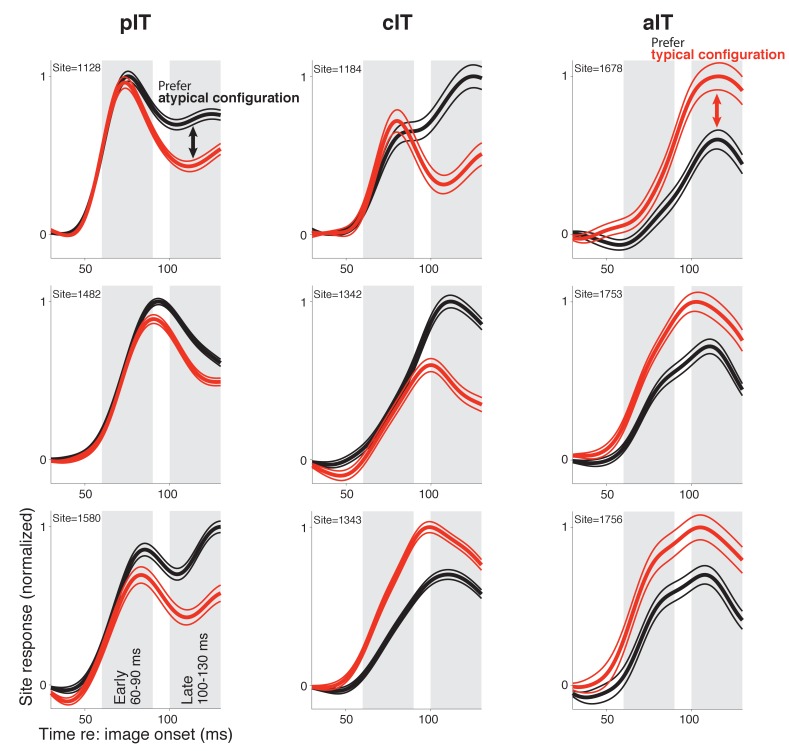
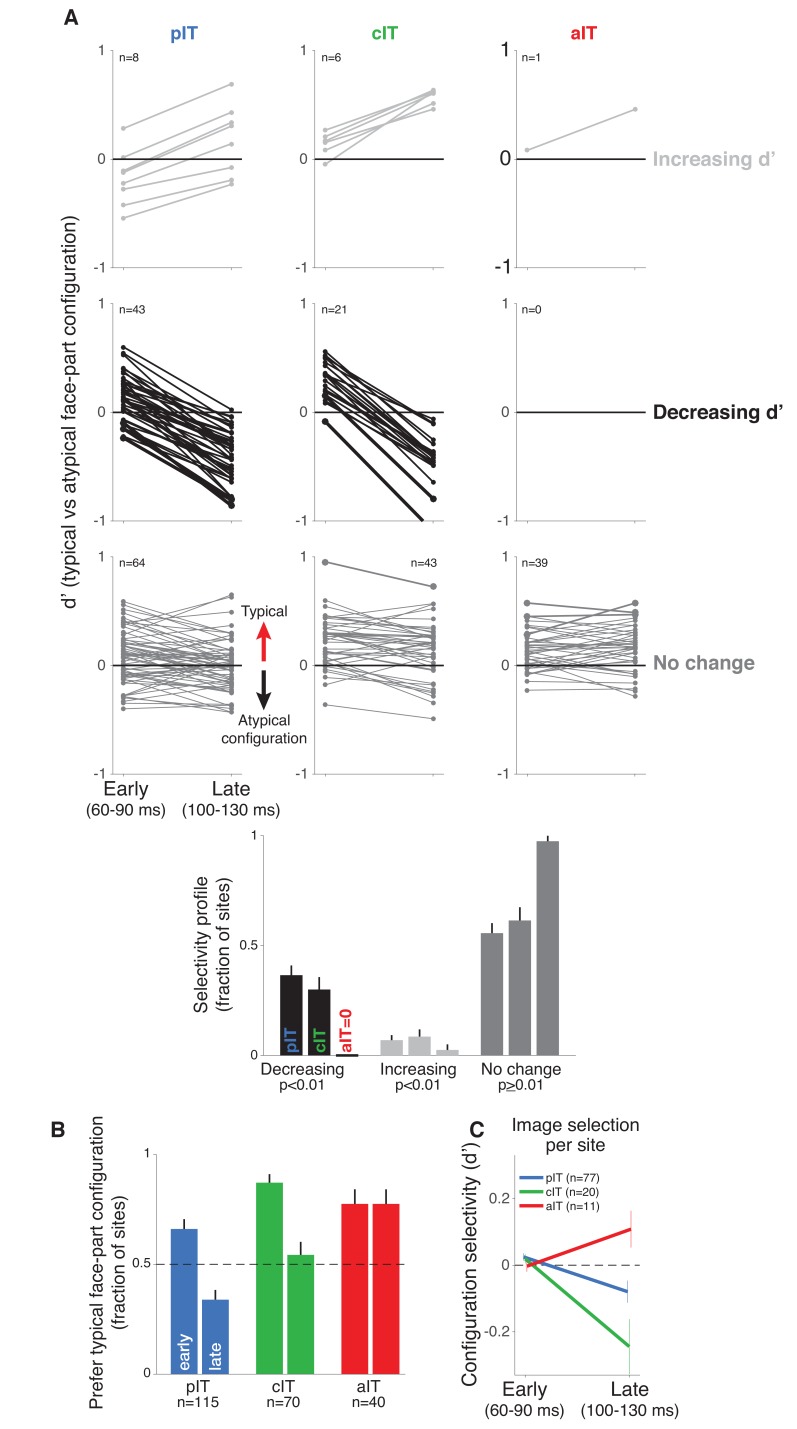
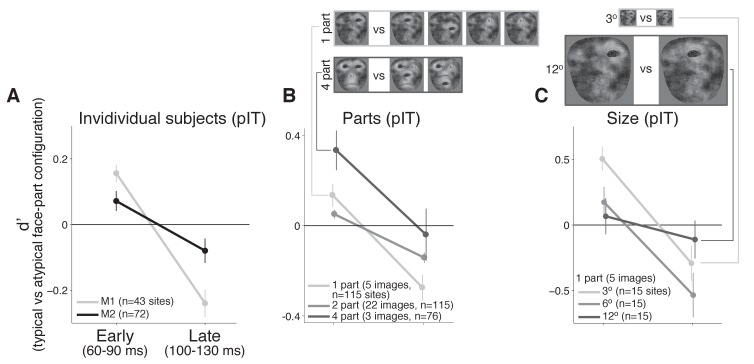
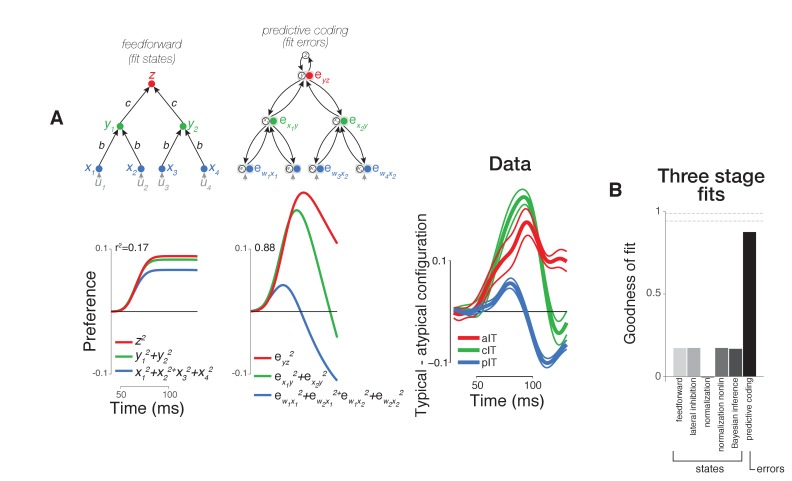
Ventral visual stream neural responses are dynamic, even for static image presentations. However, dynamical neural models of visual cortex are lacking as most progress has been made modeling static, time-averaged responses. Here, we studied population neural dynamics during face detection across three cortical processing stages. Remarkably,~30 milliseconds after the initially evoked response, we found that neurons in intermediate level areas decreased their responses to typical configurations of their preferred face parts relative to their response for atypical configurations even while neurons in higher areas achieved and maintained a preference for typical configurations. These hierarchical neural dynamics were inconsistent with standard feedforward circuits. Rather, recurrent models computing prediction errors between stages captured the observed temporal signatures. This model of neural dynamics, which simply augments the standard feedforward model of online vision, suggests that neural responses to static images may encode top-down prediction errors in addition to bottom-up feature estimates.
腹侧视觉流神经反应是动态的,即使对于静态图像呈现也是如此。然而,由于大多数进展都是在对静态、时间平均响应进行建模,因此缺乏视觉皮层的动态神经模型。在这里,我们研究了在三个皮层处理阶段进行面部检测时的群体神经动力学。值得注意的是,在最初的反应后大约 30 毫秒,我们发现中间水平区域的神经元相对于其对非典型配置的反应,减少了对其首选面部部分典型配置的反应,而较高水平区域的神经元则实现并保持了对典型配置的偏好。这些分层神经动力学与标准前馈电路不一致。相反,在阶段之间计算预测误差的递归模型捕获了观察到的时间特征。这种神经动力学模型,它只是简单地增强了在线视觉的标准前馈模型,表明对静态图像的神经反应可能除了底部向上的特征估计之外,还编码自上而下的预测误差。