Beranoagirre Aitor, Urbikain Gorka, Calleja Amaia, López de Lacalle Luis Norberto
Department of Mechanical Engineering, University of the Basque Country (UPV/EHU), Plaza Europa 1, 20018 San Sebastián, Spain.
Department of Mechanical Engineering, University of the Basque Country (UPV/EHU), Nieves Cano 12, 01006 Vitoria, Spain.
Materials (Basel). 2018 Nov 26;11(12):2379. doi: 10.3390/ma11122379.
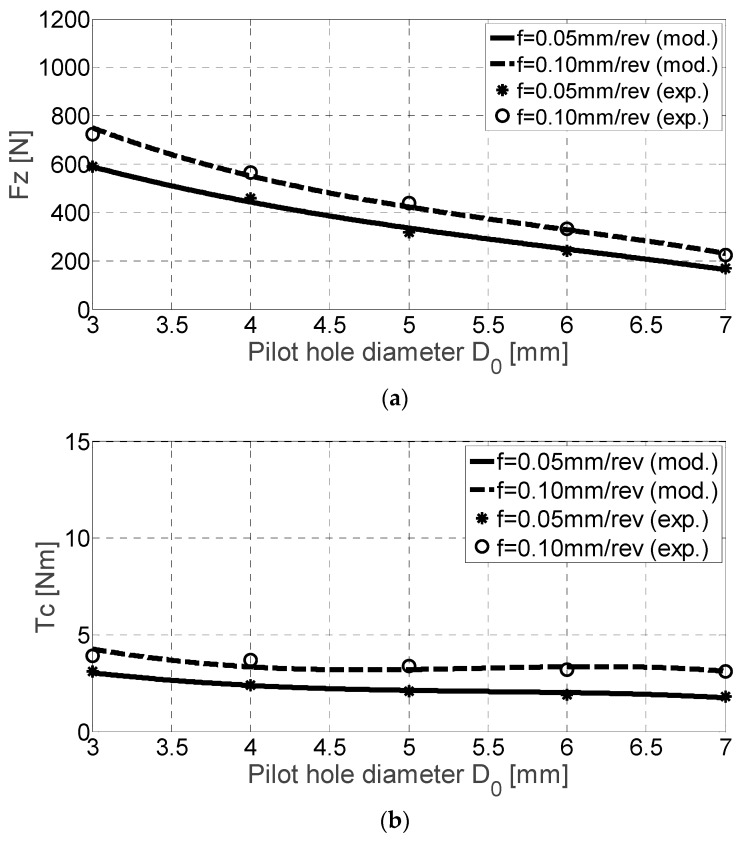
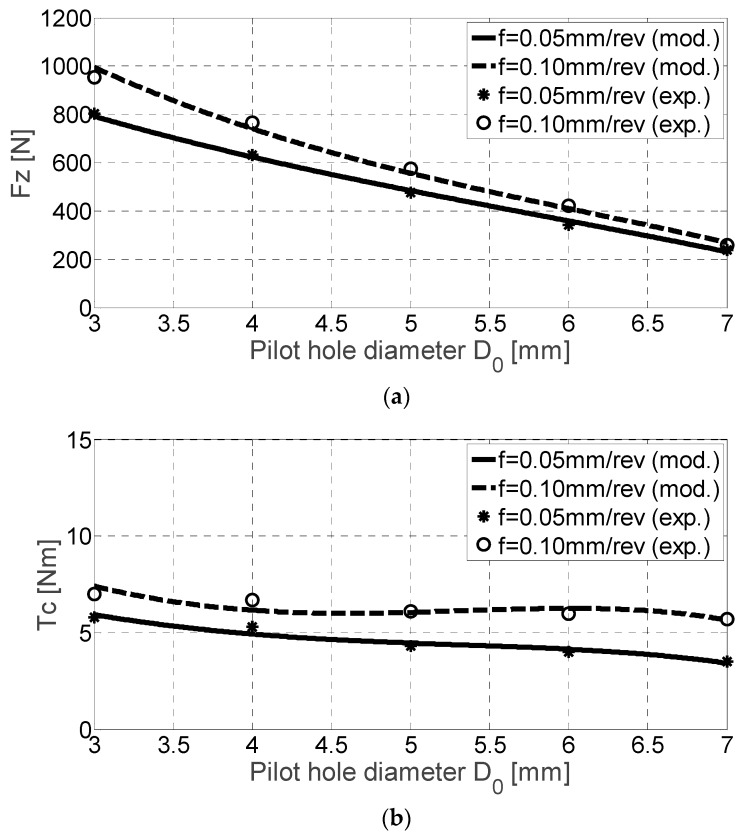
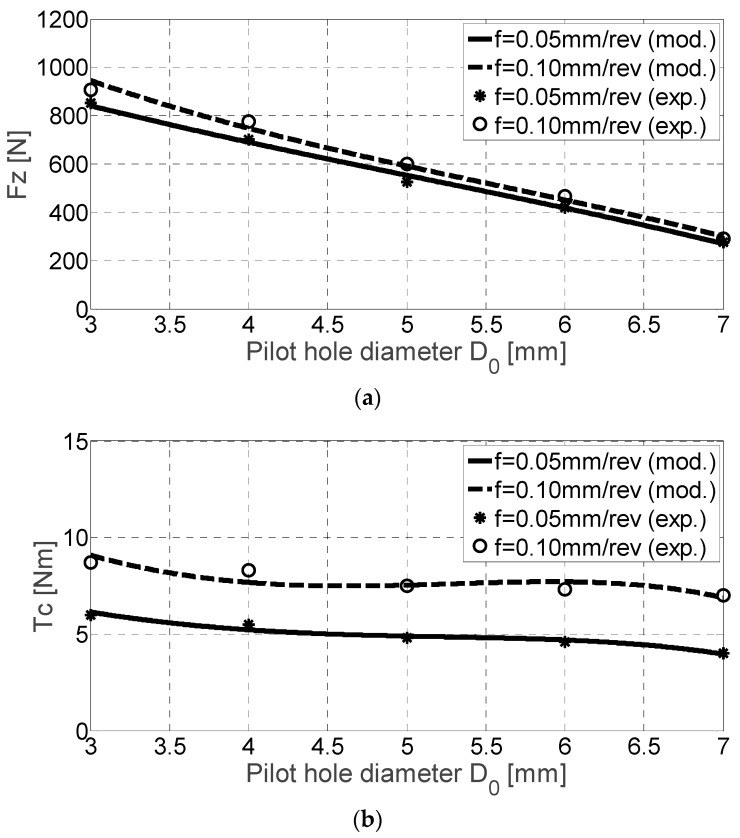
Gamma titanium aluminides (γ-TiAl) present an excellent behavior under high temperature conditions, being a feasible alternative to nickel-based superalloy components in the aeroengine sector. However, considered as a difficult to cut material, process cutting parameters require special study to guarantee component quality. In this work, a developed drilling mechanistic model is a useful tool in order to predict drilling force () and torque () for optimal drilling conditions. The model is a helping tool to select operational parameters for the material to cut by providing the programmer predicted drilling forces () and torque () values. This will allow the avoidance of operational parameters that will cause excessively high force and torque values that could damage quality. The model is validated for three types of Gamma-TiAl alloys. Integral hard metal end-drilling tools and different cutting parameters (feeds and cutting speeds) are tested for three different sized holes for each alloy.
γ型钛铝化物(γ-TiAl)在高温条件下表现出优异的性能,是航空发动机领域镍基高温合金部件的可行替代品。然而,由于其被认为是一种难切削材料,加工切削参数需要进行专门研究以确保部件质量。在这项工作中,一个已开发的钻孔力学模型是预测最佳钻孔条件下的钻孔力()和扭矩()的有用工具。该模型通过为编程人员提供预测的钻孔力()和扭矩()值,帮助选择待切削材料的操作参数。这将避免使用会导致过高的力和扭矩值从而可能损害质量的操作参数。该模型针对三种类型的γ-TiAl合金进行了验证。针对每种合金的三种不同尺寸的孔,测试了整体硬质合金端钻刀具和不同的切削参数(进给量和切削速度)。