Vlajkovic Alexandra, Meyer Dominik C, Von Knoch Marius, Schmid Samuel L, Götschi Tobias, Grubhofer Florian
Department of Orthopaedics, University of Zurich, Balgrist University Hospital, Forchstrasse 340, CH-8008, Zürich, Switzerland.
Department of Orthopaedics and Traumatology, Kreiskrankenhaus Osterholz, Am Krankenhaus 4, 27711, Osterholz-Scharmbeck, Germany.
J Orthop Surg Res. 2018 Nov 29;13(1):304. doi: 10.1186/s13018-018-1006-8.
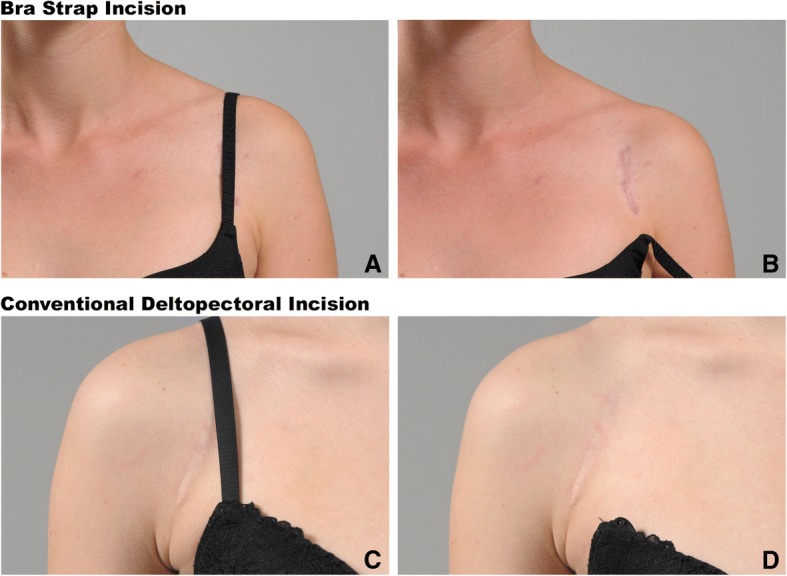
The anterior deltopectoral approach is the standard approach for performing the open Latarjet procedure. Through the use of a more medial and vertical skin incision, the scar can be cosmetically covered by the bra strap in women. We call this incision the bra strap incision. The intention of this study was (1) to elaborate if the bra strap incision is considered beneficial by female patients, (2) to find reproducible landmarks to indicate how the bra strap incision has to be oriented, and (3) to evaluate preliminary clinical results of patients in whom the bra strap incision was used.
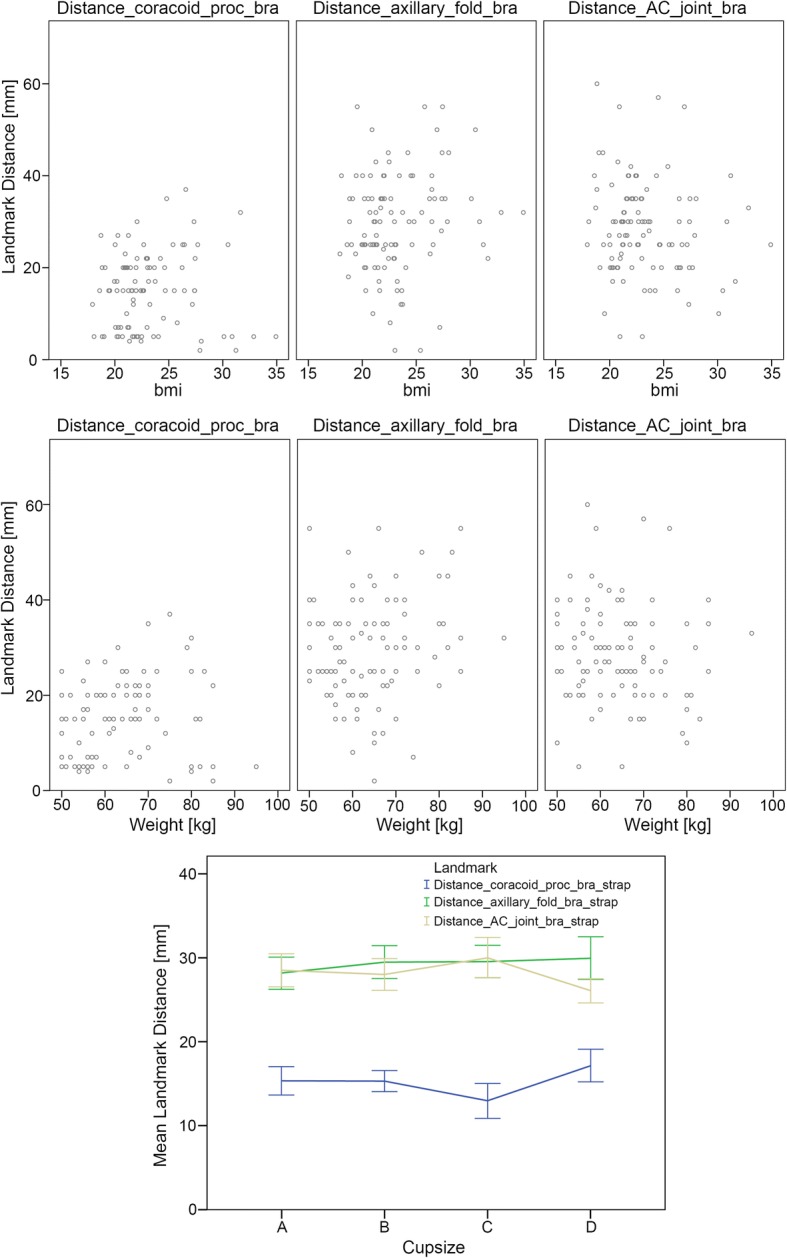
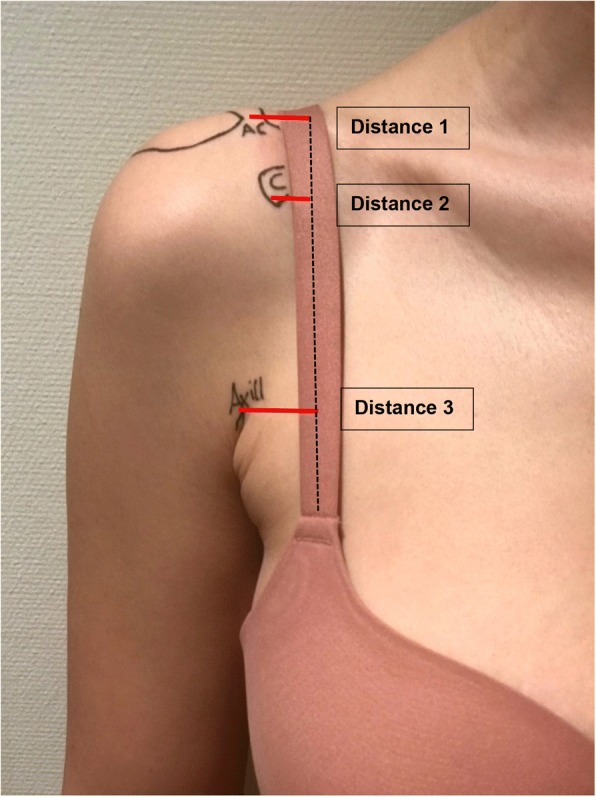
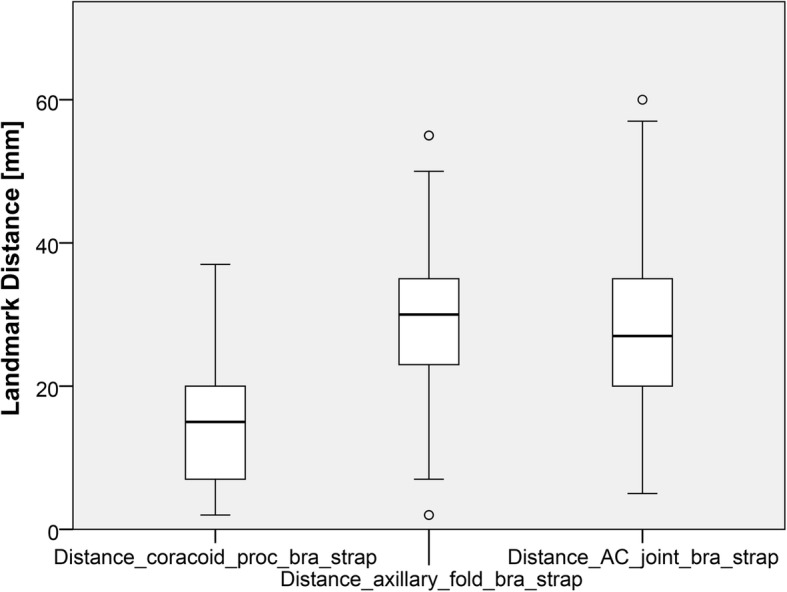
In 18 patients with a mean follow-up of 21 (range, 12-31) months treated with an open Latarjet procedure through the bra strap incision, the clinical results (scar satisfaction, Constant and Murley score [CMS], and subjective shoulder value [SSV]) were retrospectively analyzed. To assess the typical course of the bra strap, anatomical landmarks were assessed in 100 consecutive female patients as the distance from the bra strap center to (1) the tip of the coracoid process, (2) the superior end of the anterior axillary fold, and (3) the acromioclavicular joint.
All (18 of 18) patients stated that they would prefer the bra strap incision if the same procedure had to be performed on the opposite shoulder; 16 women were satisfied with the scar. The mean CMS was 83 (range 64-96) points and the mean SSV was 85 (range, 60-100) %. The mean distances from the bra strap center to the acromioclavicular joint, coracoid tip, and axillary fold were 28 (range, 5-60) mm, 15 (range, 2-17) mm, and 30 (range, 2-55) mm. No combination of distance measures and demographic variable revealed a linear relationship.
This analysis shows that the bra strap incision appears to be highly welcomed by female patients and does not compromise the clinical outcome, when compared to previously published data. However, even though the typical location of the bra strap can be determined, the large variations in the distances make it more preferable to preoperatively mark the incision for optimal placement.
The study is approved by the Ethical Committee Zurich. (Cantonal Ethical Committee number: ZH-Nr.2017-00891 ).
前外侧胸大肌三角肌入路是进行开放式Latarjet手术的标准入路。通过采用更内侧和垂直的皮肤切口,女性患者的疤痕可被胸罩肩带在美观上遮盖住。我们将此切口称为胸罩肩带切口。本研究的目的是:(1)阐述女性患者是否认为胸罩肩带切口有益;(2)找到可重复的标志点以指示胸罩肩带切口应如何定位;(3)评估采用胸罩肩带切口的患者的初步临床结果。
对18例行开放式Latarjet手术并采用胸罩肩带切口的患者进行回顾性分析,平均随访21(范围12 - 31)个月,分析其临床结果(疤痕满意度、Constant和Murley评分[CMS]以及主观肩部评分[SSV])。为评估胸罩肩带的典型走行,在100例连续女性患者中评估解剖标志点,即从胸罩肩带中心到(1)喙突尖端、(2)腋前襞上端和(3)肩锁关节的距离。
所有18例患者均表示,如果对另一侧肩部进行相同手术,她们更倾向于选择胸罩肩带切口;16名女性对疤痕满意。平均CMS为83(范围64 - 96)分,平均SSV为85(范围60 - 100)%。从胸罩肩带中心到肩锁关节、喙突尖端和腋前襞的平均距离分别为28(范围5 - 60)mm、15(范围2 - 17)mm和30(范围2 - 55)mm。距离测量值与人口统计学变量的任何组合均未显示出线性关系。
该分析表明,与先前发表的数据相比,胸罩肩带切口似乎很受女性患者欢迎,且不影响临床结果。然而,尽管可以确定胸罩肩带的典型位置,但距离的较大差异使得术前标记切口以获得最佳位置更为可取。
本研究经苏黎世伦理委员会批准。(州伦理委员会编号:ZH - Nr.2017 - 00891)