Wang Feng, Qian Dong-Sheng, Xiao Peng, Deng Song
School of Materials Science and Engineering, Wuhan University of Technology, Wuhan 430070, China.
Hubei Key Laboratory of Advanced Technology for Automotive Components, Wuhan 430070, China.
Materials (Basel). 2018 Nov 28;11(12):2403. doi: 10.3390/ma11122403.
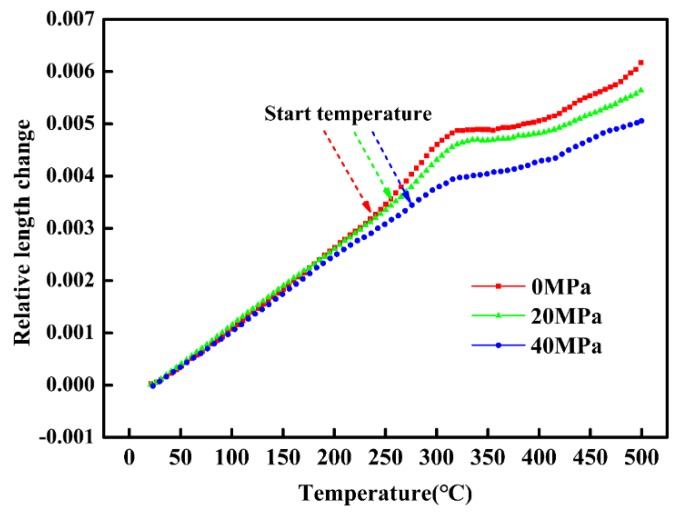
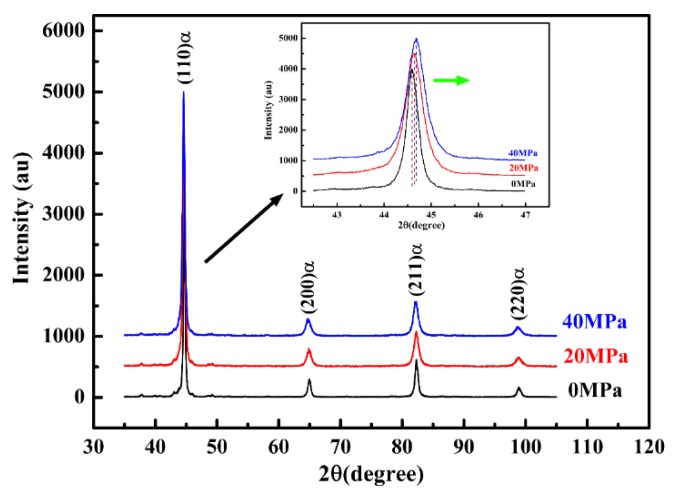
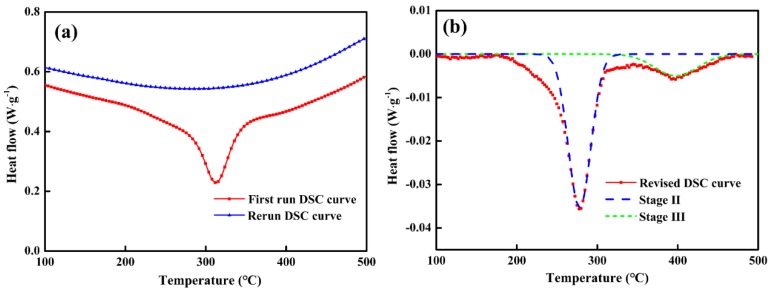
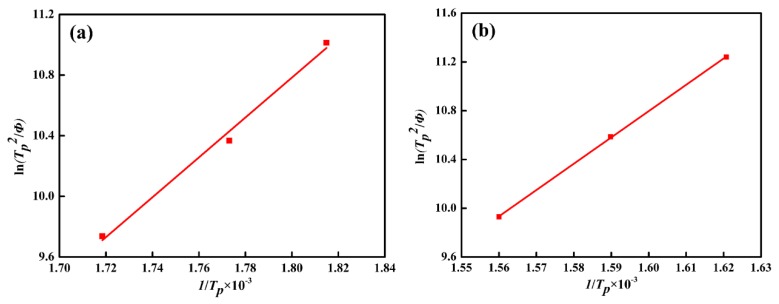
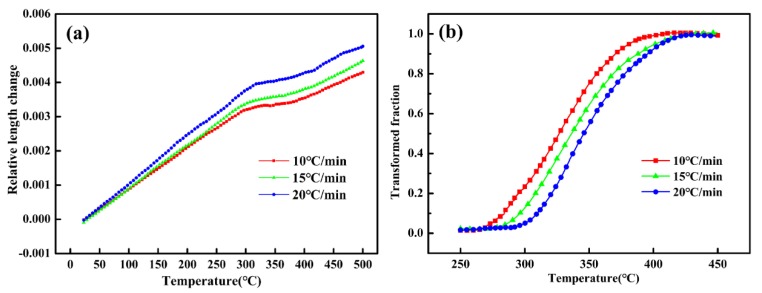
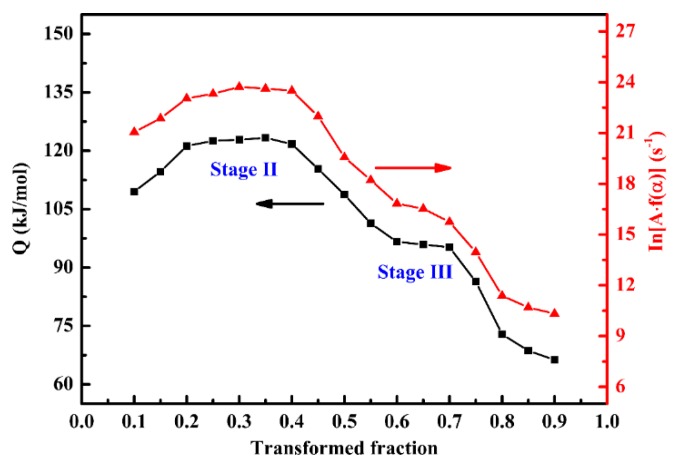
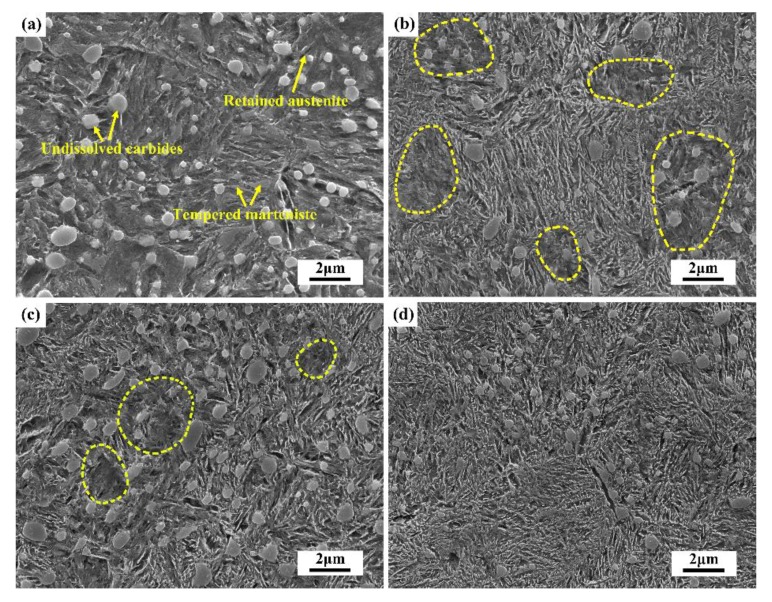
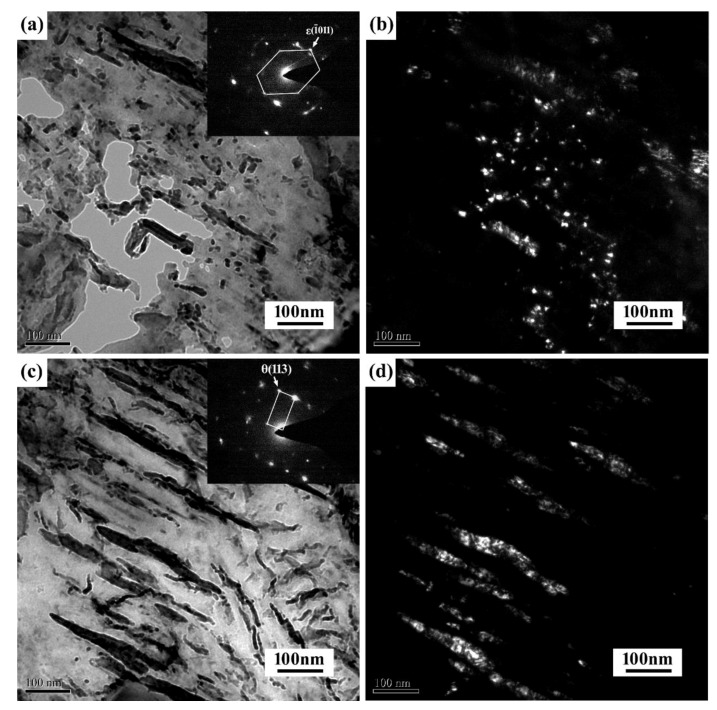
In this work, the non-isothermal process of GCr15 bearing steel after quenching and tempering (QT) under different tensile stress (0, 20, 40 MPa) was investigated by kinetic analysis and microstructural observation. The Kissinger method and differential isoconversional method were employed to assess the kinetic parameters of the microstructural evolution during the non-isothermal process with and without applied stress. It is found that the activation energy of retained austenite decomposition slightly increases from 109.4 kJ/mol to 121.5 kJ/mol with the increase of tensile stress. However, the activation energy of cementite precipitation decreases from 179.4 kJ/mol to 94.7 kJ/mol, proving that tensile stress could reduce the energy barrier of cementite precipitation. In addition, the microstructural observation based on scanning and transmission electron microscopy (SEM and TEM) shows that more cementite has formed for the specimens with the applied tensile stress, whereas there is still a large number of ε carbides existing in the specimens without stress. The results of X-ray diffraction (XRD) also verify that carbon in martensite diffuses more and participates in the formation of cementite under the applied tensile stress, which thus are in good agreement with the kinetic analysis. The mechanisms for the differences in cementite precipitation behaviors may lie in the acceleration of carbon atoms migration and the reduction of the nucleation barrier by applying tensile stress.
在本工作中,通过动力学分析和微观结构观察,研究了GCr15轴承钢在不同拉伸应力(0、20、40MPa)下淬火和回火(QT)后的非等温过程。采用基辛格方法和微分等转化率方法评估了有应力和无应力作用下非等温过程中微观结构演变的动力学参数。结果发现,随着拉伸应力的增加,残余奥氏体分解的激活能从109.4kJ/mol略有增加至121.5kJ/mol。然而,渗碳体析出的激活能从179.4kJ/mol降至94.7kJ/mol,这证明拉伸应力可降低渗碳体析出的能垒。此外,基于扫描电子显微镜和透射电子显微镜(SEM和TEM)的微观结构观察表明,施加拉伸应力的试样形成了更多的渗碳体,而无应力试样中仍存在大量的ε碳化物。X射线衍射(XRD)结果也证实,在施加拉伸应力的情况下,马氏体中的碳扩散得更多并参与渗碳体的形成,这与动力学分析结果吻合良好。渗碳体析出行为差异的机制可能在于施加拉伸应力加速了碳原子的迁移并降低了形核势垒。