Abdallah Sara J, Smith Benjamin M, Wilkinson-Maitland Courtney, Li Pei Zhi, Bourbeau Jean, Jensen Dennis
Clinical Exercise & Respiratory Physiology Laboratory, Department of Kinesiology and Physical Education, McGill University, Montreal, QC, Canada.
Respiratory Epidemiology & Clinical Research Unit, Division of Respiratory Medicine, Department of Medicine, Research Institute of the McGill University Health Centre, McGill University, Montreal, QC, Canada.
Front Physiol. 2018 Nov 14;9:1618. doi: 10.3389/fphys.2018.01618. eCollection 2018.
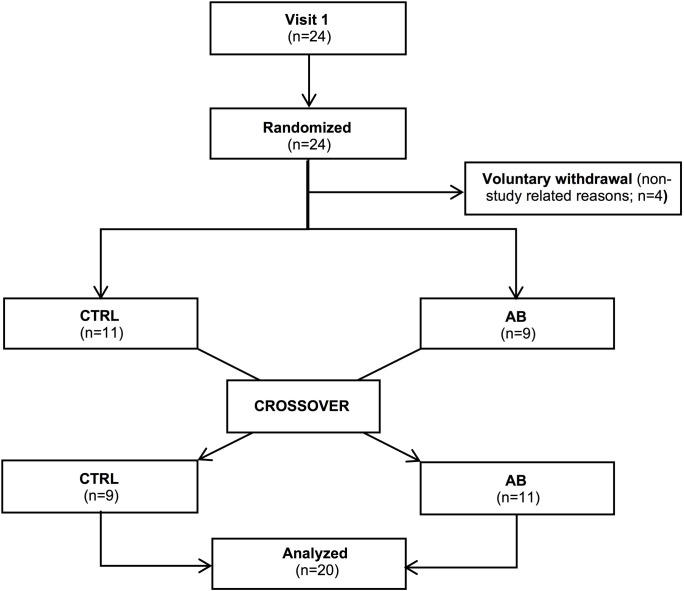
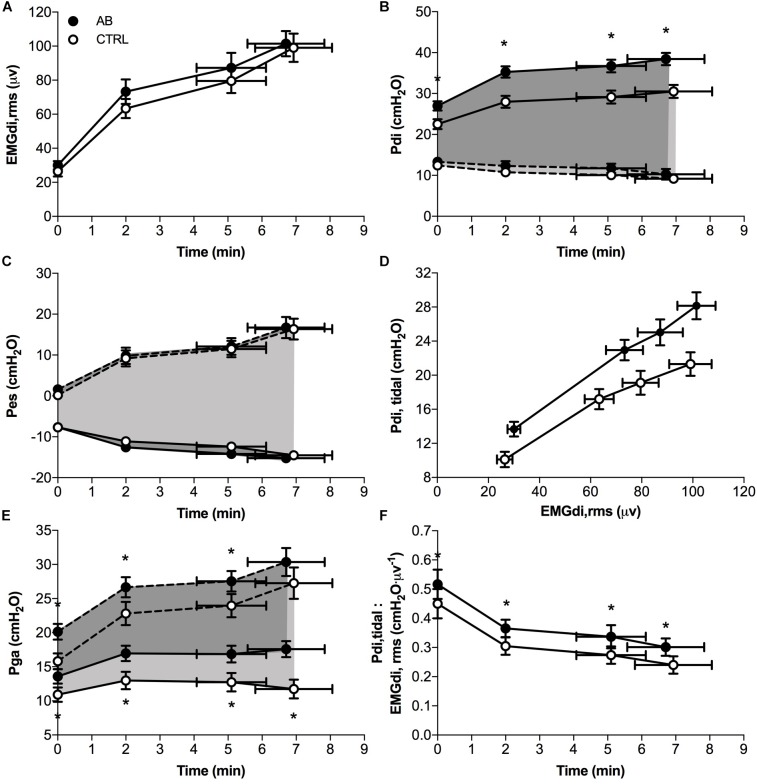
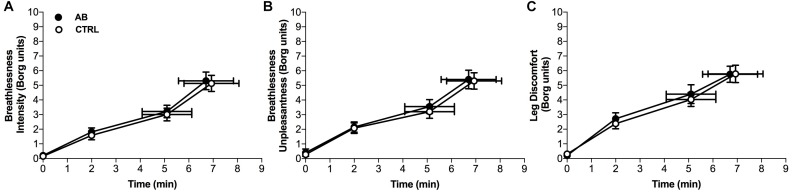
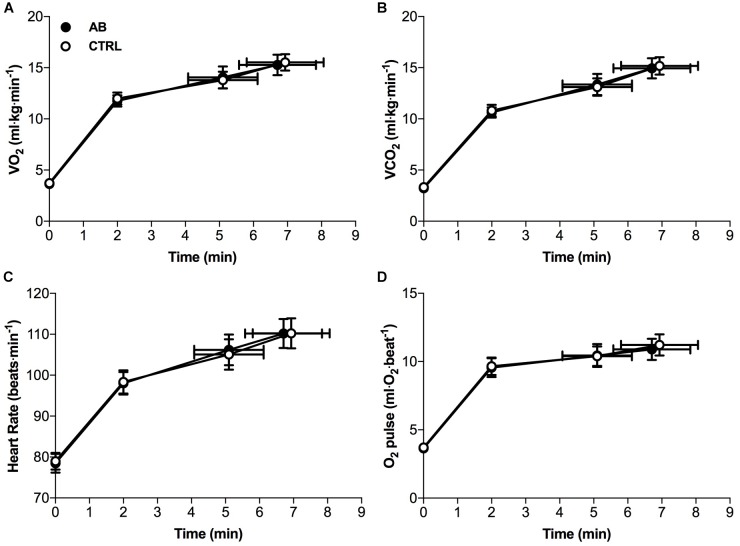
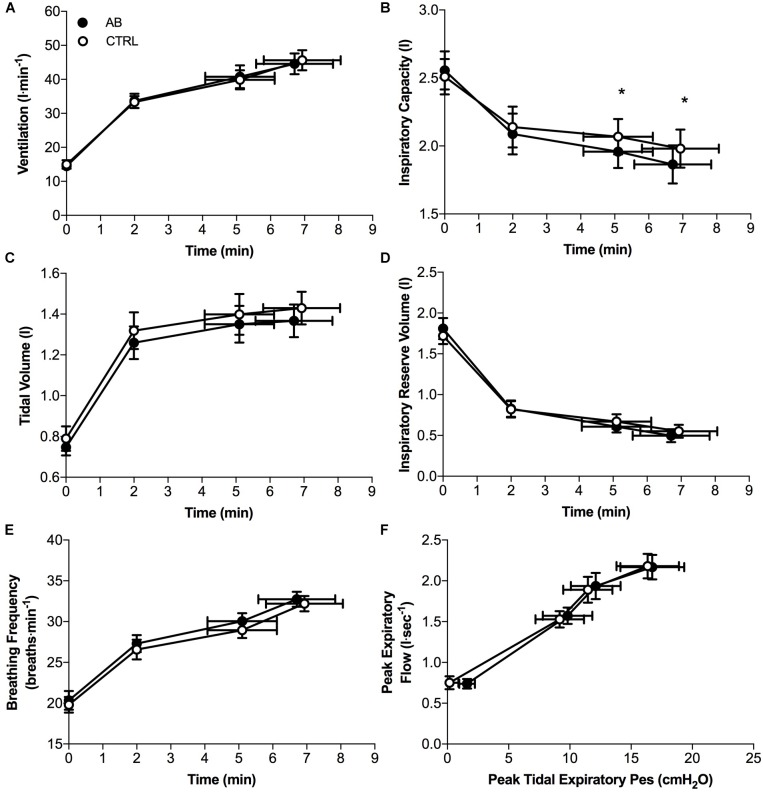
We tested the hypothesis that abdominal binding (AB) would reduce breathlessness and improve exercise tolerance by enhancing neuromuscular efficiency of the diaphragm during exercise in adults with chronic obstructive pulmonary disease (COPD). In a randomized, controlled, crossover trial, 20 adults with COPD (mean ± SD FEV, 60 ± 16% predicted) completed a symptom-limited constant-load cycle endurance exercise test at 75% of their peak incremental power output with concomitant measures of the diaphragm electromyogram (EMGdi) and respiratory pressures without (CTRL) vs. with AB sufficient to increase end-expiratory gastric pressure (Pga,ee) by 6.7 ± 0.3 cmHO at rest. Compared to CTRL, AB enhanced diaphragmatic neuromuscular efficiency during exercise ( < 0.05), as evidenced by a 25% increase in the quotient of EMGdi to tidal transdiaphragmatic pressure swing. By contrast, AB had no demonstrable effect on exertional breathlessness and exercise tolerance; spirometry and plethysmography-derived pulmonary function test parameters at rest; and cardiac, metabolic, breathing pattern, inspiratory reserve volume and EMGdi responses during exercise (all > 0.05 vs. CTRL). In conclusion, enhanced neuromuscular efficiency of the diaphragm during exercise with AB was not associated with relief of exertional breathlessness and improved exercise tolerance in adults with COPD. ClinicalTrials.gov Identifier: NCT01852006.
对于慢性阻塞性肺疾病(COPD)成人患者,腹部束缚(AB)通过在运动期间提高膈肌的神经肌肉效率,可减轻呼吸困难并改善运动耐力。在一项随机、对照、交叉试验中,20名COPD成人患者(平均±标准差FEV,预计值的60±16%)以其峰值递增功率输出的75%完成了一项症状限制恒定负荷循环耐力运动测试,同时测量了膈肌肌电图(EMGdi)和呼吸压力,测试时分别为不使用腹部束缚(对照)与使用腹部束缚,腹部束缚在静息时足以使呼气末胃内压(Pga,ee)增加6.7±0.3 cmH₂O。与对照相比,腹部束缚在运动期间提高了膈肌的神经肌肉效率(<0.05),这表现为EMGdi与潮气量跨膈肌压力摆动的商增加了25%。相比之下,腹部束缚对运动性呼吸困难和运动耐力没有明显影响;对静息时的肺活量测定和体积描记法得出的肺功能测试参数也无明显影响;对运动期间的心脏、代谢、呼吸模式、吸气储备量和EMGdi反应同样无明显影响(与对照相比均>0.05)。总之,在运动期间使用腹部束缚提高膈肌的神经肌肉效率,与COPD成人患者运动性呼吸困难的缓解及运动耐力的改善无关。ClinicalTrials.gov标识符:NCT01852006。