BarcelonaBeta Brain Research Center, Fundació Pasqual Maragall, Universitat Pompeu Fabra, Barcelona, Spain.
Unidad de Alzheimer y otros trastornos cognitivos, Hospital Clinic-IDIBAPS, Barcelona, Spain.
Acta Neuropathol. 2018 Dec;136(6):821-853. doi: 10.1007/s00401-018-1932-x. Epub 2018 Nov 28.
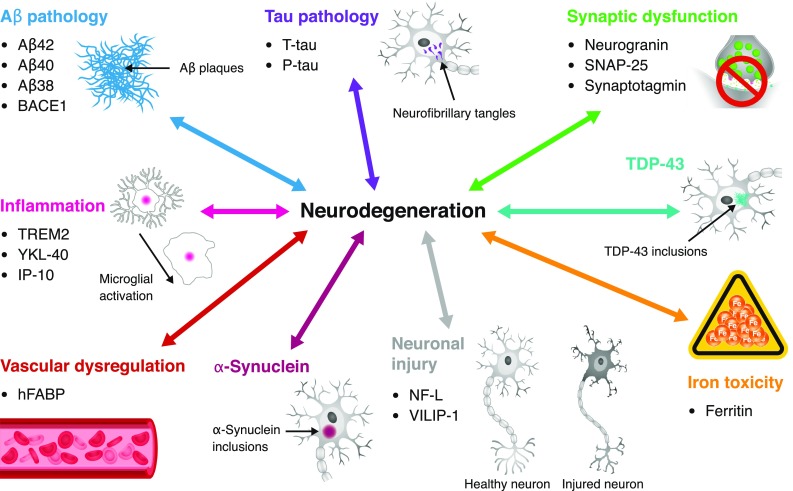
Alzheimer's disease (AD) is a progressive neurodegenerative disease with a complex and heterogeneous pathophysiology. The number of people living with AD is predicted to increase; however, there are no disease-modifying therapies currently available and none have been successful in late-stage clinical trials. Fluid biomarkers measured in cerebrospinal fluid (CSF) or blood hold promise for enabling more effective drug development and establishing a more personalized medicine approach for AD diagnosis and treatment. Biomarkers used in drug development programmes should be qualified for a specific context of use (COU). These COUs include, but are not limited to, subject/patient selection, assessment of disease state and/or prognosis, assessment of mechanism of action, dose optimization, drug response monitoring, efficacy maximization, and toxicity/adverse reactions identification and minimization. The core AD CSF biomarkers Aβ42, t-tau, and p-tau are recognized by research guidelines for their diagnostic utility and are being considered for qualification for subject selection in clinical trials. However, there is a need to better understand their potential for other COUs, as well as identify additional fluid biomarkers reflecting other aspects of AD pathophysiology. Several novel fluid biomarkers have been proposed, but their role in AD pathology and their use as AD biomarkers have yet to be validated. In this review, we summarize some of the pathological mechanisms implicated in the sporadic AD and highlight the data for several established and novel fluid biomarkers (including BACE1, TREM2, YKL-40, IP-10, neurogranin, SNAP-25, synaptotagmin, α-synuclein, TDP-43, ferritin, VILIP-1, and NF-L) associated with each mechanism. We discuss the potential COUs for each biomarker.
阿尔茨海默病(AD)是一种进行性神经退行性疾病,具有复杂且异质的病理生理学。预计患有 AD 的人数将会增加;然而,目前尚无针对该病的治疗方法,并且在晚期临床试验中没有一种方法是成功的。在脑脊液(CSF)或血液中测量的液体生物标志物有望为更有效的药物开发提供支持,并为 AD 的诊断和治疗建立更个性化的医学方法。在药物开发计划中使用的生物标志物应符合特定的使用背景(COU)。这些 COU 包括但不限于:受试者/患者选择、疾病状态和/或预后评估、作用机制评估、剂量优化、药物反应监测、疗效最大化以及毒性/不良反应的识别和最小化。核心 AD CSF 生物标志物 Aβ42、t-tau 和 p-tau 因其诊断效用而被研究指南认可,并且正在考虑对临床试验中的受试者选择进行资格认证。然而,需要更好地了解它们在其他 COU 中的潜在作用,以及识别反映 AD 病理生理学其他方面的其他液体生物标志物。已经提出了几种新型液体生物标志物,但它们在 AD 病理学中的作用以及作为 AD 生物标志物的用途仍有待验证。在这篇综述中,我们总结了一些与散发性 AD 相关的病理机制,并强调了几个已建立和新型液体生物标志物(包括 BACE1、TREM2、YKL-40、IP-10、神经颗粒蛋白、SNAP-25、突触结合蛋白、α-突触核蛋白、TDP-43、铁蛋白、VILIP-1 和 NF-L)的相关数据。我们讨论了每个生物标志物的潜在 COU。