Chang Hengrui, Zheng Zhanle, Yu Yiyang, Shao Jiasheng, Zhang Yingze
Department of Orthopaedic Surgery, the Third Hospital of Hebei Medical University, NO.139 Ziqiang Road, Shijiazhuang, Hebei, 050051, People's Republic of China.
Key laboratory of biomechanics of Hebei Province, Shijiazhuang, Hebei, 050051, People's Republic of China.
BMC Musculoskelet Disord. 2018 Nov 29;19(1):419. doi: 10.1186/s12891-018-2343-9.
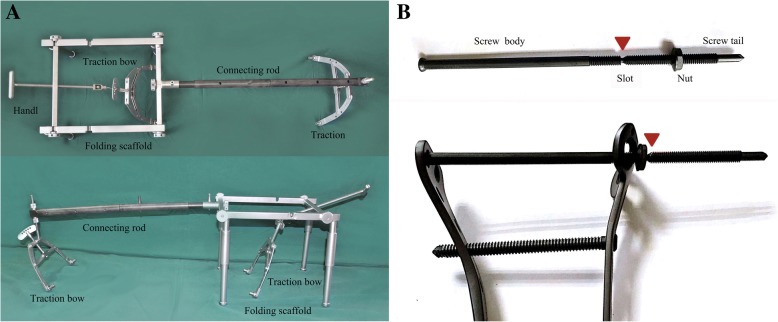
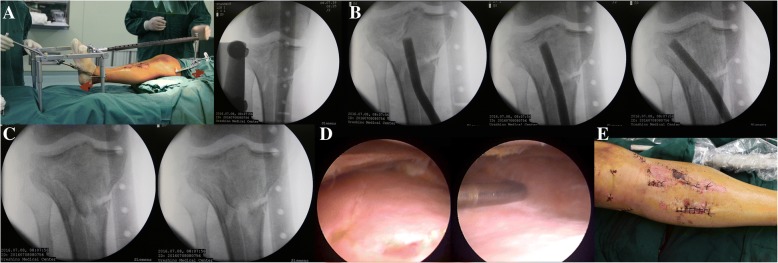
Minimally invasive treatment of complex tibial plateau fracture represents one of the most challenging problems in orthopedic surgery. We intended to describe the percutaneous surgery involving an originally designed traction device which might facilitate the closed reduction for bicondylar tibial plateau fractures. Further, to assess the clinical outcomes of this minimally invasive technique.
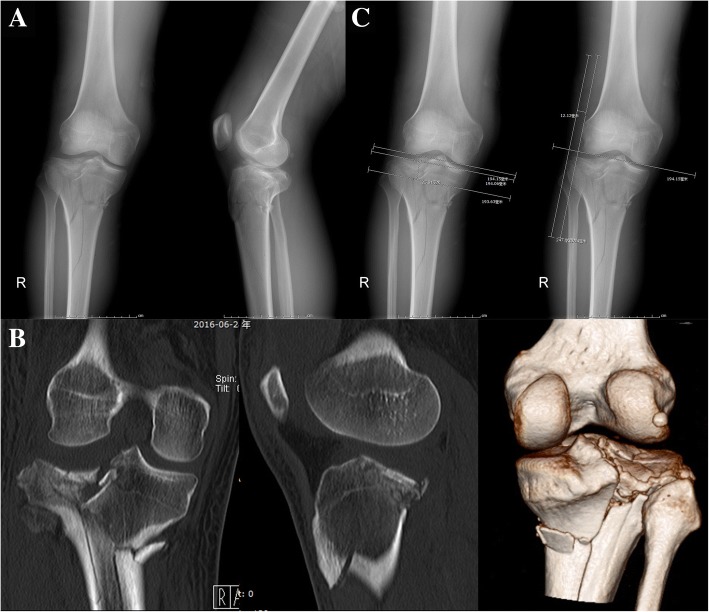
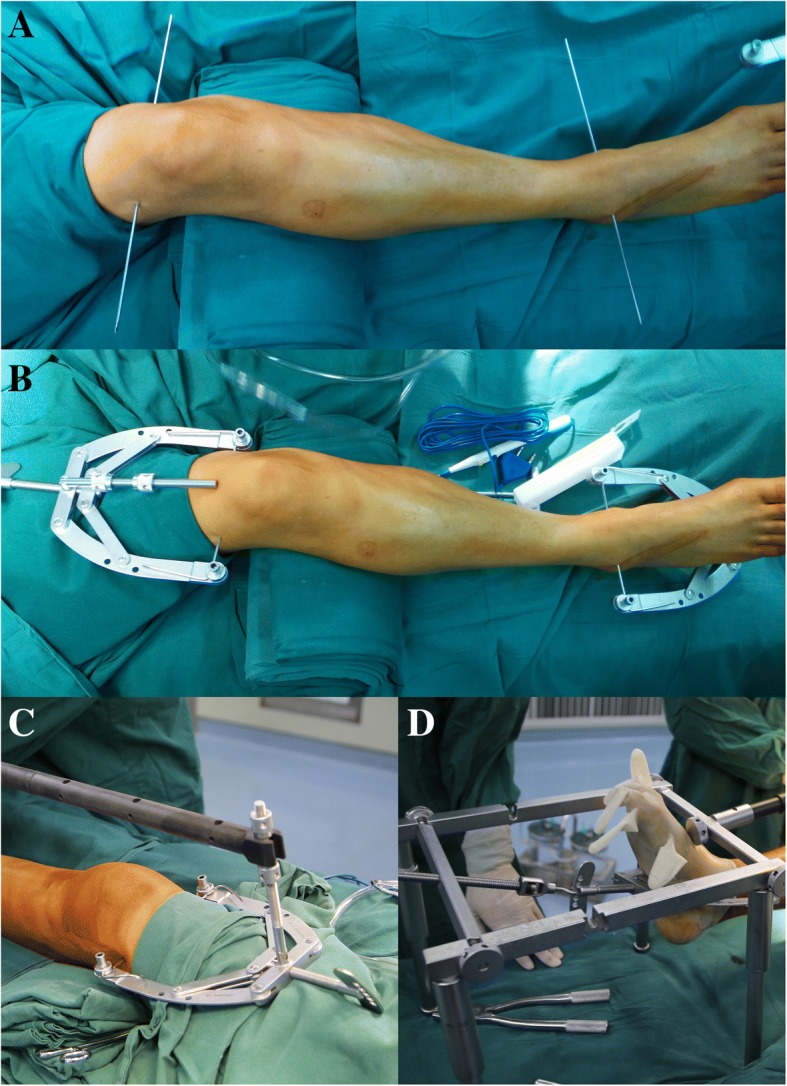
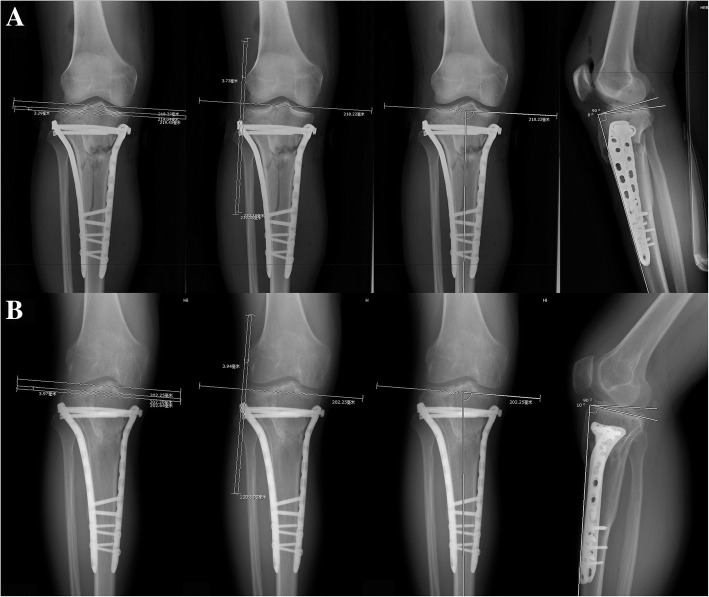
Between December 2015 and July 2016, Twenty-one patients, mean age 43.71 ± 13.80 years, suffering from a bicondylar tibial plateau fracture (AO/OTA 41-type C) were included. All fractures were firstly reduced by skeletal traction with the aid of bidirectional rapid reductor, and residual depressed fragments were treated with minimally invasive bone tamp reduction. We then evaluated at a minimum follow-up of one year: (1) the rate of complications, (2) the radiographic outcomes (the amount of depression, tibial plateau widening, tibial plateau angle and posterior slope angle) and (3) the clinical outcome (Rasmussen scoring system).
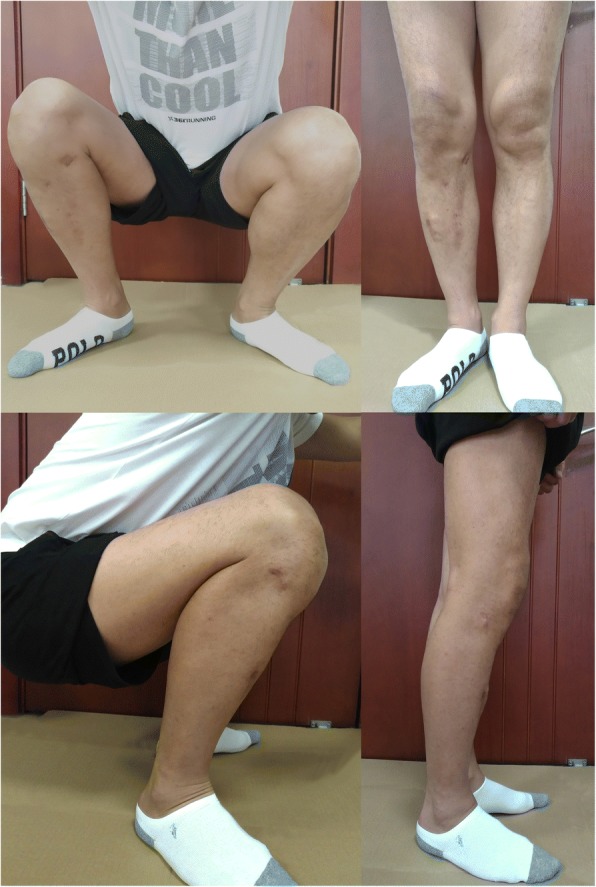
All patients had their fractures healed without secondary displacement. No instrument-related complications occurred during operation. Post-operatively, superficial infection was found in two patients and donor-site morbidity was found in one patient. We observed a < 5 mm step-off in 100% of patients and a < 5 mm plateau widening in 95.5% of patients. Three patients were considered indicative of malalignment with TPA > 90° or PSA > 15°. At last evaluation, the Rasmussen clinical score was excellent in 11 patients (52.3%), good in 9 (42.9%) and fair in 1 (4.8%), and the radiological score was excellent in seven patients (33.3%), good in 14 (66.7%).
The bidirectional rapid reductor facilitates the minimally invasive treatment of bicondylar tibial plateau fracture. The patients exhibited excellent functional recovery. These results should be validated with a larger group of patients and longer period results.
ChiCTR-OPC-16008011 .
复杂胫骨平台骨折的微创治疗是骨科手术中最具挑战性的问题之一。我们旨在描述一种经皮手术,该手术涉及一种最初设计的牵引装置,它可能有助于双髁胫骨平台骨折的闭合复位。此外,评估这种微创技术的临床疗效。
2015年12月至2016年7月,纳入21例双髁胫骨平台骨折(AO/OTA 41-C型)患者,平均年龄43.71±13.80岁。所有骨折首先借助双向快速复位器进行骨牵引复位,残余的塌陷骨折块采用微创骨挤压复位治疗。然后我们进行至少一年的随访评估:(1)并发症发生率,(2)影像学结果(塌陷程度、胫骨平台增宽、胫骨平台角和后倾角),以及(3)临床结果(Rasmussen评分系统)。
所有患者骨折均愈合,无二次移位。术中未发生与器械相关的并发症。术后,2例患者出现浅表感染,1例患者出现供区并发症。我们观察到100%的患者台阶差<5mm,95.5%的患者胫骨平台增宽<5mm。3例患者被认为存在力线不良,胫骨平台角(TPA)>90°或后倾角(PSA)>15°。末次评估时,11例患者(52.3%)的Rasmussen临床评分为优,9例(42.9%)为良,1例(4.8%)为中;7例患者(33.3%)的影像学评分为优,14例(66.7%)为良。
双向快速复位器有助于双髁胫骨平台骨折的微创治疗。患者功能恢复良好。这些结果应通过更大样本量的患者和更长时间的随访结果进行验证。
ChiCTR-OPC-16008011 。