Institute of Cellular and Molecular Immunology, University Medical Center Göttingen, Göttingen, Germany.
DZHK (German Center for Cardiovascular Research), Partner Site Göttingen, Göttingen, Germany.
Front Immunol. 2018 Nov 15;9:2665. doi: 10.3389/fimmu.2018.02665. eCollection 2018.
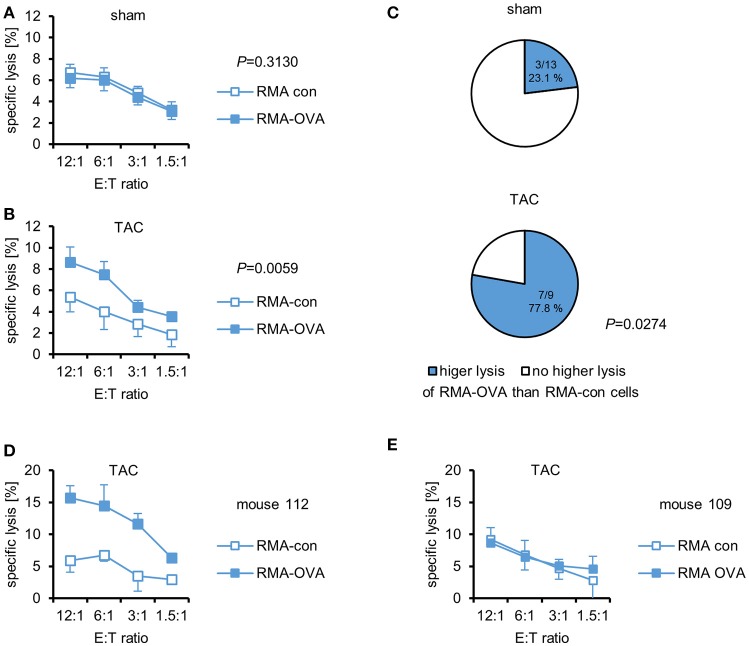
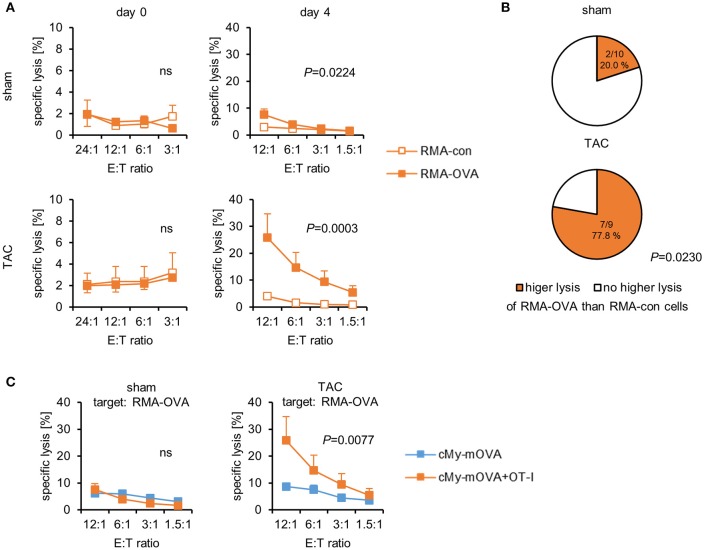
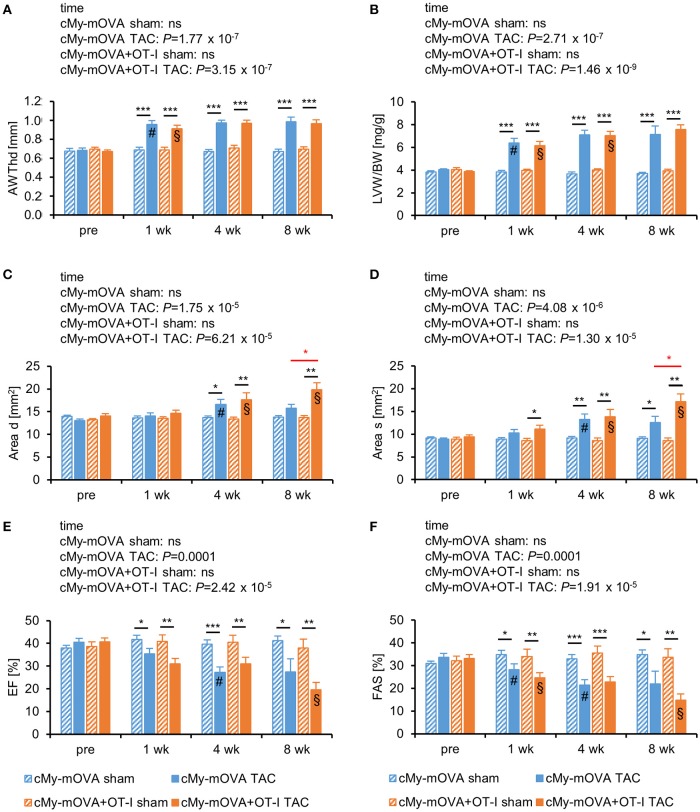
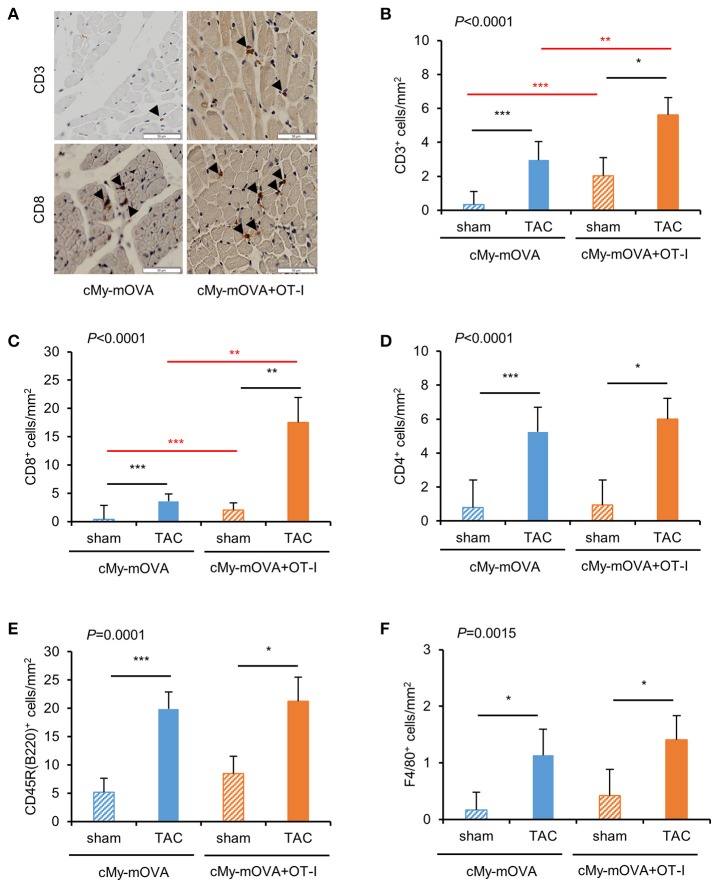
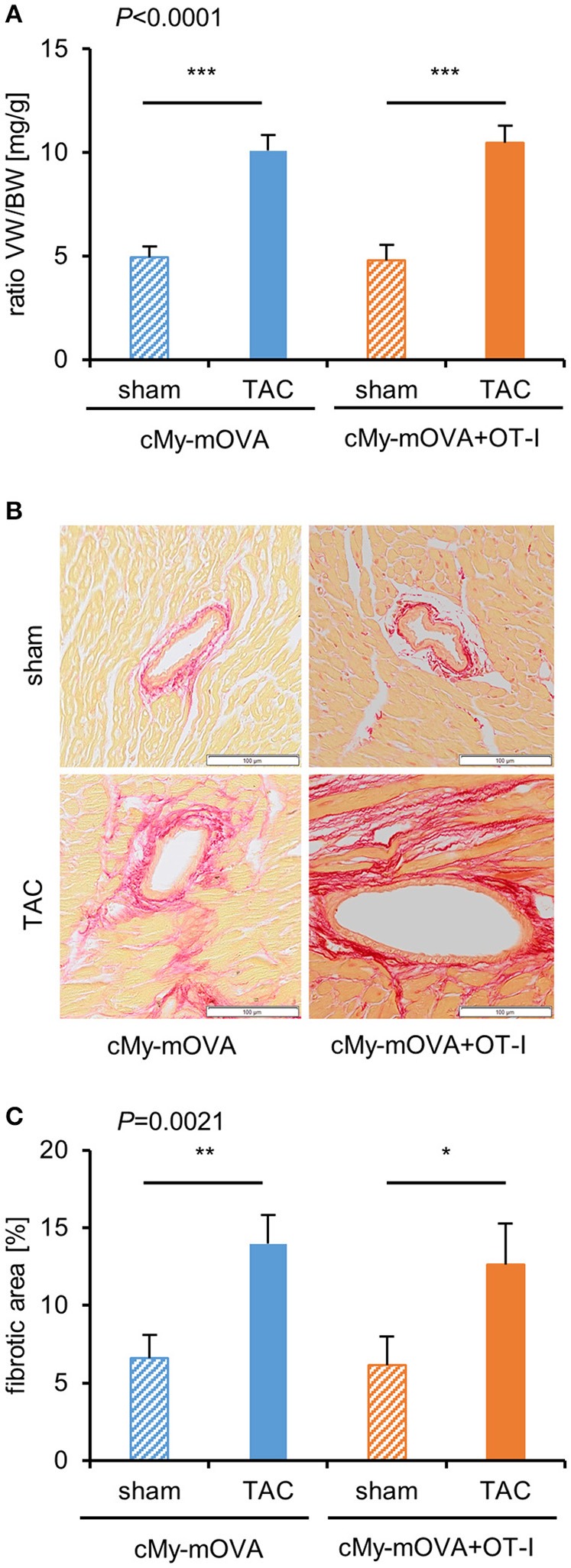
Heart failure due to pressure overload is frequently associated with inflammation. In addition to inflammatory responses of the innate immune system, autoimmune reactions of the adaptive immune system appear to be triggered in subgroups of patients with heart failure as demonstrated by the presence of autoantibodies against myocardial antigens. Moreover, T cell-deficient and T cell-depleted mice have been reported to be protected from heart failure induced by transverse aortic constriction (TAC) and we have shown recently that CD4-helper T cells with specificity for an antigen in cardiomyocytes accelerate TAC-induced heart failure. In this study, we set out to investigate the potential contribution of CD8-cytotoxic T cells with specificity to a model antigen (ovalbumin, OVA) in cardiomyocytes to pressure overload-induced heart failure. In 78% of cMy-mOVA mice with cardiomyocyte-specific OVA expression, a low-grade OVA-specific cellular cytotoxicity was detected after TAC. Adoptive transfer of OVA-specific CD8-T cells from T cell receptor transgenic OT-I mice before TAC did not increase the risk of OVA-specific autoimmunity in cMy-mOVA mice. After TAC, again 78% of the mice displayed an OVA-specific cytotoxicity with on average only a three-fold higher killing of OVA-expressing target cells. More CD8 cells were present after TAC in the myocardium of cMy-mOVA mice with OT-I T cells (on average 17.5/mm) than in mice that did not receive OVA-specific CD8-T cells (3.6/mm). However, the extent of fibrosis was similar in both groups. Functionally, as determined by echocardiography, the adoptive transfer of OVA-specific CD8-T cells did not significantly accelerate the progression from hypertrophy to heart failure in cMy-mOVA mice. These findings argue therefore against a major impact of cytotoxic T cells with specificity for autoantigens of cardiomyocytes in pressure overload-induced heart failure.
由于压力超负荷导致的心力衰竭常伴有炎症。除了固有免疫系统的炎症反应外,适应性免疫系统的自身免疫反应似乎也在心力衰竭患者的亚组中被触发,这表现为存在针对心肌抗原的自身抗体。此外,据报道,T 细胞缺陷和 T 细胞耗竭的小鼠可免受由主动脉缩窄(TAC)诱导的心力衰竭的影响,我们最近表明,针对心肌细胞中抗原具有特异性的 CD4 辅助性 T 细胞可加速 TAC 诱导的心力衰竭。在这项研究中,我们着手研究针对心肌细胞中模型抗原(卵清蛋白,OVA)具有特异性的 CD8 细胞毒性 T 细胞(CTL)对压力超负荷诱导的心力衰竭的潜在贡献。在具有心肌细胞特异性 OVA 表达的 cMy-mOVA 小鼠中,有 78%在 TAC 后检测到低水平的 OVA 特异性细胞毒性。在 TAC 之前,从 T 细胞受体转基因 OT-I 小鼠过继转移 OVA 特异性 CD8-T 细胞并未增加 cMy-mOVA 小鼠发生 OVA 特异性自身免疫的风险。在 TAC 后,又有 78%的小鼠显示出 OVA 特异性细胞毒性,平均仅对表达 OVA 的靶细胞的杀伤增加了三倍。在接受 OVA 特异性 CD8-T 细胞的 cMy-mOVA 小鼠的心肌中,TAC 后存在更多的 CD8 细胞(平均为 17.5/mm),而未接受 OVA 特异性 CD8-T 细胞的小鼠中(3.6/mm)则更少。然而,两组的纤维化程度相似。功能上,如通过超声心动图确定的,在 cMy-mOVA 小鼠中过继转移 OVA 特异性 CD8-T 细胞并未显著加速从肥大到心力衰竭的进展。因此,这些发现表明针对心肌细胞自身抗原的细胞毒性 T 细胞在压力超负荷诱导的心力衰竭中没有重大影响。