Didié Michael, Galla Satish, Muppala Vijayakumar, Dressel Ralf, Zimmermann Wolfram-Hubertus
Institute of Pharmacology and Toxicology, University Medical Center Göttingen, Göttingen, Germany.
Clinic for Cardiology and Pneumology, University Medical Center Göttingen, Göttingen, Germany.
Front Immunol. 2017 Aug 14;8:955. doi: 10.3389/fimmu.2017.00955. eCollection 2017.
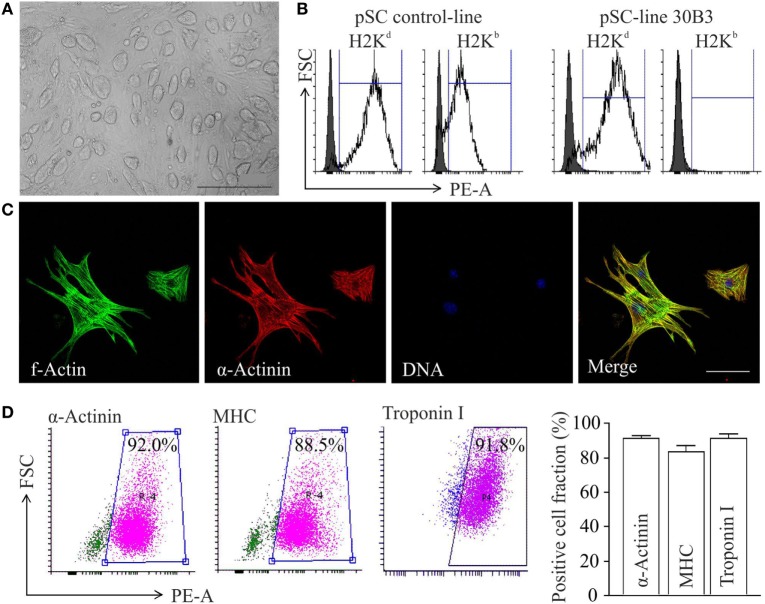
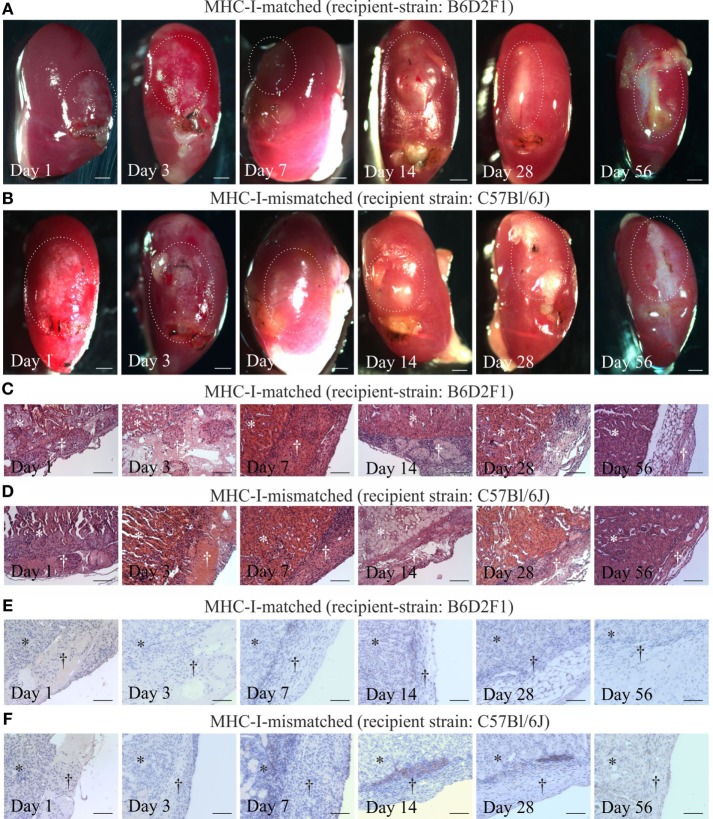
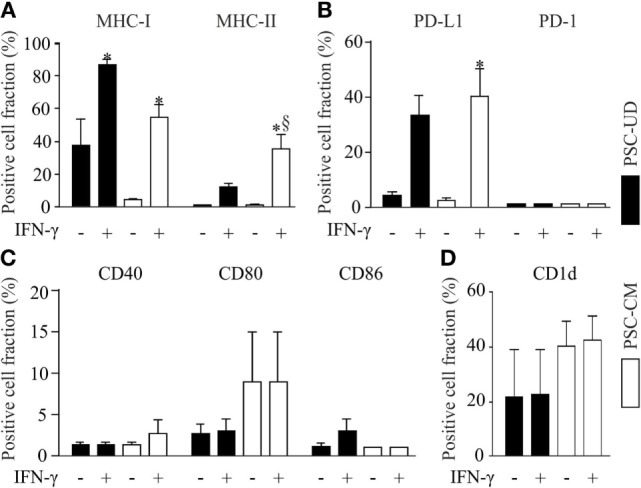
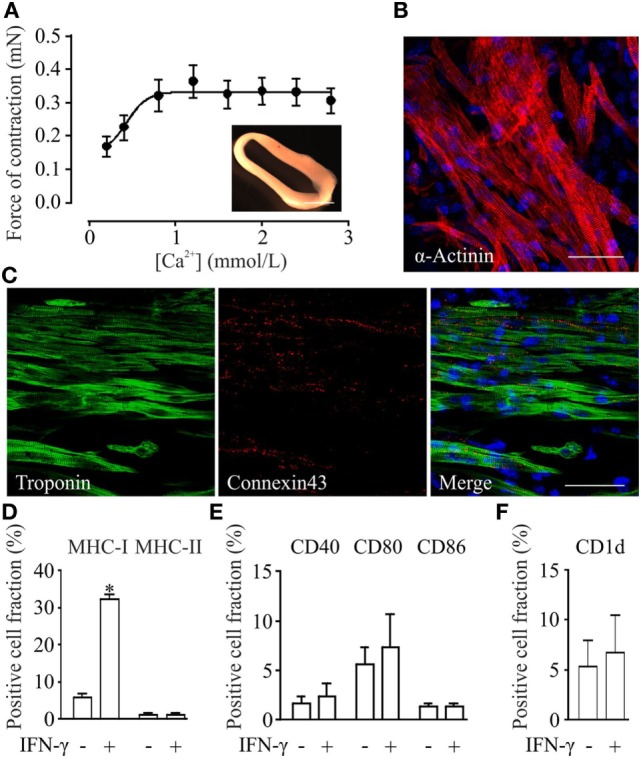
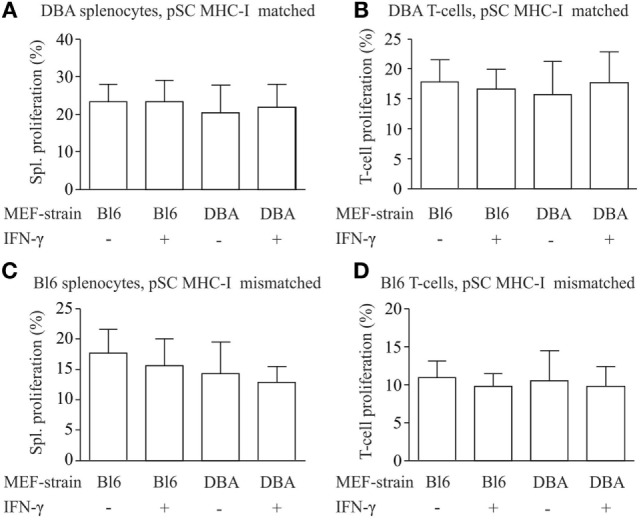
Pluripotent parthenogenetic stem cells (pSCs) can be derived by pharmacological activation of unfertilized oocytes. Homozygosity of the major histocompatibility complex (MHC) in pSCs makes them an attractive cell source for applications in allogeneic tissue repair. This was recently demonstrated for pSC-based tissue-engineered heart repair. A detailed analysis of immunological properties of pSC-derived cardiomyocytes and engineered heart muscle (EHM) thereof is, however, lacking. The aim of this study was to determine baseline and cytokine-inducible MHC class I and MHC class II as well as programmed death ligand-1 (PDL-1) and co-stimulatory protein (CD40, CD80, CD86) expression in pSC-derived cardiomyocytes and pSC-EHM and . Cardiomyocytes from an MHC-homologous (H2) pSC-line were enriched to ~90% by making use of a recently developed cardiomyocyte-specific genetic selection protocol. MHC class I and MHC class II expression in cardiomyocytes could only be observed after stimulation with interferon gamma (IFN-γ). PDL-1 was markedly upregulated under IFN-γ. CD40, CD80, and CD86 were expressed at low levels and not upregulated by IFN-γ. EHM constructed from H2 cardiomyocytes expressed similarly low levels of MHC class I, MHC class II, and costimulatory molecules under basal conditions. However, in EHM only MHC class I, but not MHC class II, molecules were upregulated after IFN-γ-stimulation. We next employed a cocultivation system with MHC-matched and MHC-mismatched splenocytes and T-cells to analyze the immune stimulatory properties of EHMs. Despite MHC-mismatched conditions, EHM did not induce splenocyte or T-cell proliferation . To evaluate the immunogenicity of pSC-derived cardiomyocytes , we implanted pSC-derived embryoid bodies after elimination of non-cardiomyocytes (cardiac bodies) under the kidney capsules of MHC-matched and -mismatched mice. Spontaneous beating of cardiac bodies could be observed for 28 days in the matched and for 7 days in the mismatched conditions. Teratomas formed after 28 days only in the MHC-matched conditions. Immunohistochemistry revealed single clusters of CD3-positive cells in the border zone of the implant in the mismatched conditions with few CD3-positive cells infiltrating the implant. Taken together, MHC-matched pSC-cardiomyocyte allografts show little immune cell activation, offering an explanation for the observed long-term retention of pSC-EHM allografts in the absence of immunosuppression.
多能孤雌生殖干细胞(pSCs)可通过对未受精卵母细胞进行药理学激活来获得。pSCs中主要组织相容性复合体(MHC)的纯合性使其成为同种异体组织修复应用中具有吸引力的细胞来源。最近在基于pSC的组织工程心脏修复中得到了证实。然而,缺乏对pSC来源的心肌细胞及其工程化心肌(EHM)免疫特性的详细分析。本研究的目的是确定pSC来源的心肌细胞和pSC-EHM中基线和细胞因子诱导的MHC I类和MHC II类以及程序性死亡配体-1(PDL-1)和共刺激蛋白(CD40、CD80、CD86)的表达。利用最近开发的心肌细胞特异性基因选择方案,将来自MHC同源(H2)pSC系的心肌细胞富集到约90%。仅在γ干扰素(IFN-γ)刺激后才能观察到心肌细胞中MHC I类和MHC II类的表达。在IFN-γ作用下,PDL-1明显上调。CD40、CD80和CD86表达水平较低,且不受IFN-γ上调。由H2心肌细胞构建的EHM在基础条件下表达的MHC I类、MHC II类和共刺激分子水平同样较低。然而,在EHM中,仅MHC I类分子在IFN-γ刺激后上调,而MHC II类分子未上调。接下来,我们采用与MHC匹配和不匹配的脾细胞及T细胞共培养系统来分析EHM的免疫刺激特性。尽管存在MHC不匹配的情况,EHM并未诱导脾细胞或T细胞增殖。为了评估pSC来源的心肌细胞的免疫原性,我们在MHC匹配和不匹配的小鼠肾包膜下植入去除非心肌细胞后的pSC来源的胚状体(心脏体)。在匹配条件下,心脏体可自发跳动28天,在不匹配条件下可跳动7天。仅在MHC匹配条件下,28天后形成了畸胎瘤。免疫组织化学显示,在不匹配条件下,植入物边缘区域有单个CD3阳性细胞簇,很少有CD3阳性细胞浸润植入物。综上所述,MHC匹配的pSC心肌细胞同种异体移植物几乎没有免疫细胞激活,这为在没有免疫抑制的情况下观察到的pSC-EHM同种异体移植物的长期留存提供了解释。