• 文献检索
  • 文档翻译
  • 深度研究
  • 学术资讯
  • Suppr Zotero 插件Zotero 插件
  • 邀请有礼
  • 套餐&价格
  • 历史记录
应用&插件
Suppr Zotero 插件Zotero 插件浏览器插件Mac 客户端Windows 客户端微信小程序
定价
高级版会员购买积分包购买API积分包
服务
文献检索文档翻译深度研究API 文档MCP 服务
关于我们
关于 Suppr公司介绍联系我们用户协议隐私条款
关注我们

Suppr 超能文献

核心技术专利:CN118964589B侵权必究
粤ICP备2023148730 号-1Suppr @ 2026

文献检索

告别复杂PubMed语法,用中文像聊天一样搜索,搜遍4000万医学文献。AI智能推荐,让科研检索更轻松。

立即免费搜索

文件翻译

保留排版,准确专业,支持PDF/Word/PPT等文件格式,支持 12+语言互译。

免费翻译文档

深度研究

AI帮你快速写综述,25分钟生成高质量综述,智能提取关键信息,辅助科研写作。

立即免费体验

树突状细胞中芳香烃受体的靶向缺失可防止二恶英引起的胸腺萎缩。

Targeted deletion of the aryl hydrocarbon receptor in dendritic cells prevents thymic atrophy in response to dioxin.

机构信息

Department of Biomedical and Pharmaceutical Sciences, University of Montana, 32 Campus Drive, Skaggs Building Room 284, Missoula, MT, 59812, USA.

Division of Biological Sciences, University of Montana, Missoula, MT, USA.

出版信息

Arch Toxicol. 2019 Feb;93(2):355-368. doi: 10.1007/s00204-018-2366-x. Epub 2018 Nov 29.

DOI:10.1007/s00204-018-2366-x
PMID:30499018
原文链接:https://pmc.ncbi.nlm.nih.gov/articles/PMC6367717/
Abstract

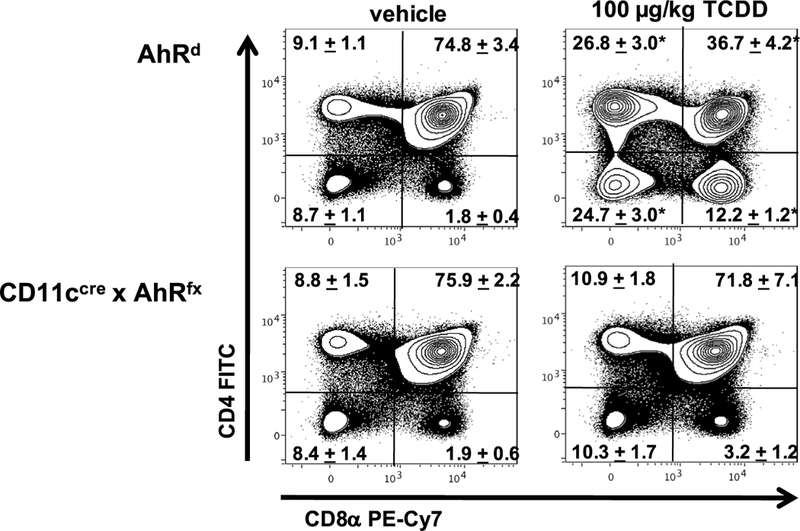
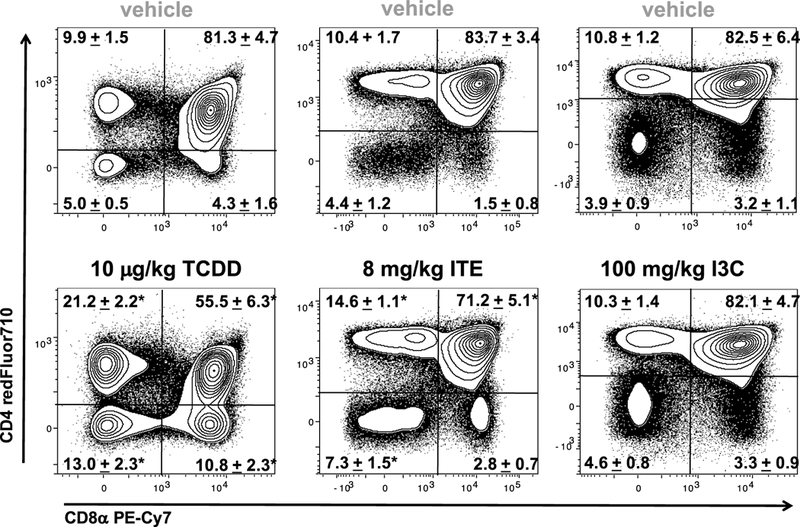
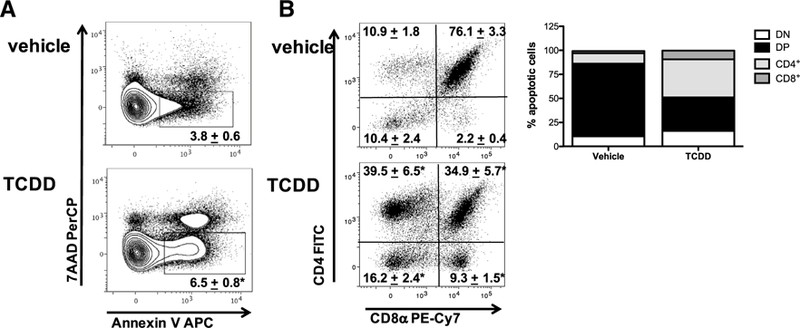
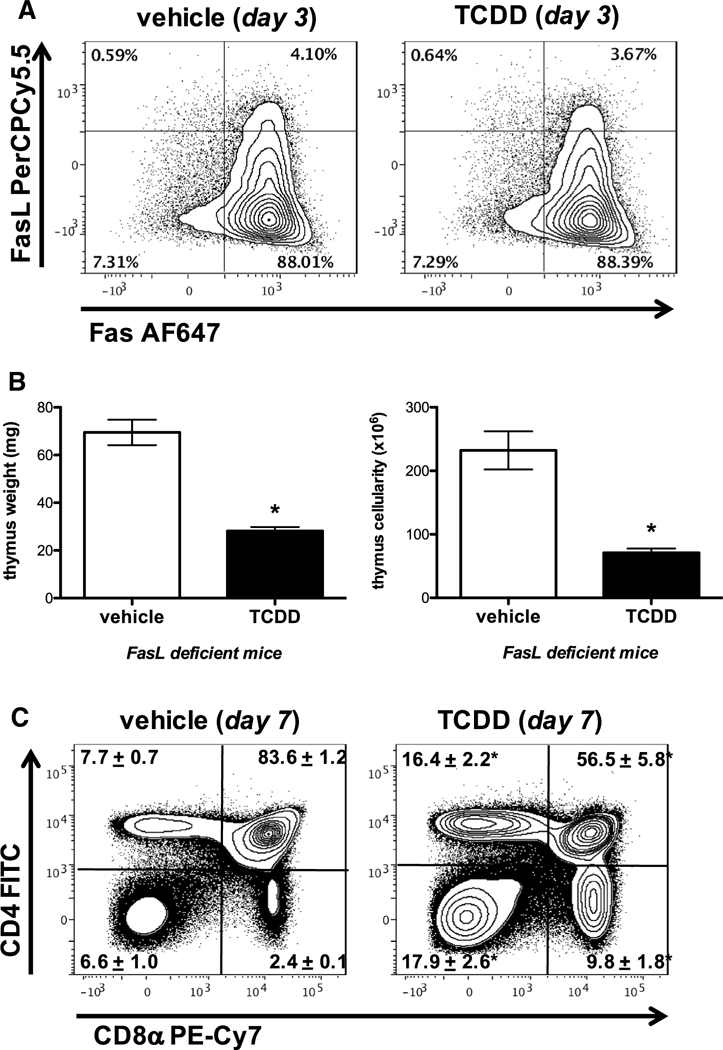
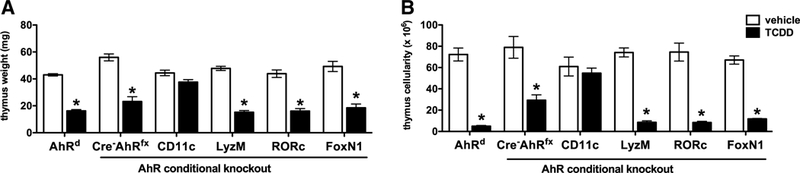
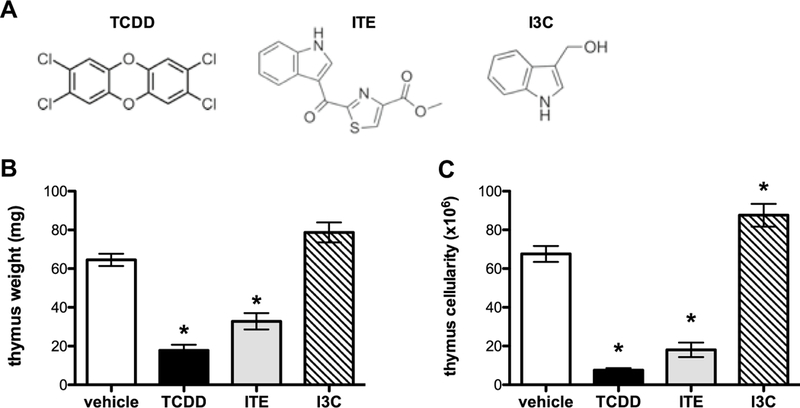
In nearly every species examined, administration of the persistent environmental pollutant, 2,3,7,8-tetrachlorodibenzo-p-dioxin (dioxin, TCDD) causes profound immune suppression and thymic atrophy in an aryl hydrocarbon receptor (AhR) dependent manner. Moreover, TCDD alters the development and differentiation of thymocytes, resulting in decreases in the relative proportion and absolute number of double positive (DP, CD4CD8) thymocytes, as well as a relative enrichment in the relative proportion and absolute number of double negative (DN, CD4CD8) and single-positive (SP) CD4CD8 and CD4CD8 thymocytes. Previous studies suggested that the target for TCDD-induced thymic atrophy resides within the hemopoietic compartment and implicated apoptosis, proliferation arrest of thymic progenitors, and emigration of DN thymocytes to the periphery as potential contributors to TCDD-induced thymic atrophy. However, the precise cellular and molecular mechanisms involved remain largely unknown. Our results show that administration of 10 µg/kg TCDD and 8 mg/kg 2-(1H-indol-3-ylcarbonyl)-4-thiazolecarboxylic acid methyl ester (ITE) induced AhR-dependent thymic atrophy in mice on day 7, whereas 100 mg/kg indole 3-carbinol (I3C) did not. Though our studies demonstrate that TCDD triggers a twofold increase in the frequency of apoptotic thymocytes, TCDD-induced thymic atrophy is not dependent on Fas-FasL interactions, and thus, enhanced apoptosis is unlikely to be a major mechanistic contributor. Finally, our results show that activation of the AhR in CD11c dendritic cells is directly responsible for TCDD-induced alterations in the development and differentiation of thymocytes, which results in thymic atrophy. Collectively, these results suggest that CD11c dendritic cells play a critical role in mediating TCDD-induced thymic atrophy and disruption of T lymphocyte development and differentiation in the thymus.

摘要

在几乎所有被检查的物种中,持久性环境污染物 2,3,7,8-四氯二苯并对二恶英(二恶英,TCDD)的给药以芳烃受体(AhR)依赖性方式引起深刻的免疫抑制和胸腺萎缩。此外,TCDD 改变了胸腺细胞的发育和分化,导致双阳性(DP,CD4CD8)胸腺细胞的相对比例和绝对数量减少,以及双阴性(DN,CD4CD8)和单阳性(SP)CD4CD8 和 CD4CD8 胸腺细胞的相对比例和绝对数量增加。先前的研究表明,TCDD 诱导的胸腺萎缩的靶标位于造血细胞群中,并暗示凋亡、胸腺祖细胞增殖停滞和 DN 胸腺细胞向外周迁移可能是 TCDD 诱导的胸腺萎缩的潜在原因。然而,确切的细胞和分子机制仍知之甚少。我们的结果表明,在第 7 天,10µg/kg TCDD 和 8mg/kg 2-(1H-吲哚-3-基羰基)-4-噻唑羧酸甲酯(ITE)给药诱导了 AhR 依赖性小鼠胸腺萎缩,而 100mg/kg 吲哚 3-甲醇(I3C)则没有。尽管我们的研究表明 TCDD 引发凋亡胸腺细胞的频率增加两倍,但 TCDD 诱导的胸腺萎缩不依赖于 Fas-FasL 相互作用,因此,增强的凋亡不太可能是主要的机制贡献者。最后,我们的结果表明,CD11c 树突状细胞中 AhR 的激活是 TCDD 诱导胸腺细胞发育和分化改变导致胸腺萎缩的直接原因。总之,这些结果表明,CD11c 树突状细胞在介导 TCDD 诱导的胸腺萎缩和破坏胸腺中 T 淋巴细胞发育和分化方面发挥着关键作用。
https://cdn.ncbi.nlm.nih.gov/pmc/blobs/d9c8/6367717/75462d93f28f/nihms-1000675-f0007.jpg
https://cdn.ncbi.nlm.nih.gov/pmc/blobs/d9c8/6367717/b5d6ef36992e/nihms-1000675-f0001.jpg
https://cdn.ncbi.nlm.nih.gov/pmc/blobs/d9c8/6367717/80b48b13f0a2/nihms-1000675-f0002.jpg
https://cdn.ncbi.nlm.nih.gov/pmc/blobs/d9c8/6367717/ce3c99fce642/nihms-1000675-f0003.jpg
https://cdn.ncbi.nlm.nih.gov/pmc/blobs/d9c8/6367717/3390aa4fc1eb/nihms-1000675-f0004.jpg
https://cdn.ncbi.nlm.nih.gov/pmc/blobs/d9c8/6367717/07e21eceec42/nihms-1000675-f0005.jpg
https://cdn.ncbi.nlm.nih.gov/pmc/blobs/d9c8/6367717/0640085b3d37/nihms-1000675-f0006.jpg
https://cdn.ncbi.nlm.nih.gov/pmc/blobs/d9c8/6367717/75462d93f28f/nihms-1000675-f0007.jpg
https://cdn.ncbi.nlm.nih.gov/pmc/blobs/d9c8/6367717/b5d6ef36992e/nihms-1000675-f0001.jpg
https://cdn.ncbi.nlm.nih.gov/pmc/blobs/d9c8/6367717/80b48b13f0a2/nihms-1000675-f0002.jpg
https://cdn.ncbi.nlm.nih.gov/pmc/blobs/d9c8/6367717/ce3c99fce642/nihms-1000675-f0003.jpg
https://cdn.ncbi.nlm.nih.gov/pmc/blobs/d9c8/6367717/3390aa4fc1eb/nihms-1000675-f0004.jpg
https://cdn.ncbi.nlm.nih.gov/pmc/blobs/d9c8/6367717/07e21eceec42/nihms-1000675-f0005.jpg
https://cdn.ncbi.nlm.nih.gov/pmc/blobs/d9c8/6367717/0640085b3d37/nihms-1000675-f0006.jpg
https://cdn.ncbi.nlm.nih.gov/pmc/blobs/d9c8/6367717/75462d93f28f/nihms-1000675-f0007.jpg

相似文献

1
Targeted deletion of the aryl hydrocarbon receptor in dendritic cells prevents thymic atrophy in response to dioxin.树突状细胞中芳香烃受体的靶向缺失可防止二恶英引起的胸腺萎缩。
Arch Toxicol. 2019 Feb;93(2):355-368. doi: 10.1007/s00204-018-2366-x. Epub 2018 Nov 29.
2
Cell proliferation arrest within intrathymic lymphocyte progenitor cells causes thymic atrophy mediated by the aryl hydrocarbon receptor.胸腺内淋巴细胞祖细胞的细胞增殖停滞会导致由芳烃受体介导的胸腺萎缩。
J Immunol. 2003 Nov 1;171(9):4582-91. doi: 10.4049/jimmunol.171.9.4582.
3
Thymic alterations induced by 2,3,7,8-tetrachlorodibenzo-p-dioxin are strictly dependent on aryl hydrocarbon receptor activation in hemopoietic cells.2,3,7,8-四氯二苯并对二恶英诱导的胸腺改变严格依赖于造血细胞中芳烃受体的激活。
J Immunol. 1998 Apr 15;160(8):3844-54.
4
Treatment of mice with 2,3,7,8-tetrachlorodibenzo-p-dioxin leads to aryl hydrocarbon receptor-dependent nuclear translocation of NF-kappaB and expression of Fas ligand in thymic stromal cells and consequent apoptosis in T cells.用2,3,7,8-四氯二苯并对二恶英处理小鼠会导致芳烃受体依赖性的核因子κB在胸腺基质细胞中的核转位以及Fas配体的表达,进而导致T细胞凋亡。
J Immunol. 2005 Jul 1;175(1):90-103. doi: 10.4049/jimmunol.175.1.90.
5
Induction of a chloracne phenotype in an epidermal equivalent model by 2,3,7,8-tetrachlorodibenzo-p-dioxin (TCDD) is dependent on aryl hydrocarbon receptor activation and is not reproduced by aryl hydrocarbon receptor knock down.2,3,7,8-四氯二苯并对二恶英(TCDD)诱导表皮等效模型出现氯痤疮表型依赖于芳烃受体激活,而芳烃受体敲低则不能复制。
J Dermatol Sci. 2014 Jan;73(1):10-22. doi: 10.1016/j.jdermsci.2013.09.001. Epub 2013 Sep 11.
6
Role of Fas-Fas ligand interactions in 2,3,7,8-tetrachlorodibenzo- p-dioxin (TCDD)-induced immunotoxicity: increased resistance of thymocytes from Fas-deficient (lpr) and Fas ligand-defective (gld) mice to TCDD-induced toxicity.Fas-Fas配体相互作用在2,3,7,8-四氯二苯并-对-二恶英(TCDD)诱导的免疫毒性中的作用:Fas缺陷(lpr)和Fas配体缺陷(gld)小鼠的胸腺细胞对TCDD诱导的毒性具有增强的抗性。
Toxicol Appl Pharmacol. 1999 Oct 15;160(2):141-55. doi: 10.1006/taap.1999.8753.
7
T cell-specific disruption of arylhydrocarbon receptor nuclear translocator (Arnt) gene causes resistance to 2,3,7,8-tetrachlorodibenzo-p-dioxin-induced thymic involution.芳烃受体核转运蛋白(Arnt)基因在T细胞中的特异性破坏导致对2,3,7,8-四氯二苯并对二恶英诱导的胸腺萎缩产生抗性。
J Immunol. 2003 Oct 15;171(8):4113-20. doi: 10.4049/jimmunol.171.8.4113.
8
2,3,7,8-tetrachlorodibenzo-p-dioxin causes alterations in lymphocyte development and thymic atrophy in hemopoietic chimeras generated from mice deficient in ARNT2.2,3,7,8-四氯二苯并对二恶英会导致由缺乏芳烃受体核转运蛋白2(ARNT2)的小鼠产生的造血嵌合体中淋巴细胞发育改变和胸腺萎缩。
Toxicol Sci. 2002 Sep;69(1):117-24. doi: 10.1093/toxsci/69.1.117.
9
Prenatal exposure to TCDD triggers significant modulation of microRNA expression profile in the thymus that affects consequent gene expression.产前接触 TCDD 会显著调节胸腺中的 microRNA 表达谱,从而影响随后的基因表达。
PLoS One. 2012;7(9):e45054. doi: 10.1371/journal.pone.0045054. Epub 2012 Sep 14.
10
Aryl hydrocarbon receptor knockout rats are insensitive to the pathological effects of repeated oral exposure to 2,3,7,8-tetrachlorodibenzo-p-dioxin.芳烃受体基因敲除大鼠对反复经口暴露于2,3,7,8-四氯二苯并对二噁英的病理效应不敏感。
J Appl Toxicol. 2016 Jun;36(6):802-14. doi: 10.1002/jat.3211. Epub 2015 Aug 17.

引用本文的文献

1
Endogenous thymic regeneration: restoring T cell production following injury.内源性胸腺再生:损伤后恢复T细胞生成
Nat Rev Immunol. 2025 Jan 6. doi: 10.1038/s41577-024-01119-0.
2
Aryl hydrocarbon receptor: current perspectives on key signaling partners and immunoregulatory role in inflammatory diseases.芳烃受体:在炎症性疾病中的关键信号伙伴和免疫调节作用的最新观点。
Front Immunol. 2024 Aug 15;15:1421346. doi: 10.3389/fimmu.2024.1421346. eCollection 2024.
3
Activation of the aryl hydrocarbon receptor improves allergen-specific immunotherapy of murine allergic airway inflammation: a novel adjuvant option?

本文引用的文献

1
INDOLE-3-CARBINOL EXERTS SEX-SPECIFIC EFFECTS IN MURINE COLITIS.吲哚 - 3 - 甲醇对小鼠结肠炎具有性别特异性影响。
Eur J Inflamm. 2012 Sep;10(3):335-346. doi: 10.1177/1721727x1201000309.
2
Canonical and non-canonical aryl hydrocarbon receptor signaling pathways.经典和非经典芳烃受体信号通路。
Curr Opin Toxicol. 2017 Feb;2:87-92. doi: 10.1016/j.cotox.2017.01.001. Epub 2017 Jan 18.
3
An endogenous aryl hydrocarbon receptor ligand, ITE, induces regulatory T cells and ameliorates experimental colitis.一种内源性芳香烃受体配体,ITE,可诱导调节性 T 细胞并改善实验性结肠炎。
芳基烃受体的激活可改善变应原特异性免疫疗法治疗变应性气道炎症:一种新型佐剂选择?
Front Immunol. 2024 Jun 10;15:1397072. doi: 10.3389/fimmu.2024.1397072. eCollection 2024.
4
Trends in experimental autoimmune prostatitis: insights into pathogenesis, therapeutic strategies, and redefinition.实验性自身免疫性前列腺炎的研究趋势:对发病机制、治疗策略及重新定义的见解
Am J Clin Exp Urol. 2024 Apr 15;12(2):52-63. doi: 10.62347/OUJJ3710. eCollection 2024.
5
Aryl hydrocarbon receptor regulates IL-22 receptor expression on thymic epithelial cell and accelerates thymus regeneration.芳烃受体调节胸腺上皮细胞上白细胞介素-22受体的表达并加速胸腺再生。
NPJ Regen Med. 2023 Nov 8;8(1):64. doi: 10.1038/s41536-023-00339-7.
6
Implications of xenobiotic-response element(s) and aryl hydrocarbon receptor in health and diseases.异源生物反应元件和芳香烃受体在健康和疾病中的意义。
Hum Cell. 2023 Sep;36(5):1638-1655. doi: 10.1007/s13577-023-00931-5. Epub 2023 Jun 17.
7
Targeting AhR as a Novel Therapeutic Modality against Inflammatory Diseases.靶向 AhR 作为治疗炎症性疾病的新疗法。
Int J Mol Sci. 2021 Dec 28;23(1):288. doi: 10.3390/ijms23010288.
8
Immunotoxicity of Xenobiotics in Fish: A Role for the Aryl Hydrocarbon Receptor (AhR)?鱼类中异生素的免疫毒性:芳香烃受体(AhR)的作用?
Int J Mol Sci. 2021 Aug 31;22(17):9460. doi: 10.3390/ijms22179460.
9
Organ-specific effects on glycolysis by the dioxin-activated aryl hydrocarbon receptor.二恶英激活的芳香烃受体对糖酵解的器官特异性作用。
PLoS One. 2020 Dec 15;15(12):e0243842. doi: 10.1371/journal.pone.0243842. eCollection 2020.
10
TCDD attenuates EAE through induction of FasL on B cells and inhibition of IgG production.TCDD 通过诱导 B 细胞 FasL 表达和抑制 IgG 产生来减轻 EAE。
Toxicology. 2021 Jan 30;448:152646. doi: 10.1016/j.tox.2020.152646. Epub 2020 Nov 28.
Am J Physiol Gastrointest Liver Physiol. 2018 Aug 1;315(2):G220-G230. doi: 10.1152/ajpgi.00413.2017. Epub 2018 Apr 19.
4
Aryl hydrocarbon receptor signaling modulates antiviral immune responses: ligand metabolism rather than chemical source is the stronger predictor of outcome.芳基烃受体信号转导调节抗病毒免疫反应:配体代谢而不是化学来源是更强的预后预测因子。
Sci Rep. 2018 Jan 29;8(1):1826. doi: 10.1038/s41598-018-20197-4.
5
Binding Mode and Structure-Activity Relationships of ITE as an Aryl Hydrocarbon Receptor (AhR) Agonist.作为一种芳基烃受体 (AhR) 激动剂,ITE 的结合模式和结构-活性关系。
ChemMedChem. 2018 Feb 6;13(3):270-279. doi: 10.1002/cmdc.201700669. Epub 2018 Jan 23.
6
TCDD, FICZ, and Other High Affinity AhR Ligands Dose-Dependently Determine the Fate of CD4+ T Cell Differentiation.TCDD、FICZ 和其他高亲和力 AhR 配体剂量依赖性地决定 CD4+T 细胞分化的命运。
Toxicol Sci. 2018 Feb 1;161(2):310-320. doi: 10.1093/toxsci/kfx215.
7
Dietary Indoles Suppress Delayed-Type Hypersensitivity by Inducing a Switch from Proinflammatory Th17 Cells to Anti-Inflammatory Regulatory T Cells through Regulation of MicroRNA.膳食吲哚通过调控微小RNA诱导促炎Th17细胞向抗炎调节性T细胞转变,从而抑制迟发型超敏反应。
J Immunol. 2016 Feb 1;196(3):1108-22. doi: 10.4049/jimmunol.1501727. Epub 2015 Dec 28.
8
Aryl hydrocarbon receptor knockout rats are insensitive to the pathological effects of repeated oral exposure to 2,3,7,8-tetrachlorodibenzo-p-dioxin.芳烃受体基因敲除大鼠对反复经口暴露于2,3,7,8-四氯二苯并对二噁英的病理效应不敏感。
J Appl Toxicol. 2016 Jun;36(6):802-14. doi: 10.1002/jat.3211. Epub 2015 Aug 17.
9
Indole and Tryptophan Metabolism: Endogenous and Dietary Routes to Ah Receptor Activation.吲哚与色氨酸代谢:激活芳烃受体的内源性及膳食途径
Drug Metab Dispos. 2015 Oct;43(10):1522-35. doi: 10.1124/dmd.115.064246. Epub 2015 Jun 3.
10
ITE, a novel endogenous nontoxic aryl hydrocarbon receptor ligand, efficiently suppresses EAU and T-cell-mediated immunity.ITE,一种新型内源性非毒性芳香烃受体配体,能有效抑制 EAU 和 T 细胞介导的免疫反应。
Invest Ophthalmol Vis Sci. 2013 Nov 13;54(12):7463-9. doi: 10.1167/iovs.12-11479.