Department of Biochemistry, Faculty of Medicine, Chiang Mai University, Chiang Mai, Thailand.
Center for Research and Development of Natural Products for Health, Chiang Mai University, Chiang Mai, Thailand.
Cancer Sci. 2019 Feb;110(2):596-607. doi: 10.1111/cas.13897. Epub 2018 Dec 21.
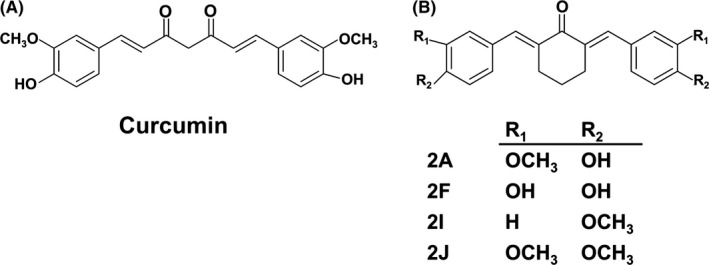
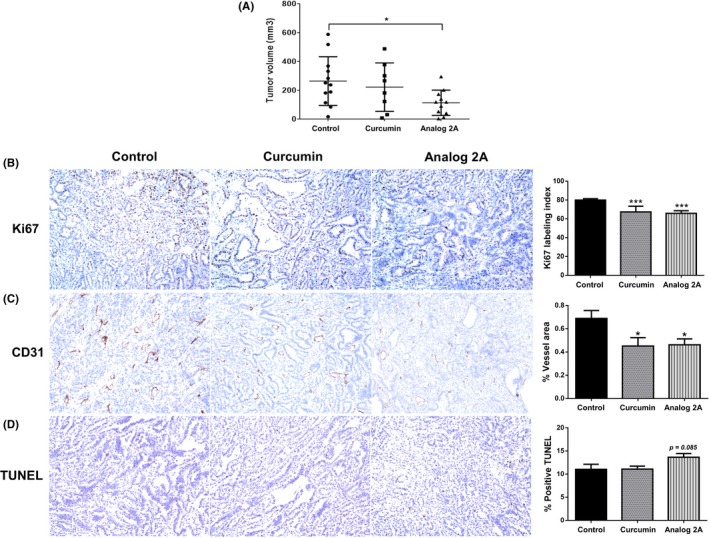
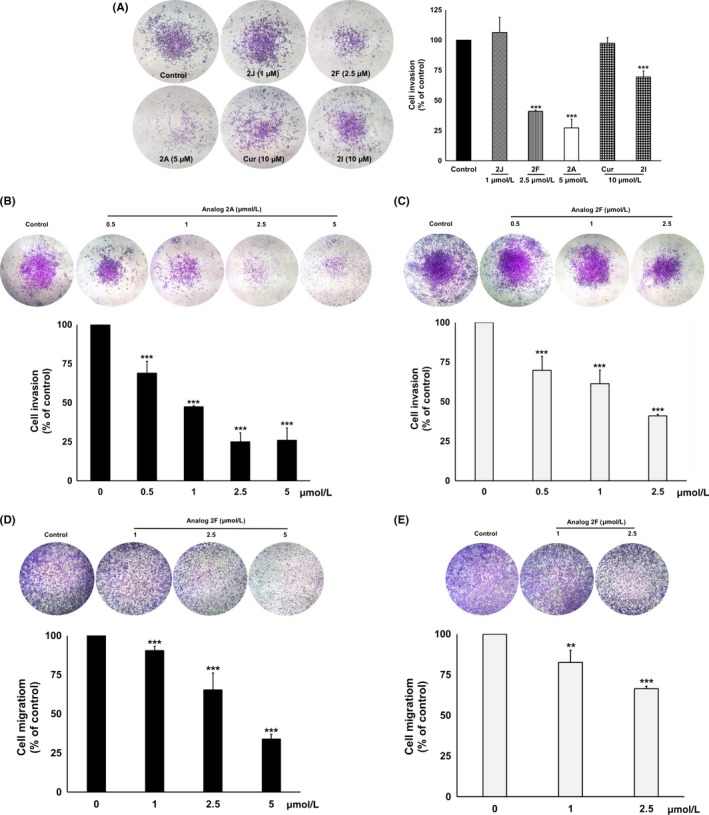
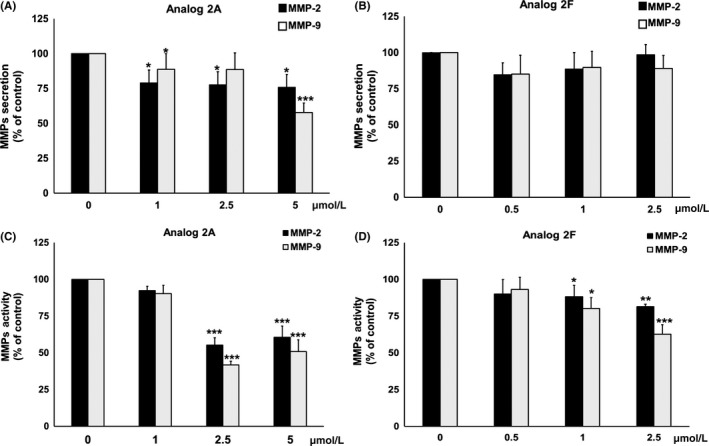
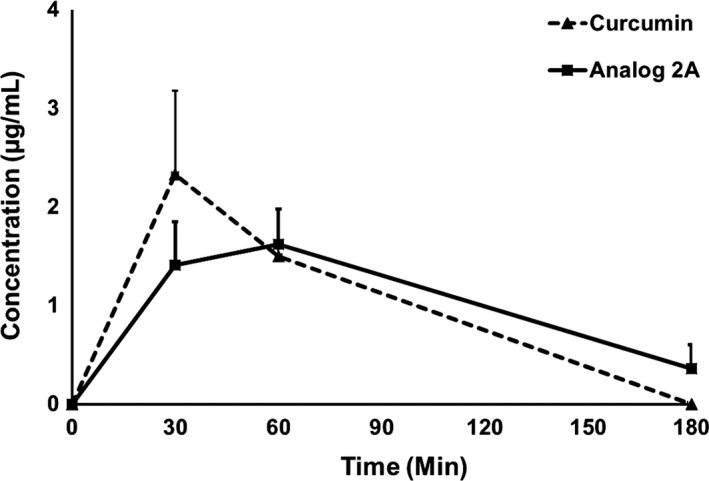
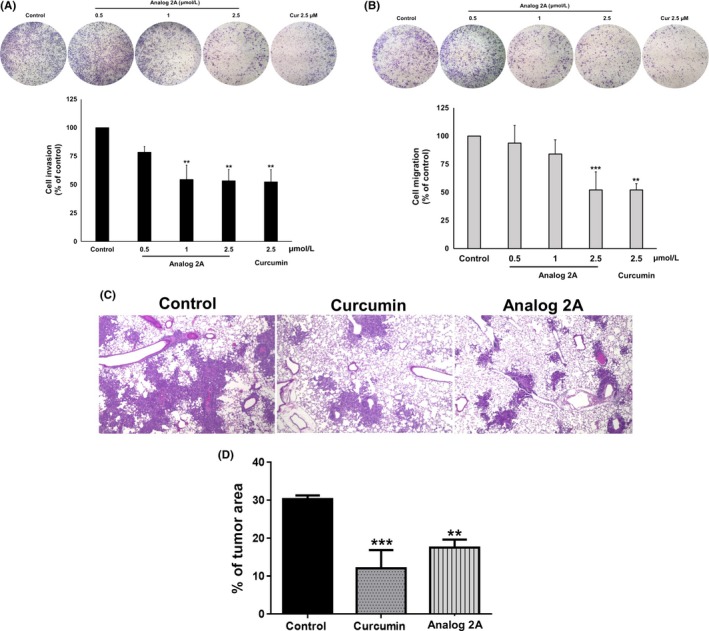
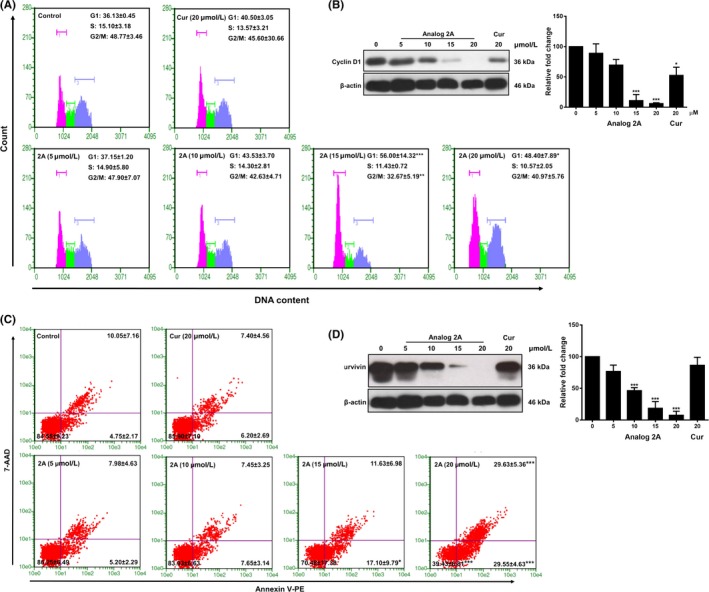
Many prostate cancer patients develop resistance to treatment called castration-resistant prostate cancer (CRPC) which is the major cause of recurrence and death. In the present study, four cyclohexanone curcumin analogs were synthesized. Additionally, their anticancer progression activity on CRPC cell lines, PC3 and PLS10 cells, was examined. We first determined their anti-metastasis properties and found that 2,6-bis-(4-hydroxy-3-methoxy-benzylidene)-cyclohexanone (2A) and 2,6-bis-(3,4-dihydroxy-benzylidene)-cyclohexanone (2F) showed higher anti-invasion properties against CRPC cells than curcumin. Analog 2A inhibited both MMP-2 and MMP-9 secretions and activities, whereas analog 2F reduced only MMP activities. These findings suggest that the compounds may inhibit CRPC cell metastasis by decreased extracellular matrix degradation. Analog 2A, the most potent analog, was then subjected to an in vivo study. Similar to curcumin, analog 2A was detectable in the serum of mice at 30 and 60 minutes after i.p. injections. Analog 2A and curcumin (30 mg/kg bodyweight) showed a similar ability to reduce tumor area in lungs of mice that were i.v. injected with PLS10 cells. Additionally, analog 2A showed superior growth inhibitory effect on PLS10 cells than that of curcumin both in vitro and in vivo. The compound inhibited PLS10 cells growth by induction of G1 phase arrest and apoptosis in vitro. Interestingly, analog 2A significantly decreased tumor growth with downregulation of cell proliferation and angiogenesis in PLS10-bearing mice. Taken together, we could summarize that analog 2A showed promising activities in inhibiting CRPC progression both in vitro and in vivo.
许多前列腺癌患者对治疗产生耐药性,称为去势抵抗性前列腺癌(CRPC),这是复发和死亡的主要原因。在本研究中,合成了四种环己酮姜黄素类似物。此外,还研究了它们对 CRPC 细胞系 PC3 和 PLS10 细胞的抗癌进展活性。我们首先确定了它们的抗转移特性,发现 2,6-双-(4-羟基-3-甲氧基苄叉基)环己酮(2A)和 2,6-双-(3,4-二羟基苄叉基)环己酮(2F)对 CRPC 细胞的抗侵袭活性高于姜黄素。类似物 2A 抑制 MMP-2 和 MMP-9 的分泌和活性,而类似物 2F 仅降低 MMP 活性。这些发现表明,这些化合物可能通过减少细胞外基质降解来抑制 CRPC 细胞转移。最有效的类似物 2A 随后进行了体内研究。与姜黄素相似,类似物 2A 在腹腔注射后 30 和 60 分钟可在小鼠血清中检测到。类似物 2A 和姜黄素(30mg/kg 体重)静脉注射 PLS10 细胞的小鼠肺部显示出相似的减少肿瘤面积的能力。此外,类似物 2A 在体外和体内对 PLS10 细胞的生长抑制作用均优于姜黄素。该化合物通过诱导 G1 期阻滞和凋亡来抑制 PLS10 细胞的生长。有趣的是,类似物 2A 可通过下调细胞增殖和血管生成来显著降低 PLS10 荷瘤小鼠的肿瘤生长。综上所述,我们可以总结出,类似物 2A 在抑制 CRPC 进展方面具有良好的体外和体内活性。