Tri-Institutional MD-PhD Program, Memorial Sloan-Kettering Cancer Center, Rockefeller University, Weill Cornell Medical College, New York, United States.
Weill Cornell Medicine, New York, United States.
Elife. 2018 Nov 30;7:e41090. doi: 10.7554/eLife.41090.
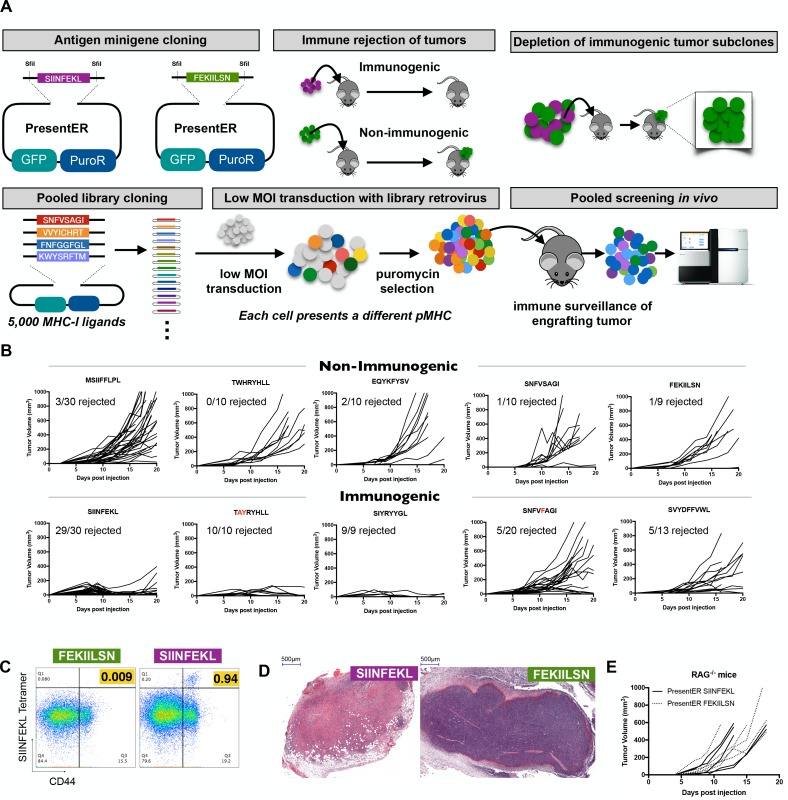
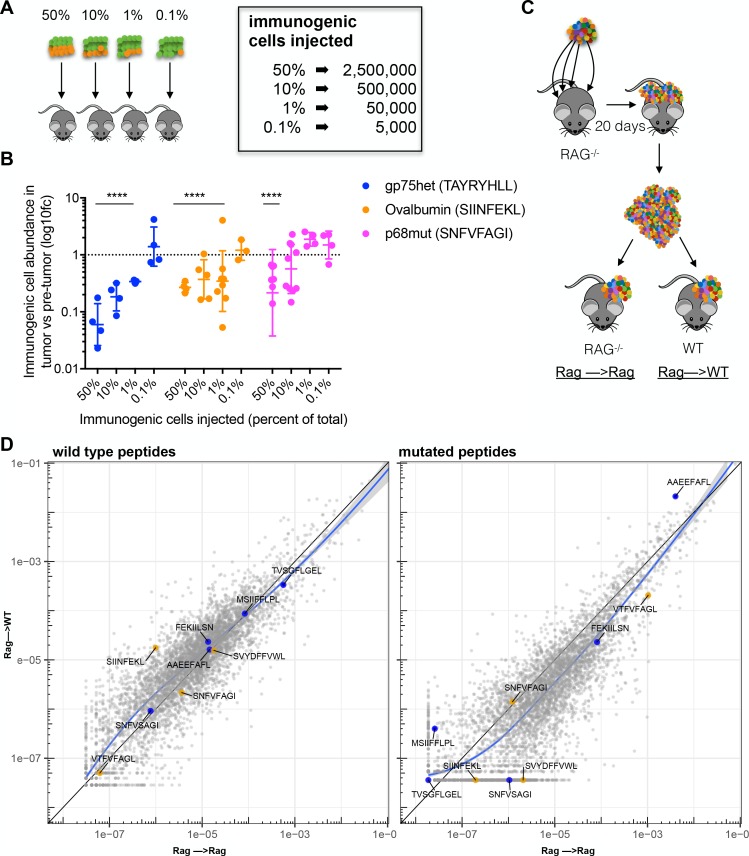
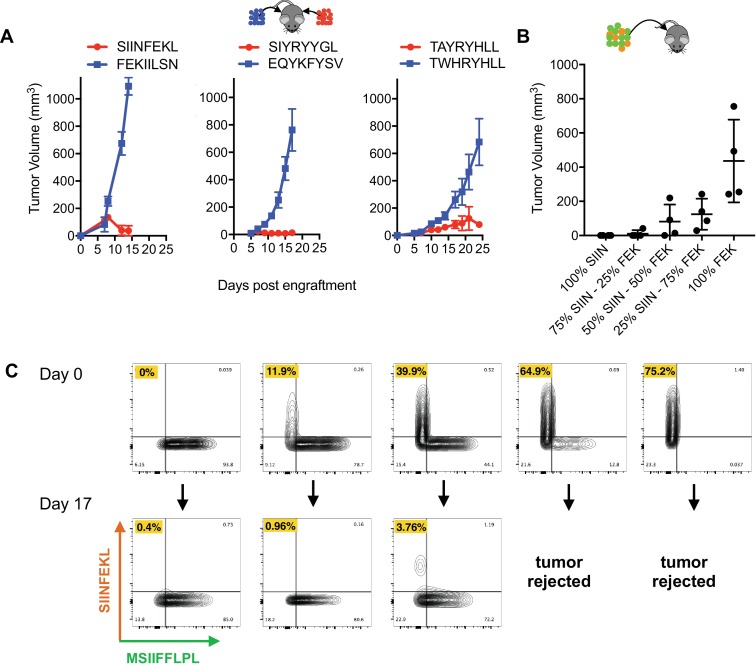
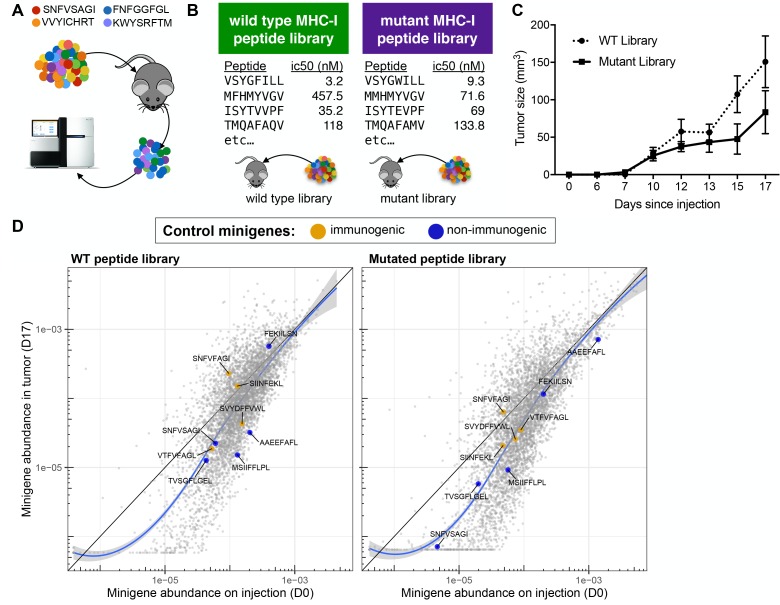
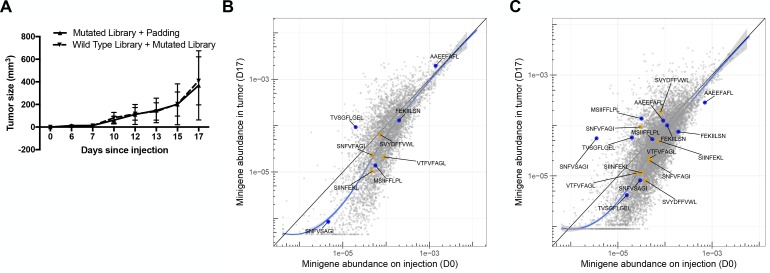
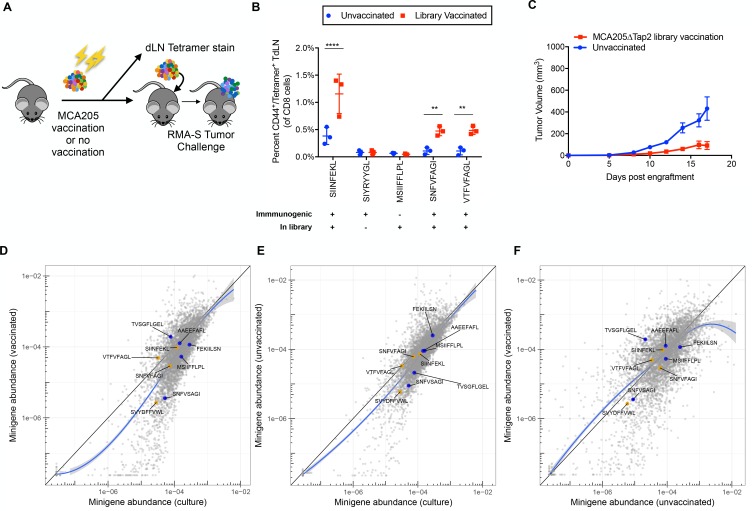
Tumors often co-exist with T cells that recognize somatically mutated peptides presented by cancer cells on major histocompatibility complex I (MHC-I). However, it is unknown why the immune system fails to eliminate immune-recognizable neoplasms before they manifest as frank disease. To understand the determinants of MHC-I peptide immunogenicity in nascent tumors, we tested the ability of thousands of MHC-I ligands to cause tumor subclone rejection in immunocompetent mice by use of a new 'PresentER' antigen presentation platform. Surprisingly, we show that immunogenic tumor antigens do not lead to immune-mediated cell rejection when the fraction of cells bearing each antigen ('clonal fraction') is low. Moreover, the clonal fraction necessary to lead to rejection of immunogenic tumor subclones depends on the antigen. These data indicate that tumor neoantigen heterogeneity has an underappreciated impact on immune elimination of cancer cells and has implications for the design of immunotherapeutics such as cancer vaccines.
肿瘤常与 T 细胞共存,这些 T 细胞识别癌细胞表面主要组织相容性复合体 I(MHC-I)呈递的体细胞突变肽。然而,目前尚不清楚为什么免疫系统在肿瘤表现为明显疾病之前未能消除免疫识别的肿瘤。为了了解新生肿瘤中 MHC-I 肽免疫原性的决定因素,我们使用新的“PresentER”抗原呈递平台测试了数千种 MHC-I 配体在免疫功能正常的小鼠中引起肿瘤亚克隆排斥的能力。令人惊讶的是,我们发现当携带每种抗原的细胞比例(“克隆比例”)较低时,免疫原性肿瘤抗原不会导致免疫介导的细胞排斥。此外,导致免疫原性肿瘤亚克隆排斥所需的克隆比例取决于抗原。这些数据表明,肿瘤新抗原异质性对癌细胞的免疫消除有被低估的影响,并对癌症疫苗等免疫治疗药物的设计具有意义。