Department of Cancer Biology, Beckman Research Institute and Cancer Center, City of Hope, Duarte, CA, 91010, USA.
Department of Urology, Stanford University School of Medicine, Stanford, CA, 94305, USA.
Oncogene. 2019 Mar;38(13):2337-2350. doi: 10.1038/s41388-018-0583-7. Epub 2018 Dec 3.
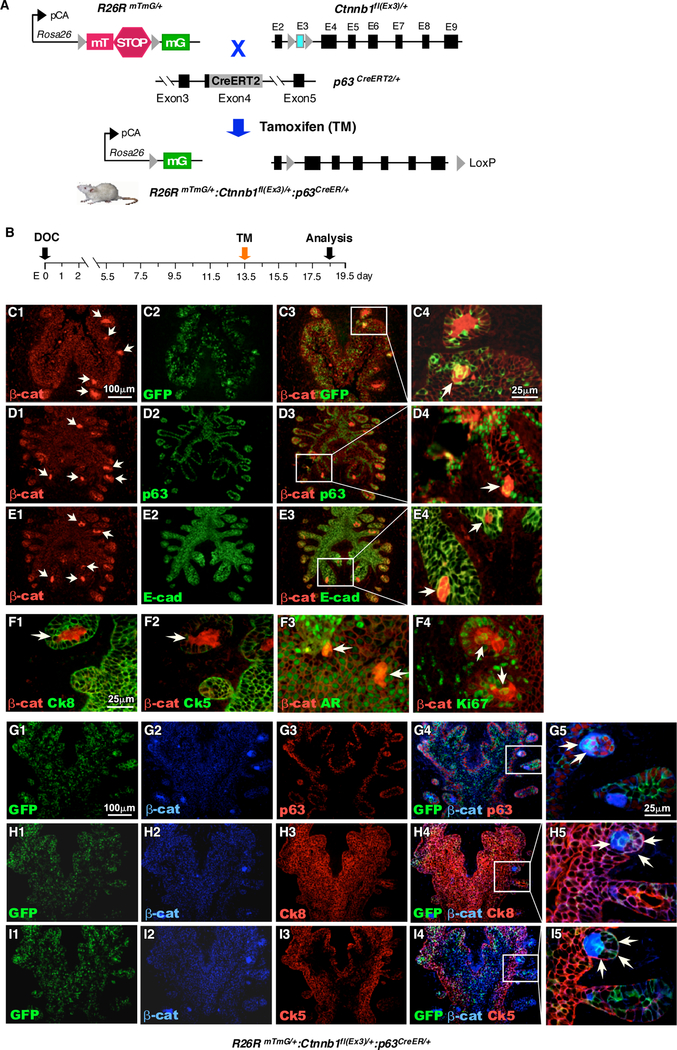
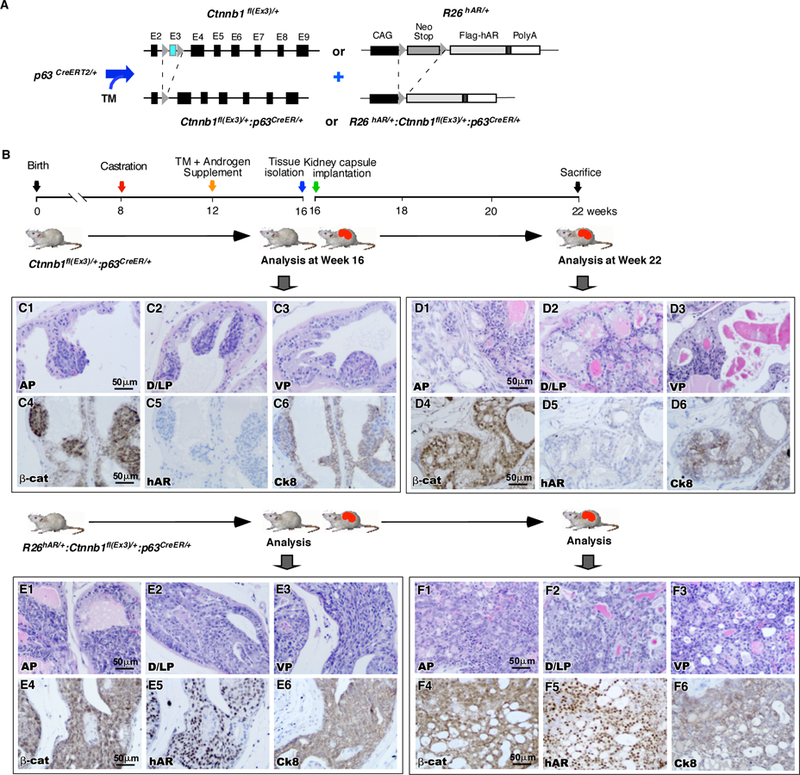
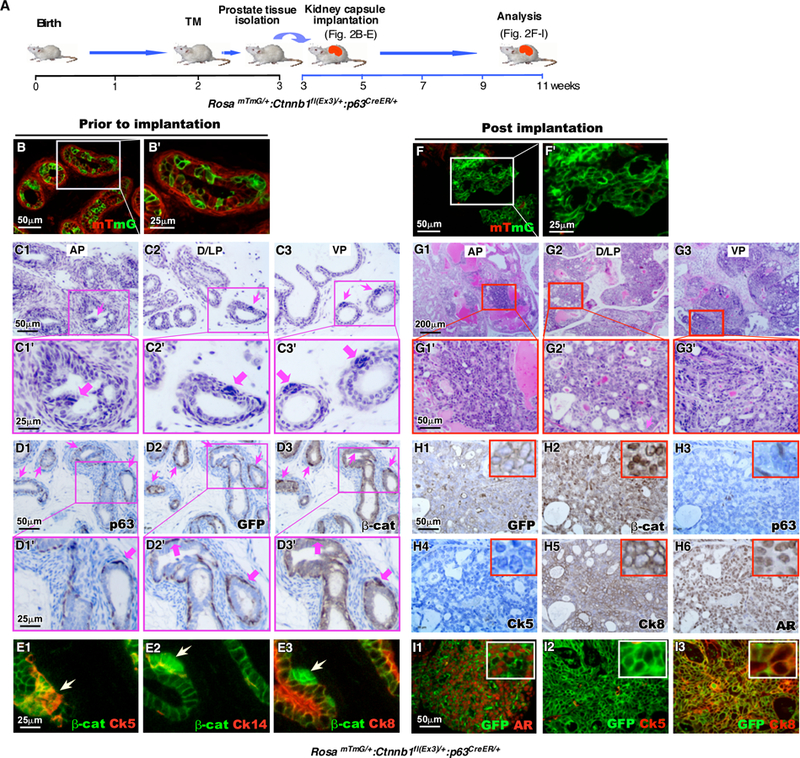
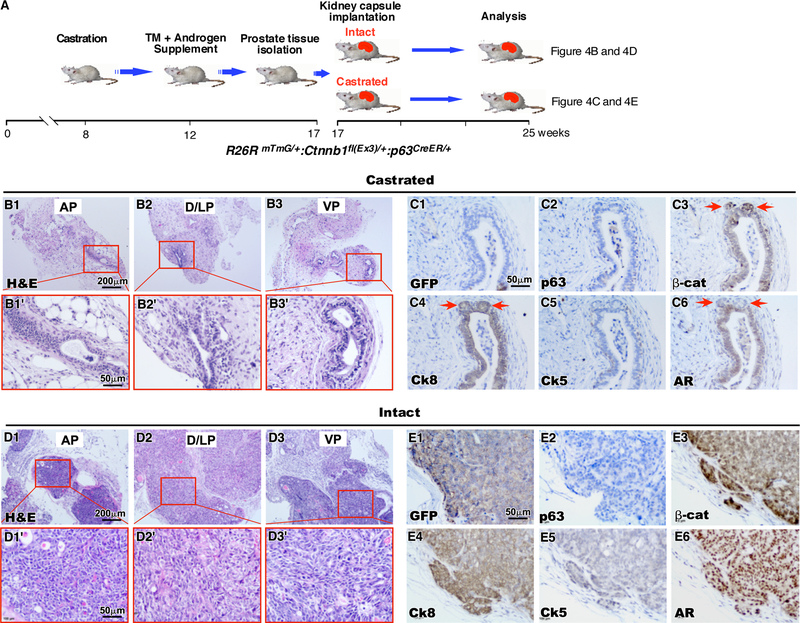
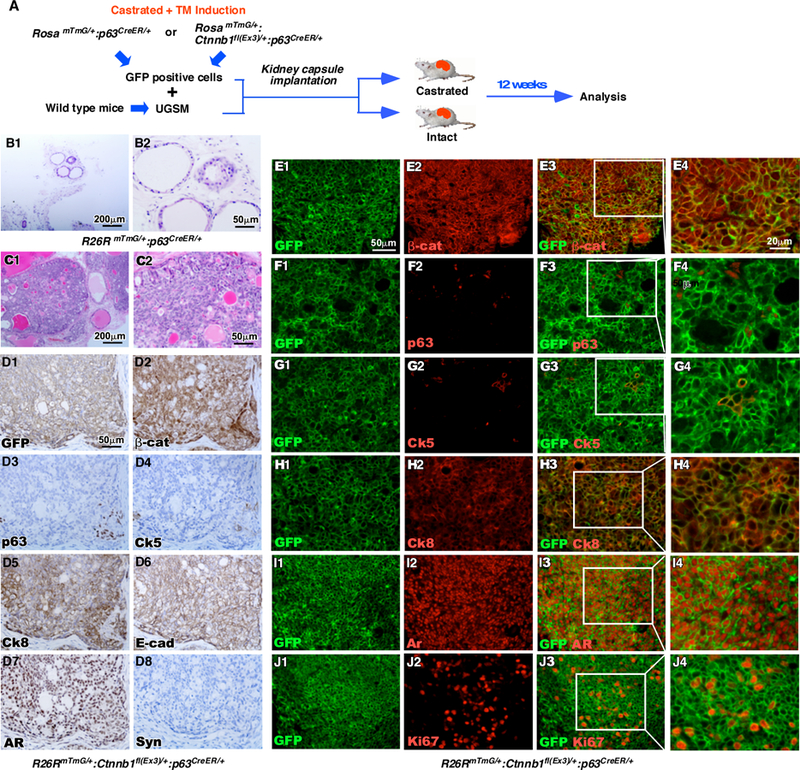
Emerging evidence has shown that both prostatic basal and luminal cells are able to initiate oncogenic transformation. However, despite the diversity of tumor-initiating cells, most prostate cancer cells express the androgen receptor (AR) and depend on androgens for their growth and expansion, implicating an essential role of androgen signaling in prostate tumorigenesis. Prostatic basal cells express p63 and are able to differentiate into luminal, neuroendocrine, and basal cells. Here, we directly assessed the essential role of androgen signaling in prostatic p63-expressing cell initiated oncogenic transformation and tumor formation. Using novel and relevant mouse models, we demonstrated that, with stabilized β-catenin expression, prostatic p63-expressing cells possess the ability to initiate oncogenic transformation and, in the presence of androgens, they further transdifferentiate into luminal-like tumor cells and develop adenocarcinomas. Castration prior to activating stabilized β-catenin sensitizes p63-expressing cells and increases their sensitivity to androgens, resulting in aggressive and fast growing tumor phenotypes. These findings are consistent with what have been observed in human prostate cancers, demonstrating an essential role for androgen signaling in prostate cancer initiation and progression. This study also provides fresh insight into developing new therapeutic strategies for better treating prostate cancer patients.
新出现的证据表明,前列腺基底细胞和腔细胞都能够启动致癌转化。然而,尽管肿瘤起始细胞具有多样性,但大多数前列腺癌细胞表达雄激素受体(AR),并且依赖雄激素来生长和扩增,这表明雄激素信号在前列腺肿瘤发生中起着重要作用。前列腺基底细胞表达 p63 并能够分化为腔细胞、神经内分泌细胞和基底细胞。在这里,我们直接评估了雄激素信号在前列腺 p63 表达细胞引发致癌转化和肿瘤形成中的关键作用。使用新型相关的小鼠模型,我们证明了,在稳定表达 β-连环蛋白的情况下,前列腺 p63 表达细胞具有启动致癌转化的能力,并且在雄激素存在的情况下,它们进一步转分化为腔样肿瘤细胞并发展为腺癌。在激活稳定的 β-连环蛋白之前进行阉割会使 p63 表达细胞变得敏感,并增加它们对雄激素的敏感性,导致侵袭性和快速生长的肿瘤表型。这些发现与人类前列腺癌中的观察结果一致,表明雄激素信号在前列腺癌的起始和进展中起着关键作用。这项研究还为开发新的治疗策略提供了新的见解,以更好地治疗前列腺癌患者。