Center for Fatty Liver, Department of Gastroenterology, Xinhua Hospital Affiliated to Shanghai Jiao Tong University School of Medicine, 200092, Shanghai, China.
Department of Gastroenterology, Zhongshan Hospital of Fudan University, 200032, Shanghai, China.
Exp Mol Med. 2018 Dec 3;50(12):1-12. doi: 10.1038/s12276-018-0183-1.
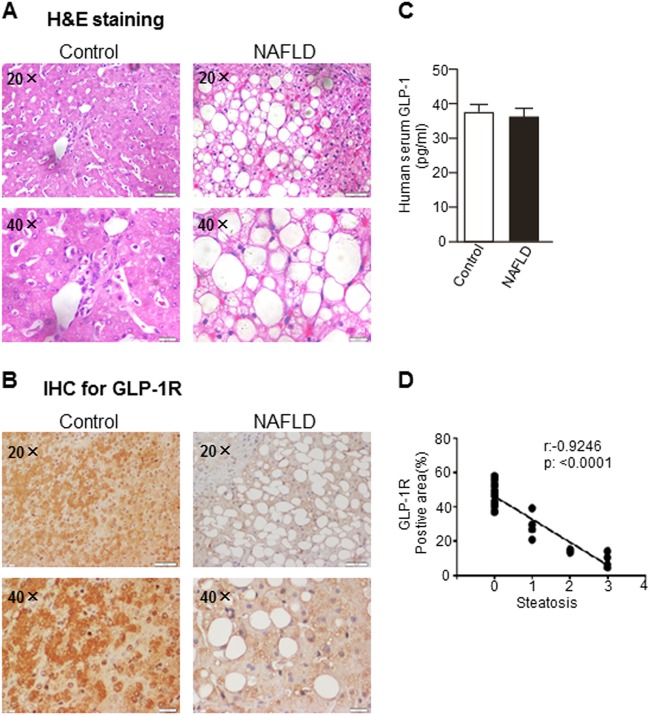
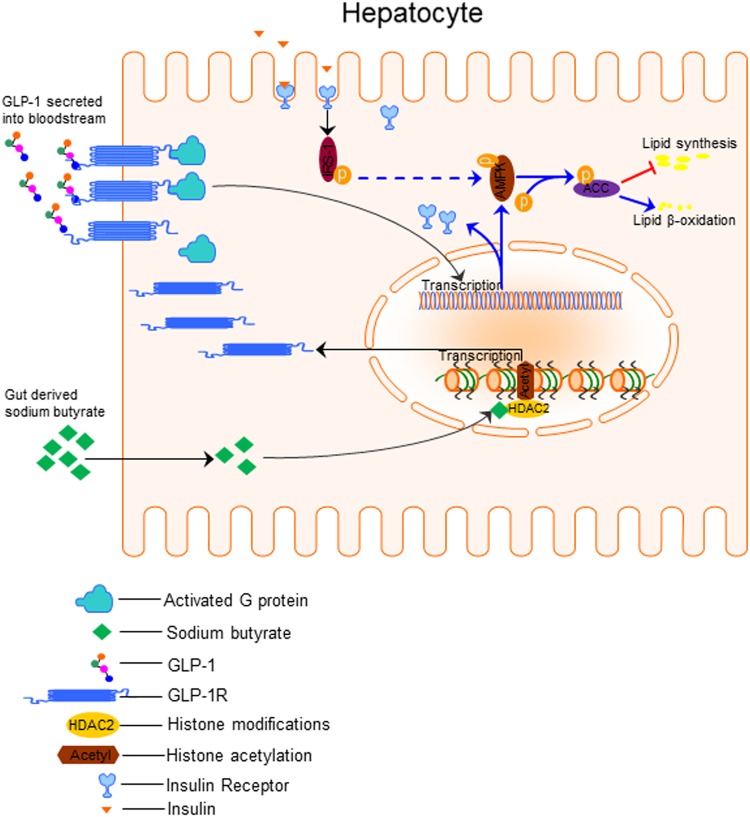
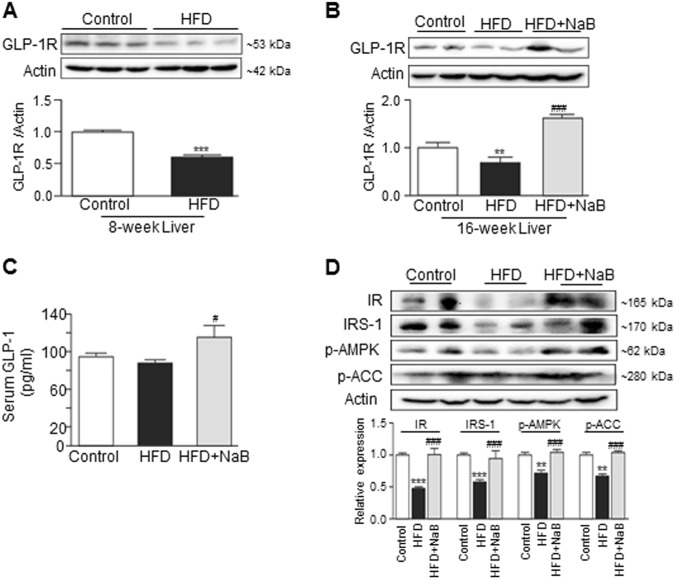
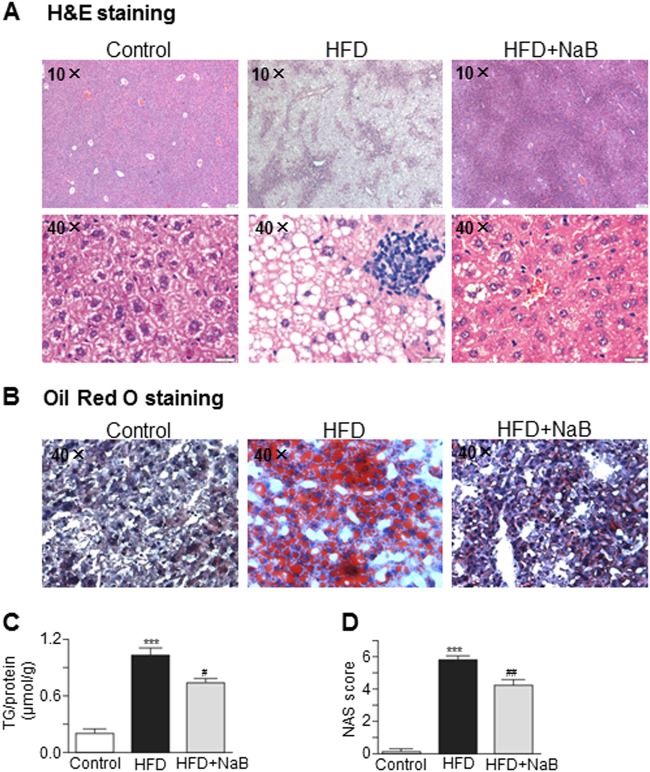
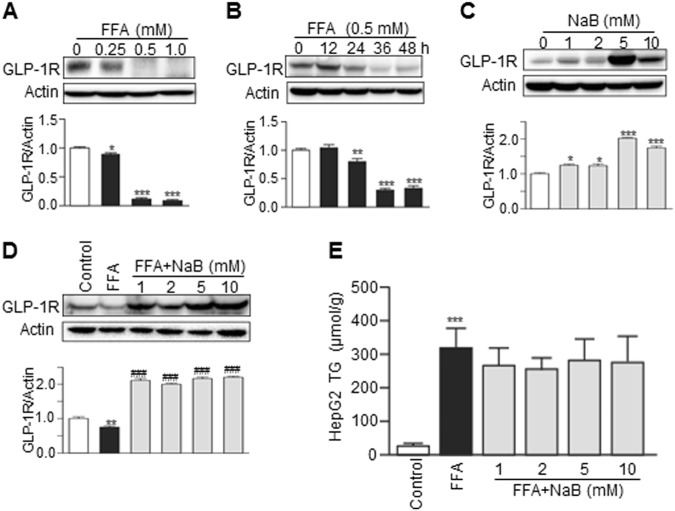
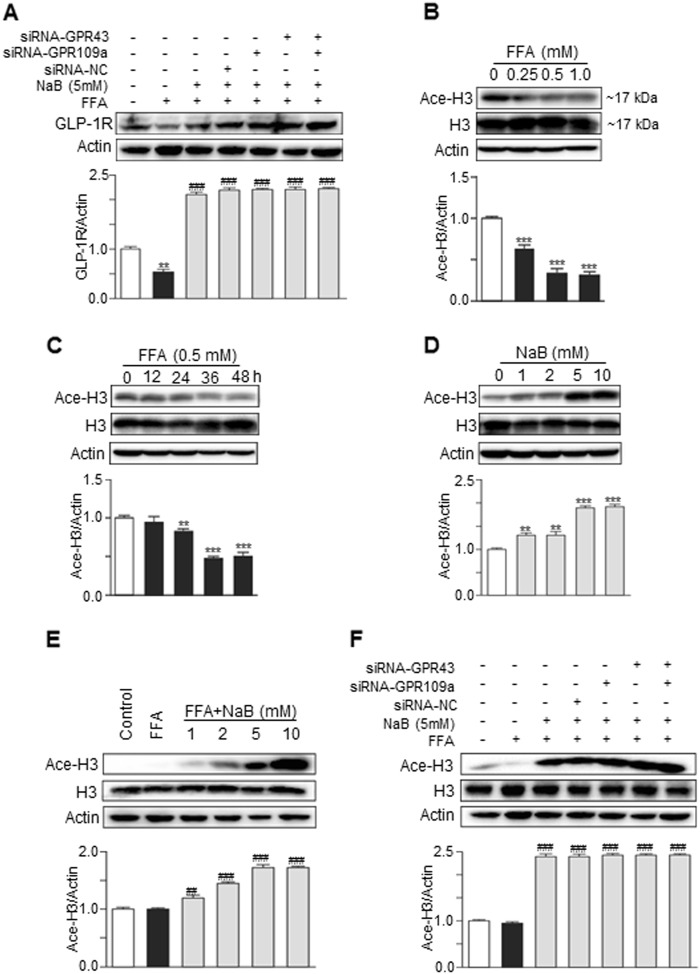
Glucagon-like peptide-1 (GLP-1) has a broad spectrum of biological activity by regulating metabolic processes via both the direct activation of the class B family of G protein-coupled receptors and indirect nonreceptor-mediated pathways. GLP-1 receptor (GLP-1R) agonists have significant therapeutic effects on non-alcoholic fatty liver disease (NAFLD) and steatohepatitis (NASH) in animal models. However, clinical studies indicated that GLP-1 treatment had little effect on hepatic steatosis in some NAFLD patients, suggesting that GLP-1 resistance may occur in these patients. It is well-known that the gut metabolite sodium butyrate (NaB) could promote GLP-1 secretion from intestinal L cells. However, it is unclear whether NaB improves hepatic GLP-1 responsiveness in NAFLD. In the current study, we showed that the serum GLP-1 levels of NAFLD patients were similar to those of normal controls, but hepatic GLP-1R expression was significantly downregulated in NAFLD patients. Similarly, in the NAFLD mouse model, mice fed with a high-fat diet showed reduced hepatic GLP-1R expression, which was reversed by NaB treatment and accompanied by markedly alleviated liver steatosis. In addition, NaB treatment also upregulated the hepatic p-AMPK/p-ACC and insulin receptor/insulin receptor substrate-1 expression levels. Furthermore, NaB-enhanced GLP-1R expression in HepG2 cells by inhibiting histone deacetylase-2 independent of GPR43/GPR109a. These results indicate that NaB is able to prevent the progression of NAFL to NASH via promoting hepatic GLP-1R expression. NaB is a GLP-1 sensitizer and represents a potential therapeutic adjuvant to prevent NAFL progression to NASH.
胰高血糖素样肽-1(GLP-1)通过直接激活 B 族 G 蛋白偶联受体家族和间接非受体介导途径调节代谢过程,具有广泛的生物学活性。GLP-1 受体(GLP-1R)激动剂在动物模型中非酒精性脂肪性肝病(NAFLD)和脂肪性肝炎(NASH)方面具有显著的治疗作用。然而,临床研究表明,GLP-1 治疗对一些 NAFLD 患者的肝脂肪变性几乎没有影响,这表明这些患者可能存在 GLP-1 抵抗。众所周知,肠道代谢物丁酸钠(NaB)可以促进肠 L 细胞分泌 GLP-1。然而,尚不清楚 NaB 是否可以改善 NAFLD 患者的肝 GLP-1 反应性。在本研究中,我们发现 NAFLD 患者的血清 GLP-1 水平与正常对照组相似,但 NAFLD 患者的肝 GLP-1R 表达明显下调。同样,在 NAFLD 小鼠模型中,高脂肪饮食喂养的小鼠表现出肝 GLP-1R 表达降低,NaB 治疗可逆转这种情况,并伴有明显的肝脂肪变性减轻。此外,NaB 治疗还通过抑制组蛋白去乙酰化酶-2(独立于 GPR43/GPR109a)上调肝 p-AMPK/p-ACC 和胰岛素受体/胰岛素受体底物-1 的表达水平。此外,NaB 通过抑制组蛋白去乙酰化酶-2(独立于 GPR43/GPR109a)增强 HepG2 细胞中 GLP-1R 的表达。这些结果表明,NaB 通过促进肝 GLP-1R 表达能够预防 NAFL 进展为 NASH。NaB 是 GLP-1 增敏剂,代表了预防 NAFL 进展为 NASH 的一种潜在治疗佐剂。