Liu Congshan, Yao Jiaqing, Yin Jianhai, Xue Jian, Zhang Haobing
National Institute of Parasitic Diseases, Chinese Center for Disease Control and Prevention, Key Laboratory of Parasite and Vector Biology, MOH, National Center for International Research on Tropical Diseases, WHO Collaborating Centre for Tropical Diseases, Shanghai 200025, People's Republic of China.
Parasite. 2018;25:62. doi: 10.1051/parasite/2018063. Epub 2018 Dec 5.
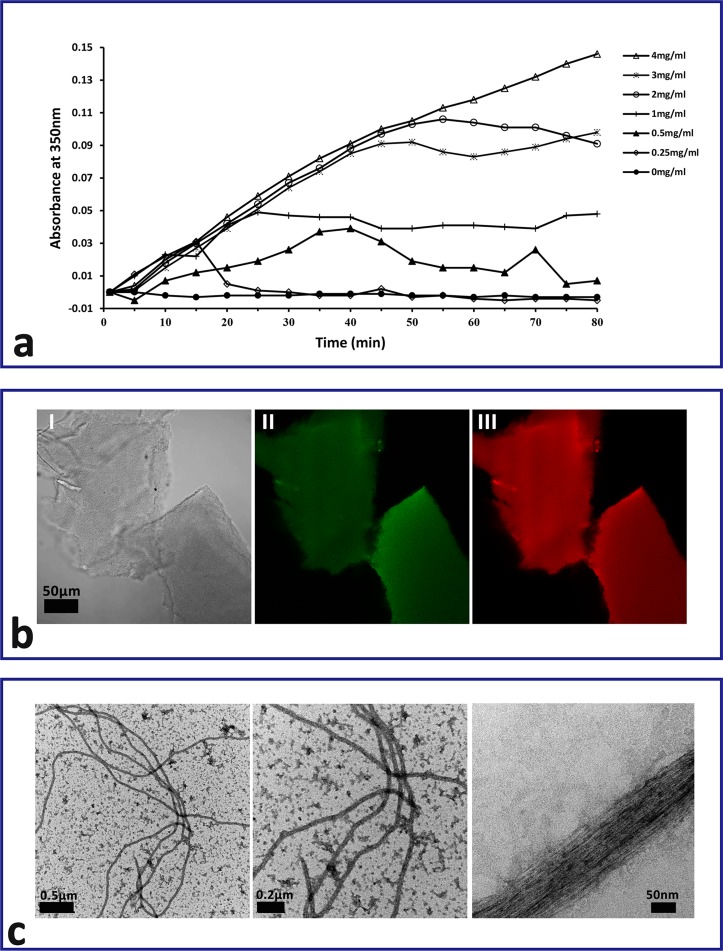
Echinococcosis, which causes a high disease burden and is of great public health significance, is caused by the larval stage of Echinococcus species. It has been suggested that tubulin is the target of benzimidazoles, the only drugs for the treatment of echinococcosis. This study evaluated the characteristics of tubulins from Echinococcus granulosus. The full-length cDNAs of E. granulosus α- and β-tubulin isoforms were cloned by reverse transcription PCR from protoscolex RNA. Then, these two tubulin isoforms (α and β) were recombinantly expressed as insoluble inclusion bodies in Escherichia coli. Nickel affinity chromatography was used to purify and refold the contents of these inclusion bodies as active proteins. The polymerization of tubulins was monitored by UV spectrophotometry (A) and confirmed by confocal microscopy and transmission electron microscopy (TEM). Nucleotide sequence analysis revealed that E. granulosus 1356 bp α-tubulin and 1332 bp β-tubulin encode corresponding proteins of 451 and 443 amino acids. The average yields of α- and β-tubulin were 2.0-3.0 mg/L and 3.5-5.0 mg/L of culture, respectively. Moreover, recombinant α- and β-tubulin were capable of polymerizing into microtubule-like structures under appropriate conditions in vitro. These recombinant tubulins could be helpful for screening anti-Echinococcus compounds targeting the tubulins of E. granulosus.
泡球蚴病由棘球绦虫的幼虫阶段引起,疾病负担高,具有重大公共卫生意义。有人提出微管蛋白是苯并咪唑类药物的作用靶点,而苯并咪唑类药物是治疗泡球蚴病的唯一药物。本研究评估了细粒棘球绦虫微管蛋白的特性。通过逆转录PCR从原头节RNA中克隆细粒棘球绦虫α和β微管蛋白亚型的全长cDNA。然后,这两种微管蛋白亚型(α和β)在大肠杆菌中作为不溶性包涵体进行重组表达。使用镍亲和层析法纯化并复性这些包涵体的内容物,使其成为活性蛋白。通过紫外分光光度法(A)监测微管蛋白的聚合,并通过共聚焦显微镜和透射电子显微镜(TEM)进行确认。核苷酸序列分析显示,细粒棘球绦虫1356 bp的α微管蛋白和1332 bp的β微管蛋白分别编码451和443个氨基酸的相应蛋白质。α和β微管蛋白的平均产量分别为每升培养物2.0 - 3.0 mg和3.5 - 5.0 mg。此外,重组α和β微管蛋白能够在体外适当条件下聚合成微管样结构。这些重组微管蛋白可能有助于筛选针对细粒棘球绦虫微管蛋白的抗棘球绦虫化合物。