Li Yuyang, Xu Zhiming, Li Jia, Ban Shuofeng, Duan Congcong, Liu Weiwei
Department of Dental Implantology School and Hospital of Stomatology Jilin University Jilin Provincial Key Laboratory of Tooth Development and Bone Remodeling Changchun Jilin China.
Department of Oral and Maxillofacial Surgery School and Hospital of Stomatology Jilin University Jilin Provincial Key Laboratory of Tooth Development and Bone Remodeling Changchun Jilin China.
FEBS Open Bio. 2018 Oct 31;8(12):1953-1963. doi: 10.1002/2211-5463.12532. eCollection 2018 Dec.
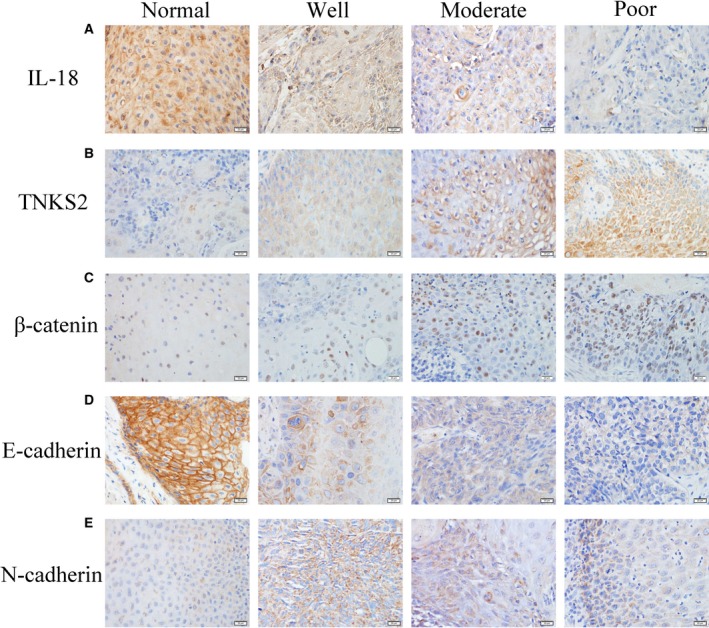
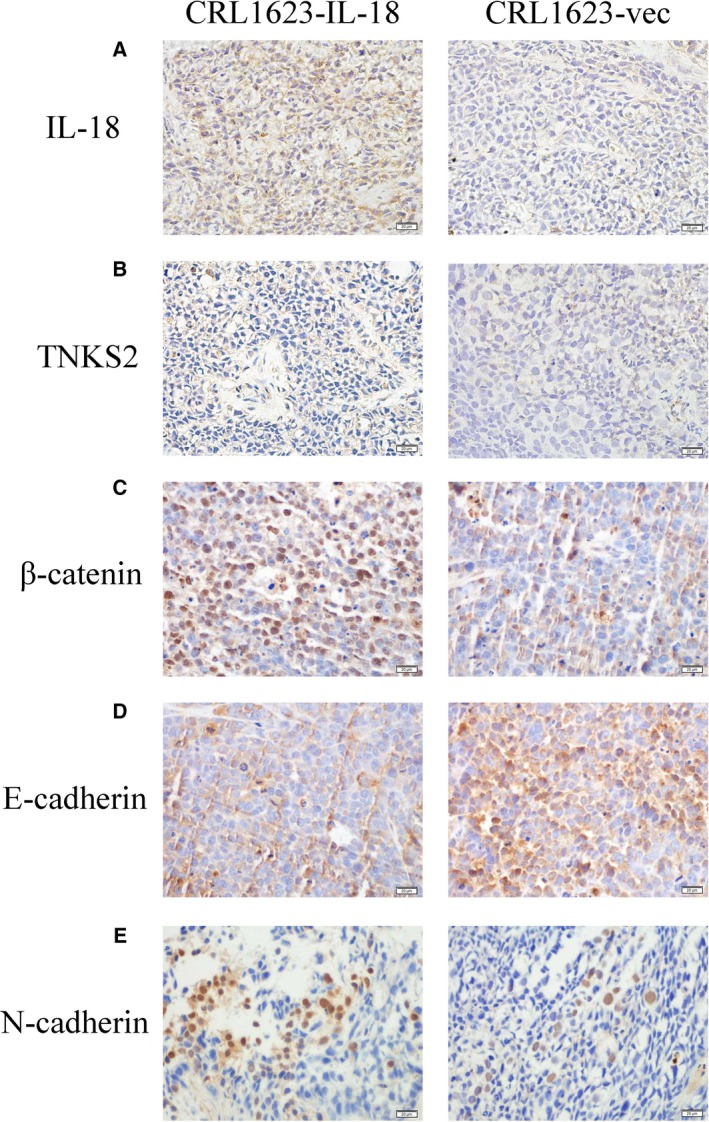
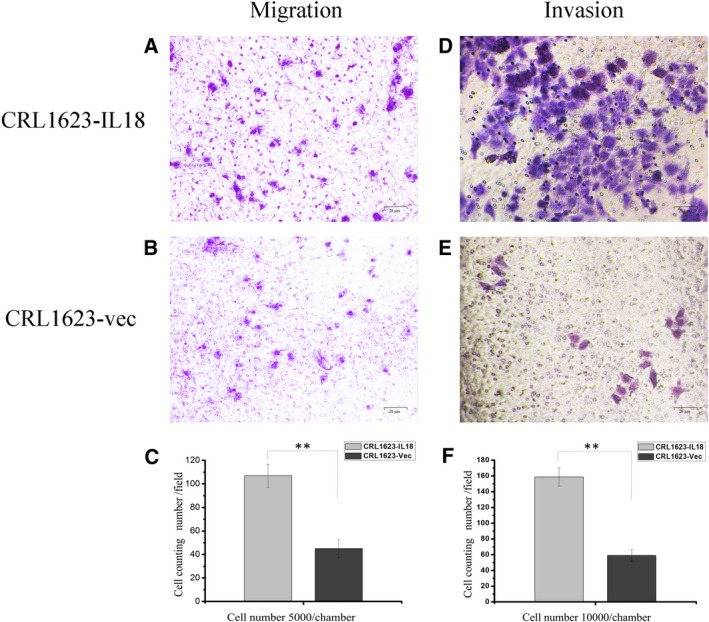
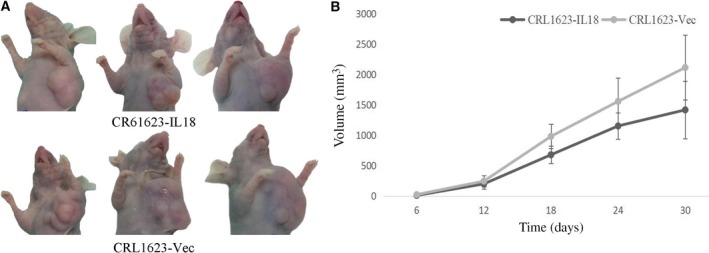
Oral squamous cell carcinoma (OSCC) is one of the most common head and neck malignancies. Advanced stages of the disease are associated with poor survival, highlighting a need for new treatment modalities. We previously showed that the proinflammatory cytokine interleukin-18 (IL-18) has a tumor suppressive role in OSCC. Here, we investigated the effects of IL-18 on proliferation, migration, and invasion of OSCC cells and , and in nude mouse xenografts. We report that expression of tankyrase 2 (TNKS2), β-catenin, and N-cadherin was higher in tumor cells than in normal mucosae, whereas the expression of IL-18 and E-cadherin was higher in normal than in tumor tissues. Elevated expression of IL-18 (<0.01) and E-cadherin (=0.034) was associated with tumor differentiation, whereas expression of TNKS2 (<0.01), β-catenin ( = 0.012), and N-cadherin ( < 0.01) was associated with tumor de-differentiation. Furthermore, compared with the vector control, IL-18 overexpression promoted tumor cell migration and invasion (<0.01), but inhibited growth of tumor cell xenografts (<0.05). At the protein level, expression levels of IL-18 (<0.01), TNKS2 ( = 0.045), β-catenin ( = 0.028), and N-cadherin ( = 0.068) were upregulated in tumor cells after IL-18 overexpression compared with those of the vector control mice, whereas expression levels of E-cadherin ( = 0.045) were decreased. In conclusion, our data suggest that IL-18 overexpression induces oral SCC cell invasion and metastasis by promoting the tumor cell epithelial-mesenchymal transition via the Wnt/β-catenin signaling pathway.
口腔鳞状细胞癌(OSCC)是最常见的头颈部恶性肿瘤之一。该疾病的晚期与生存率低相关,这凸显了对新治疗方式的需求。我们之前表明促炎细胞因子白细胞介素-18(IL-18)在OSCC中具有肿瘤抑制作用。在此,我们研究了IL-18对OSCC细胞增殖、迁移和侵袭的影响,以及在裸鼠异种移植模型中的影响。我们报告称,端锚聚合酶2(TNKS2)、β-连环蛋白和N-钙黏蛋白在肿瘤细胞中的表达高于正常黏膜,而IL-18和E-钙黏蛋白在正常组织中的表达高于肿瘤组织。IL-18(<0.01)和E-钙黏蛋白(=0.034)表达升高与肿瘤分化相关,而TNKS2(<0.01)、β-连环蛋白(=0.012)和N-钙黏蛋白(<0.01)的表达与肿瘤去分化相关。此外,与载体对照相比,IL-18过表达促进肿瘤细胞迁移和侵袭(<0.01),但抑制肿瘤细胞异种移植的生长(<0.05)。在蛋白质水平上,与载体对照小鼠相比,IL-18过表达后肿瘤细胞中IL-18(<0.01)、TNKS2(=0.045)、β-连环蛋白(=0.028)和N-钙黏蛋白(=0.068)的表达水平上调,而E-钙黏蛋白(=0.045)的表达水平下降。总之,我们的数据表明,IL-18过表达通过Wnt/β-连环蛋白信号通路促进肿瘤细胞上皮-间质转化,从而诱导口腔鳞状细胞癌细胞的侵袭和转移。