Department of Biological Sciences, Auburn University, 101 Rouse Life Sciences building, Auburn, AL, 36849-5407, USA.
Biomedical Sciences Department, Florida State University, College of Medicine, 1115 West Call Street, Tallahassee, FL, 32306, USA.
BMC Genomics. 2018 Dec 10;19(1):893. doi: 10.1186/s12864-018-5308-3.
The core functions of the insulin/insulin-like signaling and target of rapamycin (IIS/TOR) pathway are nutrient sensing, energy homeostasis, growth, and regulation of stress responses. This pathway is also known to interact directly and indirectly with the sex determination regulatory hierarchy. The IIS/TOR pathway plays a role in directing sexually dimorphic traits, including dimorphism of growth, metabolism, stress and behavior. Previous studies of sexually dimorphic gene expression in the adult head, which includes both nervous system and endocrine tissues, have revealed variation in sex-differential expression, depending in part on genotype and environment. To understand the degree to which the environmentally responsive insulin signaling pathway contributes to sexual dimorphism of gene expression, we examined the effect of perturbation of the pathway on gene expression in male and female Drosophila heads.
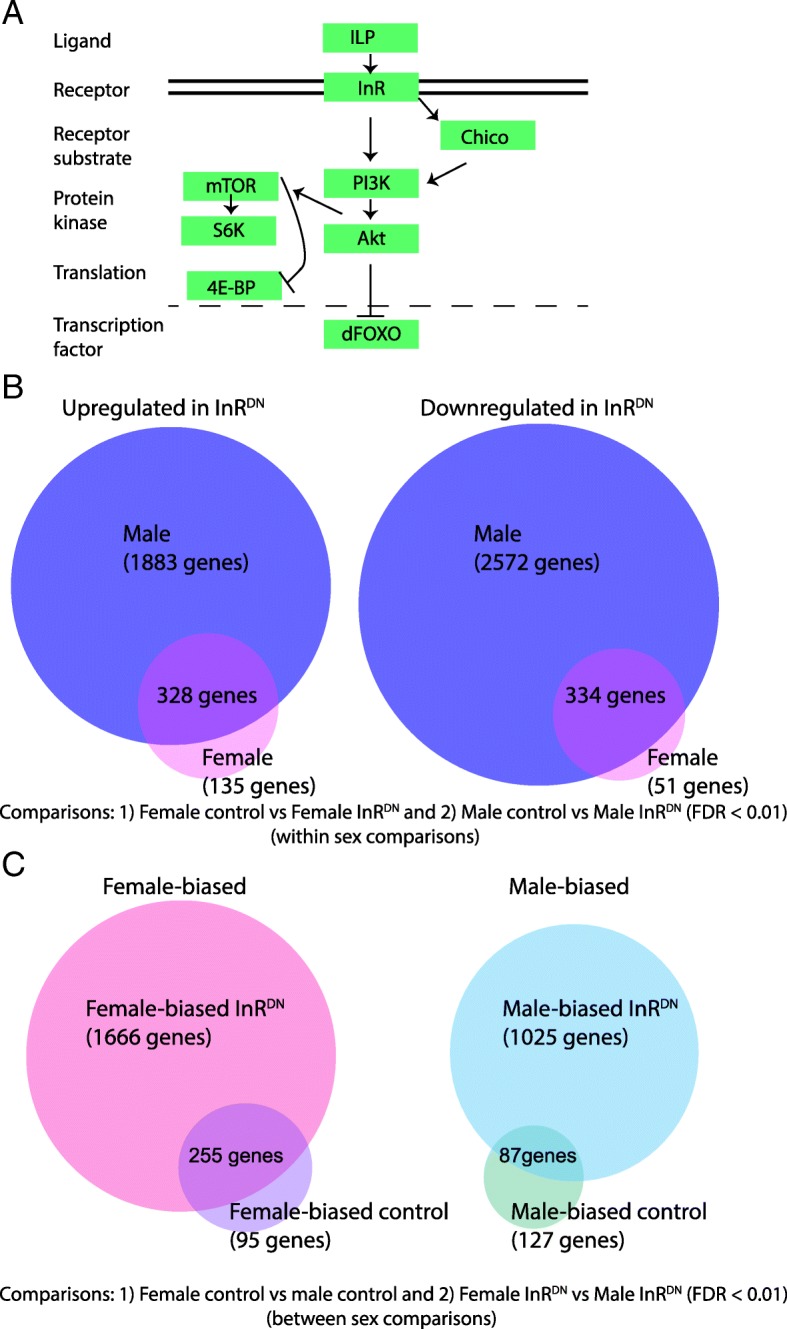
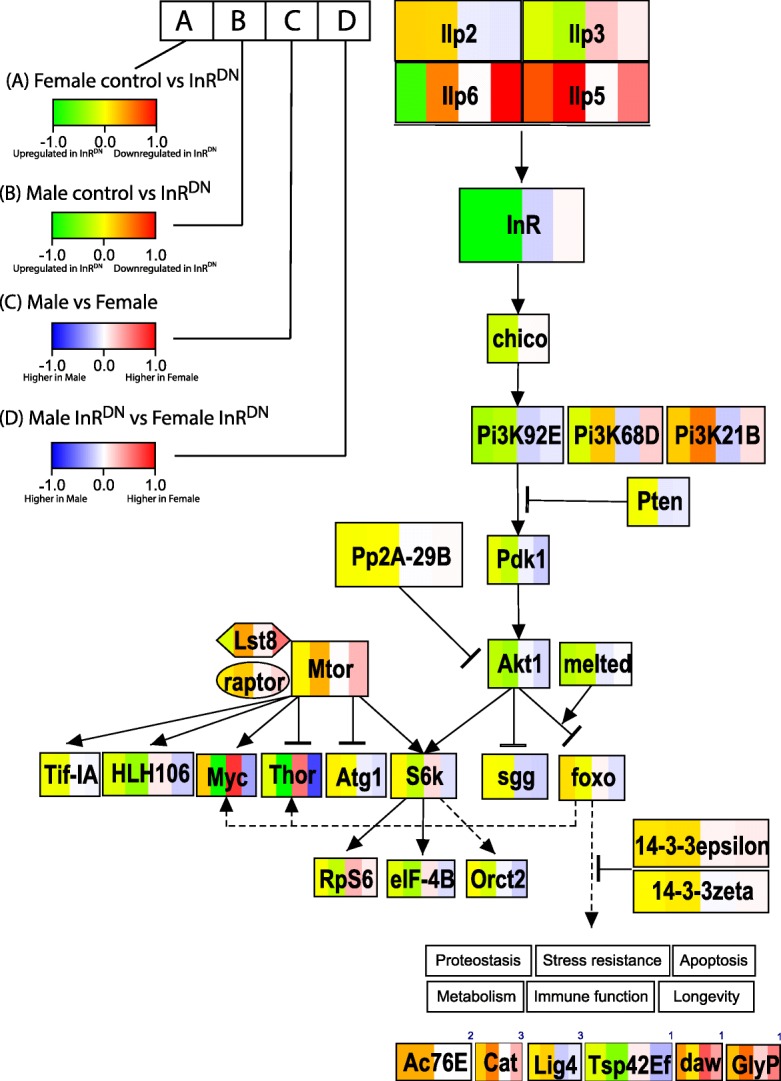
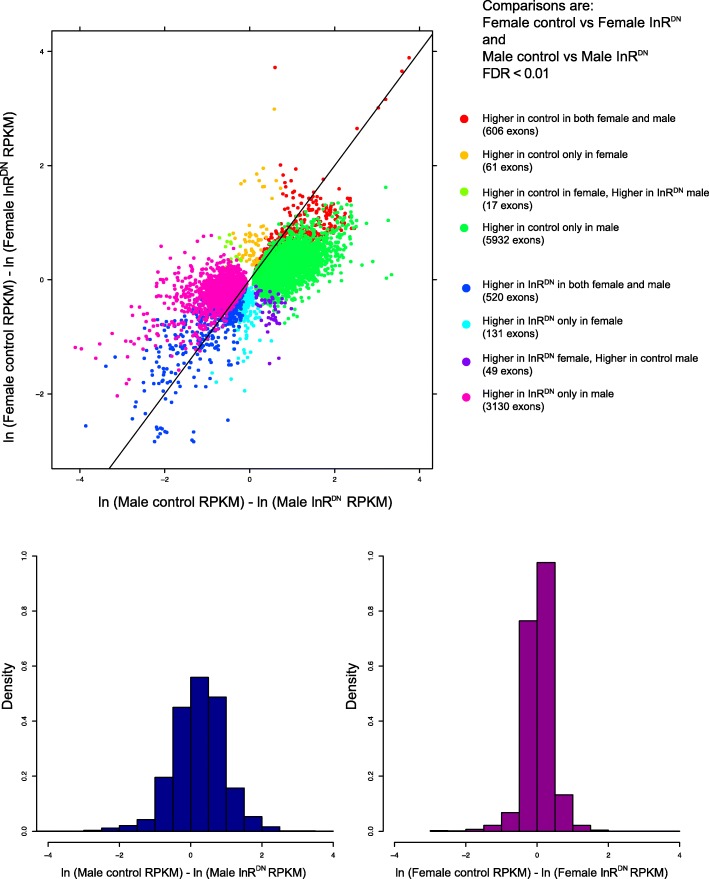
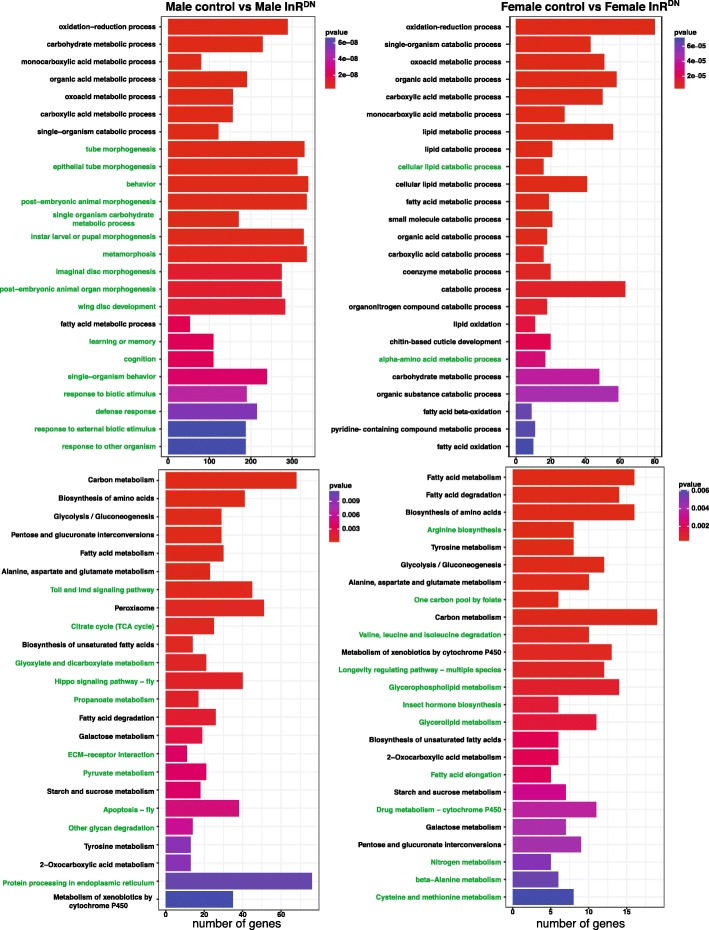
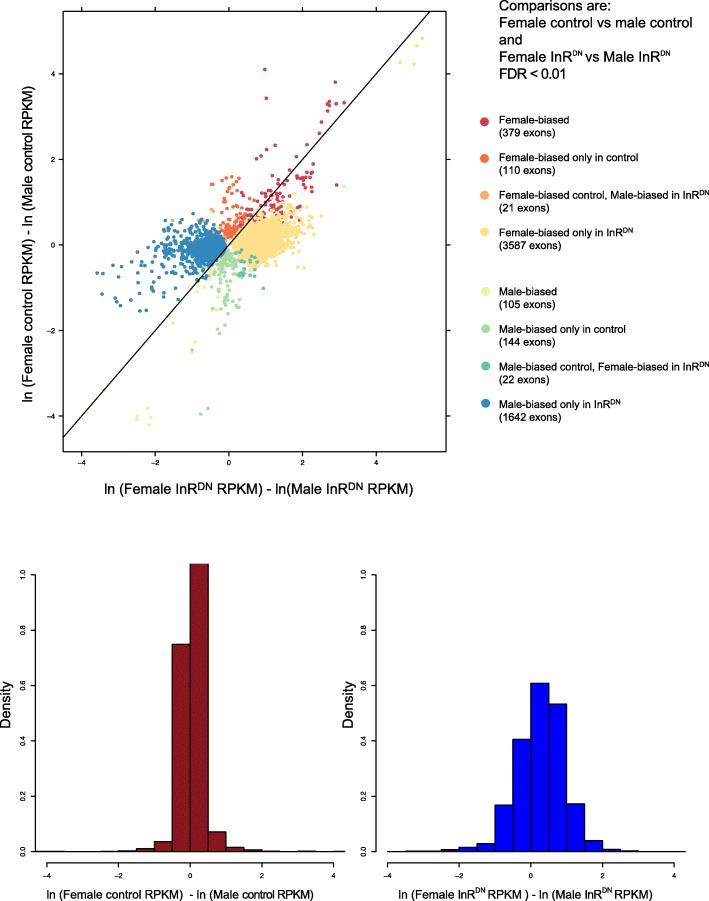
Our data reveal a large effect of insulin signaling on gene expression, with greater than 50% of genes examined changing expression. Males and females have a shared gene expression response to knock-down of InR function, with significant enrichment for pathways involved in metabolism. Perturbation of insulin signaling has a greater impact on gene expression in males, with more genes changing expression and with gene expression differences of larger magnitude. Primarily as a consequence of the response in males, we find that reduced insulin signaling results in a striking increase in sex-differential expression. This includes sex-differences in expression of immune, defense and stress response genes, genes involved in modulating reproductive behavior, genes linking insulin signaling and ageing, and in the insulin signaling pathway itself.
Our results demonstrate that perturbation of insulin signaling results in thousands of genes displaying sex differences in expression that are not differentially expressed in control conditions. Thus, insulin signaling may play a role in variability of somatic, sex-differential expression. The finding that perturbation of the IIS/TOR pathway results in an altered landscape of sex-differential expression suggests a role of insulin signaling in the physiological underpinnings of trade-offs, sexual conflict and sex differences in expression variability.
胰岛素/胰岛素样信号和雷帕霉素靶蛋白(IIS/TOR)途径的核心功能是感知营养物质、维持能量平衡、促进生长,并调节应激反应。该途径还与性别决定调控层次结构直接和间接相互作用。IIS/TOR 途径在指导性别二态性特征方面发挥作用,包括生长、代谢、应激和行为的二态性。以前对成年头部(包括神经系统和内分泌组织)中性别二态性基因表达的研究表明,性别差异表达存在差异,部分取决于基因型和环境。为了了解环境响应的胰岛素信号通路在性别二态性基因表达中的贡献程度,我们研究了该通路的扰动对果蝇头部雌雄两性基因表达的影响。
我们的数据揭示了胰岛素信号对基因表达的巨大影响,超过 50%的检测基因的表达发生改变。InR 功能敲低对雌雄两性的基因表达有共同的反应,涉及代谢途径的显著富集。胰岛素信号的扰动对雄性的基因表达有更大的影响,更多的基因发生表达变化,且基因表达差异的幅度更大。主要是由于雄性的反应,我们发现降低胰岛素信号会导致显著增加性别差异表达。这包括免疫、防御和应激反应基因、参与调节生殖行为的基因、将胰岛素信号与衰老联系起来的基因以及胰岛素信号通路本身的性别差异表达。
我们的结果表明,胰岛素信号的扰动会导致数千个基因表现出性别差异表达,而在对照条件下这些基因没有差异表达。因此,胰岛素信号可能在躯体的、性别差异表达的可变性中发挥作用。IIS/TOR 途径的扰动导致性别差异表达景观发生改变,这表明胰岛素信号在生理基础上可能参与了权衡、性冲突和性别表达可变性。