Latvian Institute of Organic Synthesis, Aizkraukles 21, Riga, LV, 1006, Latvia.
Malaria Biochemistry Laboratory, The Francis Crick Institute, 1 Midland Road, London, NW1 1AT, UK.
Eur J Med Chem. 2019 Feb 1;163:344-352. doi: 10.1016/j.ejmech.2018.11.068. Epub 2018 Nov 29.
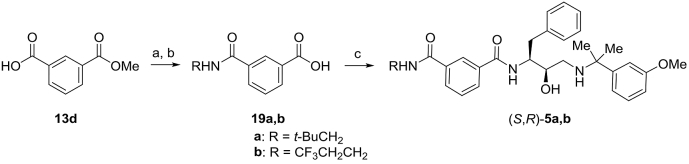
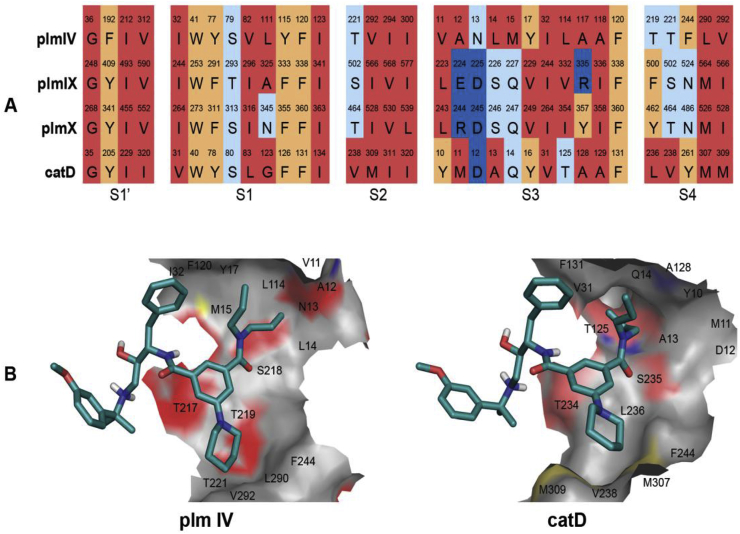
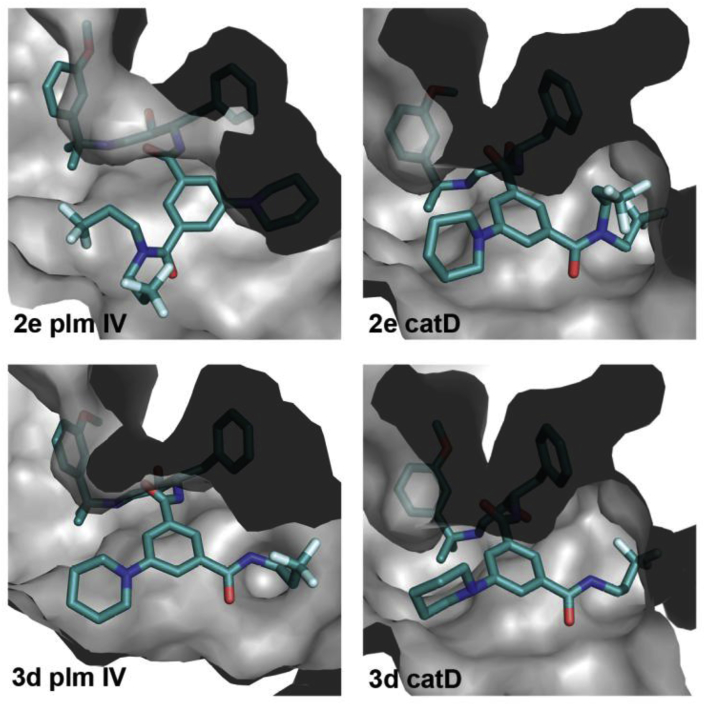
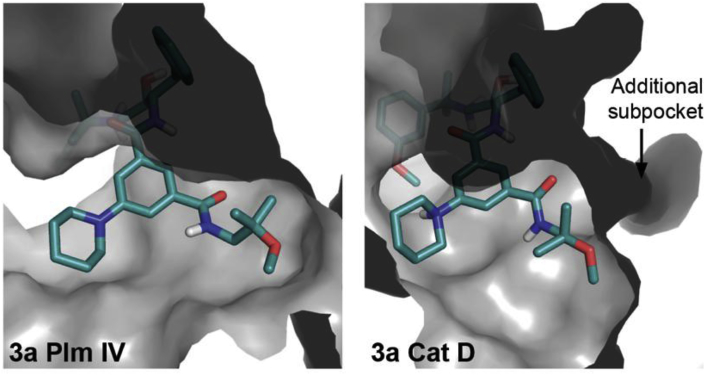
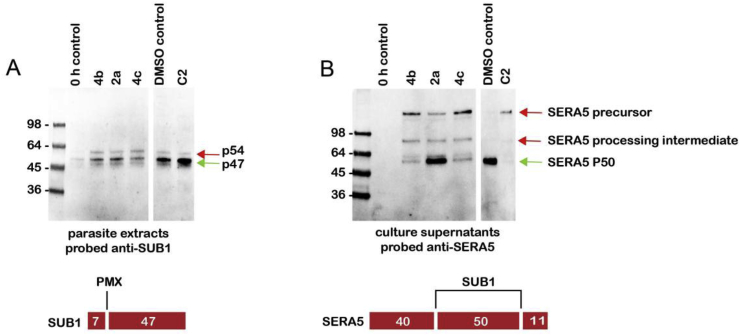
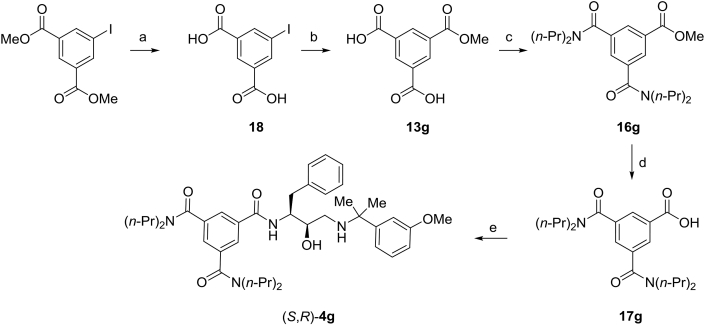
Following up the open initiative of anti-malarial drug discovery, a GlaxoSmithKline (GSK) phenotypic screening hit was developed to generate hydroxyethylamine based plasmepsin (Plm) inhibitors exhibiting growth inhibition of the malaria parasite Plasmodium falciparum at nanomolar concentrations. Lead optimization studies were performed with the aim of improving Plm inhibition selectivity versus the related human aspartic protease cathepsin D (Cat D). Optimization studies were performed using Plm IV as a readily accessible model protein, the inhibition of which correlates with anti-malarial activity. Guided by sequence alignment of Plms and Cat D, selectivity-inducing structural motifs were modified in the S3 and S4 sub-pocket occupying substituents of the hydroxyethylamine inhibitors. This resulted in potent anti-malarials with an up to 50-fold Plm IV/Cat D selectivity factor. More detailed investigation of the mechanism of action of the selected compounds revealed that they inhibit maturation of the P. falciparum subtilisin-like protease SUB1, and also inhibit parasite egress from erythrocytes. Our results indicate that the anti-malarial activity of the compounds is linked to inhibition of the SUB1 maturase plasmepsin subtype Plm X.
继抗疟药物发现的开放倡议之后,开发了一种葛兰素史克(GSK)表型筛选命中物,以生成基于羟乙基胺的质体朊酶(Plm)抑制剂,该抑制剂在纳摩尔浓度下抑制疟原虫恶性疟原虫的生长。进行了先导优化研究,目的是提高 Plm 抑制对相关人类天冬氨酸蛋白酶组织蛋白酶 D(Cat D)的选择性。使用 Plm IV 作为易于获得的模型蛋白进行了优化研究,其抑制作用与抗疟活性相关。根据 Plms 和 Cat D 的序列比对,对羟乙基胺抑制剂的 S3 和 S4 亚口袋占据取代基中的选择性诱导结构基序进行了修饰。这导致 Plm IV/Cat D 选择性因子高达 50 倍的有效抗疟药物。对选定化合物的作用机制的更详细研究表明,它们抑制了恶性疟原虫的枯草杆菌样蛋白酶 SUB1 的成熟,并且还抑制了寄生虫从红细胞中的逸出。我们的结果表明,化合物的抗疟活性与抑制 SUB1 成熟酶质体朊酶 Plm X 有关。