Rowlands Jordan, Heng Julian, Newsholme Philip, Carlessi Rodrigo
School of Pharmacy and Biomedical Sciences, Curtin Health Innovation Research Institute, Perth, WA, Australia.
Front Endocrinol (Lausanne). 2018 Nov 23;9:672. doi: 10.3389/fendo.2018.00672. eCollection 2018.
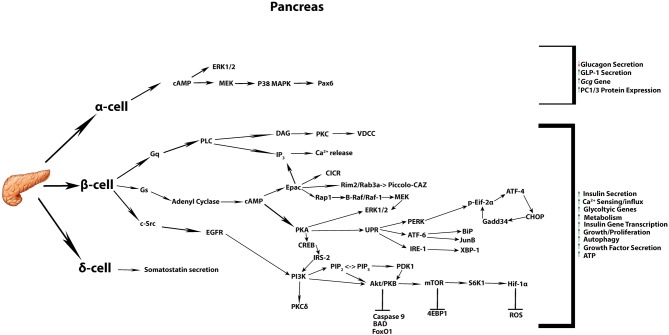
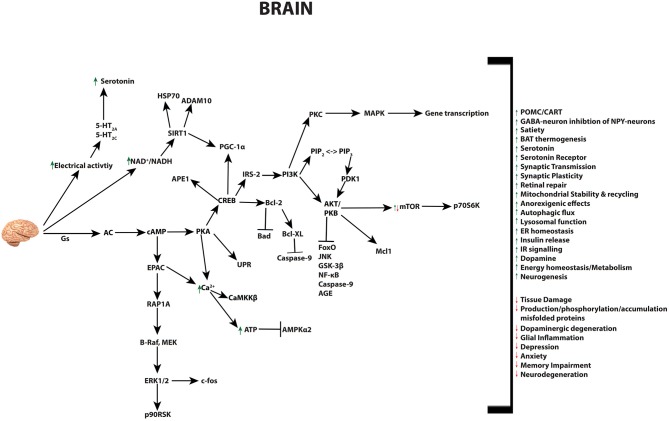
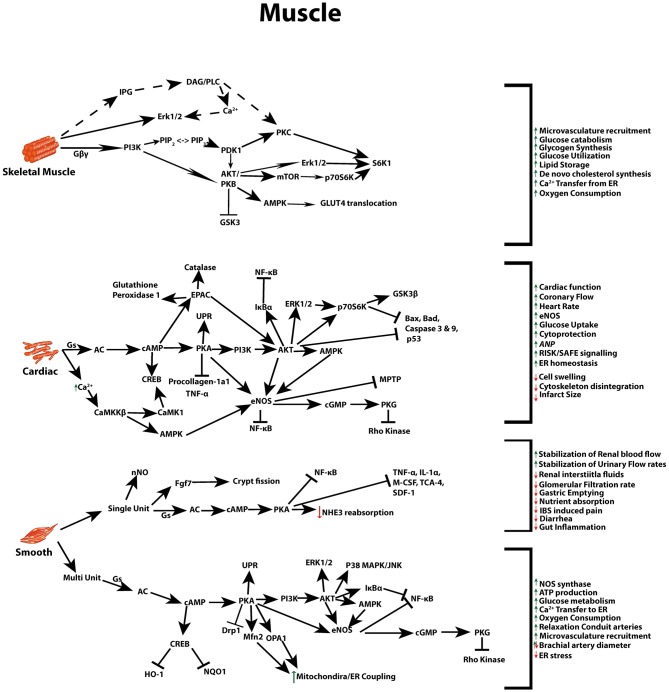
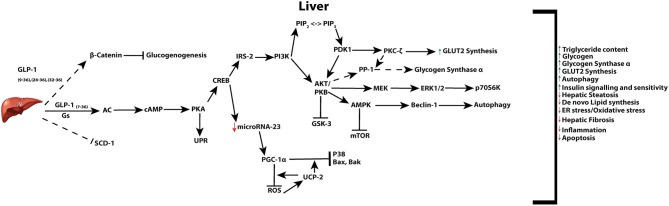
The incretin hormone Glucagon-Like Peptide-1 (GLP-1) is best known for its "incretin effect" in restoring glucose homeostasis in diabetics, however, it is now apparent that it has a broader range of physiological effects in the body. Both and studies have demonstrated that GLP-1 mimetics alleviate endoplasmic reticulum stress, regulate autophagy, promote metabolic reprogramming, stimulate anti-inflammatory signaling, alter gene expression, and influence neuroprotective pathways. A substantial body of evidence has accumulated with respect to how GLP-1 and its analogs act to restore and maintain normal cellular functions. These findings have prompted several clinical trials which have reported GLP-1 analogs improve cardiac function, restore lung function and reduce mortality in patients with obstructive lung disease, influence blood pressure and lipid storage, and even prevent synaptic loss and neurodegeneration. Mechanistically, GLP-1 elicits its effects via acute elevation in cAMP levels, and subsequent protein kinase(s) activation, pathways well-defined in pancreatic β-cells which stimulate insulin secretion in conjunction with elevated Ca and ATP. More recently, new studies have shed light on additional downstream pathways stimulated by chronic GLP-1 exposure, findings which have direct relevance to our understanding of the potential therapeutic effects of longer lasting analogs recently developed for clinical use. In this review, we provide a comprehensive description of the diverse roles for GLP-1 across multiple tissues, describe downstream pathways stimulated by acute and chronic exposure, and discuss novel pleiotropic applications of GLP-1 mimetics in the treatment of human disease.
肠促胰岛素激素胰高血糖素样肽-1(GLP-1)最为人所知的是其在恢复糖尿病患者血糖稳态方面的“肠促胰岛素效应”,然而,现在很明显它在体内具有更广泛的生理作用。体内和体外研究均表明,GLP-1模拟物可减轻内质网应激、调节自噬、促进代谢重编程、刺激抗炎信号传导、改变基因表达并影响神经保护途径。关于GLP-1及其类似物如何恢复和维持正常细胞功能,已经积累了大量证据。这些发现促使了多项临床试验,这些试验报告称GLP-1类似物可改善心脏功能、恢复肺功能并降低阻塞性肺病患者的死亡率、影响血压和脂质储存,甚至预防突触丧失和神经退行性变。从机制上讲,GLP-1通过cAMP水平的急性升高以及随后的蛋白激酶激活来发挥其作用,这些途径在胰腺β细胞中已得到明确界定,它们与升高的Ca和ATP一起刺激胰岛素分泌。最近,新的研究揭示了慢性GLP-1暴露所刺激的其他下游途径,这些发现与我们对最近开发用于临床的长效类似物的潜在治疗效果的理解直接相关。在这篇综述中,我们全面描述了GLP-1在多个组织中的不同作用,描述了急性和慢性暴露所刺激的下游途径,并讨论了GLP-1模拟物在治疗人类疾病中的新的多效性应用。