Aydos Dunya, Aksoy Zeynep Busra, Unal Mehmet Altay, Akcali Kamil Can, Bitirim Ceylan Verda, Turan Belma
Stem Cell Institute, Ankara University, Ankara, Turkey.
Faculty of Medicine Department of Biophysics, Ankara University, Ankara, Turkey.
Cardiovasc Diabetol. 2025 Aug 18;24(1):338. doi: 10.1186/s12933-025-02828-z.
A dual glucose-dependent insulinotropic polypeptide (GIP) and glucagon-like peptide-1 (GLP1) receptor agonist, tirzepatide (TZPD), is a novel cardioprotective agent, particularly in metabolic disturbances-related co-morbidities, however, there is no exact study to emphasize its possible unintended action in cardiac cells.
Considering a relationship between the trafficking of incretin receptors in a manner not anticipated by the standard way of cAMP as a primary actor in TZPD action, together with the role of cAMP depression in cardiac dysfunction, here, we aimed to elucidate a pattern of unintended receptor interactions of TZPD and molecular processes underlying the pleiotropic effects of TZPD through modulation of the β-adrenoceptors (β-ARs) signaling in cardiomyocytes.
To establish the multifaceted cardioprotective function and underlying mechanisms of TZPD against hyperglycemia (HG)-or senescence (SC)-induced cardiac dysfunction, H9c2 cells were treated with and without TZPD. We also used β-ARs overexpressed H9c2 cells (β3OE) for comparisons.
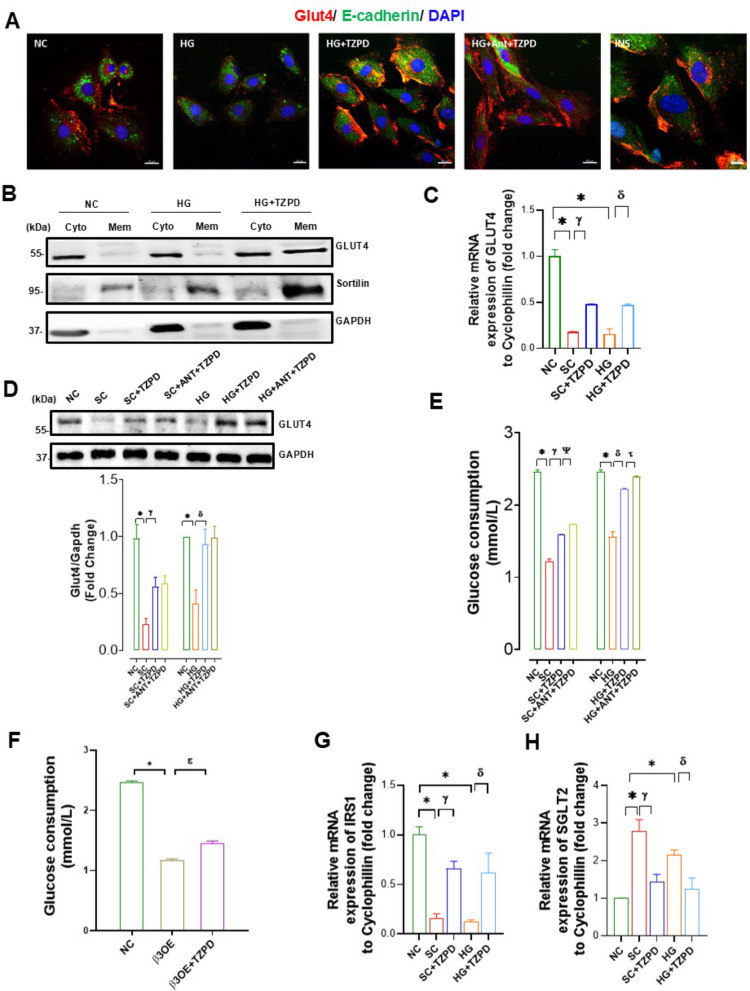
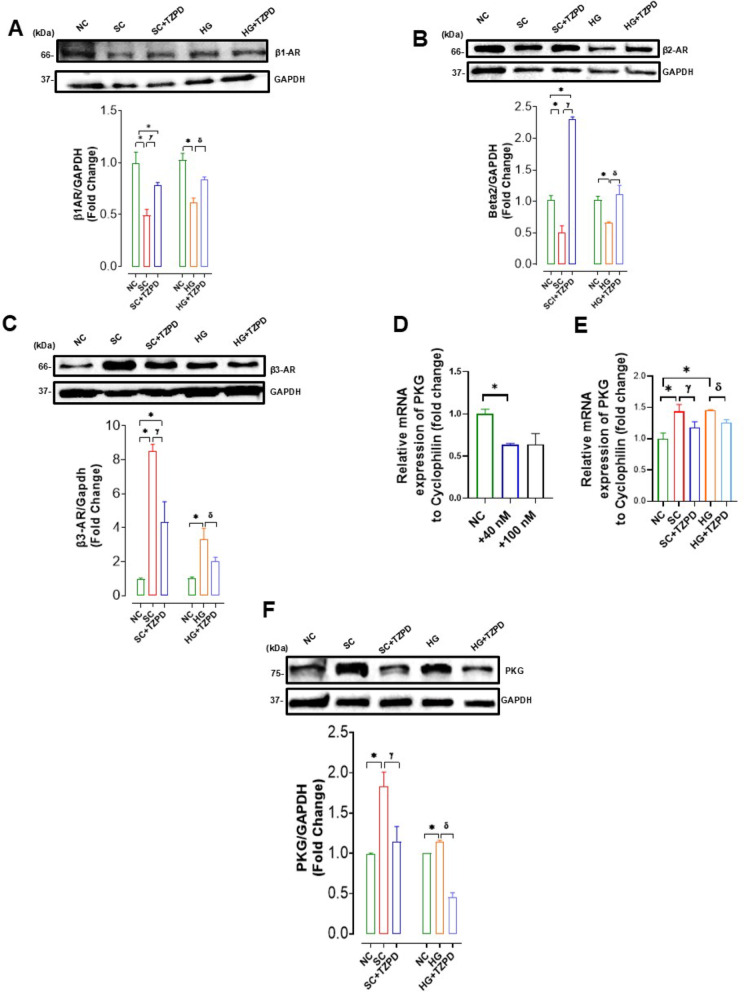
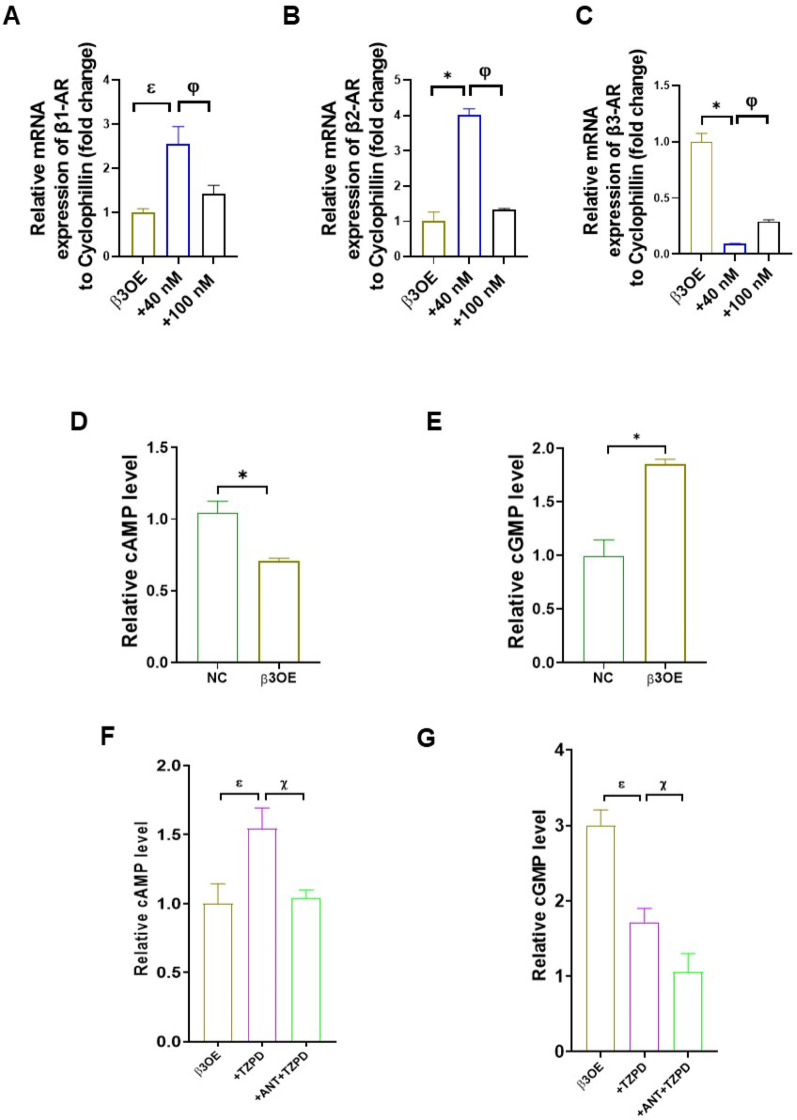
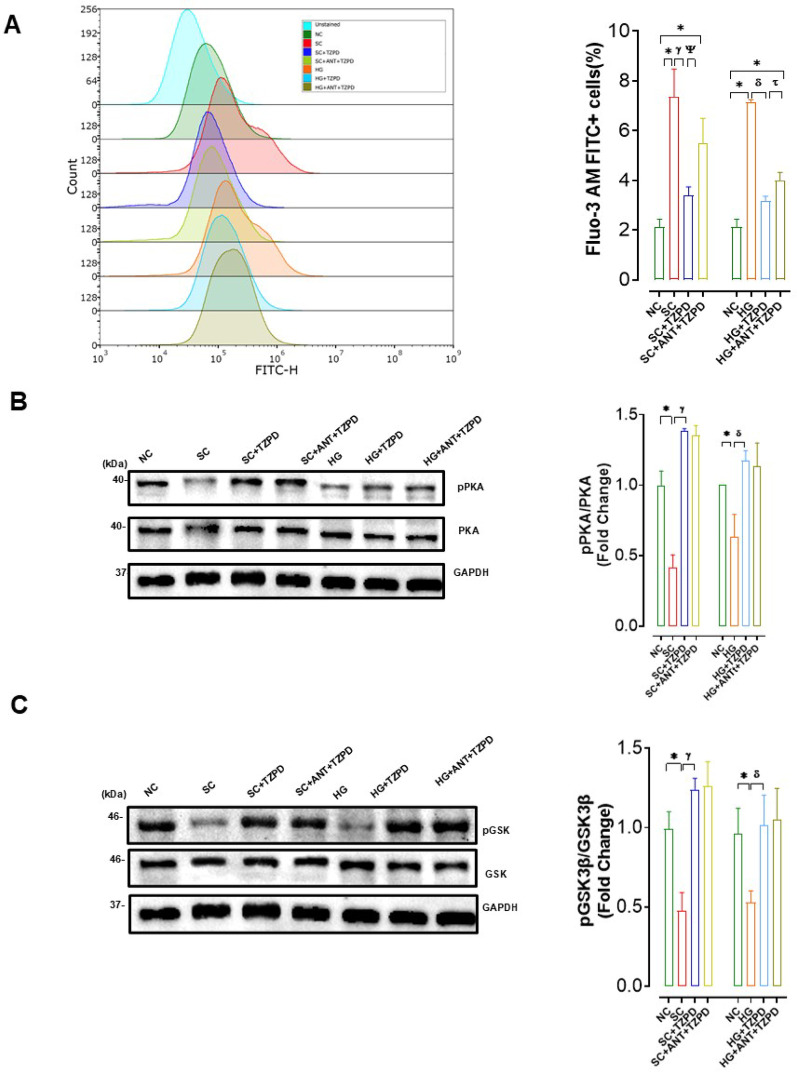
The TZPD intervention ameliorated the HG or SC phenotypes in the cardiac cells via alleviation in protein levels of GLP-1R and GIP-R as well as production of cAMP or cGMP, even in the presence of these receptor antagonisms. TZPD also increased the levels of β- and β-ARs while significantly decreasing activated β-ARs and PKG, being parallel to normalizations in the cAMP and cGMP in the presence of the antagonisms of these receptors. The therapeutic effects of TZPD on similar parameters of the β3OE group of cells can strongly verify its unintended action among multifaceted effects in either HG or SC cells. In addition, molecular dynamics simulations indicated that TZPD binds with the highest affinity to GLP-1R and β-ARs rather than GIP-R and then relatively lower but almost similar affinities to β- and β-ARs. Furthermore, mechanistically, the cardioprotective effect of TZPD includes significant regulation of the cellular Ca, at most, modulating the proteins in β-ARs signaling pathways. Moreover, TZPD could significantly increase not only the depressed protein level but also the translocation of GLUT4 on the sarcolemma, promoting glucose uptake in the HG or SC groups independent of its receptor actions.
Our findings indicate that TZPD, with its multifaceted role, has beneficial effects on cardiac cells by positively modulating β-ARs signaling and glucose metabolism rather than on-target receptor action. Furthermore, we demonstrated how TZPD can engage the different targets with distinct signaling motifs at the sarcolemma.
双重葡萄糖依赖性促胰岛素多肽(GIP)和胰高血糖素样肽-1(GLP1)受体激动剂替尔泊肽(TZPD)是一种新型心脏保护剂,尤其在与代谢紊乱相关的合并症方面,但尚无确切研究强调其在心脏细胞中可能存在的意外作用。
考虑到肠促胰岛素受体的转运方式与作为TZPD作用主要参与者的标准cAMP方式不同,以及cAMP降低在心脏功能障碍中的作用,在此,我们旨在通过调节心肌细胞中的β-肾上腺素能受体(β-ARs)信号,阐明TZPD意外的受体相互作用模式及其多效性作用背后的分子过程。
为了确立TZPD对高血糖(HG)或衰老(SC)诱导的心脏功能障碍的多方面心脏保护功能及潜在机制,对H9c2细胞进行有无TZPD处理。我们还使用β-ARs过表达的H9c2细胞(β3OE)进行比较。
即使存在这些受体拮抗剂,TZPD干预仍可通过降低GLP-1R和GIP-R的蛋白水平以及cAMP或cGMP的产生,改善心脏细胞中的HG或SC表型。TZPD还增加了β-和β-ARs的水平,同时显著降低活化的β-ARs和PKG,这与这些受体拮抗剂存在时cAMP和cGMP的正常化情况平行。TZPD对β3OE组细胞类似参数的治疗效果可以有力地证实其在HG或SC细胞多方面作用中的意外作用。此外,分子动力学模拟表明,TZPD与GLP-1R和β-ARs的结合亲和力最高,而与GIP-R的结合亲和力相对较低,但与β-和β-ARs的结合亲和力几乎相似。此外,从机制上讲,TZPD的心脏保护作用包括对细胞钙的显著调节,最多可调节β-ARs信号通路中的蛋白质。此外,TZPD不仅可以显著提高GLUT4在肌膜上降低的蛋白水平,还可以促进其转运,从而在HG或SC组中促进葡萄糖摄取,且这一过程独立于其受体作用。
我们的研究结果表明,具有多方面作用的TZPD通过正向调节β-ARs信号和葡萄糖代谢,而非通过靶向受体作用,对心脏细胞产生有益影响。此外,我们还展示了TZPD如何在肌膜上与具有不同信号基序的不同靶点相互作用。