Sterr Annette, Ebajemito James K, Mikkelsen Kaare B, Bonmati-Carrion Maria A, Santhi Nayantara, Della Monica Ciro, Grainger Lucinda, Atzori Giuseppe, Revell Victoria, Debener Stefan, Dijk Derk-Jan, DeVos Maarten
School of Psychology, Faculty of Health and Medical Sciences, University of Surrey, Guilford, United Kingdom.
Institute of Biomedical Engineering, University of Oxford, Oxford, United Kingdom.
Front Hum Neurosci. 2018 Nov 26;12:452. doi: 10.3389/fnhum.2018.00452. eCollection 2018.
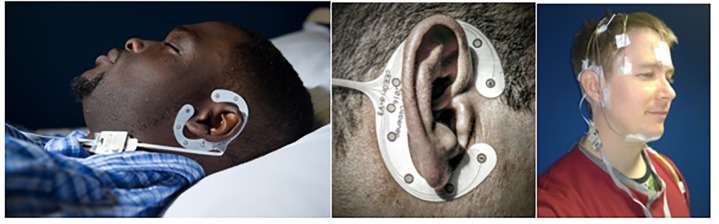
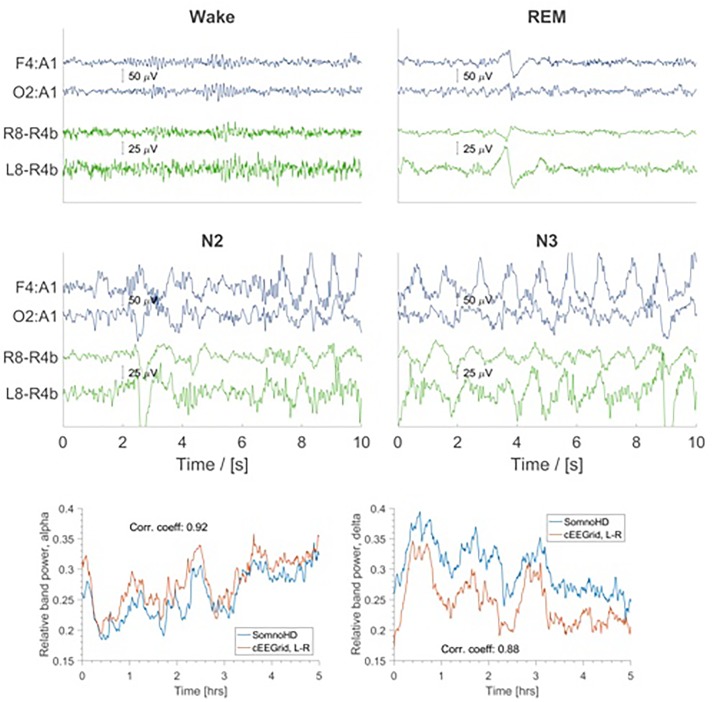
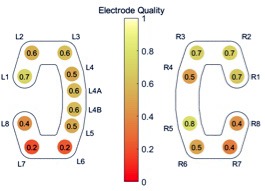
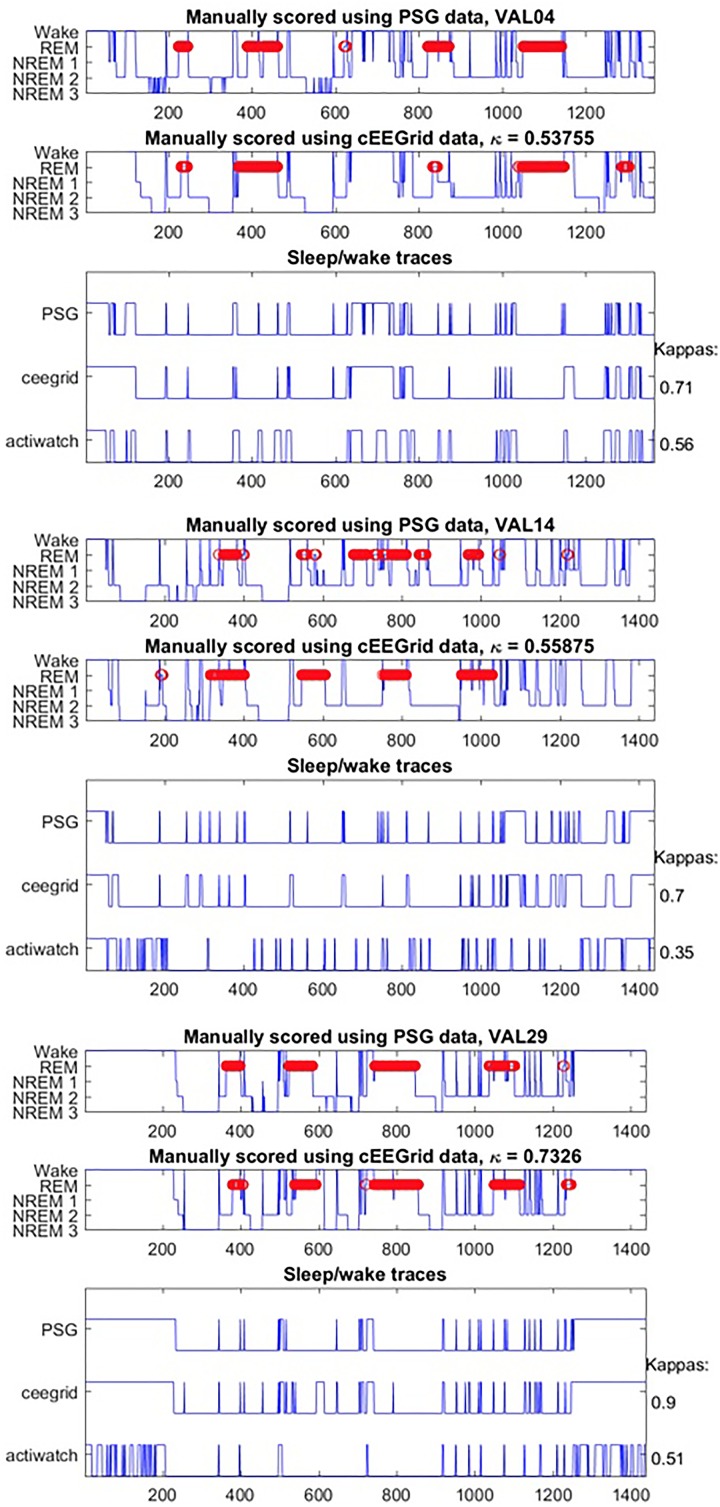
Electroencephalography (EEG) recordings represent a vital component of the assessment of sleep physiology, but the methodology presently used is costly, intrusive to participants, and laborious in application. There is a recognized need to develop more easily applicable yet reliable EEG systems that allow unobtrusive long-term recording of sleep-wake EEG ideally away from the laboratory setting. cEEGrid is a recently developed flex-printed around-the-ear electrode array, which holds great potential for sleep-wake monitoring research. It is comfortable to wear, simple to apply, and minimally intrusive during sleep. Moreover, it can be combined with a smartphone-controlled miniaturized amplifier and is fully portable. Evaluation of cEEGrid as a motion-tolerant device is ongoing, but initial findings clearly indicate that it is very well suited for cognitive research. The present study aimed to explore the suitability of cEEGrid for sleep research, by testing whether cEEGrid data affords the signal quality and characteristics necessary for sleep stage scoring. In an accredited sleep laboratory, sleep data from cEEGrid and a standard PSG system were acquired simultaneously. Twenty participants were recorded for one extended nocturnal sleep opportunity. Fifteen data sets were scored manually. Sleep parameters relating to sleep maintenance and sleep architecture were then extracted and statistically assessed for signal quality and concordance. The findings suggest that the cEEGrid system is a viable and robust recording tool to capture sleep and wake EEG. Further research is needed to fully determine the suitability of cEEGrid for basic and applied research as well as sleep medicine.
脑电图(EEG)记录是睡眠生理评估的重要组成部分,但目前使用的方法成本高昂、对参与者有侵扰性且应用繁琐。人们认识到需要开发更易于应用且可靠的EEG系统,以便在理想情况下能在实验室环境之外对睡眠-觉醒EEG进行不干扰的长期记录。cEEGrid是最近开发的一种环绕耳朵的柔性印刷电极阵列,在睡眠-觉醒监测研究方面具有巨大潜力。它佩戴舒适、应用简单,在睡眠期间侵扰性最小。此外,它可以与智能手机控制的小型放大器相结合,并且完全便于携带。对cEEGrid作为一种耐运动设备的评估正在进行中,但初步结果清楚地表明它非常适合认知研究。本研究旨在通过测试cEEGrid数据是否具备睡眠阶段评分所需的信号质量和特征,来探索cEEGrid在睡眠研究中的适用性。在一家经认可的睡眠实验室中,同时采集了来自cEEGrid和标准多导睡眠图(PSG)系统的睡眠数据。对20名参与者进行了一次延长的夜间睡眠记录。手动对15个数据集进行了评分。然后提取与睡眠维持和睡眠结构相关的睡眠参数,并对信号质量和一致性进行统计评估。研究结果表明,cEEGrid系统是一种可行且强大的记录工具,可用于捕捉睡眠和觉醒EEG。需要进一步研究以充分确定cEEGrid在基础研究、应用研究以及睡眠医学中的适用性。