Qadir Irfan, Ahmad Saeed, Zaman Atiq Uz, Khan Chirag Muhammad, Ahmad Shahzad, Aziz Amer
Department of Orthopaedic and Spine Surgery, Ghurki Trust Teaching Hospital, Lahore, Pakistan.
Hip Pelvis. 2018 Dec;30(4):260-268. doi: 10.5371/hp.2018.30.4.260. Epub 2018 Dec 6.
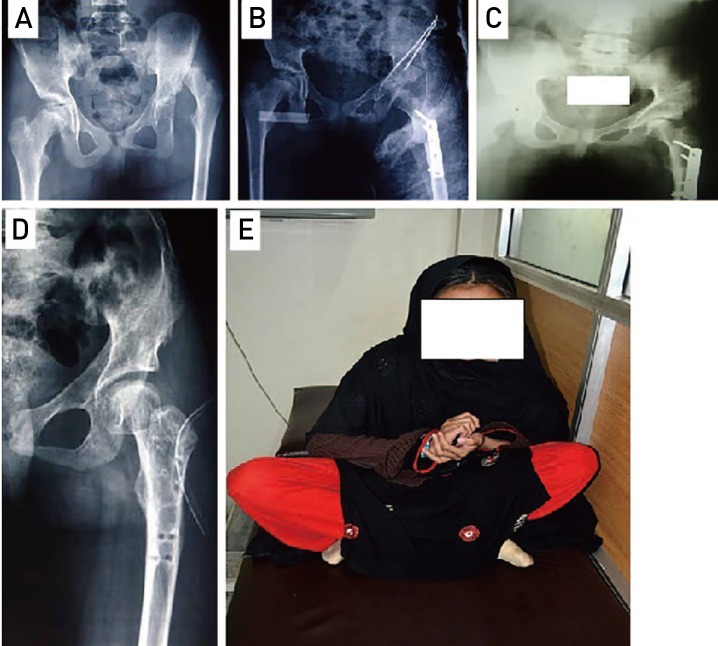
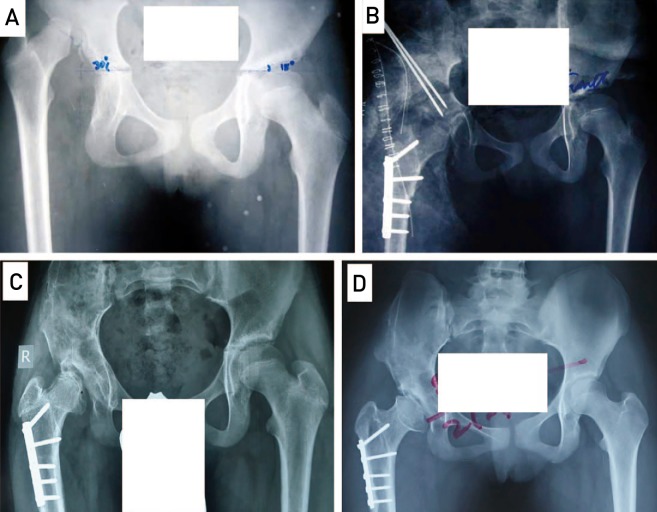
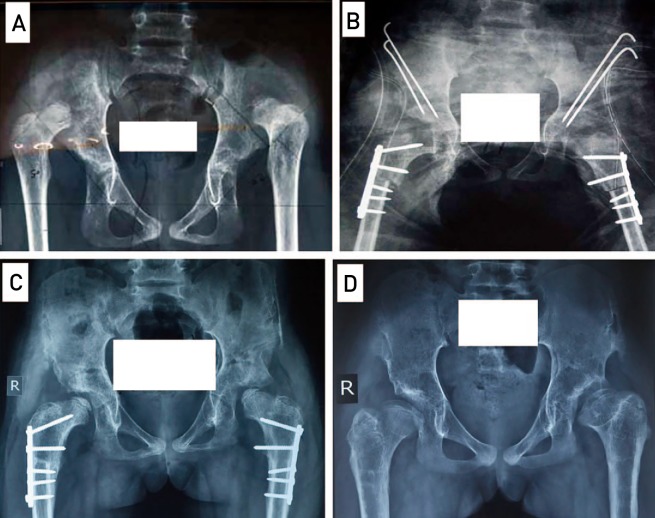
This study was performed to assess the clinical and radiological outcomes following one-stage hip reconstruction, consisting of open reduction femoral shortening and pelvic osteotomy, for neglected developmental dislocation of the hip (DDH).
This is a retrospective analysis of 77 hips in 65 patients (46 females and 19 males; 12 had bilateral dislocations), operated at a Ghurki Trust Teaching Hospital in Pakistan between 2013 and 2015. The average age at surgery was 11.02±3.43 years. According to the Tönnis classification, there were 10, 14, 22, and 31 patients in grades 1, 2, 3, and 4, respectively. The pelvic procedure utilized in this study was triple osteotomy (47 hips) followed by double and Salter osteotomy (18 and 12 hips, respectively). Postoperative evaluations were conducted using the modified MacKay's scoring system (functional outcomes) and Severin's scoring method (radiological assessment).
Postoperatively, there were 38 (49.4%), 19 (24.7%), 14 (18.2%), and 6 (7.8%) hips in Severin grade I, II, III and IV, respectively. According to the modified McKay criteria, there were 22 hips (28.6%) in excellent condition, 44 (57.1%) in good condition, 9 (11.7%) in fair condition and 2 (2.6%) in poor condition. Both patients with poor outcomes had an unstable, painful hip with evidence of avascular necrosis of the femoral head.
Based on the results presented here, we recommend the single stage procedure of open reduction, femoral shortening and pelvic osteotomy for treatment of DDH in older children with good to excellent functional and radiological outcomes.
本研究旨在评估一期髋关节重建术(包括切开复位股骨缩短和骨盆截骨术)治疗陈旧性发育性髋关节脱位(DDH)后的临床和放射学结果。
这是一项对2013年至2015年期间在巴基斯坦古尔基信托教学医院接受手术的65例患者(46例女性和19例男性;12例为双侧脱位)的77个髋关节进行的回顾性分析。手术时的平均年龄为11.02±3.43岁。根据Tönnis分类,1级、2级、3级和4级分别有10例、14例、22例和31例患者。本研究中采用的骨盆手术为三联截骨术(47个髋关节),其次是双截骨术和Salter截骨术(分别为18个和12个髋关节)。术后评估采用改良的麦凯评分系统(功能结果)和塞韦林评分方法(放射学评估)。
术后,塞韦林I级、II级、III级和IV级的髋关节分别有38个(49.4%)、19个(24.7%)、14个(18.2%)和6个(7.8%)。根据改良的麦凯标准,情况极佳的髋关节有22个(28.6%),良好的有44个(57.1%),中等的有9个(11.7%),差的有2个(2.6%)。结果差的两名患者髋关节均不稳定且疼痛,有股骨头缺血性坏死的迹象。
基于此处给出的结果,我们推荐采用切开复位、股骨缩短和骨盆截骨的一期手术治疗大龄儿童的DDH,其功能和放射学结果良好至极佳。