Institute of Crop Sciences, Chinese Academy of Agricultural Sciences, Beijing, China.
J Exp Bot. 2019 Feb 20;70(4):1167-1182. doi: 10.1093/jxb/ery429.
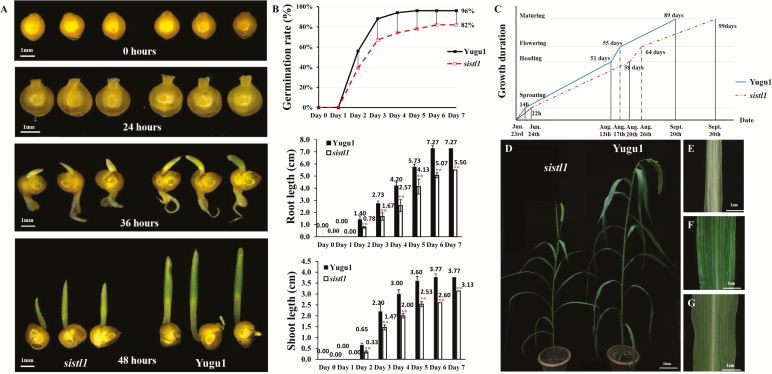
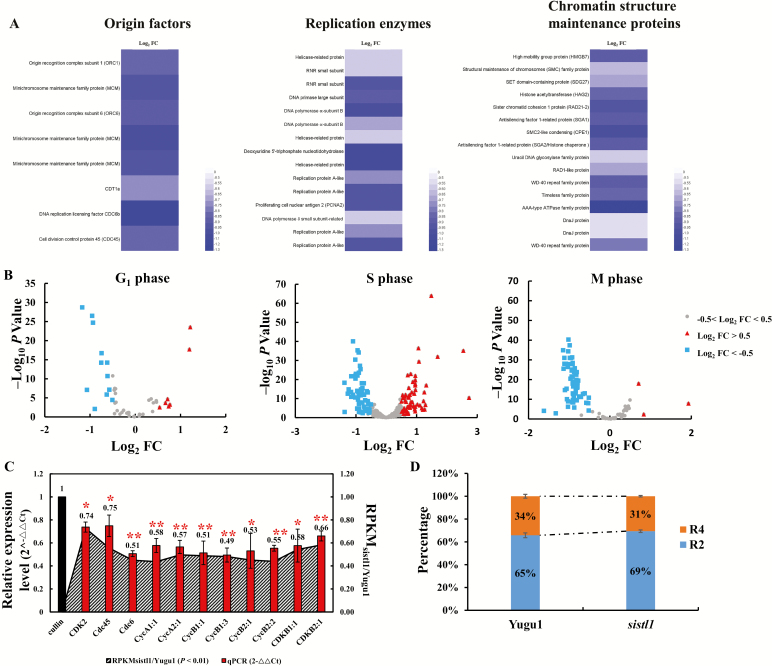
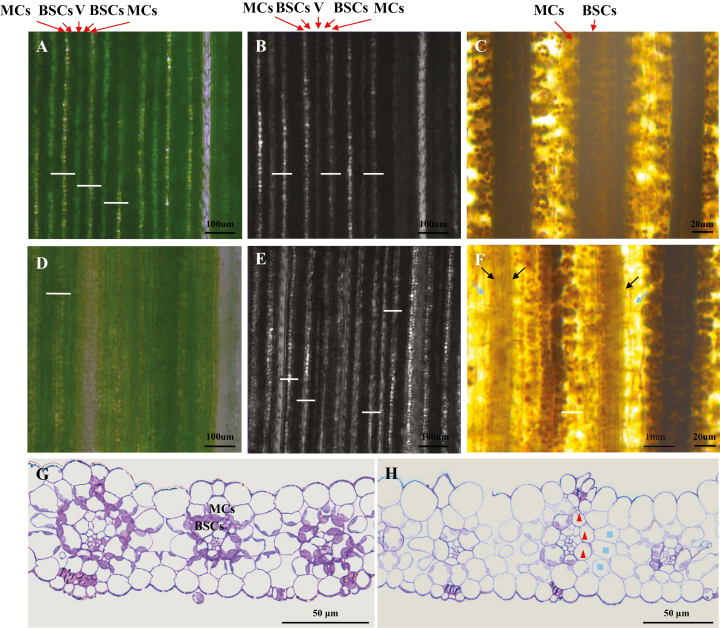
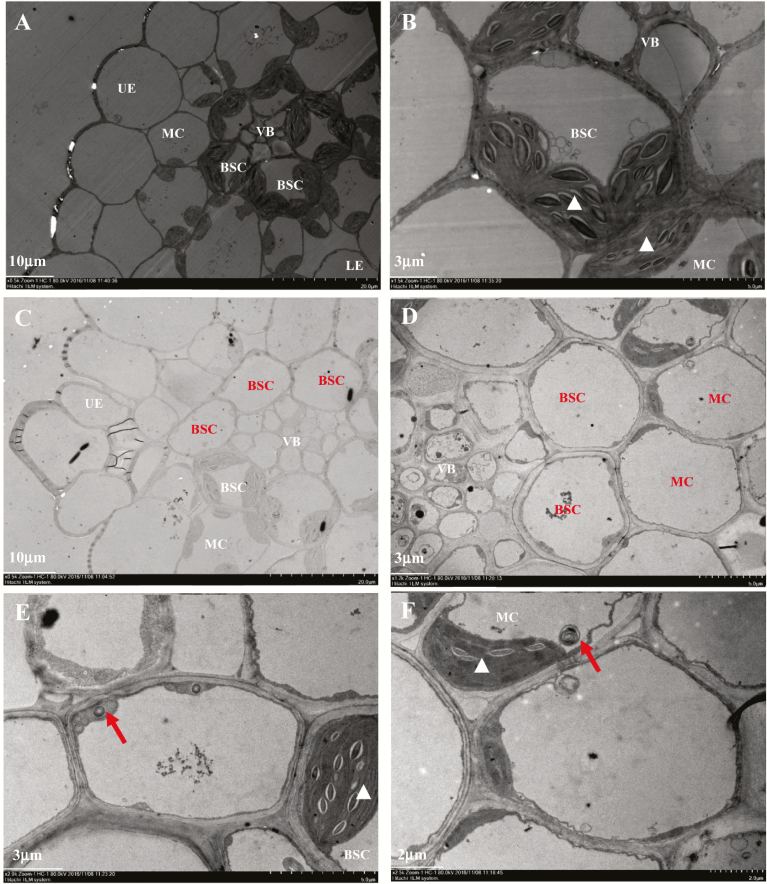
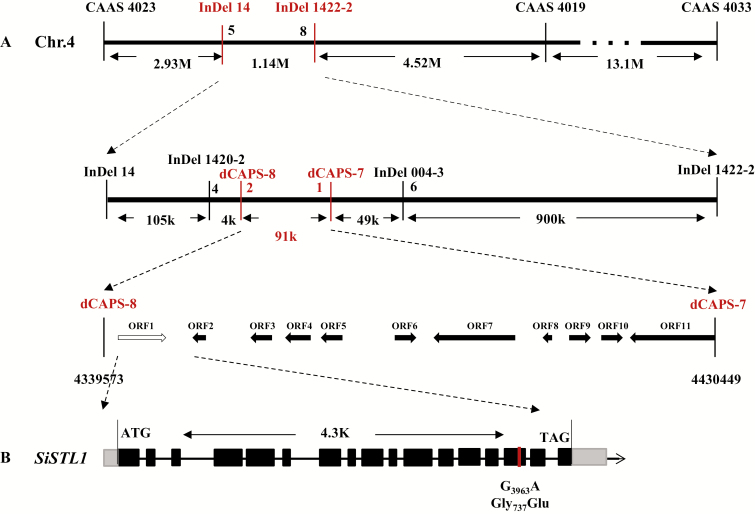
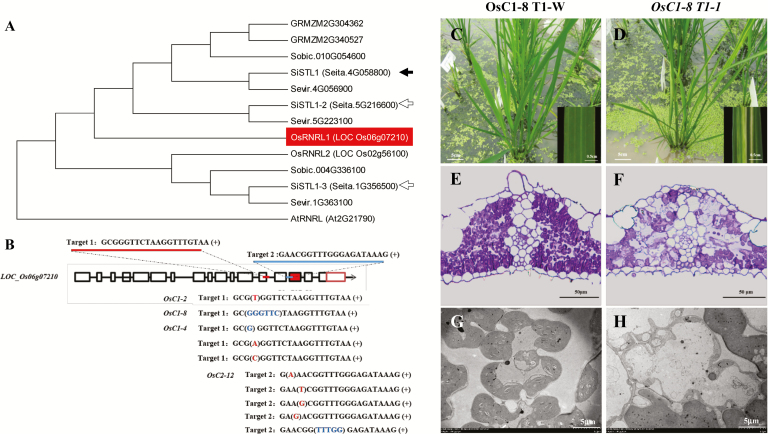
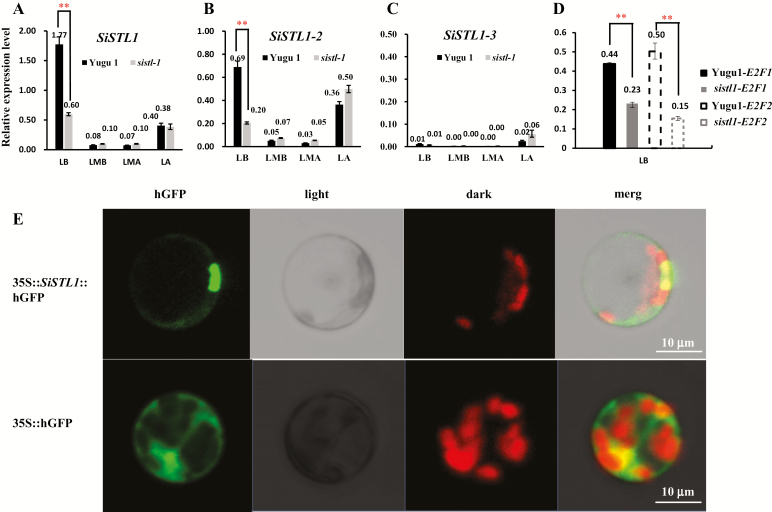
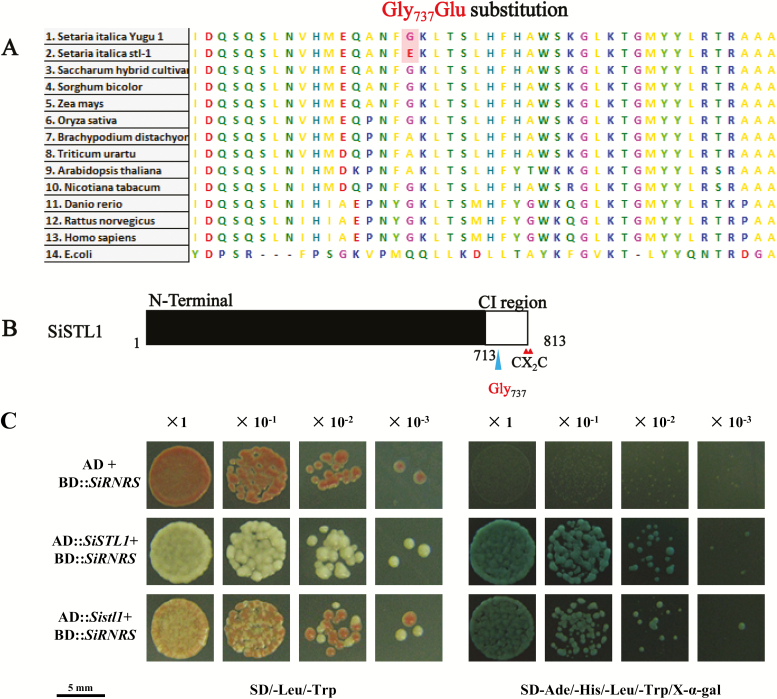
The activity of ribonucleotide reductase (RNR), which catalyses the transformation of four ribonucleoside diphosphates (NDPs) to their corresponding deoxyribonucleoside diphosphates (dNDPs), is the main determiner of the cellular concentration of dNTP pools and should be tightly coordinated with DNA synthesis and cell-cycle progression. Constitutively increased or decreased RNR activity interferes with DNA replication and leads to arrested cell cycle progression; however, the mechanisms underlying these disruptive effects in higher plants remain to be uncovered. In this study, we identified a RNR large subunit mutant, sistl1, in Setaria italica (foxtail millet), which exhibited growth retardation as well as striped leaf phenotype, i.e. irregularly reduced leaf vein distances and decreased chloroplast biogenesis. We determined that a Gly737 to Glu substitution occurring in the C-terminus of the SiSTL1 protein slightly affected its optimal function, leading in turn to the reduced expression of genes variously involved in the assembly and activation of the DNA pre-replicative complex, elongation of replication forks and S phase entry. Our study provides new insights into how SiSTL1 regulates plant growth, chloroplast biogenesis, and cell cycle progression in Poaceae crops.
核糖核苷酸还原酶(RNR)的活性催化了四种核糖核苷二磷酸(NDPs)转化为其相应的脱氧核糖核苷二磷酸(dNDPs),是细胞内 dNTP 池浓度的主要决定因素,应该与 DNA 合成和细胞周期进程紧密协调。RNR 活性的组成性增加或减少会干扰 DNA 复制,并导致细胞周期进程停滞;然而,高等植物中这些破坏效应的机制仍有待揭示。在这项研究中,我们在 Setaria italica(黍)中鉴定出一个 RNR 大亚基突变体 sistl1,其表现出生长迟缓以及条纹叶表型,即叶脉间距不规则减小和叶绿体生物发生减少。我们确定 SiSTL1 蛋白 C 末端发生的 Gly737 到 Glu 的取代略微影响了其最佳功能,进而导致各种参与 DNA 预复制复合物组装和激活、复制叉延伸和 S 期进入的基因表达减少。我们的研究为 SiSTL1 如何在禾本科作物中调节植物生长、叶绿体生物发生和细胞周期进程提供了新的见解。