Vaccine Evaluation Center, BC Children's Hospital, University of British Columbia, Vancouver, Canada.
Departments of Paediatrics, Microbiology, Immunology and Infectious Diseases, Pathology, and Laboratory Medicine, University of Calgary, Canada.
J Pediatric Infect Dis Soc. 2020 Apr 30;9(2):118-127. doi: 10.1093/jpids/piy128.
Recent increases in pertussis morbidity and mortality rates among young infants have led to a recommendation in some countries for vaccination against pertussis during pregnancy. Having data on the burden of pediatric pertussis in a large population over time is important for establishing the true burden of disease in the acellular pertussis (aP) vaccine era. Here, we describe age-specific epidemiology and morbidity and mortality rates in children hospitalized with pertussis over 17 years across Canada in the aP vaccine era.
Patients aged ≤16 years who were admitted to 1 of 12 pediatric tertiary-care hospitals across Canada between 1999 and 2015 with confirmed (laboratory-confirmed or epidemiologically linked) or probable (clinically diagnosed) pertussis were included.
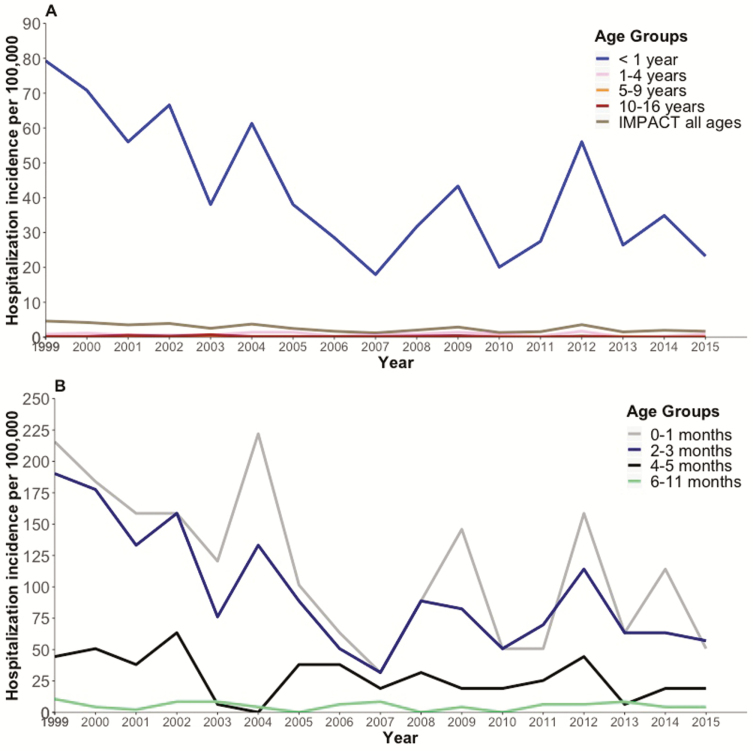
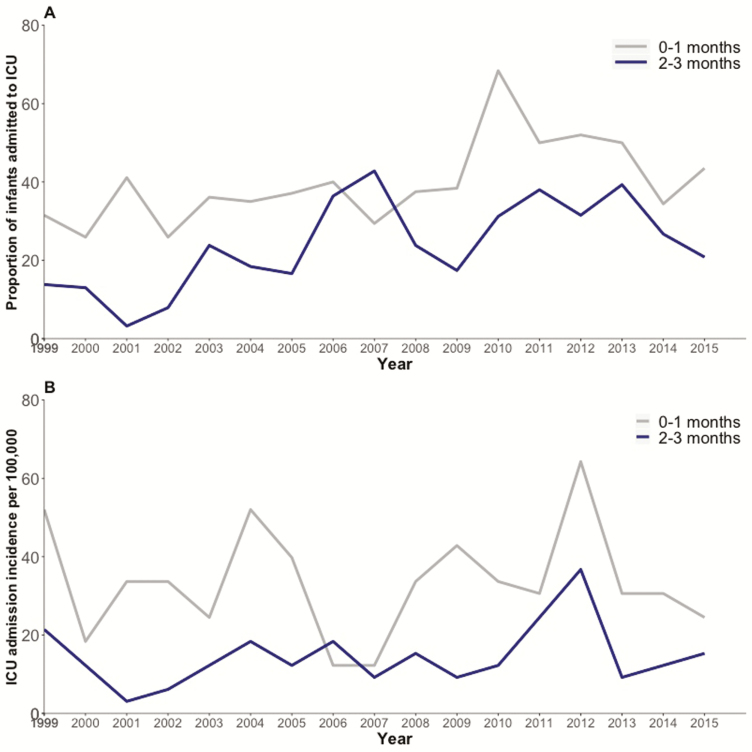
Overall, 1402 patients with pertussis were included. Infants aged <2 months had the highest mean annual incidences of pertussis hospitalization and intensive care unit (ICU) admission (116.40 [95% confidence interval (CI), 85.32-147.49] and 33.48 [95% CI, 26.35-40.62] per 100 000 population, respectively). The overall proportion of children who required ICU admission was 25.46%, and the proportion was highest in infants aged <2 months (37.90%). Over the span of this study, 21 deaths occurred. Age of <16 weeks, prematurity, encephalopathy, and a confirmed pertussis diagnosis were independent risk factors for ICU admission. Age of <4 weeks, prematurity, and female sex were independent risk factors for death.
In the aP vaccine era, endemic pertussis still contributes considerably to childhood morbidity and death, particularly in infants aged <2 months. Vaccination against pertussis during pregnancy has the potential to reduce this disease burden.
最近,婴幼儿百日咳发病率和死亡率有所上升,这导致一些国家建议在怀孕期间接种百日咳疫苗。随着时间的推移,在一个大人群中获得关于小儿百日咳负担的数据对于确定无细胞百日咳(aP)疫苗时代疾病的真实负担非常重要。在这里,我们描述了在 aP 疫苗时代,加拿大 12 家儿科三级保健医院中,17 年来因百日咳住院的儿童的年龄特异性流行病学和发病率及死亡率。
1999 年至 2015 年期间,年龄≤16 岁的患者在加拿大 12 家儿科三级保健医院中的 1 家医院因确诊(实验室确诊或流行病学相关)或可能(临床诊断)百日咳而住院,这些患者被纳入研究。
共纳入 1402 例百日咳患者。<2 个月的婴儿患百日咳的年平均住院和重症监护病房(ICU)入院率最高(分别为 116.40 [95%置信区间(CI),85.32-147.49]和 33.48 [95% CI,26.35-40.62] /100000 人口)。需要 ICU 入院的儿童比例总体为 25.46%,<2 个月的婴儿比例最高(37.90%)。在这项研究期间,有 21 例死亡。年龄<16 周、早产、脑病和确诊的百日咳诊断是 ICU 入院的独立危险因素。年龄<4 周、早产和女性是死亡的独立危险因素。
在 aP 疫苗时代,地方性百日咳仍然对儿童发病率和死亡率造成很大影响,特别是<2 个月的婴儿。怀孕期间接种百日咳疫苗有可能减轻这种疾病负担。