Department of Neurosurgery, Qilu Hospital, Shandong University, 107 Wenhua Western Rd., Jinan, 250012, Shandong, China.
Brain Science Research Institute, Shandong University, 44 Wenhuaxi Road, Jinan, China.
Neurosurg Rev. 2020 Feb;43(1):259-263. doi: 10.1007/s10143-018-1048-8. Epub 2018 Dec 11.
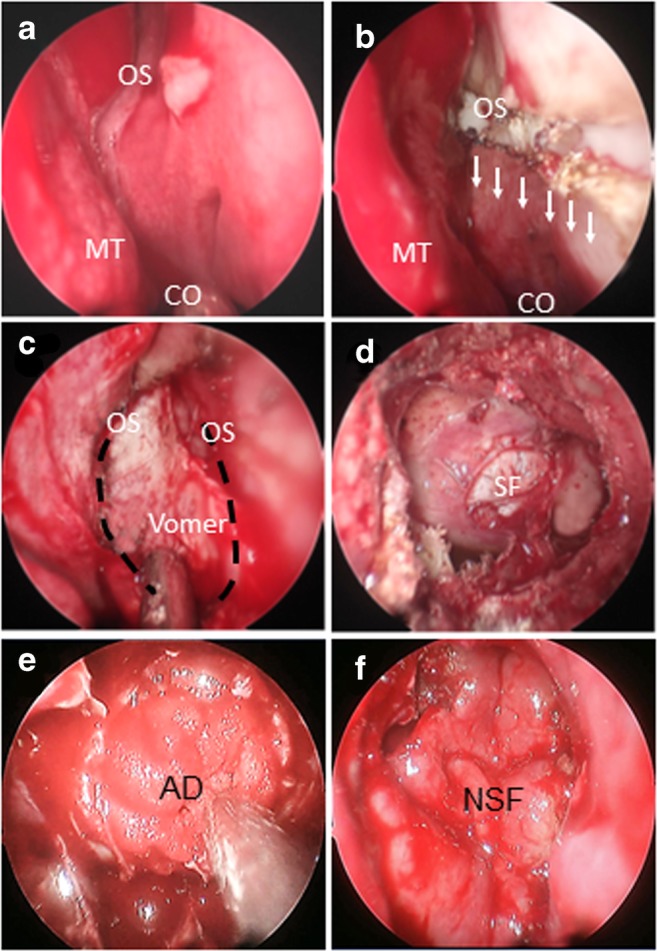
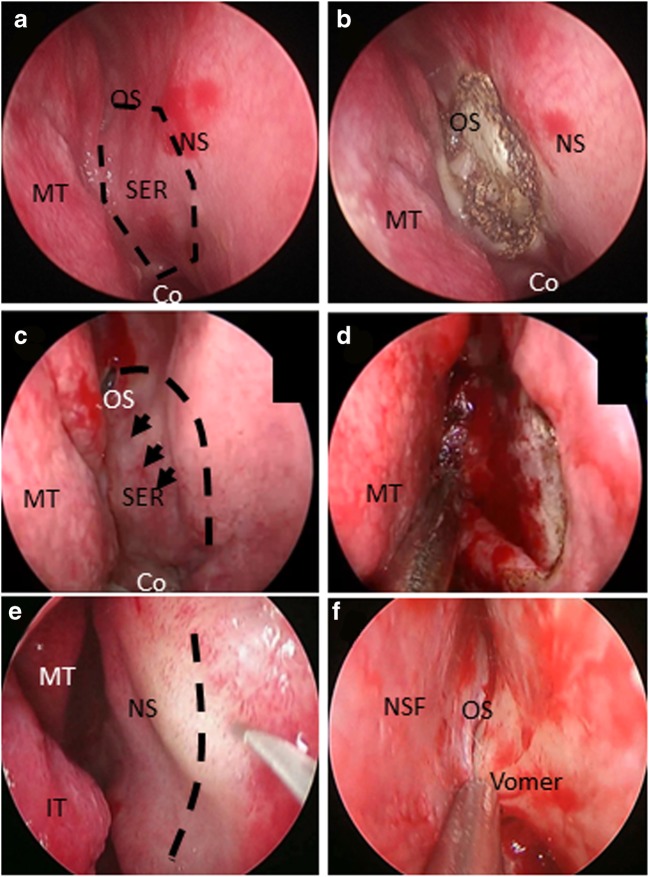
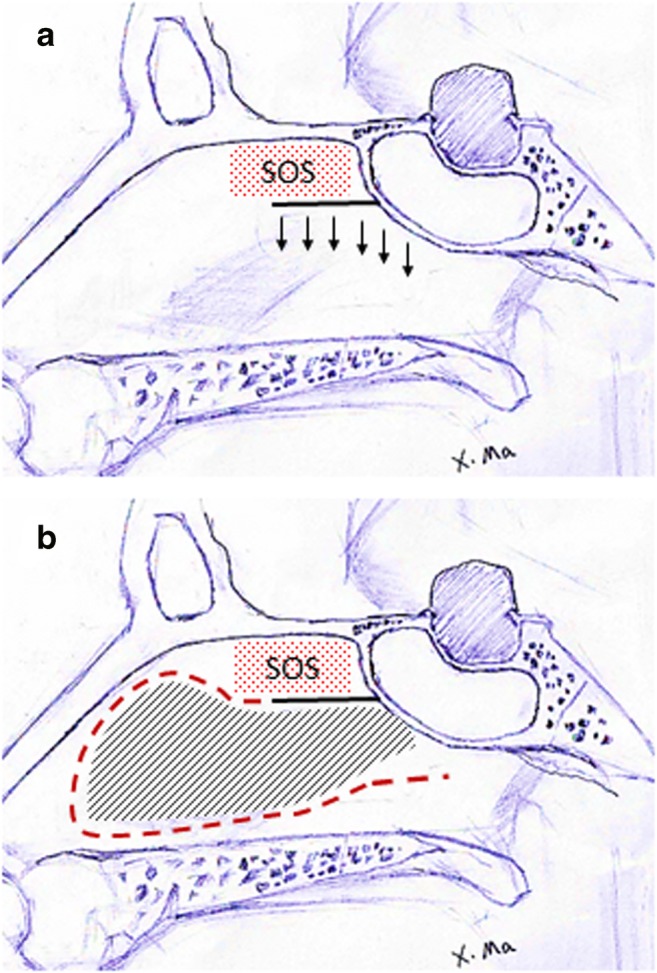
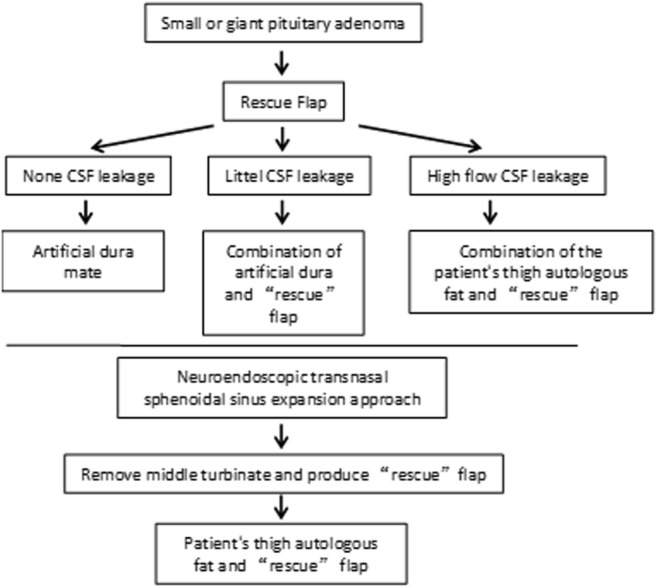
To explore the reliability and superiority of nasoseptal "rescue" flap technique in neuroendoscopic transnasal pituitary adenoma resection. Retrospective clinical analysis of 113 cases of endoscopic transsphenoid pituitary adenoma resection with the application of nasoseptal "rescue" flap technology. The reliability and the superiority of the technique were evaluated according to the duration of nasal cavity and sphenoid sinus stage, the incidence of postoperative anosmia, and cerebrospinal rhinorrhea. The duration of nasal and sphenoid sinus stage was 15-30 min, averaging 24 min. There were 27 cases of intro-operative cerebrospinal fluid leakage, including 24 cases of low-flow cerebrospinal fluid leak and 3 cases of high-flow cerebrospinal fluid leak. Twenty-three cases were converted from nasoseptal "rescue" flap to nasal septum flap. There were 17 cases of postoperative olfactory decline or disappearance, 1 case of epistaxis and 1 case of cerebrospinal rhinorrhea. The application of nasoseptal "rescue" flap technique can proceed sellar floor reconstruction when the diaphragma sellae rupture occurs during the operation. There is no obvious increase of the duration of sphenoid sinus and nasal stage and the rate of postoperative olfactory loss. This technique can be used as a conventional technique for endoscopic transsphenoid pituitary adenoma resection.
探讨鼻内隔“救援”瓣技术在神经内镜经鼻蝶窦垂体瘤切除中的可靠性和优越性。回顾性分析了 113 例应用鼻内隔“救援”瓣技术的内镜经蝶窦垂体瘤切除术的临床资料。根据鼻腔和蝶窦阶段的持续时间、术后嗅觉丧失的发生率和脑脊液鼻漏来评估该技术的可靠性和优越性。鼻腔和蝶窦阶段的持续时间为 15-30 分钟,平均 24 分钟。术中发生 27 例脑脊液漏,其中 24 例为低流量脑脊液漏,3 例为高流量脑脊液漏。23 例从鼻内隔“救援”瓣转为鼻中隔瓣。术后嗅觉减退或消失 17 例,鼻出血 1 例,脑脊液鼻漏 1 例。当鞍底破裂时,应用鼻内隔“救援”瓣技术可以进行鞍底重建。该技术不会明显增加蝶窦和鼻腔阶段的持续时间以及术后嗅觉丧失的发生率。该技术可作为内镜经蝶窦垂体瘤切除术的常规技术。