Seijsing Johan, Sobieraj Anna M, Keller Nadia, Shen Yang, Zinkernagel Annelies S, Loessner Martin J, Schmelcher Mathias
Laboratory of Food Microbiology, Institute of Food, Nutrition and Health, ETH Zürich, Zürich, Switzerland.
Division of Infectious Diseases and Hospital Epidemiology, University Hospital Zürich - University of Zürich, Zürich, Switzerland.
Front Microbiol. 2018 Nov 27;9:2927. doi: 10.3389/fmicb.2018.02927. eCollection 2018.
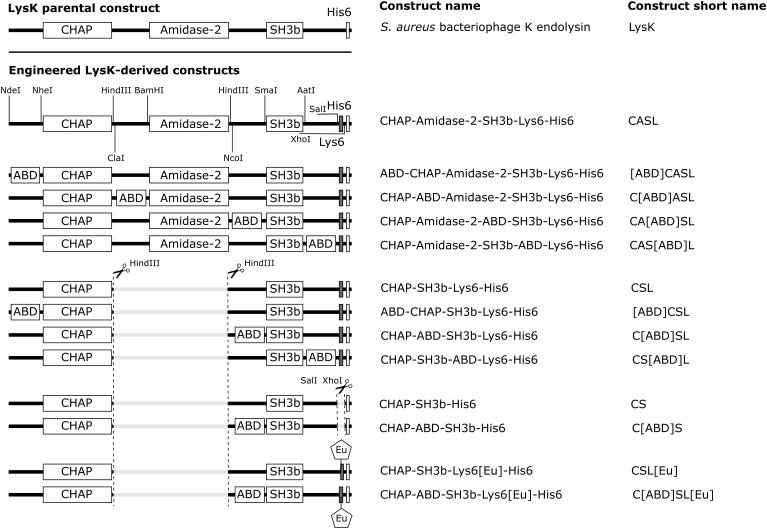
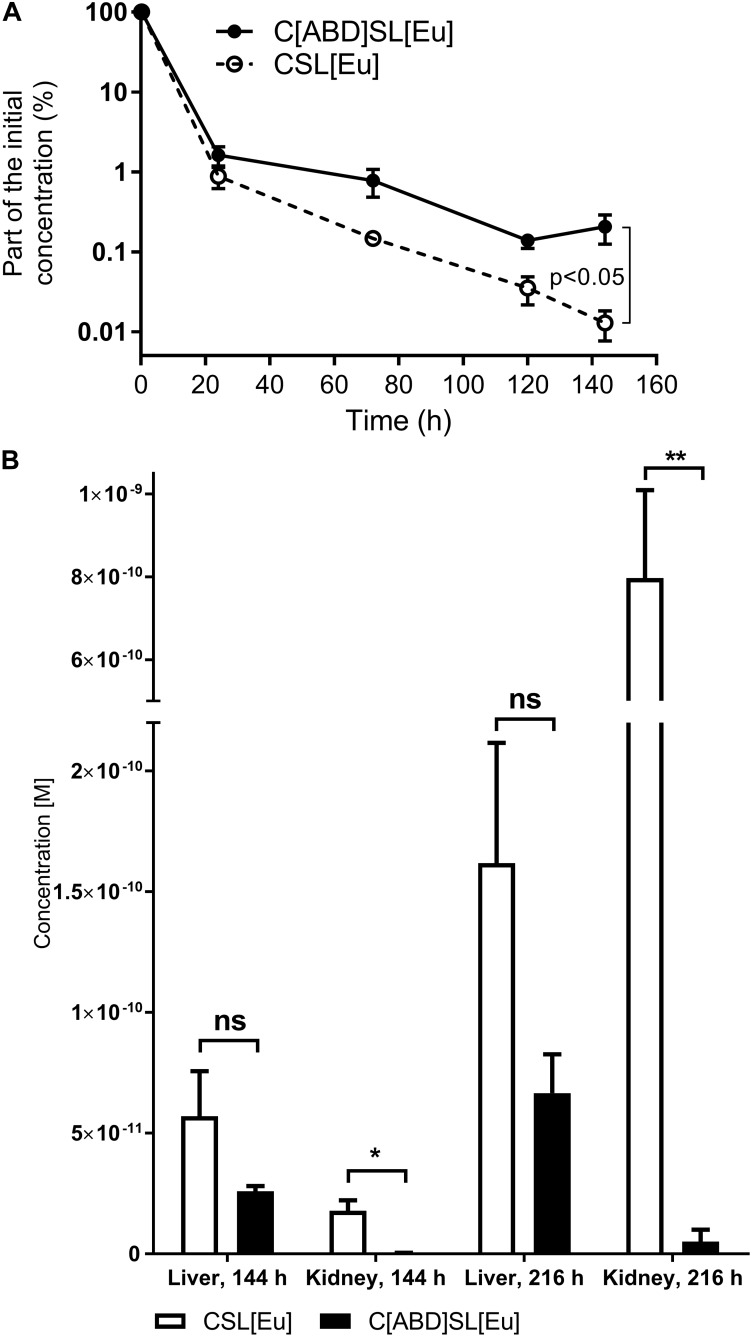
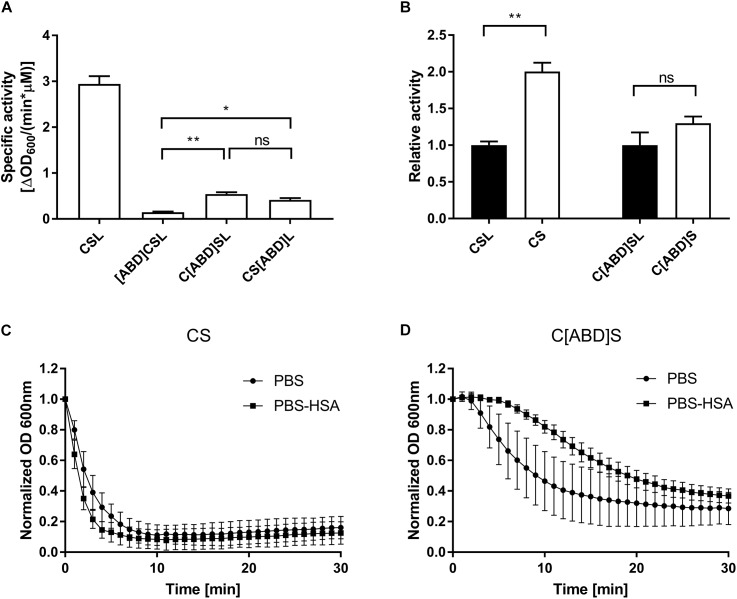
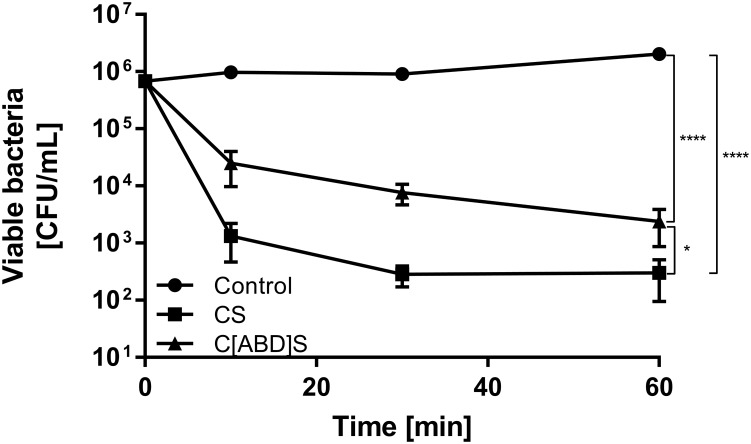
The increasing number of multidrug-resistant bacteria intensifies the need to develop new antimicrobial agents. Endolysins are bacteriophage-derived enzymes that degrade the bacterial cell wall and hold promise as a new class of highly specific and versatile antimicrobials. One major limitation to the therapeutic use of endolysins is their often short serum circulation half-life, mostly due to kidney excretion and lysosomal degradation. One strategy to increase the half-life of protein drugs is fusion to the albumin-binding domain (ABD). By high-affinity binding to serum albumin, ABD creates a complex with large hydrodynamic volume, reducing kidney excretion and lysosomal degradation. The aim of this study was to investigate the antibacterial activity and biodistribution and half-life of an engineered variant of the phage endolysin LysK. The ABD sequence was introduced at different positions within the enzyme, and lytic activity of each variant was determined and in human serum. Half-life and biodistribution were assessed by intravenous injection of europium-labeled proteins into C57BL/6 wild-type mice. Our data demonstrates that fusion of the endolysin to ABD improves its serum circulation half-life and reduces its deposition in the kidneys . The most active construct reduced counts in human serum by 3 logs within 60 min. We conclude that ABD fusions provide an effective strategy to extend the half-life of antibacterial enzymes, supporting their therapeutic potential for treatment of systemic bacterial infections.
多重耐药菌数量的不断增加强化了开发新型抗菌剂的需求。内溶素是噬菌体衍生的酶,可降解细菌细胞壁,有望成为一类新型的高特异性和多功能抗菌剂。内溶素治疗应用的一个主要限制是其血清循环半衰期通常较短,这主要是由于肾脏排泄和溶酶体降解。增加蛋白质药物半衰期的一种策略是与白蛋白结合结构域(ABD)融合。通过与血清白蛋白的高亲和力结合,ABD形成一个具有较大流体动力学体积的复合物,减少肾脏排泄和溶酶体降解。本研究的目的是研究噬菌体内溶素LysK的工程变体的抗菌活性、生物分布和半衰期。将ABD序列引入酶的不同位置,并在人血清中测定每个变体的裂解活性。通过将铕标记的蛋白质静脉注射到C57BL/6野生型小鼠中来评估半衰期和生物分布。我们的数据表明,内溶素与ABD融合可改善其血清循环半衰期,并减少其在肾脏中的沉积。最具活性的构建体在60分钟内可使人类血清中的细菌数量减少3个对数。我们得出结论,ABD融合提供了一种有效的策略来延长抗菌酶的半衰期,支持其治疗全身性细菌感染的潜力。