Liang Shuang, Lv Zheng-Tao, Zhang Jia-Ming, Wang Yu-Ting, Dong Yong-Hui, Wang Zheng-Gang, Chen Kun, Cheng Peng, Yang Qing, Guo Feng-Jing, Lu Wei-Wei, Zhu Wen-Tao, Chen An-Min
Department of Orthopedics, Tongji Hospital, Tongji Medical College, Huazhong University of Science & Technology, Wuhan, China.
Department of Oral Medicine, Infection and Immunity, Harvard School of Dental Medicine, Boston, MA, United States.
Front Pharmacol. 2018 Nov 27;9:1378. doi: 10.3389/fphar.2018.01378. eCollection 2018.
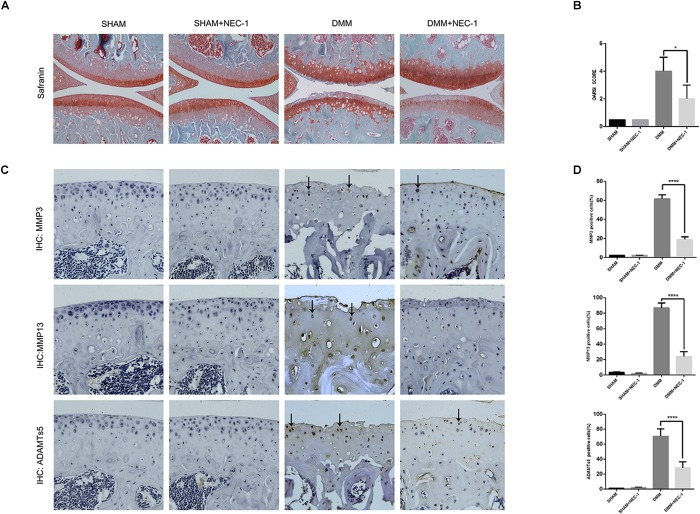
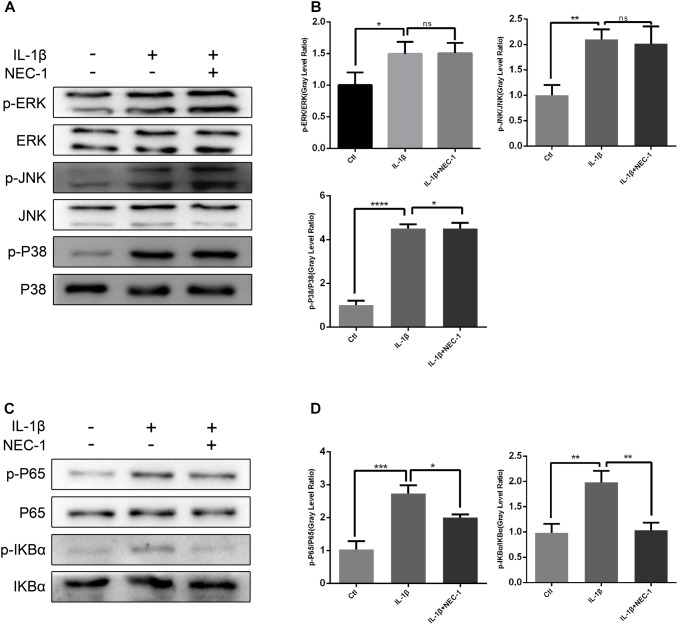
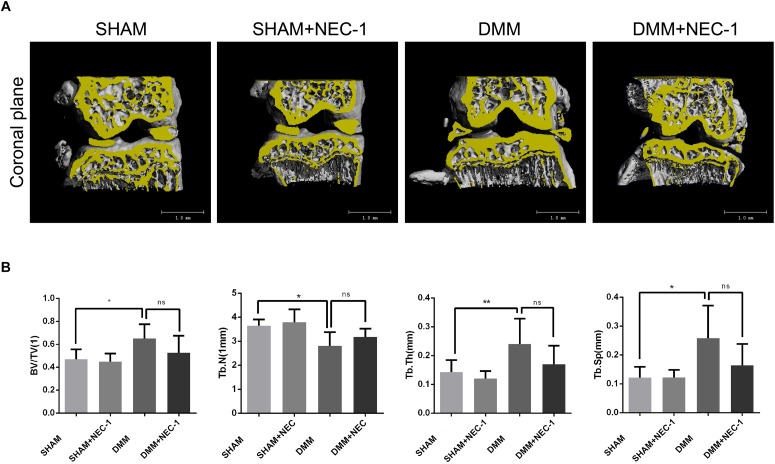
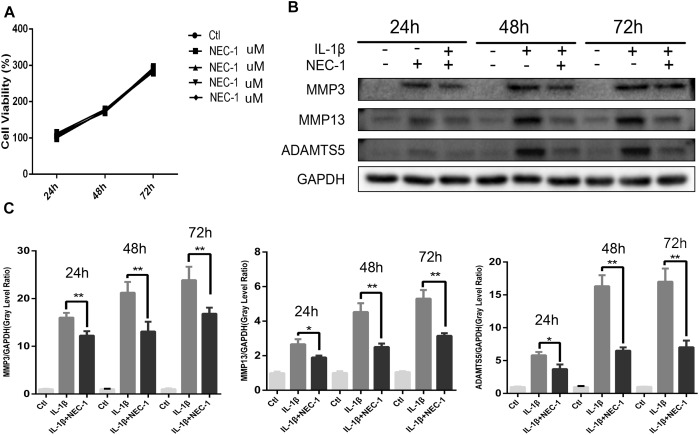
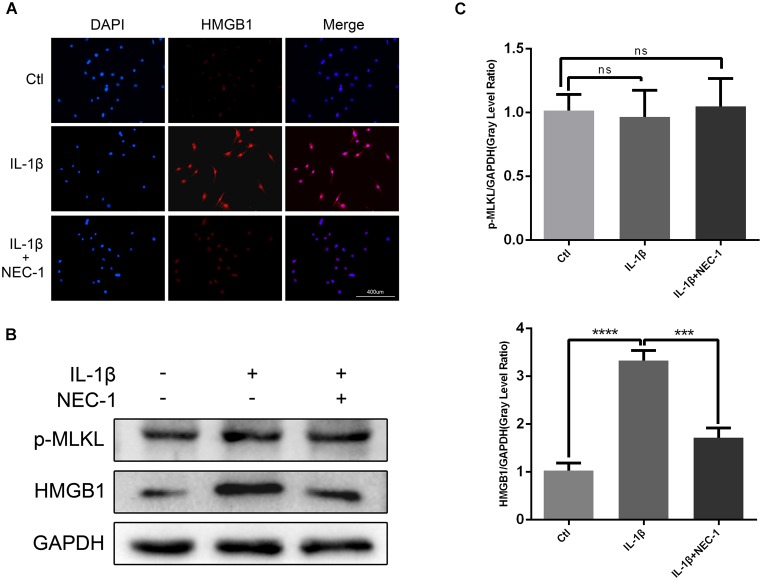
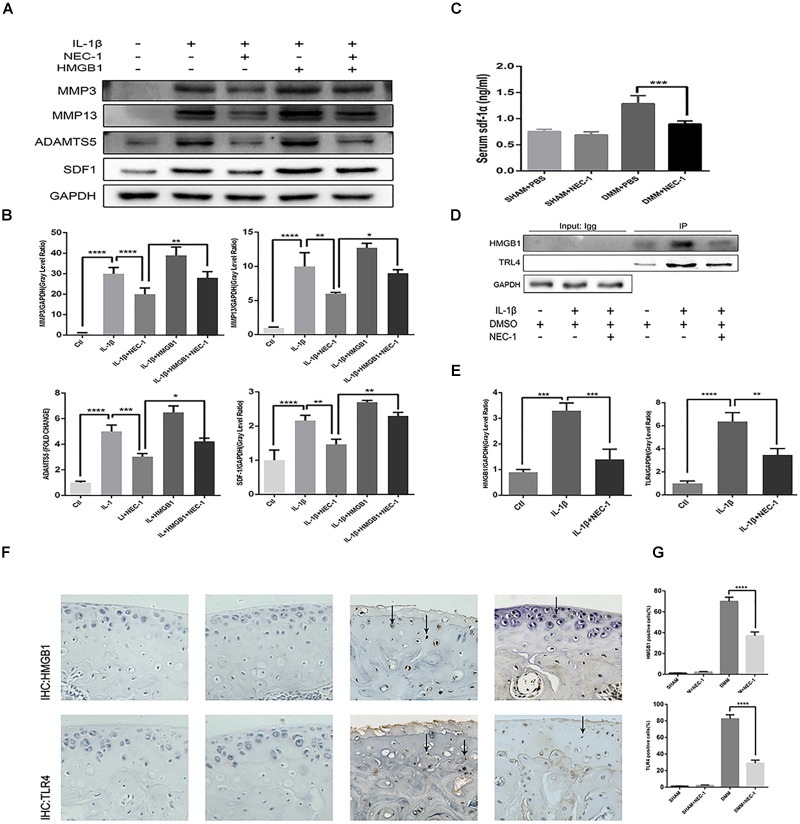
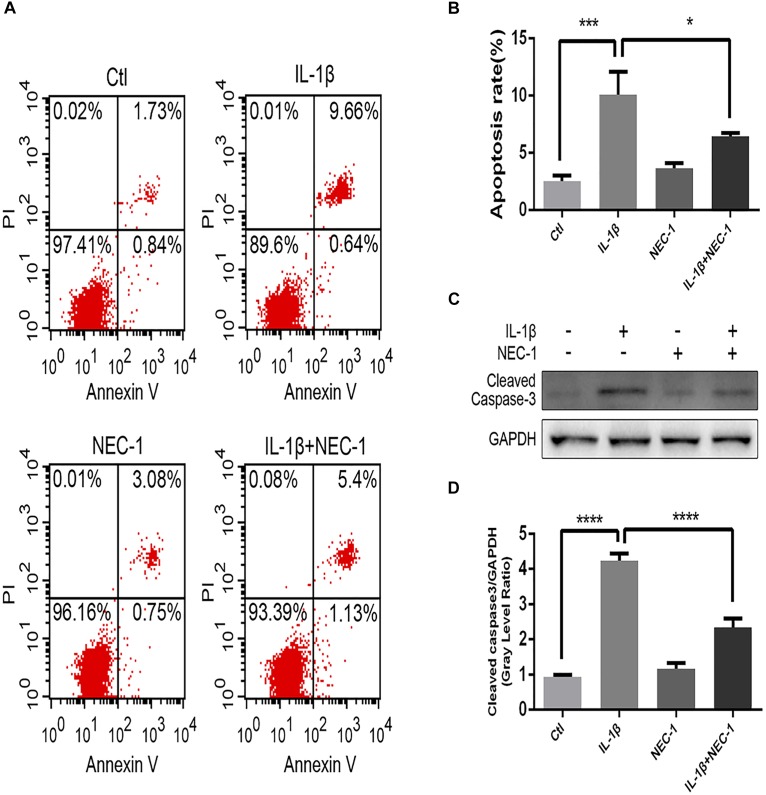
Necrostatin-1 (Nec-1) is a specific small molecule inhibitor of receptor-interacting protein kinase 1 (RIPK1) that specifically inhibits phosphorylation of RIPK1. RIPK1 regulates inflammation and cell death by interacting with receptor-interacting serine/threonine protein kinases 3(RIPK3). We hypothesized that Nec-1 may have anti-inflammatory efficacy in patients with osteoarthritis (OA), as the pathophysiology of OA involves the activation of inflammation-related signaling pathways and apoptosis. In this study, we explored the effects of Nec-1 on interleukin (IL)-1β-induced inflammation in mouse chondrocytes and the destabilised medial meniscus (DMM) mouse model. Inhibiting RIPK1 with Nec-1 dramatically suppressed catabolism both and , but did not inhibit changes in subchondral bone. Nec-1 abolished the increases in matrix metalloproteinase (MMP) and ADAM metallopeptidase with thrombospondin type 1 motif 5 (ADAMTs5) expression induced by IL-1β. However, adding high-mobility group box 1 (HMGB1) partially abrogated this effect, indicating the essential role of HMGB1 and Nec-1 in the protection of primary chondrocytes. Furthermore, Nec-1 decreased the expression of Toll-like receptor 4 (TLR4) and stromal cell-derived factor-1 (SDF-1), and attenuated the interaction between TLR4 and HMGB1. Western blot results suggested that Nec-1 significantly suppressed IL-1β-induced NF-κB transcriptional activity, but not MAPK pathway. Micro-computed tomography, immunohistochemical staining, and Safranin O/Fast Green staining were used to assess the degree of destruction of OA cartilage. The results show that NEC-1 can significantly reduce the degree of destruction of OA cartilage. Therefore, Nec-1 may be a novel therapeutic candidate to treat OA.
坏死抑制因子-1(Nec-1)是一种受体相互作用蛋白激酶1(RIPK1)的特异性小分子抑制剂,可特异性抑制RIPK1的磷酸化。RIPK1通过与受体相互作用的丝氨酸/苏氨酸蛋白激酶3(RIPK3)相互作用来调节炎症和细胞死亡。我们推测,由于骨关节炎(OA)的病理生理学涉及炎症相关信号通路的激活和细胞凋亡,Nec-1可能对OA患者具有抗炎作用。在本研究中,我们探讨了Nec-1对白细胞介素(IL)-1β诱导的小鼠软骨细胞炎症以及内侧半月板不稳定(DMM)小鼠模型的影响。用Nec-1抑制RIPK1可显著抑制分解代谢,但不抑制软骨下骨的变化。Nec-1消除了IL-1β诱导的基质金属蛋白酶(MMP)和含血小板反应蛋白基序的解聚素样金属蛋白酶5(ADAMTs5)表达的增加。然而,添加高迁移率族蛋白B1(HMGB1)部分消除了这种作用,表明HMGB1和Nec-1在保护原代软骨细胞中起重要作用。此外,Nec-1降低了Toll样受体4(TLR4)和基质细胞衍生因子-1(SDF-1)的表达,并减弱了TLR4与HMGB1之间的相互作用。蛋白质印迹结果表明,Nec-1显著抑制IL-1β诱导的核因子κB(NF-κB)转录活性,但不抑制丝裂原活化蛋白激酶(MAPK)途径。采用显微计算机断层扫描、免疫组织化学染色和番红O/固绿染色来评估OA软骨的破坏程度。结果表明,NEC-1可显著降低OA软骨的破坏程度。因此,Nec-1可能是治疗OA的一种新型候选药物。