Murray-Stewart Tracy, Dunworth Matthew, Foley Jackson R, Schwartz Charles E, Casero Robert A
Sidney Kimmel Comprehensive Cancer Center, Johns Hopkins University, Baltimore, MD 21287, USA.
The Greenwood Genetic Center, Greenwood, SC 29646, USA.
Med Sci (Basel). 2018 Dec 7;6(4):112. doi: 10.3390/medsci6040112.
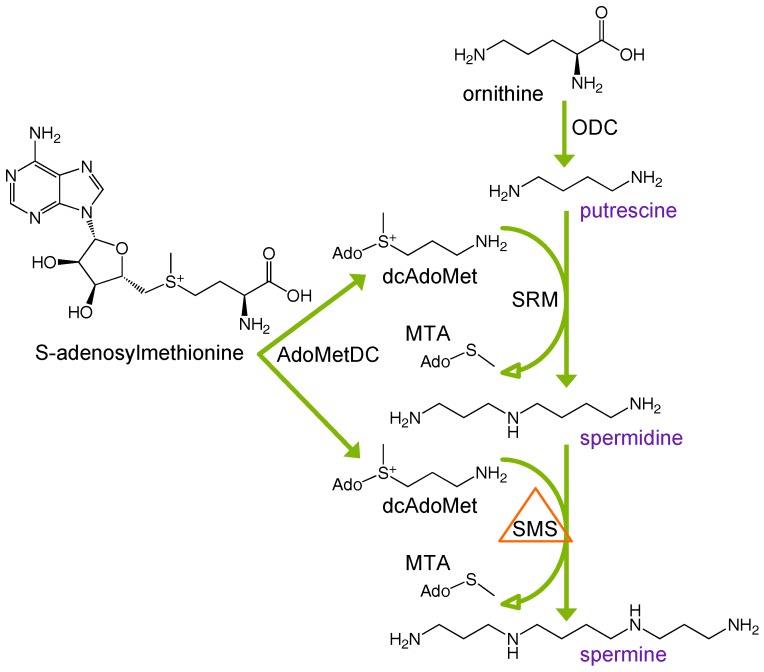
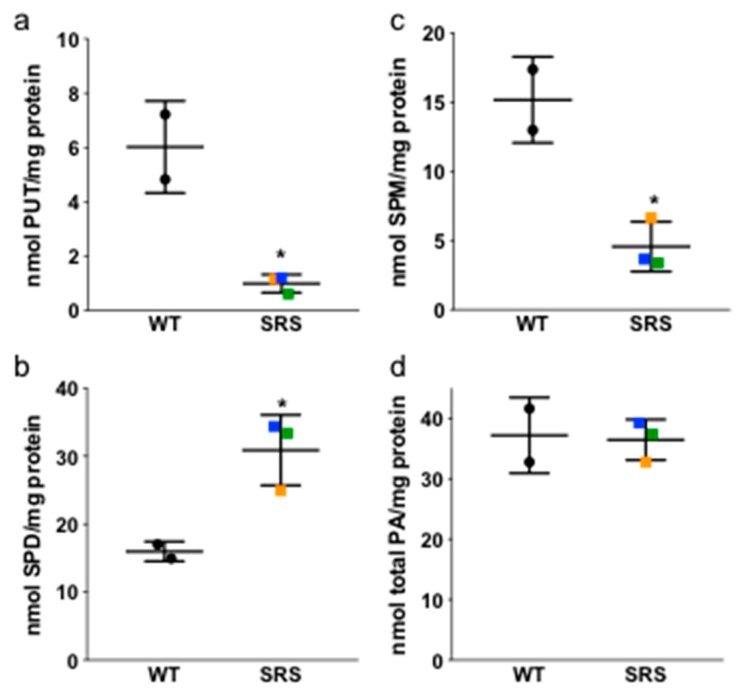
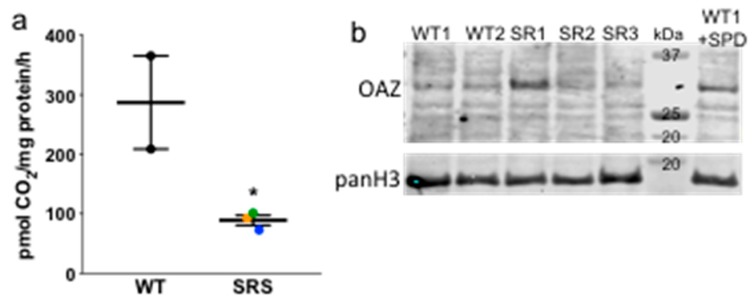
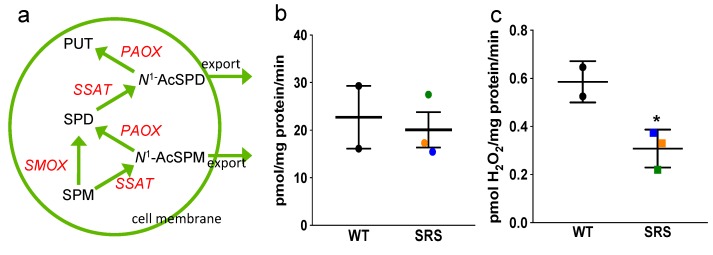
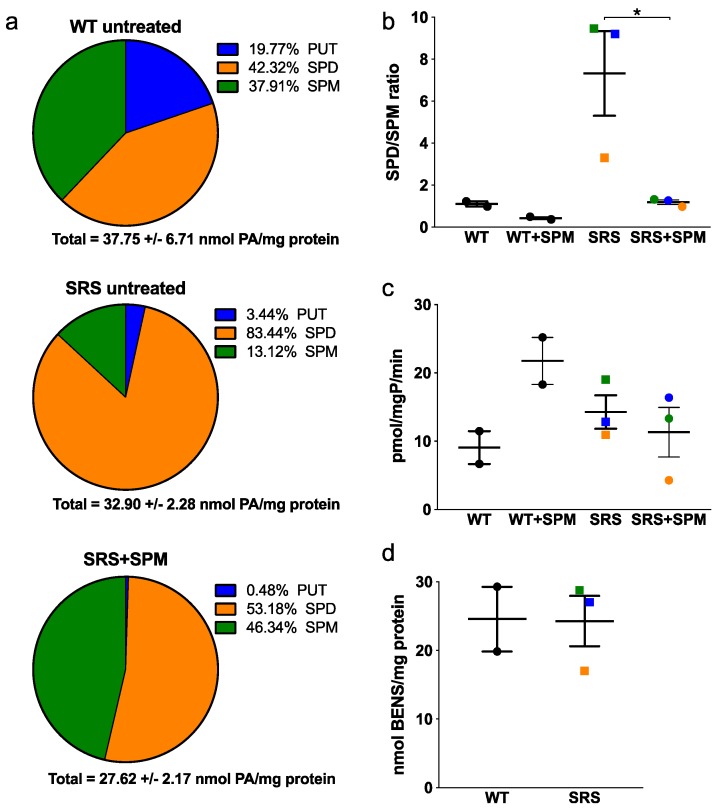
Loss-of-function mutations of the spermine synthase gene () result in Snyder-Robinson Syndrome (SRS), a recessive X-linked syndrome characterized by intellectual disability, osteoporosis, hypotonia, speech abnormalities, kyphoscoliosis, and seizures. As SMS catalyzes the biosynthesis of the polyamine spermine from its precursor spermidine, SMS deficiency causes a lack of spermine with an accumulation of spermidine. As polyamines, spermine, and spermidine play essential cellular roles that require tight homeostatic control to ensure normal cell growth, differentiation, and survival. Using patient-derived lymphoblast cell lines, we sought to comprehensively investigate the effects of SMS deficiency on polyamine homeostatic mechanisms including polyamine biosynthetic and catabolic enzymes, derivatives of the natural polyamines, and polyamine transport activity. In addition to decreased spermine and increased spermidine in SRS cells, ornithine decarboxylase activity and its product putrescine were significantly decreased. Treatment of SRS cells with exogenous spermine revealed that polyamine transport was active, as the cells accumulated spermine, decreased their spermidine level, and established a spermidine-to-spermine ratio within the range of wildtype cells. SRS cells also demonstrated elevated levels of tissue transglutaminase, a change associated with certain neurodegenerative diseases. These studies form a basis for further investigations into the leading biochemical changes and properties of -mutant cells that potentially represent therapeutic targets for the treatment of Snyder-Robinson Syndrome.
精胺合酶基因()的功能丧失突变会导致斯奈德 - 罗宾逊综合征(SRS),这是一种隐性X连锁综合征,其特征为智力障碍、骨质疏松、肌张力减退、言语异常、脊柱侧凸和癫痫发作。由于精胺合酶催化从前体亚精胺生物合成多胺精胺,精胺合酶缺乏会导致精胺缺乏而亚精胺积累。作为多胺,精胺和亚精胺发挥着重要的细胞作用,需要严格的稳态控制以确保正常的细胞生长、分化和存活。我们使用患者来源的淋巴母细胞系,全面研究精胺合酶缺乏对多胺稳态机制的影响,包括多胺生物合成和分解代谢酶、天然多胺的衍生物以及多胺转运活性。除了SRS细胞中精胺减少和亚精胺增加外,鸟氨酸脱羧酶活性及其产物腐胺也显著降低。用外源性精胺处理SRS细胞表明,多胺转运是活跃的,因为细胞积累了精胺,降低了亚精胺水平,并建立了与野生型细胞范围内的亚精胺与精胺比率。SRS细胞还表现出组织转谷氨酰胺酶水平升高,这种变化与某些神经退行性疾病有关。这些研究为进一步研究 - 突变细胞的主要生化变化和特性奠定了基础,这些变化可能代表治疗斯奈德 - 罗宾逊综合征的治疗靶点。