Danish Archaea Centre, Department of Biology, University of Copenhagen, Ole Maaløes Vej 5, 2200 Copenhagen, Denmark.
Viruses. 2018 Dec 8;10(12):695. doi: 10.3390/v10120695.
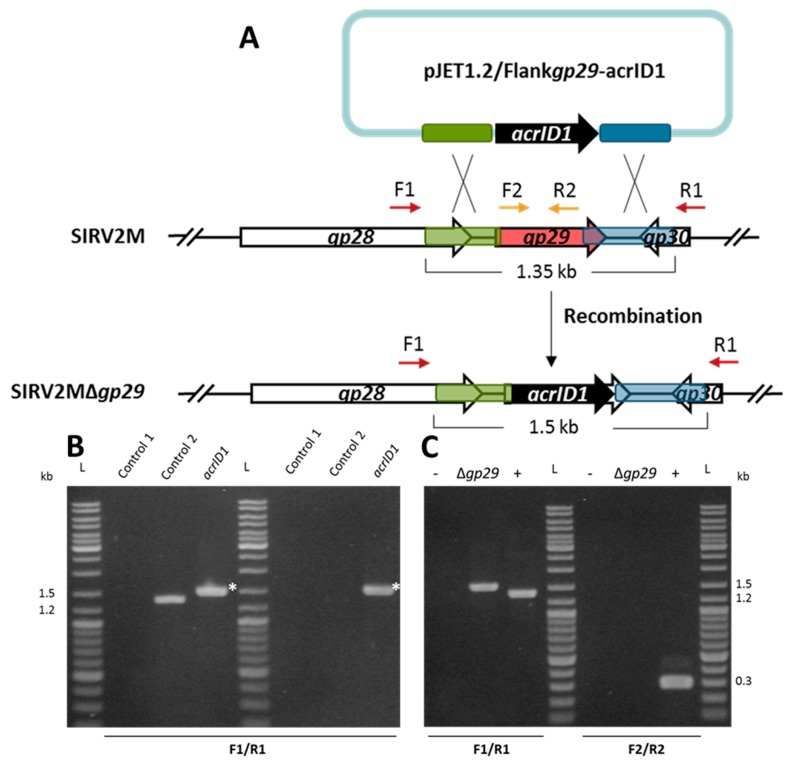
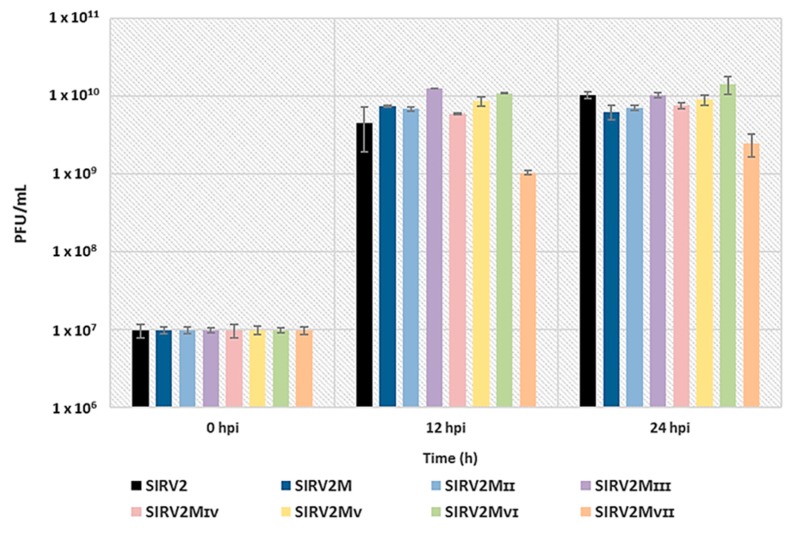
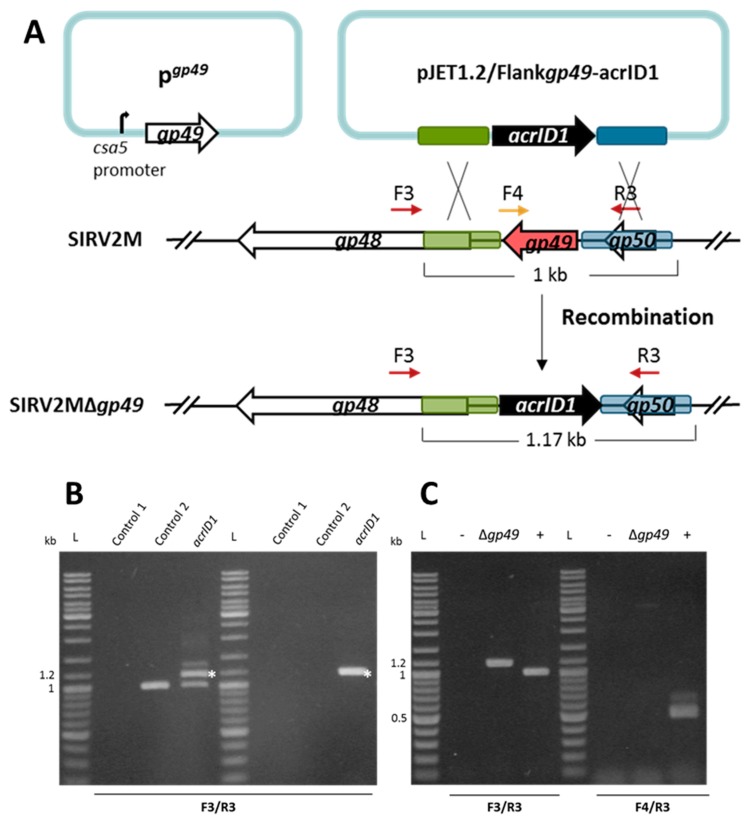
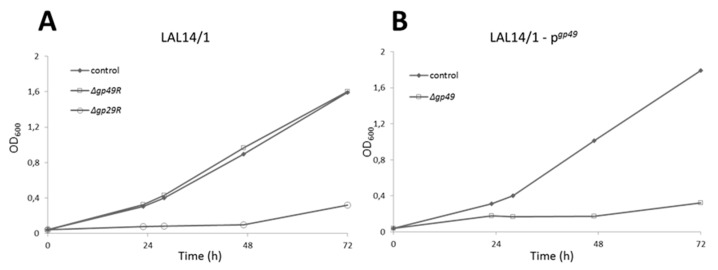
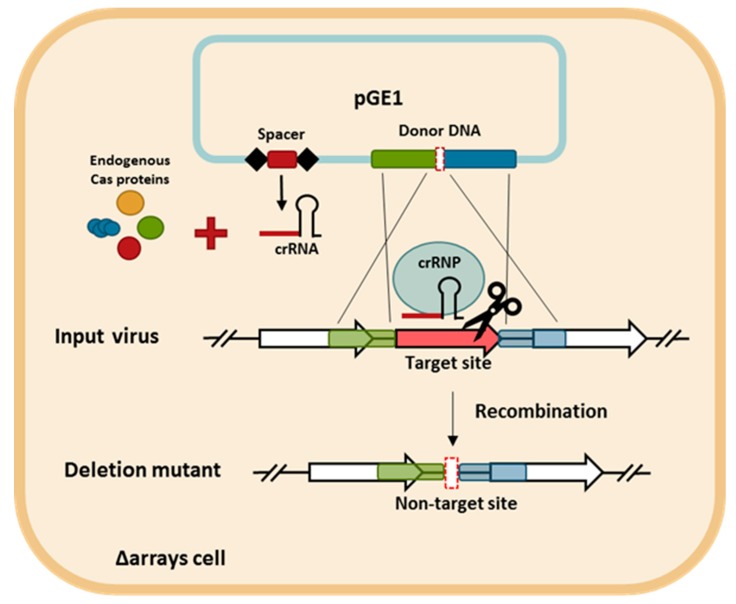
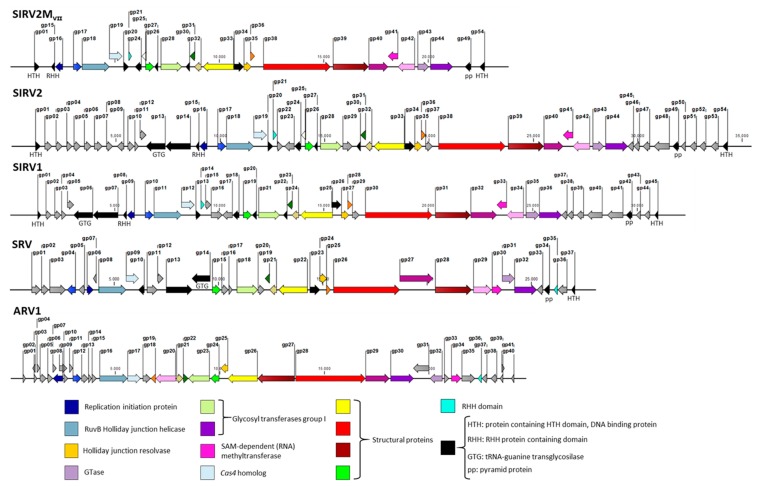
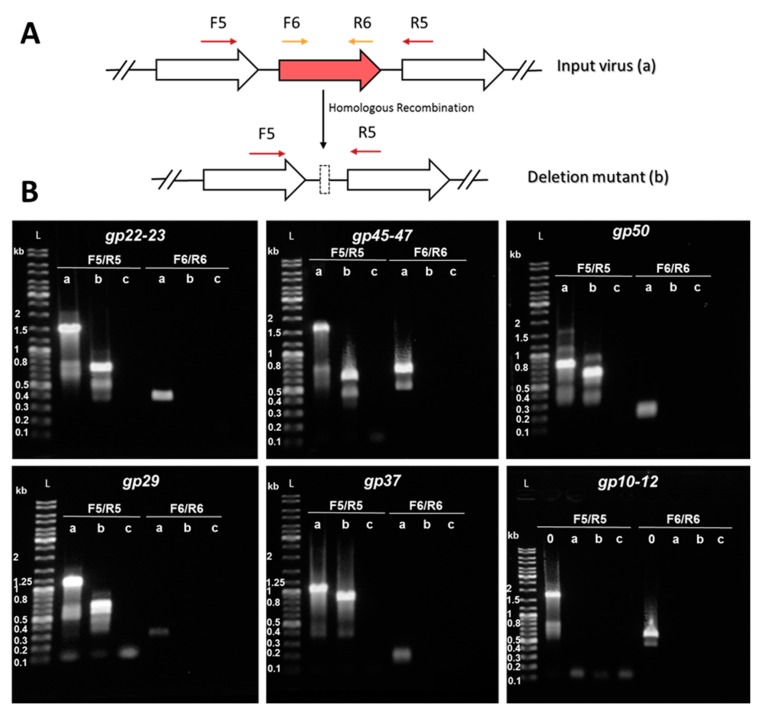
Genetic engineering of viruses has generally been challenging. This is also true for archaeal rod-shaped viruses, which carry linear double-stranded DNA genomes with hairpin ends. In this paper, we describe two different genome editing approaches to mutate the rod-shaped virus 2 (SIRV2) using the archaeon LAL14/1 and its derivatives as hosts. The anti-CRISPR (Acr) gene , which inhibits CRISPR-Cas subtype I-D immunity, was first used as a selection marker to knock out genes from SIRV2M, an -null mutant of SIRV2. Moreover, we harnessed the endogenous CRISPR-Cas systems of the host to knock out the accessory genes consecutively, which resulted in a genome comprised solely of core genes of the 11 SIRV members. Furthermore, infection of this series of knockout mutants in the CRISPR-null host of LAL14/1 (Δarrays) confirmed the non-essentiality of the deleted genes and all except the last deletion mutant propagated as efficiently as the WT SIRV2. This suggested that the last gene deleted, SIRV2 , is important for the efficient viral propagation. The generated viral mutants will be useful for future functional studies including searching for new Acrs and the approaches described in this case are applicable to other viruses.
病毒的基因工程通常具有挑战性。这对于具有线性双链 DNA 基因组和发夹末端的古菌杆状病毒也是如此。在本文中,我们描述了两种不同的基因组编辑方法,用于使用古菌 LAL14/1 及其衍生物作为宿主来突变杆状病毒 2(SIRV2)。抗 CRISPR(Acr)基因最初被用作选择标记,以敲除 SIRV2M 的基因,SIRV2M 是 SIRV2 的 -null 突变体。此外,我们利用宿主的内源性 CRISPR-Cas 系统连续敲除辅助基因,导致基因组仅由 11 个 SIRV 成员的核心基因组成。此外,在 LAL14/1 的 CRISPR 缺失宿主(Δarrays)中感染这一系列缺失突变体,证实了缺失基因的非必需性,除最后一个缺失突变体外,所有缺失突变体的繁殖效率均与 WT SIRV2 一样高。这表明最后删除的基因 SIRV2 对于病毒的有效繁殖很重要。生成的病毒突变体将有助于未来的功能研究,包括寻找新的 Acrs,并且本文中描述的方法适用于其他病毒。