Krieger Christine C, Morgan Sarah J, Neumann Susanne, Gershengorn Marvin C
Laboratory of Endocrinology and Receptor Biology, National Institute of Diabetes and Digestive and Kidney Diseases, National Institutes of Health, Bethesda, Maryland.
Curr Opin Endocr Metab Res. 2018 Oct;2:29-33. doi: 10.1016/j.coemr.2018.01.007. Epub 2018 Feb 5.
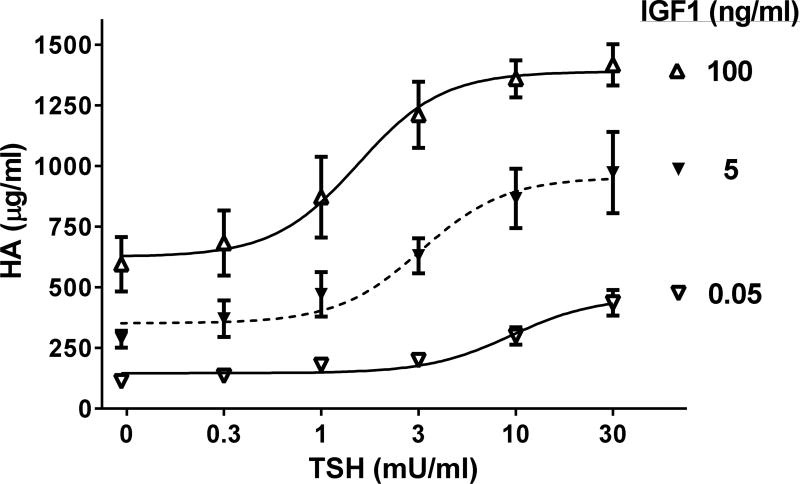
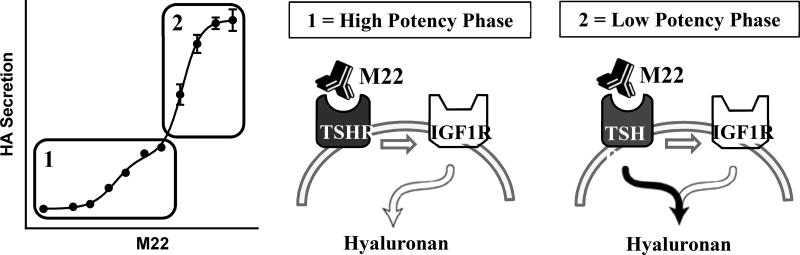
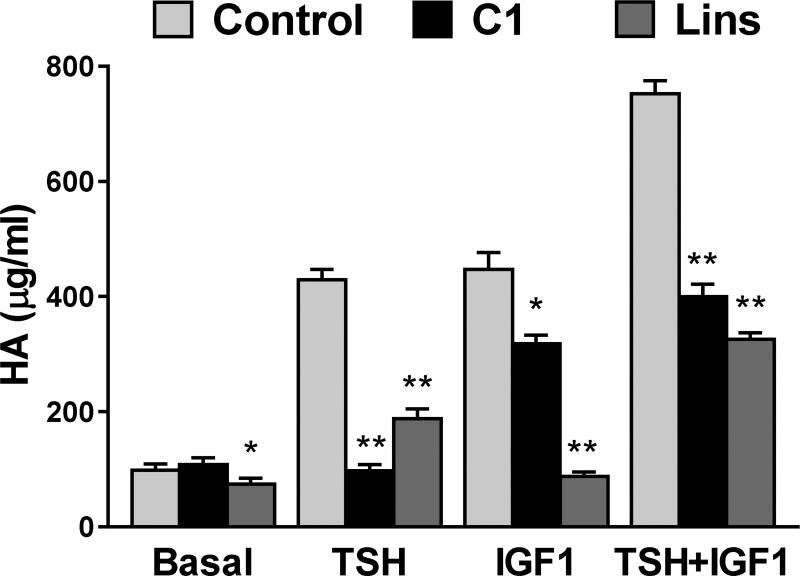
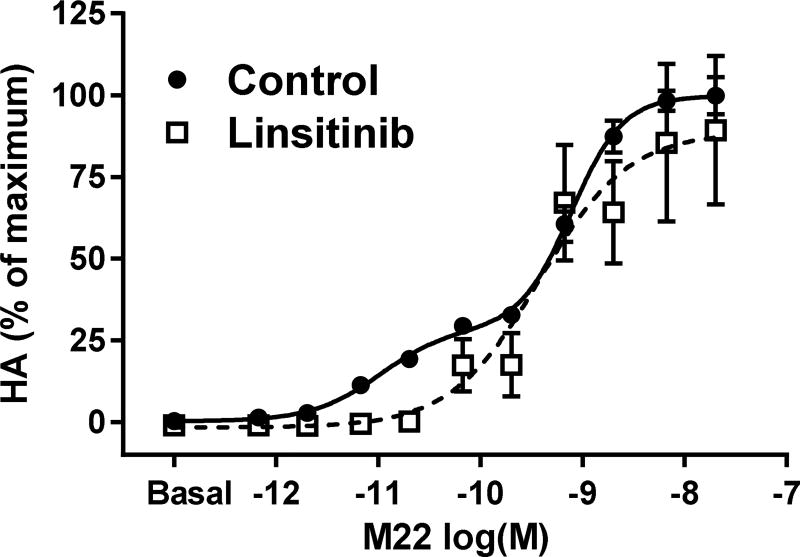
Thyroid stimulating hormone and insulin-like growth factor 1 receptors (TSHRs and IGF1Rs, respectively) interact leading to additive or synergistic stimulation of cellular responses. Recent findings provide evidence that the interaction between TSHRs and IGF1Rs is similar to that described for other G protein-coupled receptors and receptor tyrosine kinases. These types of interactions occur at or proximal to the receptors and are designated "receptor cross-talk." Herein, we describe our studies in human thyrocytes, human retro-orbital fibroblasts from Graves' orbitopathy patients and a model cell line that support the concept of TSHR/IGF1R cross-talk. We also discuss how receptor cross-talk is involved in stimulation by a monoclonal TSHR-stimulating antibody and how targeting both receptors may lead to novel treatments of Graves' orbitopathy.
促甲状腺激素和胰岛素样生长因子1受体(分别为TSHRs和IGF1Rs)相互作用,导致对细胞反应的累加或协同刺激。最近的研究结果表明,TSHRs和IGF1Rs之间的相互作用与其他G蛋白偶联受体和受体酪氨酸激酶所描述的相互作用相似。这些类型的相互作用发生在受体处或其近端,被称为“受体串扰”。在此,我们描述了我们在人甲状腺细胞、来自格雷夫斯眼病患者的人眼眶后成纤维细胞以及一个模型细胞系中的研究,这些研究支持TSHR/IGF1R串扰的概念。我们还讨论了受体串扰如何参与单克隆TSHR刺激抗体的刺激作用,以及同时靶向这两种受体如何可能导致格雷夫斯眼病的新治疗方法。