Qiao Kun, Wang Min, Takano Tetsuo, Liu Shenkui
The State Key Laboratory of Subtropical Silviculture, Zhejiang Agriculture and Forestry University, Lin'an, China.
Shenzhen Key Laboratory of Marine Bioresource & Eco-Environmental Science, Guangdong Engineering Research Center for Marine Algal Biotechnology, College of Life Science and Oceanography, Shenzhen University, Shenzhen, China.
Front Plant Sci. 2018 Nov 28;9:1772. doi: 10.3389/fpls.2018.01772. eCollection 2018.
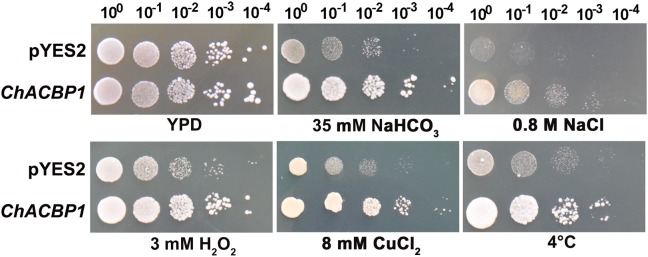
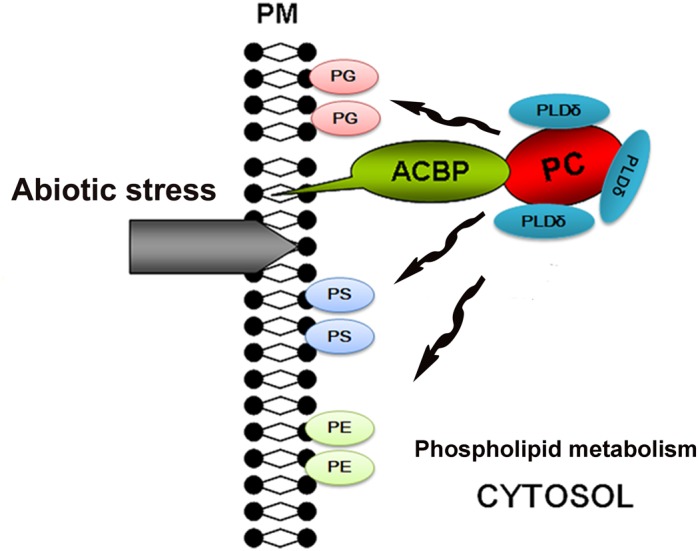
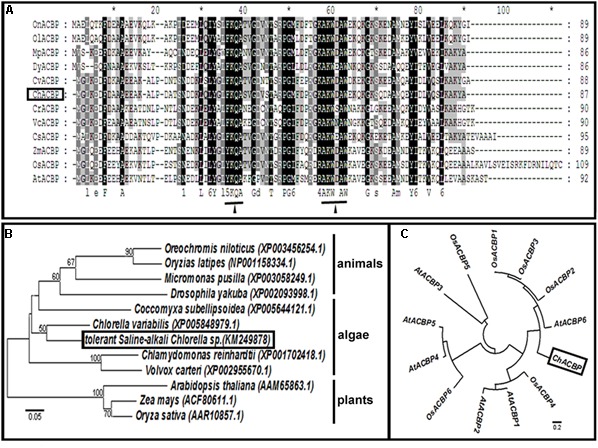
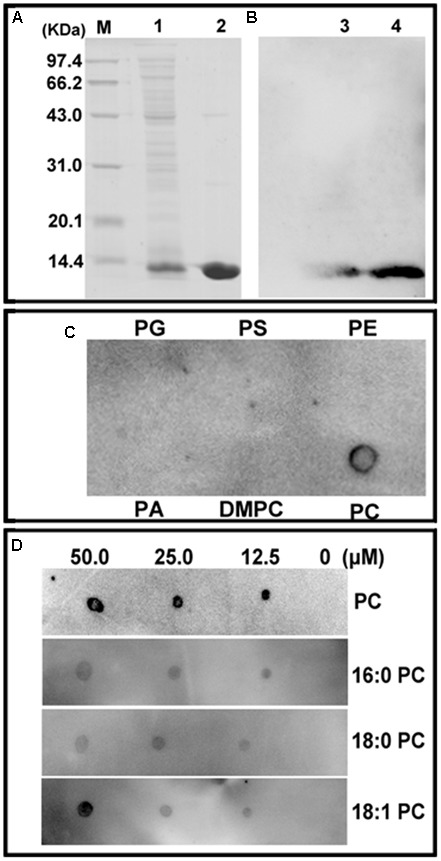
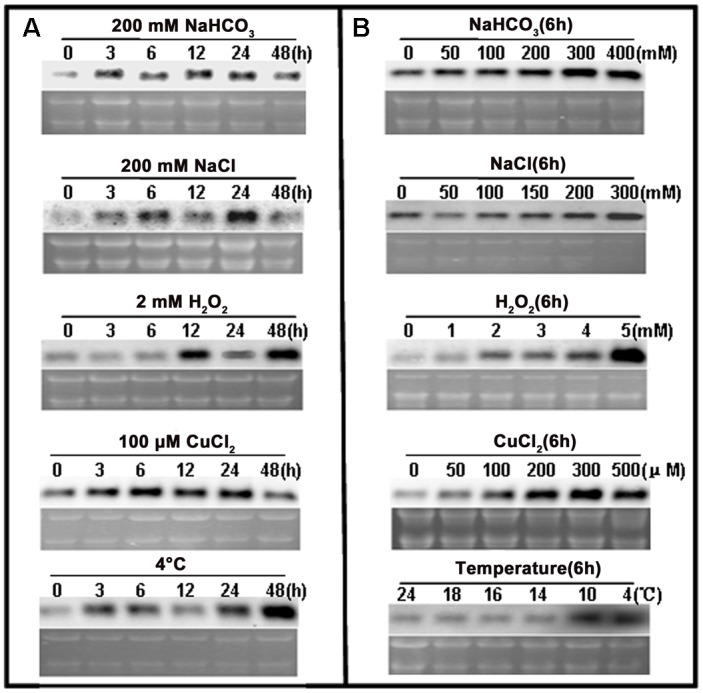
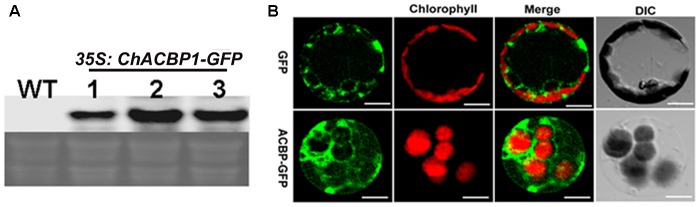
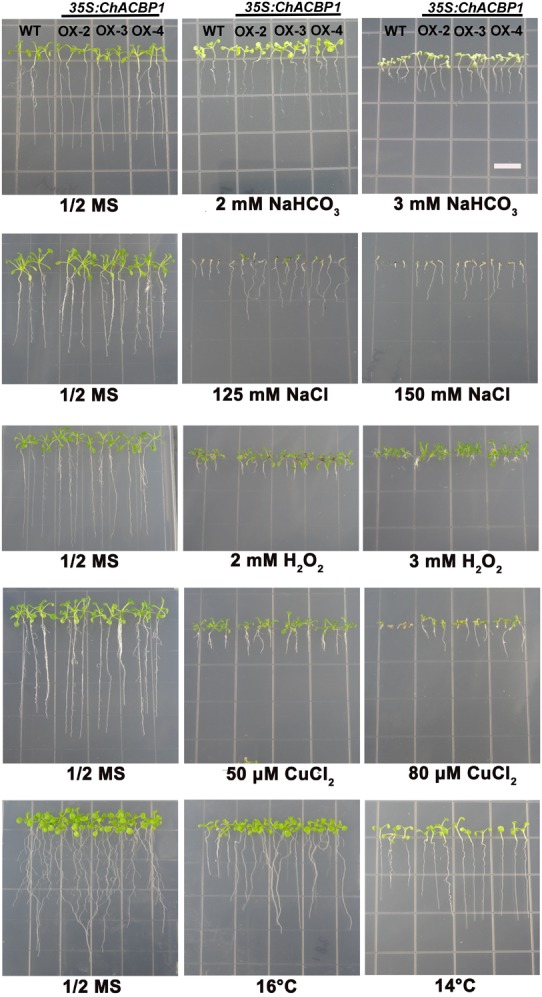
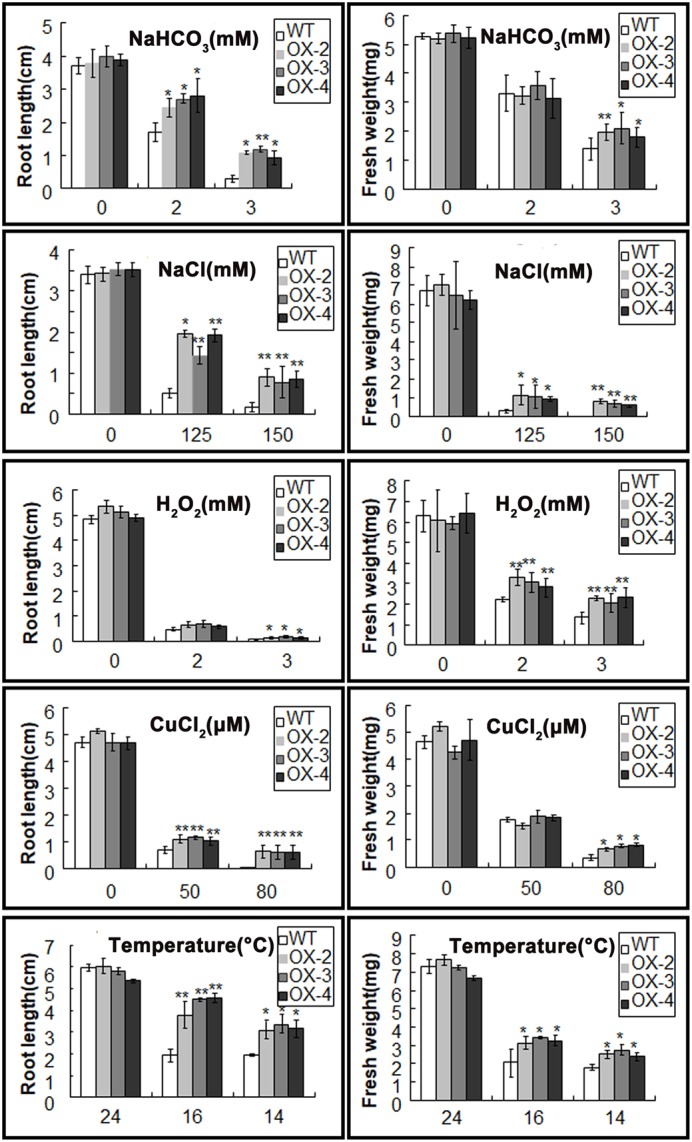
A large proportion of the world's arable land is saline-alkali land, and this is becoming an urgent environmental problem for agriculture. One approach to address this problem is to develop new varieties of stress-resistant plants through genetic engineering. The algae ( ) JB6, which was previously isolated from saline-alkali land, was found to exhibit strong NaHCO tolerance. Here, we explored saline-alkali-tolerance genes in this alga that might be useful for producing abiotic stress-resistant transgenic plants. We identified a gene encoding acyl-CoA-binding protein 1 (ACBP1) from JB6 by screening a full-length cDNA library in yeast under NaHCO stress. Northern blot analyses showed that the mRNA levels were significantly up-regulated under abiotic stresses such as salinity, oxidation, heavy metals, and low temperature stresses. The recombinant ChACBP1 protein was found to bind phosphatidylcholine . Green fluorescent protein-labeled ChACBP1 was localized to the cytosol. Overexpression of in yeast and increased their resistance to high salinity, oxidation, heavy metals, and low temperature stresses. These results suggested that ChACBP1 may mediate plant abiotic stress adaptation through phospholipid metabolism. Thus, ChACBP1 may be useful to genetically improve the tolerance of plants to saline-alkali soil.
世界上很大一部分耕地是盐碱地,这正成为农业亟待解决的环境问题。解决这一问题的一种方法是通过基因工程培育抗逆植物新品种。先前从盐碱地分离出的藻类( )JB6被发现具有很强的耐NaHCO能力。在此,我们在这种藻类中探索可能有助于培育抗非生物胁迫转基因植物的耐盐碱基因。我们通过在酵母中筛选NaHCO胁迫下的全长cDNA文库,从JB6中鉴定出一个编码酰基辅酶A结合蛋白1(ACBP1)的基因。Northern印迹分析表明,在盐度、氧化、重金属和低温胁迫等非生物胁迫下,mRNA水平显著上调。发现重组ChACBP1蛋白能结合磷脂酰胆碱。绿色荧光蛋白标记的ChACBP1定位于细胞质。在酵母中过表达 并 提高了它们对高盐、氧化、重金属和低温胁迫的抗性。这些结果表明,ChACBP1可能通过磷脂代谢介导植物对非生物胁迫的适应。因此,ChACBP1可能有助于通过基因手段提高植物对盐碱土壤的耐受性。