Department of Biology, Mansfield University, Mansfield, PA, United States.
Center for Cellular Immunotherapies, Abramson Cancer Center, University of Pennsylvania, Philadelphia, PA, United States.
Front Immunol. 2018 Dec 3;9:2740. doi: 10.3389/fimmu.2018.02740. eCollection 2018.
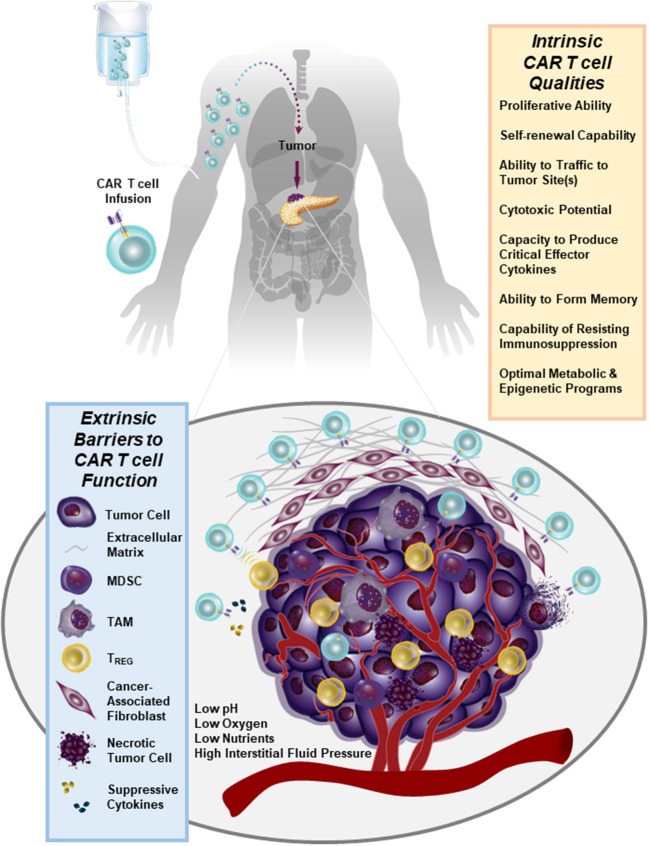
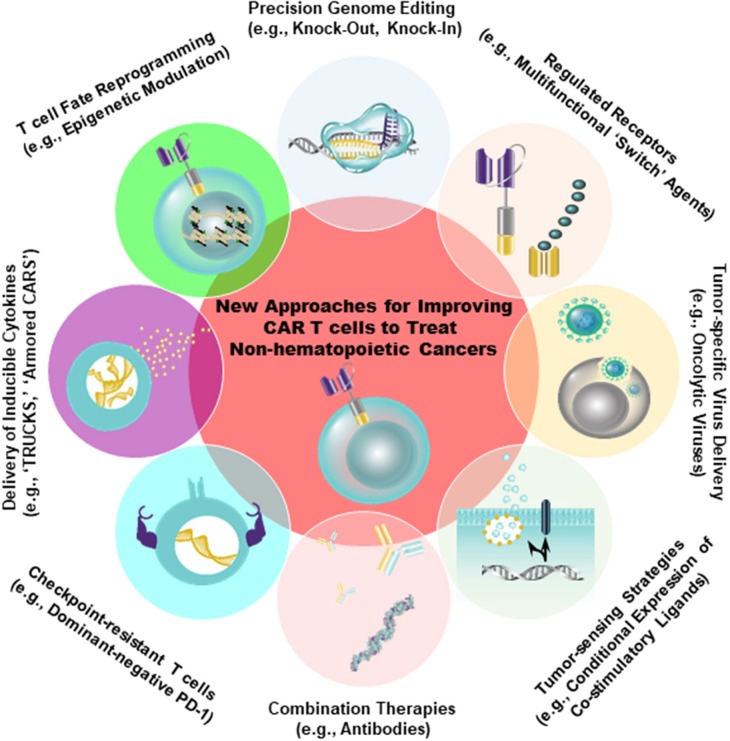
Chimeric antigen receptor (CAR)-engineered T cells represent a breakthrough in personalized medicine. In this strategy, a patient's own T lymphocytes are genetically reprogrammed to encode a synthetic receptor that binds a tumor antigen, allowing T cells to recognize and kill antigen-expressing cancer cells. As a result of complete and durable responses in individuals who are refractory to standard of care therapy, CAR T cells directed against the CD19 protein have been granted United States Food and Drug Administration (FDA) approval as a therapy for treatment of pediatric and young adult acute lymphoblastic leukemia and diffuse large B cell lymphoma. Human trials of CAR T cells targeting CD19 or B cell maturation antigen in multiple myeloma have also reported early successes. However, a clear and consistently reproducible demonstration of the clinical efficacy of CAR T cells in the setting of solid tumors has not been reported to date. Here, we review the history and status of CAR T cell therapy for solid tumors, potential T cell-intrinsic determinants of response and resistance as well as extrinsic obstacles to the success of this approach for much more prevalent non-hematopoietic malignancies. In addition, we summarize recent strategies and innovations that aim to augment the potency of CAR T cells in the face of multiple immunosuppressive barriers operative within the solid tumor microenvironment. Advances in the field of CAR T cell biology over the coming years in the areas of safety, reliability and efficacy against non-hematopoietic cancers will ultimately determine how transformative adoptive T cell therapy will be in the broader battle against cancer.
嵌合抗原受体 (CAR)-修饰的 T 细胞代表了个性化医学的突破。在这种策略中,患者自身的 T 淋巴细胞经过基因重编程,编码一种合成受体,该受体与肿瘤抗原结合,使 T 细胞能够识别并杀死表达抗原的癌细胞。由于对标准治疗方案有耐药性的个体中出现了完全和持久的反应,针对 CD19 蛋白的 CAR T 细胞已获得美国食品和药物管理局 (FDA) 的批准,作为治疗儿童和年轻成人急性淋巴细胞白血病和弥漫性大 B 细胞淋巴瘤的疗法。针对多发性骨髓瘤中的 CD19 或 B 细胞成熟抗原的 CAR T 细胞的人体试验也报告了早期成功。然而,迄今为止,尚未在实体瘤中明确且一致地证明 CAR T 细胞的临床疗效。在这里,我们回顾了用于实体瘤的 CAR T 细胞治疗的历史和现状,以及潜在的 T 细胞内在决定反应和耐药性的因素,以及这种方法在更为常见的非造血恶性肿瘤中成功的外在障碍。此外,我们总结了最近的策略和创新,旨在增强 CAR T 细胞在实体肿瘤微环境中存在的多种免疫抑制障碍面前的效力。在未来几年,CAR T 细胞生物学领域的进展将在安全性、可靠性和针对非造血癌症的疗效方面,最终决定过继性 T 细胞疗法在对抗癌症的更广泛斗争中具有多大的变革性。