Driedonks Tom A P, Nijen Twilhaar Maarten K, Nolte-'t Hoen Esther N M
Department of Biochemistry & Cell Biology, Faculty of Veterinary Medicine, Utrecht University, Utrecht, The Netherlands.
J Extracell Vesicles. 2018 Dec 12;8(1):1552059. doi: 10.1080/20013078.2018.1552059. eCollection 2019.
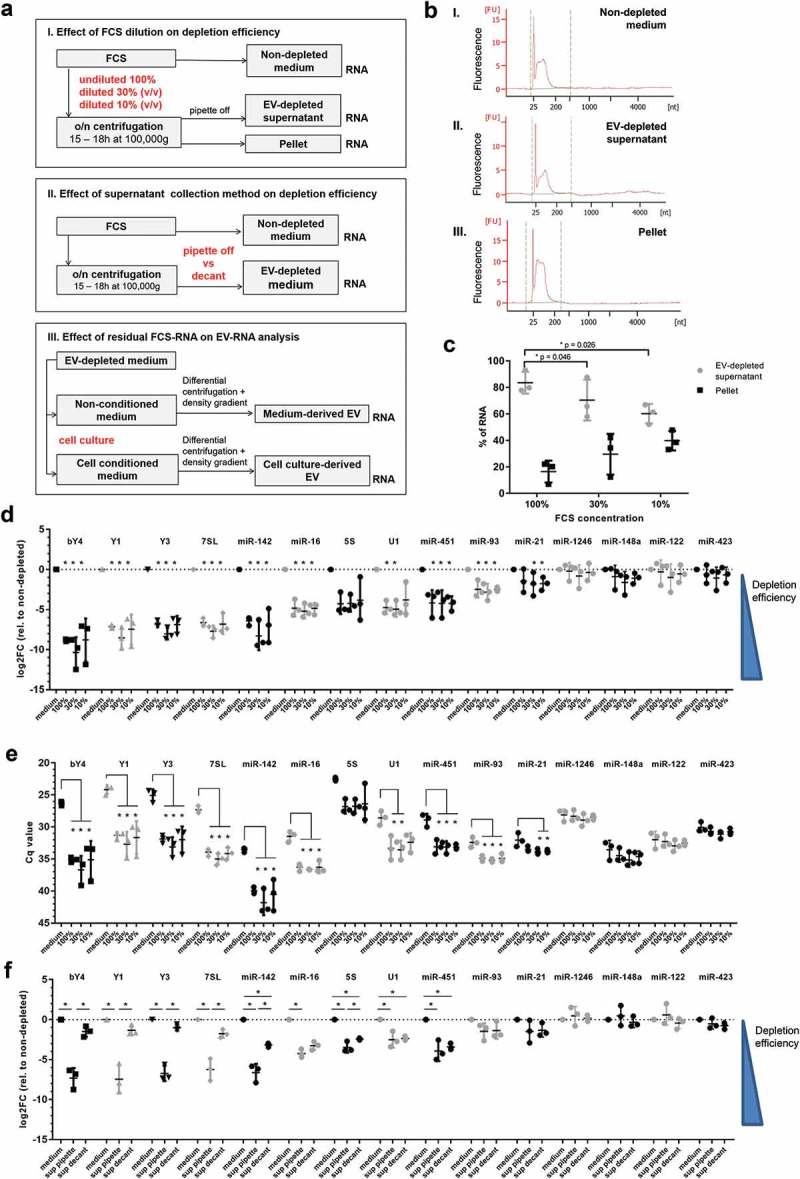
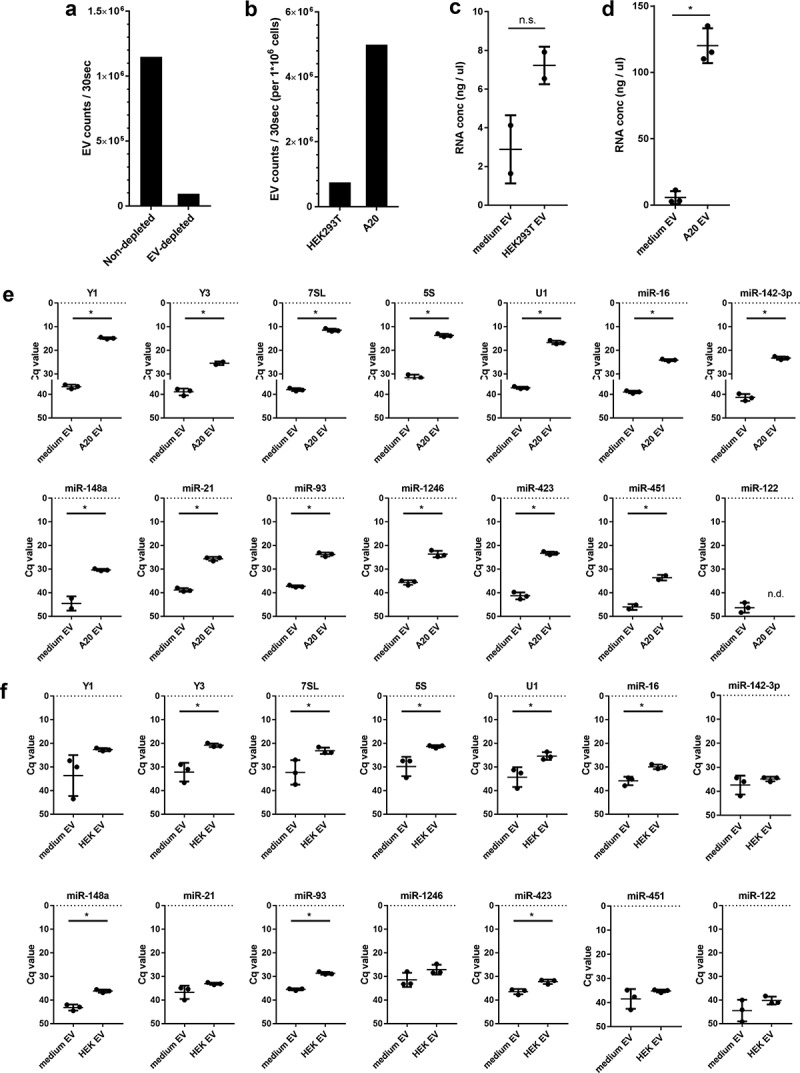
Foetal calf serum (FCS) is a common supplement of cell culture medium and a known source of contaminating extracellular vesicles (EV) containing RNA. Because of a high degree of sequence similarity among homologous non-coding RNAs of mammalian species, residual FCS-RNA in culture medium may interfere in the analysis of EV-RNA released by cultured cells. Recently, doubts have been raised as to whether commonly used protocols for depletion of FCS-EV efficiently remove FCS-RNA. Moreover, technical details in FCS-EV depletion protocols are known to vary between labs, which may lead to inter-study differences in contaminating FCS-RNA levels. Here, we investigated how technical modifications of EV-depletion protocols affect the efficiency with which bovine RNAs are depleted from FCS, and determined the contribution of contaminating bovine RNA to EV-RNA purified from cell cultures. Our data show differences in depletion efficiency between and within various classes of small non-coding RNA. Importantly, we demonstrate that variations in FCS-EV depletion protocols affect both the quantity and type of residual FCS-RNAs in EV-depleted medium. By using optimised FCS-EV depletion protocols combined with methods for high-grade purification of EV the levels of contaminating bovine RNA in EV populations isolated from cell culture medium can be reduced. With illustrative datasets we also demonstrate that the abundance of a specific RNA in cell culture EV can only be determined if measured relative to background levels of this RNA in medium control samples. These data highlight the need for optimisation and validation of existing and novel FCS-EV depletion methods and urge for accurate descriptions of these methods in publications to increase experimental reproducibility.
胎牛血清(FCS)是细胞培养基中常用的补充剂,也是已知的含有RNA的污染性细胞外囊泡(EV)来源。由于哺乳动物物种同源非编码RNA之间存在高度的序列相似性,培养基中残留的FCS-RNA可能会干扰对培养细胞释放的EV-RNA的分析。最近,人们对常用的FCS-EV去除方案是否能有效去除FCS-RNA提出了质疑。此外,已知FCS-EV去除方案的技术细节在不同实验室之间存在差异,这可能导致研究间污染的FCS-RNA水平存在差异。在这里,我们研究了EV去除方案中的技术修改如何影响从FCS中去除牛RNA的效率,并确定了污染的牛RNA对从细胞培养物中纯化的EV-RNA的贡献。我们的数据显示了不同类别的小非编码RNA之间以及内部在去除效率上的差异。重要的是,我们证明了FCS-EV去除方案的变化会影响去除EV的培养基中残留FCS-RNA的数量和类型。通过使用优化的FCS-EV去除方案并结合EV的高级纯化方法,可以降低从细胞培养基中分离的EV群体中污染的牛RNA水平。通过示例数据集,我们还证明,只有相对于培养基对照样品中该RNA的背景水平进行测量,才能确定细胞培养EV中特定RNA的丰度。这些数据突出了优化和验证现有及新型FCS-EV去除方法的必要性,并敦促在出版物中准确描述这些方法,以提高实验的可重复性。