Department of Physiology and Biophysics, University of California, Irvine, 92697, CA, USA.
Department of Physiology and Biophysics, Stony Brook University, Stony Brook, 11794, NY, USA.
Nat Commun. 2018 Dec 18;9(1):5367. doi: 10.1038/s41467-018-07789-4.
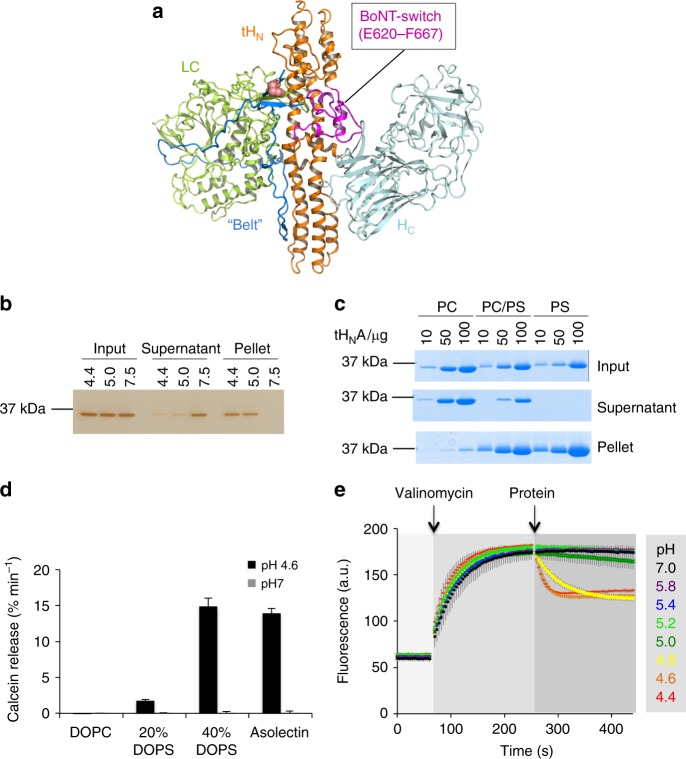
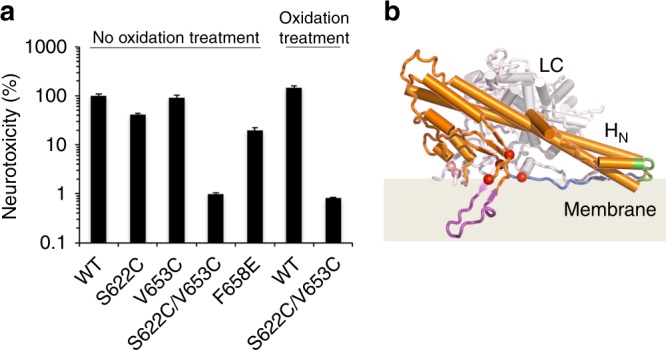
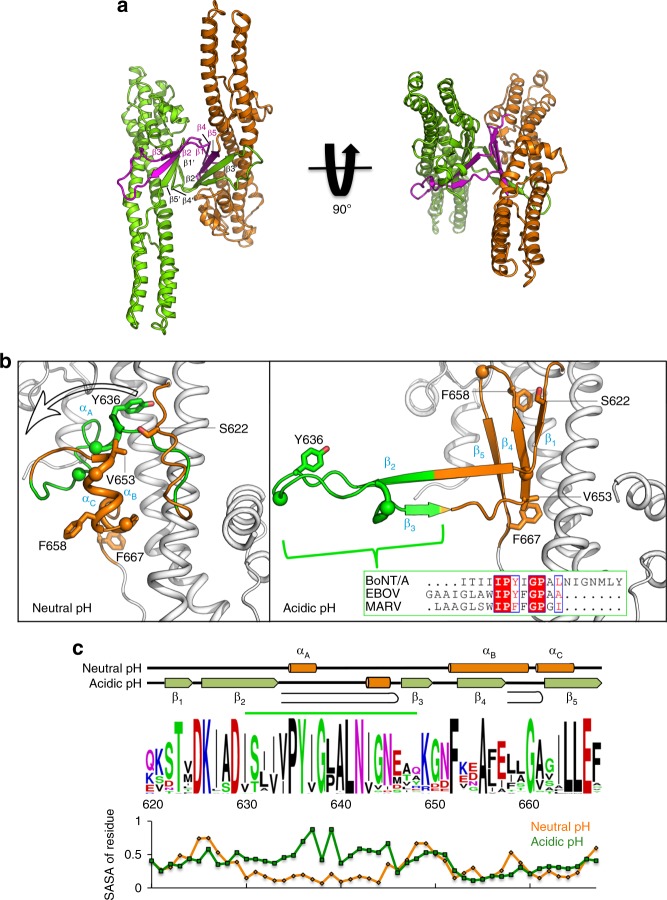
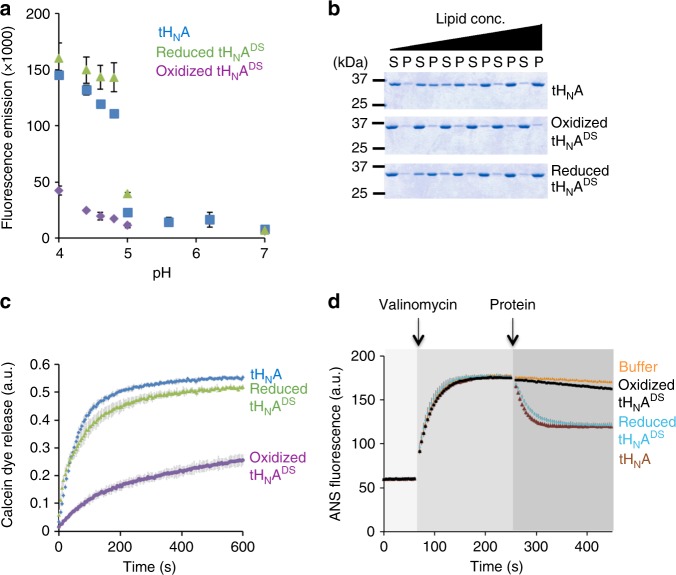
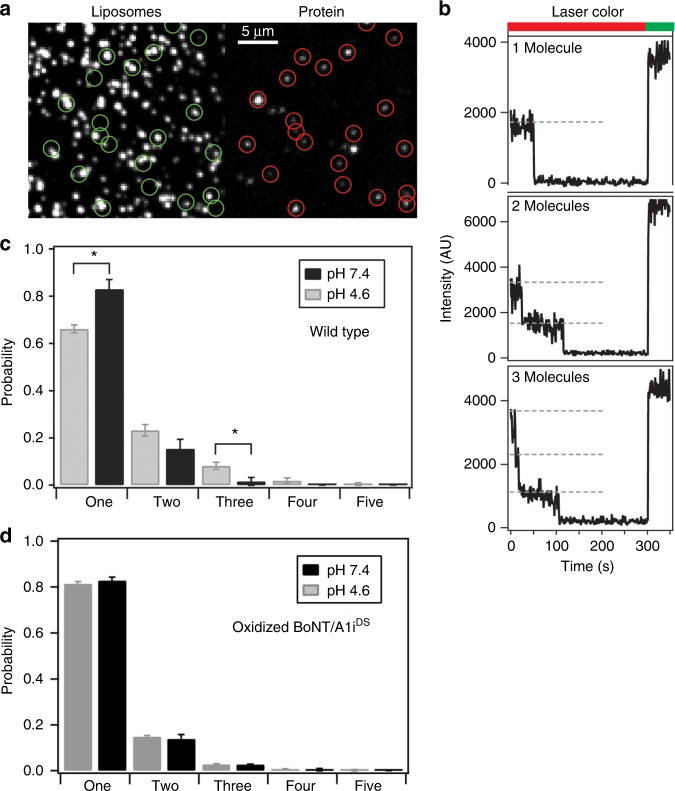
Botulinum neurotoxin (BoNT) delivers its protease domain across the vesicle membrane to enter the neuronal cytosol upon vesicle acidification. This process is mediated by its translocation domain (H), but the molecular mechanism underlying membrane insertion of H remains poorly understood. Here, we report two crystal structures of BoNT/A1 H that reveal a novel molecular switch (termed BoNT-switch) in H, where buried α-helices transform into surface-exposed hydrophobic β-hairpins triggered by acidic pH. Locking the BoNT-switch by disulfide trapping inhibited the association of H with anionic liposomes, blocked channel formation by H, and reduced the neurotoxicity of BoNT/A1 by up to ~180-fold. Single particle counting studies showed that an acidic environment tends to promote BoNT/A1 self-association on liposomes, which is partly regulated by the BoNT-switch. These findings suggest that the BoNT-switch flips out upon exposure to the acidic endosomal pH, which enables membrane insertion of H that subsequently leads to LC delivery.
肉毒杆菌神经毒素(BoNT)通过其易位子结构域(H)将蛋白酶结构域递送至囊泡膜,在囊泡酸化时进入神经元胞质溶胶。该过程由其易位子结构域(H)介导,但 H 的膜插入的分子机制仍知之甚少。在这里,我们报告了 BoNT/A1 H 的两个晶体结构,揭示了 H 中的一种新型分子开关(称为 BoNT 开关),其中埋藏的 α-螺旋通过酸性 pH 转变为表面暴露的疏水性 β-发夹。通过二硫键捕获锁定 BoNT 开关会抑制 H 与阴离子脂质体的结合,阻断 H 形成通道,并使 BoNT/A1 的神经毒性降低多达约 180 倍。单颗粒计数研究表明,酸性环境往往会促进 BoNT/A1 在脂质体上的自组装,这部分受 BoNT 开关的调节。这些发现表明,BoNT 开关在暴露于酸性内涵体 pH 时翻转,从而使 H 能够插入膜中,随后导致 LC 的递呈。